
Tried & Tested Routine and Tips for Students to Practice Before Exams

Tried & Tested Routine and Tips for Students to Practice Before Exams

Tried & Tested Routine and Tips for Students to Practice Before Exams

Pressure from school and high expectations from parents, can add to the exam stress most students have to undergo. Generally, students aren’t very fond on studies, and avoid doing homework or revising concepts taught in class until the very last minute. The built-up overburdened study stress affects the student’s state of mind, especially before an important board examination.

Here are some tips and routine to follow before an Exam

Make a Study Schedule

Enlist all the subjects and the chapters that are to be included in the upcoming examination. Prepare a timetable for each day and try to balance out topics. For example; don’t attempt to study or revise all difficult topics in one day. Pair one easy social science topic with another difficult problem-solving sum from trigonometry.

Allocate Time for Revision

Revision is the key! The more a student practices, the easier it gets to attempt the exam paper. There are multiple mock tests available, so its wise to undertake these mock papers, so that the examinee knows exactly how much time to allocate to each section of the answer paper and is well-prepared to attempt any type of question that comes their way.

Use Unique Study Methods

If you are learning about a topic that has many stages; say for example; the lifecycle of a butterfly, use flashcards and draw each stage on a separate flashcard. Write the explanation at the back of the flashcard, and this is how students are most likely to remember the step-wise patterns. You could also try to concise the main pointers and make keywords; like VIBGYOR is the abbreviation that helps one remember the 7 colors of a rainbow. Watching videos and reading novels to get a better understanding of the concept, also works well.

Make Study Notes

Research shows that when you write down points, you are likely to remember the facts for a longer period. Especially in the age of digital information, where most students are glued to laptops and notepads, usage of pen & paper has become rare. However, writing on paper not only helps retain information, but also improves the student’s handwriting, thereby preparing to create a better impression for the examiner.

Minimize Distractions

Ban the usage of smartphones, so that one doesn’t spend too much time browsing through social media platforms, which is a complete waste of time. Also do not touch that TV remote, until exams are over. Pack those video games and place it on the topmost shelf of your cupboard! Utilize time to meaningfully study, by avoiding any sort of unwanted distraction.

Practice Yoga & Meditation

Even a 45-minute routine of yoga & meditation goes a long way in helping students re-focus. Yoga helps improve concentration and meditation calms the mind. Especially for students who are hyper and have low concentration levels, yoga & meditation helps manifold. Simply sit in one place with your legs crossed and observe your breath.

Get Enough Sleep

A good night’s sleep is essential, if you don’t want to pass out during an exam. A sound sleep is a must to help the brain retain information and get the clarity & focus required on exam day.

Eat Healthy & Stay Hydrated

Eating a well-balanced meal that includes proteins, fibers, and carbohydrates, helps the body and mind stay active through the day. Especially when you are dedicating extra effort to work your memory overtime just before an exam, one needs good nutrition to stay physically strong and mentally alter.

Markezy is a powerful, innovative digital platform that enhances the education experience by bringing valuable technology for student assessments. The tools help not only in evaluating but also in analyzing how students perform. Markezy allows students, parents, and educators to notice knowledge gaps, provide quick feedback and achieve the best outcome. Markezy is integrated in schools across Dubai in the Middle East.

You can now utilize the latest technology to streamline and improve your grading system too. Thanks to Markezy! It also offers you the flexibility to accommodate a range of teaching and learning styles. To learn more about Markezy’s availability in GCC or UAE regions, visit our website: https://knowledge-hub.com/markezy/

Contact us

Fill in your details below or send us an email on info@knowledge-hub.com

Getting Familiarized with The Basics of Photoshop

Getting Familiarized with The Basics of Photoshop

Getting Familiarized with The Basics of Photoshop

Adobe Photoshop is a widely used platform and is popular amongst photographers, graphic designers, web developers, 3D artists, creative artists, and other professionals across the world. As many as 10 million users globally, find it advantageous and extremely useful to edit images and design creatives with the help of Photoshop. The demand for marketing collaterals and social media creatives have created lucrative job opportunities in the market for design experts. So, why not catch them young, and get students familiarized with the basics of Photoshop?

Like a blank canvas, Photoshop allows you to explore limitless opportunities. From the slightest editing to designing complex Infographics from scratch, it is all achievable on Photoshop. Let’s find out the versatility of this platform, and how one can make use of it.


Graphic Designing

A graphic designer basically visualizes an artwork and puts it together by adding text, visuals, and pictures, into one frame. Photoshop aids in helping designers mix & match various elements and create a beautiful illustration that can be used as a marketing collateral or a social media image, to communicate a story that the brand is trying to build up.

Web Designing

Before getting started with coding a website, you would prefer to create a framework of what the website would look like. With Photoshop you can first make a sample of the website design, page by page, or at least a prototype of the homepage, to put the design in context before actually executing it. This process makes it easier for the coder at the time of coding and even reduces errors.

Print Materials

For the purpose of marketing, a brand needs to have several collaterals printed like; standee, brochure, flyers, portfolios, etc. which share details about the product/service. These materials are usually designed, edited, and formatted in a print-ready format using Photoshop. Complex designs like 3-fold brochures are also conveniently curated in exact size and dimensions using Photoshop.

Videos

Can videos be edited on Photoshop? Certainly yes! Photoshop can be used to edit video, clips, and RAW format motion by performing different functions. The platform is capable of adding filters, changing effects, trimming videos, choosing frames, and adjusting color contrast.

3D

A three-dimensional object or layout looks pretty cool and adds detailing & depth to the image. 3D designs are used by interior decorators, architects, or even applied to products, to see how it looks in different angles. Did you know Photoshop has an in-built feature that allows plain text to be converted into 3D. Check out the ‘Windows’ tab on Photoshop and click ‘3D’ to add layers, shadow effects, and create textures to make the 2D into a 3D image.

Web Designing

Before getting started with coding a website, you would prefer to create a framework of what the website would look like. With Photoshop you can first make a sample of the website design, page by page, or at least a prototype of the homepage, to put the design in context before actually executing it. This process makes it easier for the coder at the time of coding and even reduces errors.

Print Materials

For the purpose of marketing, a brand needs to have several collaterals printed like; standee, brochure, flyers, portfolios, etc. which share details about the product/service. These materials are usually designed, edited, and formatted in a print-ready format using Photoshop. Complex designs like 3-fold brochures are also conveniently curated in exact size and dimensions using Photoshop.


About TechnoKids

TechnoKids is a popular computer-based curriculum that provides technology-based projects to assist teachers in classrooms. TechnoKids resources are highly customizable and the innovative projects on this platform keep children engaged. TechnoKids is incorporated in educational institutes & hobby classes across developed nations like Dubai in the Middle East.

Schools introduce the wonders of Photoshop to students in Grade 7th and above, by making use of the TechchoPhotoshop module by TechnoKids.

Learning Objective of TechnoPhotoshop to students

  • Learn photo editing skills
  • Adjust the color of photos and learn to crop an image
  • Apply filter effect to photos
  • Create a scene right from scratch and make it look real
  • Use text, layers, brushes, and shapes.

The TechnoPhotoshop project includes the following materials;

  • Teacher guide
  • Student workbook
  • Customizable resources
  • Assessment tools
  • Extension activities
  • Templates
  • Parent letter
  • Certification

High School students will have a good time creating their own ‘scrapbook’ applying different filters, designs, and fonts using the Photoshop platform. Who knows, the Next Best interior designer, game developer, motion animator, or creative artist, could be your classmate! To know more about TechnoKids and its reach in the UAE market and to purchase the TechnoPhotoshop curriculum in any of the GCC regions, visit our website: https://knowledge-hub.com/senior-curriculum/

Contact us

Fill in your details below or send us an email on info@knowledge-hub.com

Tips for Culminating a Home Library

Tips for Culminating a Home Library

Tips for Culminating a Home Library

Home is where our heart is! Then why should you have to go too far to fetch reading books for your kiddos? If you’ve always been a book nerd in your school days and wished the same habit for your children, then having a small corner dedicated to all kinds of books in your home, could be a good start!

The benefits of reading are manifold and being raised in a home with a ‘mini library’ can impact the child’s life in a positive manner. Imagine how excited your kids would be to have access to 50-100 different types of picture books, tales, biographies, and classics, in their home bookshelf. Just seeing the array of choicest books, makes them excited to go and pick one up & read it.

We bet your child will want to put aside their iPads and give reading a try, getting enticed by the fully stocked home library in the periphery vision of their eye. So, let’s raise a generation of readers, though it may sound like a tough task in this age of digitalization! One book at a time!

Here are some ways to build a great DIY home library.

Choose the Right Spot

A space that is poorly lit and has no source of natural light, is ideally not a good spot to host a library. Make sure the location you select is convenient and accessible to your child. Avoid any sort of clutter and move objects & furniture away from the library space. Also, have a small seating area, like a beanbag or a foldable chair around the reading corner, so that your kids can comfortably sit and read, be it for a few minutes, or even hours together.

Place Books Within Reach

Place books within reach, on the bottom-most and middle sections, and avoid displaying them on the topmost shelf. Your preschooler should not be taxed. Standing on toes, stretching arms, and having to pray that the book doesn’t fall down, is more like a Fear Factor task and is really demotivating. Going through rigorous rituals every time he feels like reading a book, won’t work.

Organize the Bookshelf

Start by categorizing books as per their genre; fiction, non-fiction, rhymes, and general knowledge books, etc. Place books of the same category in one section and use a divider to break the pile. Label each section of the bookshelf, so that children learn to read words & associate the book with its correct category. Vertically stacking books, the old-fashioned way is useful. Always display the book on the side which has the title & author mentioned, for easy recognition.

Rotate Books

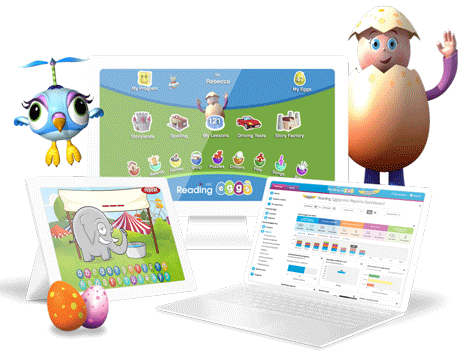
Having a good collection of books is great, however, displaying them all on the rack is impossible. Make it a monthly exercise to rotate books that are on the shelf and place new titles on display, while the other books can be stored in the attic. Children usually tend to re-read their favorite book and miss the opportunity to try picking up other books. Therefore, patiently Introduce your child to new & more exciting book covers, and motivate them to read a variety of genres, instead of sticking to one. To learn about the latest age-appropriate reading books in the market, reference the Reading Eggs app, which allows parents to browse through over 3000 titles. This app is pretty popular in Dubai and across the Middle East and those who have been using this platform have good things to say.

Encourage Creativity

Around the reading corner have some stationary handy; markers, crayons, origami paper, etc. Encourage your little one to re-tell the tale and use props to make it more interesting & creative. Children have a vivid imagination, and you will be surprised at the enthusiasm they display in presenting the story. You can also follow up the story with an activity from the Reading Eggs app – which is available for download seamlessly across the UAE and in other GCC countries.

Now that you know how to set up a library at home, it’s time to have a fixed routine for ‘story time’ each day. Maybe 15 minutes before bedtime and 30 minutes after your child returns from school, makes for a good practice.

Contact us

Fill in your details below or send us an email on info@knowledge-hub.com

Robots For Children With Special Needs

Robots For Children With Special Needs

Robots For Children With Special Needs

As per recent research, it is found that one in 160 children across the world suffers from ASD (Autism spectrum disorder).

What is autism?

Autism is a lifelong mental health disability that occurs when the child is young and it interferes with the daily functioning of that individual. The symptoms and degree of complexity may vary from child to child, however, there are certain common characteristics or unique traits associated with ASD. This lifelong disorder impacts the person’s social skills, communication skills, and ability to form meaningful relationships. Some of the symptoms include;

  • Unusual facial expression and gestures, also avoiding eye contact
  • Lack of interest in sharing or communicating with others
  • Prefers to be detached, alone, and in one’s own world
  • Finding it hard to understand other person’s point of view
  • Resists being touched • Speaking or humming in a specific rhythmic tone
  • Repetitive body movements (shaking arms, legs, flapping)
  • Clumsiness and awkward behavior
  • Has an exaggerated reaction to certain sounds & smells

Robots for Special Needs

Special children, feel lonely and can’t easily make friends in school. Living with autism can severely affect the child’s academic performance and leave them in a state of despair. Thanks to the advancement of technology in the UAE & all across the world, there are robots that are specifically built to support therapy and education for children with intellectual disabilities, including autism.

Social robots are programmed to express emotions and empathy which helps the child with special needs feel comfortable and thereby make the robot his/her ‘friend’. Children confide in their new buddy and return to the robot for help with academic tasks, while seeking emotional support.

These robots have a human-like design and a pleasant voice to tirelessly interact with the child, without passing any judgments or derogatory remarks. It even helps reduce anxiety & stress to a great extent.

Here are some popular Social Robots already available in the market:

NAO Robot

This is a fully-programmable humanoid robot that has performed wonders in the education space, for the special needs community. NAO has a human figure and its arms & legs function impressively, to captivate the attention of children & adults. Schools can integrate the curriculum into the robot’s software, to provide teaching aids to children who need extra help. Its operations are made-to-measure using NAOqi OS.

Misty II

Misty is a smart robot that is built to coach and deliver life skills to students. It has become a daily living companion and delivers academic content to children with Autism Spectrum Disorder (ASD) and other special needs. Students quickly develop a bond with Misty and playfully engage in content that is of educative purpose. Most IB Schools in Dubai & GCC Regions, across the Middle East, who follow the STEM (Science, Technology, Engineering, Mathematics) approach, take the help of Misty II as it features STEM-augmenting accessories, apps, and content to enhance STEM education.

Learn More: https://knowledge-hub.com/misty-robotics/

KEBBI Robot

Kebbi is an Educative Robot that uses AI (Artificial Intelligence) to make it more humanly, and less machine-like. Its intelligent software and hardware are designed to enable KEBBI to respond to facial expressions and body language as if one were communicating with a human being. It delivers personalized lessons to students and works well in the home & school environment. Its friendly personality provides heartwarming moments and enhances the educational experience manifold.

IPal Robot

This robot delivers educational content with its in-built WOZ Teacher’s Aid System through a robotic solution that enables capturing children’s attention and is especially beneficial to those with special needs like autism. The touch screen on its body can be used to display images and educational content, in an engaging manner, making the learning process more interactive. 

It’s time to unlock your child’s hidden potential, even if it means taking help of the above-mentioned robots. We are sure your little ones will bloom with special attention from their ‘bot friends’. As the saying goes, ‘If they can’t learn the way we teach, we teach the way they learn.’ – Dr. Ole Ivar Løvaas

Contact us

Fill in your details below or send us an email on info@knowledge-hub.com

Going Beyond Rote Learning: Improving Conceptual Fluency In Math

Going Beyond Rote Learning: Improving Conceptual Fluency In Math

Going Beyond Rote Learning: Improving Conceptual Fluency In Math

Students often develop Math anxiety which is frightening and takes the joy out of learning. Fear of the subject keeps children away from practicing math, leave aside giving it their hundred percent. The fact doesn’t change that Math is required in our day-to-day lives. Budgeting household expenditure requires math, cooking requires estimation of ingredients used for preparation, animation & designing require knowledge of angles & shapes, and even coding involves some logical acumen.

Rote Learning

Math When formulae seem tough to decipher and equations are too complex to apply, children resort to rote learning techniques. Learning tables do require some rote learning skills, but the same can’t be applied to other operations. It’s impossible to mug up the answer and reproduce it in exams, as in math the questions need to be understood first, then one needs to apply problem-solving acumen, and attempt it logically in a step-by-step manner. Especially when it comes to dealing with word problems, students will need to have a robust conceptual understanding.

Developing Conceptual Understanding in Math

It’s important to first encourage children to feel more positive towards the subject. Only when learners find some benefit behind studying the subject, do they actually start to appreciate it.

#1 Build Confidence

Having faith and believing in oneself, is half a battle won. Building a strong foundation and someone to help through with the subject is the basis of developing a good hold of numbers. Educators need to be an accomplice not only in solving mathematical equations but give children the confidence to pursue wholeheartedly. The fear of getting the answer wrong, leading to frustration is quite normal, but the attitude of ‘not giving up’ and ‘continuous efforts need to be inculcated.

#2 Getting Involved

‘Learning – teaching’ is a two-way process. Simply solving sums on the board from the textbook is not only going to make math really boring but barely motivates kids to develop an interest in the subject. IB Schools across the globe, including Dubai & other GCC Countries, follow an inclusive learning process where the educator teaches children as per the interest and style of the class. This essentially means, making math learning ‘fun’. Be unconventional by getting children involved in playing math quizzes or get them to undertake group assignments & compete with other math geniuses in class. Ultimate students will come to like math and enjoy the process of learning.


#3 Gradual Pace of Learning

Not everyone cracks a difficult math equation in the first attempt! Start with smaller problems that have easy solutions and at a later stage increase difficulty. Gradual progression makes the child more confident in dealing with numbers. Give students ample time & opportunity to practice, recall, and apply the concept. Also, some students are fast learners in class, while others take their time to grasp. Therefore, accommodate the needs of all students and maybe pay extra attention to the slow learners by devoting time to help them after-class.

#4 Practice & Practice

Acing at math is all about practice, practice & more practice. The more you practice, the faster you will be able to solve sums and find shortcuts or tricks to find the solutions. Mental math usually requires a lot of repetition, in order to quickly calculate something like; x + 29 = 63, what is the value of ‘x’? But who says math homework can’t be fun? There are math-specific apps available for download on iOS and Android devices which entertain students while reinforcing math concepts taught in school. Some popular apps downloaded in UAE are; Maths Shed, Mathmateer, Mathseeds, Mathspace, etc.

To conclude, we would say it is important to focus on conceptual fluency in mathematics by developing the child’s critical thinking capabilities. A mindset of ‘why to solve and ‘how to solve’ must be ingrained, so that the learner is immersed in the solving process, rather than concentrating on the procedural complexities.

Mathspace brings together all learning touch-points together by offering video lessons, downloadable textbooks, and active practice, for the math learners. Students get instant feedback and are encouraged to practice solving problems on worksheets. This learning platform has a collection of over 50,000 worksheets and thus parents are pleased to adapt Mathspace over & above math lessons taught in schools across the Middle East & other regions of the world.

Contact us

Fill in your details below or send us an email on info@knowledge-hub.com

Easy Steps For Solving Word Problems

Easy Steps For Solving Word Problems

Easy Steps For Solving Word Problems

Word problems are not straightforward where students can read a topic, ‘addition’ and then mechanically solve all sums under that category: 1 + 10, 50 + 140, 1000 + 1200, etc. There is no clear indication of a mathematical equation in a ‘word’ problem and the question doesn’t present itself in an easy solvable format. Probably that’s the reason why students are not too confident of dealing with math word problems and find excuses to skip that part in their exam paper. Often learners fail to see the ‘math’ behind word problems and thereby can’t figure which formula to apply.

Let’s show you how to approach word-problems in a step by step manner. Simply put these techniques to practice, and eliminate your fear of having to decode sentences into a solvable equation.

#1 Read The Problem

Comprehending the text, first require the student to read the problem multiple times, until he is clear of what needs to be done next. Often students are in a hurry and skip reading full sentences, thereby getting confused & make errors. One needs to word by word read aloud and try and understand the meaning behind important keywords.

For Example:

Tom has 24 chocolates, which is 7 lesser than his friend John. How many chocolates does John have?

Read this carefully a couple of times and you will discover keywords that denote a specific hidden meaning. Just by reading ‘lesser than’ doesn’t mean that 24 – 7 = 17 is the answer. If Tom has 7 chocolates lesser than John, then John has to have ‘more’ number of chocolates. Which means John has 24+7=31 chocolates. You see, to figure out the ‘hidden’ meanings, one needs to really take time to understand the wordings in the first place.

#2 Graphical Representation of Word Problem

Some students are comfortable solving a word problem by drawing pictures, rather than using mental math techniques. Drawing makes the ‘addition’ / ‘subtraction’ process easier, as one can strike out the items while counting and reduce the chance for errors. However, make sure you are considering all aspects of the problem while pictorially representing the equation.

#3 Break the Equation and Write Down Steps

It is always better to write down and list the details of a complex 4-5 lines word problem, to make things easier. Listing all the points down, ensures that you do not skip any detail and are able to correctly put things into perspective, before rushing to get the right answer. Make a rough column at the side of the exam paper and write down all bullet points that are important.

For Example:

There are two Ashoka trees in the forest. The tall Ashoka tree is 16 feet in height and the short tree is 6 feet shorter than the tall one. Tina has a ladder that is 14 feet in height. As compared to the taller tree, how short is the ladder.

  • Tall Ashoka Tree 16 feet height
  • Short Ashoka Tree 6 feet shorter than tall one (16 feet – 6 feet = 10 feet)
  • Ladder height is 14 feet
  • Ashoka tree is 16 feet and ladder is 14 feet
  • Ladder is shorter than the tall Ashoka tree by (16 feet – 14 feet = 2 feet)

#4 Construct a Formula

Translate the terms written in English into math symbols and create a formula or an equation which can be used to solve the sum.

Example:

  • Increased by (+)
  • Added together (+)
  • Comparatively smaller (-)
  • Twice as large (x2)
  • One portion of the pizza divided equally in 4 parts (1/4)

Teddy had 8 socks, now he is left with only 3. How many socks did Teddy give his sister Stella?

8 – x = 3

8 – 3= x

5 = x

Verify: 8 – 5 = 3

Answer: Teddy gave 5 socks to Stella.

Practice the above steps to simplify the word problems, before solving them. The more your child practices, the better he will get at it and would be able to attempt it faster in the exam paper. Wondering where you would find readymade practice math word problems? Try out Mastheads – Real learning, real math, real fun! Mathseeds is trusted teachers with a satisfaction score of 8.9 out of 10 and is loved by students with a high rating of 9.2 out of 10. Even in Dubai and all-over Middle East, Mathseeds is a go-to for Math learners in R – years of schooling. The platform introduces kids to interesting characters and motivates them by gifting them golden acorns.

Get your Mathseeds trial in GCC region, including UAE, by visiting our website https://knowledge-hub.com/mathseeds/

Contact us

Fill in your details below or send us an email on info@knowledge-hub.com