
Easy Steps For Solving Word Problems

Easy Steps For Solving Word Problems

Easy Steps For Solving Word Problems

Word problems are not straightforward where students can read a topic, ‘addition’ and then mechanically solve all sums under that category: 1 + 10, 50 + 140, 1000 + 1200, etc. There is no clear indication of a mathematical equation in a ‘word’ problem and the question doesn’t present itself in an easy solvable format. Probably that’s the reason why students are not too confident of dealing with math word problems and find excuses to skip that part in their exam paper. Often learners fail to see the ‘math’ behind word problems and thereby can’t figure which formula to apply.

Let’s show you how to approach word-problems in a step by step manner. Simply put these techniques to practice, and eliminate your fear of having to decode sentences into a solvable equation.

#1 Read The Problem

Comprehending the text, first require the student to read the problem multiple times, until he is clear of what needs to be done next. Often students are in a hurry and skip reading full sentences, thereby getting confused & make errors. One needs to word by word read aloud and try and understand the meaning behind important keywords.

For Example:

Tom has 24 chocolates, which is 7 lesser than his friend John. How many chocolates does John have?

Read this carefully a couple of times and you will discover keywords that denote a specific hidden meaning. Just by reading ‘lesser than’ doesn’t mean that 24 – 7 = 17 is the answer. If Tom has 7 chocolates lesser than John, then John has to have ‘more’ number of chocolates. Which means John has 24+7=31 chocolates. You see, to figure out the ‘hidden’ meanings, one needs to really take time to understand the wordings in the first place.

#2 Graphical Representation of Word Problem

Some students are comfortable solving a word problem by drawing pictures, rather than using mental math techniques. Drawing makes the ‘addition’ / ‘subtraction’ process easier, as one can strike out the items while counting and reduce the chance for errors. However, make sure you are considering all aspects of the problem while pictorially representing the equation.

#3 Break the Equation and Write Down Steps

It is always better to write down and list the details of a complex 4-5 lines word problem, to make things easier. Listing all the points down, ensures that you do not skip any detail and are able to correctly put things into perspective, before rushing to get the right answer. Make a rough column at the side of the exam paper and write down all bullet points that are important.

For Example:

There are two Ashoka trees in the forest. The tall Ashoka tree is 16 feet in height and the short tree is 6 feet shorter than the tall one. Tina has a ladder that is 14 feet in height. As compared to the taller tree, how short is the ladder.

  • Tall Ashoka Tree 16 feet height
  • Short Ashoka Tree 6 feet shorter than tall one (16 feet – 6 feet = 10 feet)
  • Ladder height is 14 feet
  • Ashoka tree is 16 feet and ladder is 14 feet
  • Ladder is shorter than the tall Ashoka tree by (16 feet – 14 feet = 2 feet)

#4 Construct a Formula

Translate the terms written in English into math symbols and create a formula or an equation which can be used to solve the sum.

Example:

  • Increased by (+)
  • Added together (+)
  • Comparatively smaller (-)
  • Twice as large (x2)
  • One portion of the pizza divided equally in 4 parts (1/4)

Teddy had 8 socks, now he is left with only 3. How many socks did Teddy give his sister Stella?

8 – x = 3

8 – 3= x

5 = x

Verify: 8 – 5 = 3

Answer: Teddy gave 5 socks to Stella.

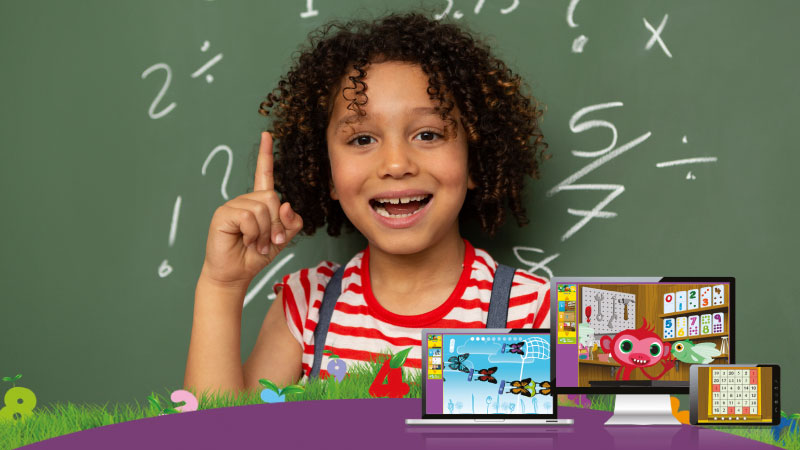
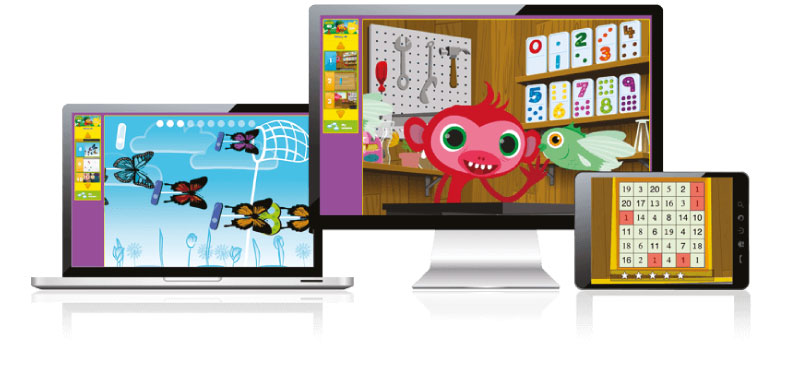
Practice the above steps to simplify the word problems, before solving them. The more your child practices, the better he will get at it and would be able to attempt it faster in the exam paper. Wondering where you would find readymade practice math word problems? Try out Mastheads – Real learning, real math, real fun! Mathseeds is trusted teachers with a satisfaction score of 8.9 out of 10 and is loved by students with a high rating of 9.2 out of 10. Even in Dubai and all-over Middle East, Mathseeds is a go-to for Math learners in R – years of schooling. The platform introduces kids to interesting characters and motivates them by gifting them golden acorns.

Get your Mathseeds trial in GCC region, including UAE, by visiting our website https://knowledge-hub.com/mathseeds/

Contact us

Fill in your details below or send us an email on info@knowledge-hub.com

One Step Closer To Nature: A Collection Of Books for Kids

One Step Closer To Nature: A Collection Of Books for Kids

One Step Closer To Nature – A Collection Of Books for Kids

Nature is all around us and our very existence depends on nature. The plants around us in the gardens, the soil we play with, vast oceans, hills, valleys, and all kinds of animal species, are components of nature. Mother Earth is filled with beauty and it is our responsibility to take care of it. Just as nature gives us so much food & fresh air, we need to be grateful for its gifts.

Children are taught about nature in preschool. In fact, it is now that they spend the most time outdoors and don’t mind getting dirty in sand making castles & smelling sweet flower fragrances. As a parent or school teacher, inculcating a ‘love for nature’ and teaching children how to ‘preserve natural resources’ goes a long way. We suggest you introduce students to these books on nature and let them enjoy glancing through.

#1 Night Animals – by Gianna Marino

This is a bedtime classic, and your kids are sure to drift off to fond memories, post-story-time. It is a light-hearted book where night campers go trekking and hear sounds of all sorts of creatures, only to find out that animals living in these forests are actually scared of the intruders into their territory. Children get introduced to possum, wolf, bear, skunk, bat, and other interesting animals & birds, through the book.

#2 Up In The Garden Down In The Dirt – by Kate Messner

This book reveals interesting insights about the mischief that goes on under the surface of the earth. Earthworms digging, snakes hunting, skunks burrowing, and other creatures unintentionally helping the farmer yield a crop. Isn’t that fascinating? We bet you wouldn’t have guessed how your tomatoes are so plump or how pees grew to full size under their pods. Pick up this book right away and learn more about the activity that lies between the stalks & roots, deep down under the ground.

#3 We are Water Protectors – by Carole Lindstrom

A young girl and her grandmother walk by a river in their neighborhood often and talk about how beautiful the free-flowing river water is. Time & again, the little one exclaims how she loves admiring the river and says ‘water is our first medicine’ and that ‘we all come from water’. As time goes by one day the young girl spots ‘a black snake – oil pipeline’ and is disturbed by the sight of it. Oh, what a threat to her community and animals! The black snake represents ‘oil pipelines’ being built on Native land in America. The book pictorially depicts how numerous movements are thereby undertaken by ‘Water Protectors’ in the West to raise concerns regarding safeguarding Earth & its waters.

#4 Our World in Pictures: Trees, Leaves, Flowers & Seeds – by Chris Clennett

Learn all that you have to about the plant anatomy- trees, flowers, seeds, fruits, etc. What part of the plant is edible and what isn’t? Find out about the unique characteristics of plants. Which plant eats insects? How do cacti survive in the desert? Which flower looks like a monkey face? The book has over 1,000 attractive images of strange plants, as well as common ones. It’s a must-read for your little kiddos, as this book is sure to get them excited and wanting to learn more.

#5 The Tiny Seed by Eric Carle

Narrated by the famous author ‘Eric Carle’, The Tiny Seed, is a story of a ‘seed’ and how it travels far and wide across rivers, oceans, mountains, deserts before it finally finds a perfect spot to settle down. Once settled, it grows into a tree & blooms into a flower thereafter. The book subtly talks about the entire lifecycle of a seed. From a seedling to a flower that dispels seeds and these new seeds waiting to find their destiny to uncover.

#6 Everything Spring This one’s a National Geographic bestseller

Children learn all that they need to about ‘spring season’ through superb pictures that bring a cheery smile to their faces. Smell the fresh scent of flowers and bask in the sunlight, as you turn page by page of this book. A time of perfect merriment for animals, birds, and even us humans!

It’s always wise to inculcate a habit of reading good books at a young age. Start with simple stories that use illustrations to depict the essence, and then gradually advance to ones that focus on good literature to improve the child’s vocabulary. Reading Eggs is an amazing E-Reading platform, preferred by most moms and educators in Dubai – UAE, and other countries across the world. Reading Eggs provides ample opportunity to kids to explore books on various genres, undertake post-reading activities, and track their progress.

In this emerging digitalization world, Reading Eggs is a suitable alternative to hardcover books, as children can easily access 100’s of books on ‘nature’ from their iPads & Phones. To get access to Reading Eggs in GCC or anywhere in the Middle East, visit our website: <link>

Contact us

Fill in your details below or send us an email on info@knowledge-hub.com

Interesting Memory Games For Kids: Improve Concentration and Retention

Interesting Memory Games For Kids: Improve Concentration and Retention

Interesting Memory Games For Kids – Improve Concentration and Retention

Going to school and absorbing all that was taught in class, requires the child to develop focused concentration, listening skills, and retention capacity. We’ve heard that practice makes a man perfect, and so the key to ‘acing’ it in academics, begins with a little practice at home. Memory games are a great way to help children develop concentration and keep them busy productively at home. Instead of Googling numerous ideas of memory games to play with your kiddies, here’s a comprehensive list that we have compiled for you;

Matching Pictures

This is probably the most favorite game amongst children. To begin with, take a pack of flashcards and ensure each image has its corresponding matching pair. You can download printable flashcards according to a theme; summer fruits, spring flowers, wild animals, etc. Make sure that cards are placed on a mat with the ‘image’ facing downwards. Ask the child to randomly pick up two cards from the spread and turn them over. If the two cards ‘match’ then pick them up and keep it aside. If they don’t match, flip the cards with the ‘picture side’ downwards again, and repeat this exercise until all matching pairs are found. The idea is to remember the placement of the cards and where their match was located.


Guess the Missing Item

Take a large tub and fill it up with some household items. You could get anything that is readily available at home like; a spoon, book, cup, toy car, pencil, etc. Take about 10-12 items to make the game more challenging. However, if your kiddo is just 3 – 4 years old, restrict yourself from choosing 5-6 simple items only. Place all the items in the tub and let the participant observe them for 10 minutes. Now cover the tub and ask the child to look away. Gently remove one item from the tub and hide it from anyone’s sight. Uncover and let the child guess which item is missing. Repeat this activity, until all the missing items are guessed correctly. Applaud the efforts, and congratulate your child later.


Shuffling the Cups

This is a classic game, that you must have played as a child. Take three identical paper cups and place pom-pom balls under one cup. Now shuffle the cups randomly. Pick up the cup under which there are pom-poms and ask the child to keep an eye on that one. Shuffle again and this time, ask the participant to choose the cup – which had the pom-poms. If the child guesses it correctly, appreciate his efforts. If not, try again until the pom-poms are found.


Memory Train

This is a group activity to be played in class. The game starts when the first child says ‘I am going to the market to buy….’. The child has to name any item that he wishes to purchase, for example; an apple. Now the next child introduces one more item and has to remember the item already bought by his friend in the previous turn. The second student says; ‘I am going to the market to purchase apple and pasta’. The third child continues; ‘I am going to the market to purchase an apple, pasta, and chocolate’. The idea is to remember and reproduce the sequence of items in the exact same manner, as it was revealed.


Spot the Difference

If you have a subscription to a magazine or newspaper for kids, you would be acquainted with the ‘spot the difference’ game section. There are two identical pictures, however, in one image, there might be elements that are missing or different. For example, One picture might have a photo frame missing, the color of the cushion may be different, or the pattern on the wall may be slightly non-identical. Between the two images, there could be 7-9 differences, that the child is required to spot. It seems pretty easy, but do not fooled! Concentrating and identifying the minutest error requires an ‘eye for detailing’ and thus helps in developing the child’s attention skills.

We are certain by choosing the above memory games, your kids will have lots of fun. They also learn to form meaningful connections with their peers and enhance their communication skills, memory power, concentration, and much more.

If you are looking for ideas related to specific Math related games; check out the Mathletics Platform. Mathletics is present in 110 countries across the globe and its popularity in Dubai in the Middle East is growing by the day. Mathletics has games for children 2 years to 16 years and includes interesting activities such as; Multiverse, Play Paws, Magic Mentors, Numbeanies, amongst others. If you belong to GCC or anywhere in the UAE, do check out Mathletics.

Contact us

Fill in your details below or send us an email on info@knowledge-hub.com

What Questions To Ask The Reader After Having Read A Story

What Questions To Ask The Reader After Having Read A Story

What Questions To Ask The Reader After Having Read A Story

Storybooks are every child’s favorite pastime. They love to learn about new characters, flip through artistic caricatures, and read out new words aloud. Being lost in fantasy-land, children often assume the ‘lead role’ and think of themselves being ‘superheroes’ and ‘princesses’ as they accomplish a mission of ‘saving the world’ and spreading ‘peace’. While all this creativity is good, how would you comprehend whether the essence of the story is understood by your child correctly? Did the child manage to expand his vocabulary? What were their thoughts on the ending of the story?

Storybooks are every child’s favorite pastime. They love to learn about new characters, flip through artistic caricatures, and read out new words aloud. Being lost in fantasy-land, children often assume the ‘lead role’ and think of themselves being ‘superheroes’ and ‘princesses’ as they accomplish a mission of ‘saving the world’ and spreading ‘peace’. While all this creativity is good, how would you comprehend whether the essence of the story is understood by your child correctly? Did the child manage to expand his vocabulary? What were their thoughts on the ending of the story?

Why did you choose to read this book?

To understand the child’s thought process in choosing the book, ask this question – Why did you choose this book? Do not expect elaborate answers though. It’s not like they must have done research about the book and then picked it up. The reasons could be as simple as; ‘I liked the book cover’ or ‘My friend told me to read it’. It could also be that the child is more comfortable reading books of certain genres. Choosing books like- ‘Science is Magic’ and ‘Outdoor Maker Lab’, indicates the child’s interest in Sciences, while books like ‘A Children’s History of India’ and ‘Who Was Anne Frank?’ are storybooks of interest for History lovers.

Who was your favorite character from the book and why?

Children who read common fiction stories, might not necessarily like the same character. They may have their own favorites. While some may admire the braveness of the ‘dog’ in Harper Collins ‘Go Away Dog’, others would adore the helpfulness of the ‘dwarfs’ in ‘Snow White & The Seven Dwarfs’. Hear the child out; as to which character is his favorite; and the reason for it. It gives parents an idea about what ‘values’ and ‘characteristics’ children uphold as important and correct them if they are not on the right track.

What was the most interesting scene from the storybook?

A story is basically different scenes and incidences interwoven together, which adds essence to the book. Some parts of the book really stand out, while others are just a drag. Ask the reader, which part did he enjoy reading the most! You would be amazed to learn how intelligently children connect their personal lives to the scene in the book and instantly are excited to talk about it. Say for instance the child says; ‘I liked it when Anita became friends with Mohan in the end, though they had some misunderstandings in the beginning’. Probably the child would have experienced something similar in their lives, where they become friends with someone, they were not really fond of in the start. There is a strong emotional connection here with the scene, and hence children enjoy reading & talking about it even more, as compared to other scenes in the book.

What was the lesson you learnt from this book?

If it’s a storybook with a moral, ask the reader what are his thoughts on it. Did he like the moral? Would he practice the learnings and apply them to his day-to-day life? In the book ‘David Gets In Trouble’ by David Shannon, the moral of the story is ‘We should own up our actions, even if we are afraid we might get a scolding from mom and dad’. Have a conversation with the kiddo and tell him, it’s absolutely okay to make mistakes, but it is also important to confess it and say sorry thereafter promising not to repeat again. This gives children confidence, the next time they make a mistake, to acknowledge it and speak the truth.

Did you like the ending of the book?

Not always do children like what they read in the storybooks. Sometimes, the ending is not what the reader was expecting and this leads to disappointment. But what if they had a chance to recreate or retell the story differently? Encourage students to narrate how they feel the ending should have been and it will pleasantly surprise you. Allow the flow of thoughts and creativity, while the child is engrossed in retelling the tale. Don’t forget to compliment his efforts and applaud his imagination.

The above exercise gives pre-schoolers confidence that their ideas and opinions matter, and therefore start showing more involvement while reading. The child develops communication skills, learns how to express his feelings, and showcases creativity.

About myON

myON is a digital library aimed at personalizing reading experiences for students as per their age and level of readiness. The platform has over 7,000 interesting books including some time-tested classics. Parents and schools in GCC and other countries of the UAE encourage subscribing to myOn, as it emphasizes on Smart Reading and assigns projects to students based on the book to test their level of understanding. Adults can even track the progress of the child and guide them accordingly. To get instant access to its full-fledge e-library in Dubai – Middle East, visit our website https://knowledge-hub.com/

Contact us

Fill in your details below or send us an email on info@knowledge-hub.com

Be A Fitness Ambassador: Attempt The TechnoFitness Challenge

Be A Fitness Ambassador: Attempt The TechnoFitness Challenge

Be A Fitness Ambassador: Attempt The TechnoFitness Challenge

We often hear the statement ‘health is wealth’. This statement couldn’t be truer than now and its importance is growing each day. The seeds of a healthy lifestyle and good food habits have to be sown when the child is young and in school. It is the teacher’s duty to make children realize how important physical, mental, and social wellbeing is and encourage them to follow it as a ‘number one’ priority. Learning about the importance of health & wellness is pretty boring if it were to be mugged up from a textbook.


About TechnoFit

The famous TechnoKids platform has introduced the ‘TechnoFit’ curriculum to drive children to learn about fitness in a unique way. The module includes numerous hands-on activities and group challenges which makes the whole learning process quite exciting and rewarding. The TechnoKids curriculum has become quite popular amongst parents and educational institutes in Dubai and other regions of the UAE, who wish to teach their children computer lessons, in a fun & engaging way.

Be Fit Challenge

Students become elite members of the TechnoFit Club and undertake the ‘Be Fit Challenge’. To start with, children are first made aware of healthy eating and exercise habits. After the basic knowledge is gained, students must follow the same practice and challenge themselves to live a healthy lifestyle.

The next step is to prep up and design a digital ‘food guide’ and online ‘fitness posters’ to prepare for the on-ground ‘Be Fit’ event. The celebration begins by dividing students into teams and competing with each other to present ‘healthy dishes’ and ‘recipes’ that can be replicated in normal day-to-day living. Students use their creativity and Graphic design skills to curate an ‘e-Menu’ and ‘Invitation Cards’ to send out to parents, teachers, and staff in school, thereby inviting them to their stall. Here’s a breakup of the tasks that are to be undertaken in a systematic manner:

Session 1

Students join the TechnoFit Club (TFC) where the unanimous motto is ‘Eat Right, Be Fit, Live Well.’ Students watch the ‘The Be Fit Challenge’ video and they get to understand the importance of diet and exercise. Each kid who signs up for the challenge is presented with a membership card. This card is designed by students themselves and includes their names, picture, and other information.

Session 2

Participants learn about a balanced diet and what to include in everyday mealtime to get the right amount of nutrition and energy to nourish the body. Children then design a ‘Be Fit Food Guide’ to spread the importance of a balanced diet further. To make the Guide interesting, children collect pictures of food items and organize them under the various Food Group headings. This way it is a constant reminder for students to make healthy food choices.

Session 3

Students perform the right kind of exercise, and make posters to highlight the various exercises to be practiced daily. Putting up the poster at a prominent place in the school premises and home sets a cue to take a break from studies and dedicate 30 minutes of rigorous physical exercise at any time through the day. Making posters again & again will only give the child more practice on various design aspects

Session 4

Students use Microsoft Publisher to create a side-fold ‘card’ and an ‘invite’ to be sent out to the audience and jury members with the schedule of the events. The aim is to welcome all health & fitness-conscious audiences to the ‘Be Fit’ final event.

Session 5

It’s time to show who’s the fittest at The ‘Be Fit’ challenge event. All Food Groups display their food items and flex their muscles before the esteemed jury panel; which includes; teachers, staff, parents, and co-students.

Session 6

An elaborate award ceremony is well deserved and all participants rightfully earn a Certificate. This certificate is designed by the students themselves for all TechnoFit members, using the Microsoft Publisher tool. Hurry, it’s time to celebrate – you are now Certified as Healthy!

The Project Includes The Following Materials

Teacher Guide, Student Workbook, Customizable Resources, Assessment Tools, Activities, Sample Files, Templates, Parent Letters, and Certificates.

Tech Skills Gained

Publishing, Graphics, and Word Processing.

To learn more about TechnoFit and source the latest software anywhere in the Middle East, including GCC Countries, visit our website

Contact us

Fill in your details below or send us an email on info@knowledge-hub.com

What Is Matter? Understanding Structure and Properties of Matter

What Is Matter? Understanding Structure and Properties of Matter

What Is Matter? Understanding Structure and Properties of Matter

According to definition, the subject Chemistry is the study of matter, its composition and the changes it undergoes. Before we start exploring the fascinating aspects of chemistry, let us start by understanding what matter is.

Explanation of Matter

Matter is anything that has mass and occupies space. Matter can exist in different forms or states and has various characteristics. Also, any object that has a physical form can be made of matter. Tiny bits of atoms are bound together to form molecules, that makeup matter. Your table, the chair you are sitting on, your food, all of this is matter.

Three States of Matter

There are 3 distinct states of matter; solid, liquid, and gases. Solids have fixed shape and volume- ex: a rock. Liquids have a fixed volume, but take up the shape of the container ex: water. Gases have no volume and no shape ex: air in vehicle tires.

What is a substance?

Substance is a form of matter that contains only one type of atom or molecule. That means substance is matter in which all parts are alike. Substance is further divided into two sub-categories:

Elements

An element is a chemical substance that is made up of a piacular kind of atom and cannot be broken down further or transformed by a chemical reaction into different elements. Examples of elements are; gold, oxygen, sulfur, and iron.

  • Compounds

Compounds on the other hand; are pure substances that are made up of two or more elements. Examples of compounds are; salt, water, and sugar.

Mixtures

A mixture is formed when two or more substances are mixed together. A Mixture can either have homogenous or heterogeneous properties. Let us find out what this means;

  • Homogenous Mixture

In a homogenous mixture, the components mix with each other having a uniform composition. However, the components cannot be seen with the naked eye. Also, the components cannot be separated from the mixture easily. Example: salt solution, sugar solution, and detergent.

  • Heterogenous Mixture

A heterogeneous mixture is one, in which the composition is not uniform throughout and different components are observed. Unlike Homogenous mixtures, components of Heterogenous mixtures as visible with the naked eye. Even the size of the particles are large. You can separate the components of a heterogeneous mixture. Example: salt and oil, ice cubes in a drink, sand & water, etc.

Methods for Separating Mixtures

The components of a mixture can be separated physically. However, the technique to be used may be different for different types of mixtures and their chemical composition. Here are the different ways in which mixtures can be separated;

  • Using a Separating Funnel

A separating funnel can be used to separate two immiscible liquids. These are those liquids that do not mix together, instead, they form different layers that can be clearly seen with the naked eye. Examples of immiscible liquids are; kerosene and water, oil and water, honey and oil, etc.

Experiment:

Fill the separating funnel with kerosene and water and allow it to settle down. You will clearly see two distinctive layers forming; water is at the bottom layer & kerosene at the top. Open the stopcock of the separating funnel. You will notice that water flows out onto a different vessel. When all the water is emptied, shut the stopcock, so that the kerosene remains in the separating funnel.

Evaporation

Through evaporation, you can separate solids that are dissolved in water. The thought behind this is, solids do not evaporate, but liquids do, and the solid substance is left behind in the vessel.

  • Experiment

Take a glass and mix water with salt. Now empty the salt & water mixtures into a petri dish and heat is continuously over a burner. By heating, the water starts to form vapor and evaporates into the air. Keep heating until all the water is evaporated and only the salt remains in the dish.

Distillation

Distillation is the process of separating the components or substances from a liquid mixture, by using the technique of boiling and condensation.

  • Experiment

Add a few drops of ink into water and empty it into a Conical flask. Add some anti-bumping granules in the conical flask and arrange the apparatus and test tubes, before you begin with the experiment. Heat the conical flask over medium flame using a burner, and watch the ink as it starts to boil. Observe the delivery tube and notice condensation starting to happen, as vapor turns into liquid again. Wait for all the water to condense, leaving only the liquid ink in the flask.

Carolina’s Building Blocks of Science® 3D: Structure and Properties of Matter (©2019) Carolina is a world-renowned supplier of Science lab equipment to schools across the globe and in Dubai, Middle East. The chemistry module on ‘Structure and Properties of Matter’ Is aimed at students of Grade 5 and it helps students discover the physical and chemical properties of matter. The kit comprises all the materials to conduct experiments, a teacher’s guide, and a student reader.

Contact us

Fill in your details below or send us an email on info@knowledge-hub.com