

AI Education Solutions UAE: Preparing Schools for the Future of Learning
Artificial Intelligence is transforming industries, workplaces, and the skills students need to succeed in the future. As technology continues to evolve, schools must prepare learners not only to use AI tools but also to understand how they work, evaluate their impact, and apply them responsibly.
This is why many educational institutions are adopting AI Education Solutions UAE to equip students and teachers with the knowledge, skills, and confidence required in a technology-driven world.
Schools can strengthen this approach by integrating AI with STEM Curriculum UAE and digital learning frameworks that develop creativity, innovation, and problem-solving skills. Schools that embrace AI today are creating future-ready learning environments that empower students to become innovators, problem-solvers, and lifelong learners.

What is AI Education?
AI education is the process of teaching students about artificial intelligence concepts, applications, ethics, and real-world use cases.
Rather than focusing solely on advanced programming, AI education introduces learners to concepts such as:
- Pattern recognition
- Data analysis
- Machine learning fundamentals
- Automation
- Problem-solving
- Decision-making systems
- Responsible AI usage
Students learn how AI impacts everyday life while developing critical thinking and digital literacy skills that are increasingly valuable across industries.
As AI becomes more integrated into society, schools are recognizing the importance of implementing structured AI learning programs that are age-appropriate, engaging, and curriculum-aligned.
Why AI Education Matters for Schools
Preparing Students for Future Careers
According to global workforce trends, AI and automation will influence nearly every profession in the coming decades.
Future careers in:
- Healthcare
- Engineering
- Finance
- Education
- Marketing
- Manufacturing
- Research
will all require some level of AI understanding.
Schools that introduce AI concepts early help students build foundational knowledge before entering higher education and the workforce.
Developing Critical Thinking Skills
AI education encourages students to ask important questions:
- How does AI make decisions?
- What data is being used?
- Can algorithms be biased?
- How should AI be used responsibly?
These discussions strengthen analytical thinking and digital citizenship.
Enhancing Creativity and Innovation
Contrary to common misconceptions, AI does not replace creativity.
Instead, AI can support:
- Idea generation
- Design thinking
- Prototyping
- Research
- Collaboration
Students learn how technology can amplify human creativity rather than replace it.
AI Curriculum for Schools
A successful AI curriculum should provide a progressive learning pathway that grows with students. Schools can strengthen AI learning by combining it with a structured ICT Curriculum for Schools UAE , helping students develop digital literacy, computational thinking, and coding skills from an early age.
Early Years (Ages 5–8)
At this stage, students begin exploring foundational concepts through:
- Pattern recognition activities
- Logical reasoning games
- Sorting and classification exercises
- Problem-solving challenges
The focus is on developing computational thinking skills rather than technical AI concepts.
Primary School (Ages 8–11)
Students can begin exploring:
- What AI is
- How machines learn
- Data collection basics
- Everyday AI applications
Hands-on activities and classroom projects make learning engaging and meaningful.
Middle School (Ages 11–14)
Students develop a deeper understanding of:
- Machine learning concepts
- Data analysis
- Algorithms
- Ethical considerations
Project-based learning becomes increasingly important during this stage.
Secondary School (Ages 14–18)
Older students can explore:
- AI model development
- Predictive analytics
- AI applications across industries
- Ethics and governance
These experiences help prepare students for future academic and career pathways.
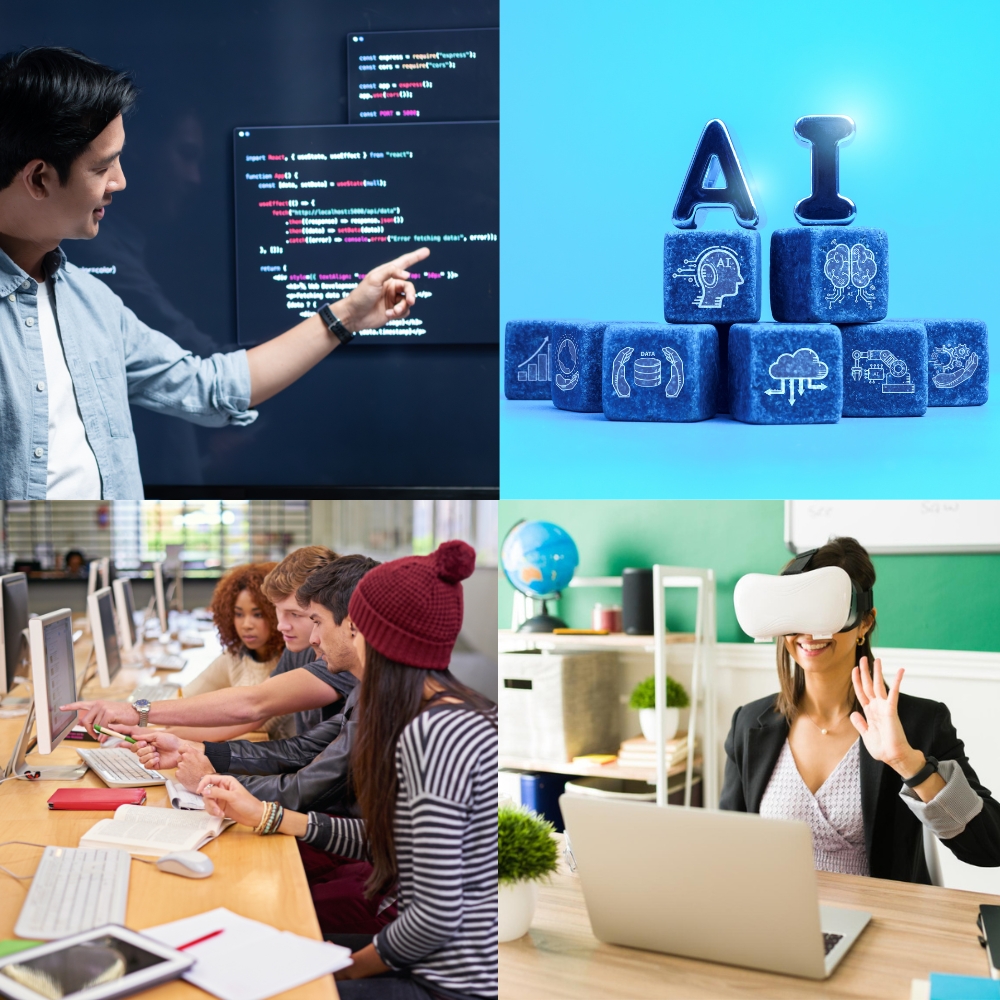
AI Learning Through Project-Based Education
One of the most effective ways to teach AI is through hands-on learning.
Project-based education allows students to:
- Investigate real-world problems
- Develop solutions
- Test ideas
- Collaborate with peers
- Present findings
This approach improves engagement while strengthening problem-solving and communication skills.
Examples include:
Smart City Projects
Students design AI-powered systems for traffic management, waste reduction, or energy efficiency.
Environmental Monitoring
Learners use data analysis techniques to study environmental challenges.
Health and Wellness Applications
Students explore how AI supports healthcare and wellbeing initiatives.
AI Learning Tools for Schools
Educational technology platforms help schools implement AI learning effectively.
Key tools may include:
Interactive Learning Platforms
Digital learning environments enable students to engage with AI concepts through interactive activities and assessments.
Collaborative Learning Tools
Technology platforms encourage teamwork, creativity, and project development.
Assessment Solutions
AI-powered assessment tools can provide insights into student progress and learning needs.
Building Future Ready Classrooms
Schools are increasingly investing in Future Ready Classrooms UAE that combine AI, coding, STEM, digital literacy, and collaborative learning spaces to prepare students for tomorrow's challenges.
Future-ready classrooms typically include:
- AI learning opportunities
- Coding education
- STEM programs
- Robotics learning
- Digital literacy initiatives
- Collaborative learning spaces
The goal is not simply introducing technology but transforming how students learn and solve problems.
This is where AI Education Solutions UAE play a critical role in supporting school transformation strategies.
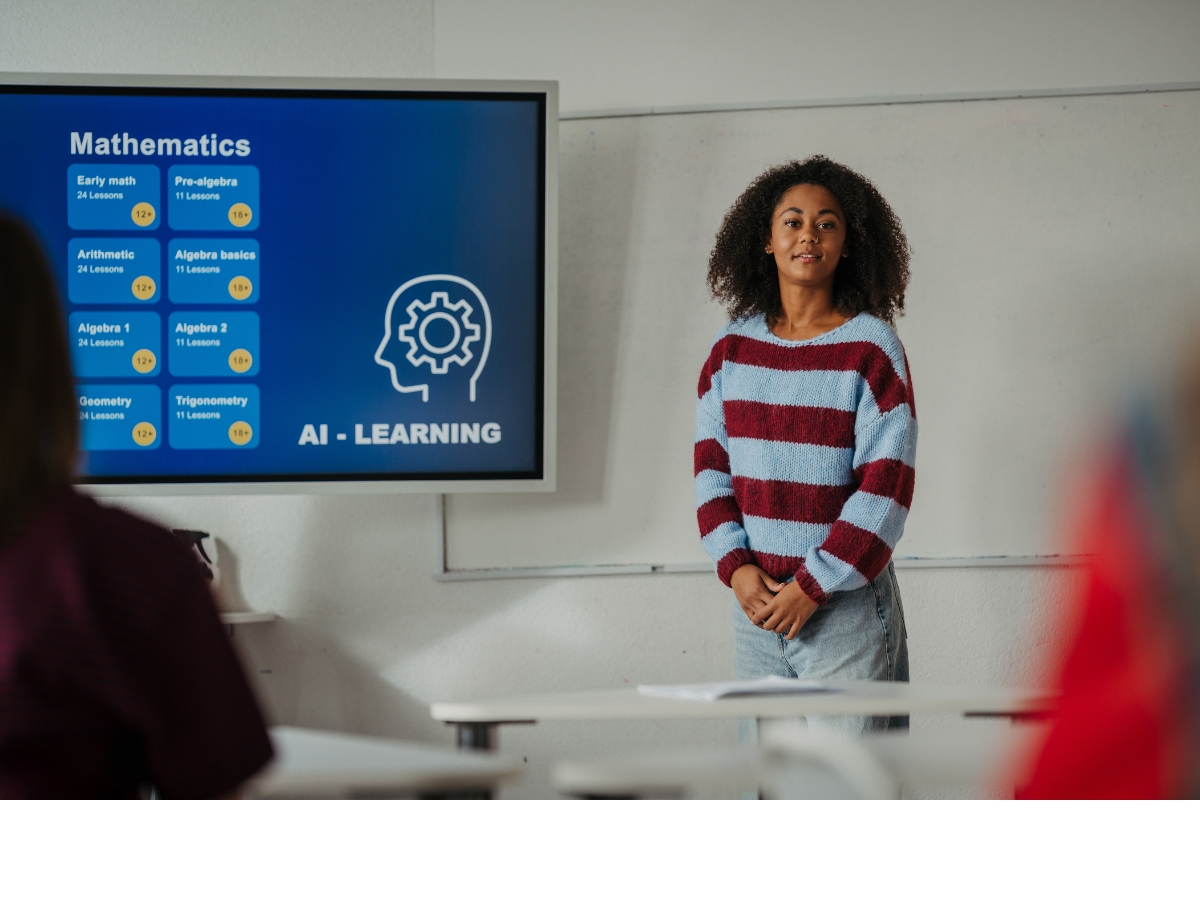
The Role of Teachers in AI Education
Technology alone does not create meaningful learning experiences.
Teachers remain central to successful AI implementation. Schools that invest in Teacher Training Programs UAE can help educators confidently integrate AI tools, project-based learning, and digital assessment strategies into everyday teaching.
Educators require professional development in:
- AI fundamentals
- Classroom integration strategies
- Digital assessment
- Responsible AI practices
- Project-based learning methodologies
Ongoing teacher training ensures schools maximize the impact of AI learning initiatives.
Integrating AI with STEM Education
AI works best when integrated into broader STEM learning programs. A comprehensive STEM Curriculum UAE enables students to apply artificial intelligence concepts through science investigations, engineering challenges, and project-based learning activities.
Students can combine AI with:
Science
Analyze data and identify patterns.
Technology
Explore digital tools and software applications.
Engineering
Design innovative solutions to real-world challenges.
Mathematics
Develop logical reasoning and data interpretation skills.
This interdisciplinary approach creates deeper and more meaningful learning experiences.
AI, Coding and Robotics
AI education naturally complements coding and robotics programs. Through Robotics and Coding Programs UAE , students can explore automation, sensors, data analysis, and intelligent decision-making in hands-on learning environments.
Students can progress from:
- Computational Thinking
- Coding Fundamentals
- Robotics Applications
- AI Concepts
- Advanced Technology Projects
This progression helps learners develop increasingly sophisticated technology skills.
Related Solutions
Explore:
ICT 360 Curriculum
LEGO® Education Programs
Robotics and Coding Programs
STEM Learning Solutions
Teacher Professional Development
Why Schools Choose Knowledge Hub
Knowledge Hub supports schools in creating innovative and future-focused learning environments.
Through curriculum solutions, educational technology platforms, professional development programs, and hands-on learning resources, schools can confidently prepare students for a rapidly changing world.
Knowledge Hub works closely with educational institutions to implement learning experiences that promote:
- Innovation
- Creativity
- Digital literacy
- Computational thinking
- Future readiness
FAQ’S (Frequently Asked Questions)
What is AI education?
AI education teaches students how artificial intelligence works, its applications, ethical considerations, and real-world impact.
Is AI suitable for primary school students?
Yes. AI concepts can be introduced through age-appropriate activities focused on patterns, problem-solving, and computational thinking.
Why should schools teach AI?
AI literacy is becoming an essential skill for future careers and responsible technology use.
Does AI education require advanced programming?
No. Many AI concepts can be taught without advanced coding knowledge.
How does AI support STEM learning?
AI enhances STEM education through data analysis, problem-solving, engineering design, and real-world applications.
What teacher training is required?
Teachers benefit from professional development focused on AI literacy, classroom integration, and responsible AI practices.
Prepare Your School for the Future with AI Education
The future of education is being shaped by artificial intelligence, digital literacy, and innovative learning experiences.
Discover how Knowledge Hub can help your institution implement AI Education Solutions UAE through curriculum development, technology integration, teacher training, and future-ready learning programs.
Contact our team today to explore AI learning solutions for your schools.