
What’s Inside the LEGO® Education Computer Science & AI Science Kit (Grades 6–8)

What’s Inside the LEGO® Education Computer Science & AI Science Kit (Grades 6–8)

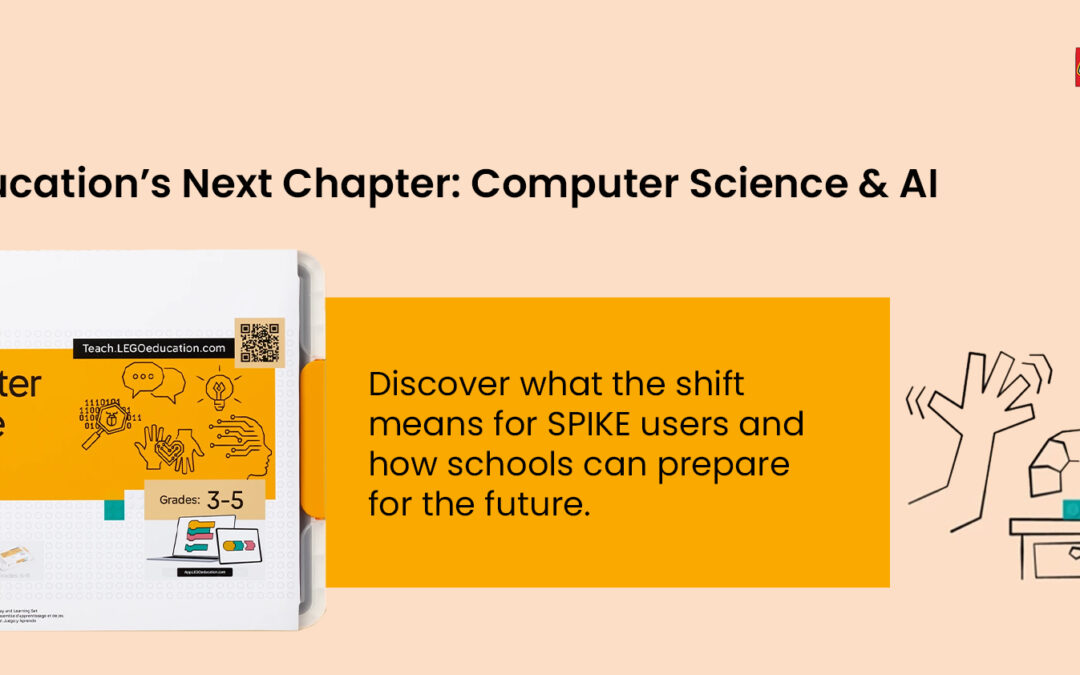
The LEGO Education Computer Science & AI Set 45522 is designed to support hands-on learning in Computer Science and AI for middle school classrooms. It combines physical components, coding tools, and curriculum resources to help educators deliver structured learning experiences.

LEGO® Elements for Hands-On Learning

The set includes a collection of LEGO® elements that enable students to build a variety of models as part of their learning activities.

These elements are used within guided lessons to support:

  • Model building
  • Exploration of concepts
  • Iterative design

The focus is on using physical models as part of the learning process rather than standalone construction.

Hardware Components

The kit includes key electronic components that allow models to interact with code:

  • 1 Double Motor
  • 1 Single Motor
  • 1 Color Sensor
  • 1 Programmable Controller

These components are used within lesson activities to help students explore how inputs and outputs work in programmed systems.

Classroom-Ready Accessories

To support classroom implementation, the set also includes:

  • Connection elements
  • USB charging cable
  • Storage solution for organization

These components are designed to support ease of use and classroom management.

Coding Environment

The solution uses the LEGO® Education coding environment, which features a block-based interface suitable for middle school learners.

Key characteristics:

  • Visual, block-based coding
  • Compatible with supported devices
  • Designed for classroom use

Students use this environment to create programs that control the hardware components included in the set.

Structured Lesson Content

The set is supported by a sequence of curriculum-aligned lessons designed for Grades 6–8.

The content introduces key Computer Science concepts, including:

  • Sequencing and logic
  • Control structures (such as loops and conditionals)
  • Variables and functions
  • Introductory AI and data concepts

Lessons are designed to be delivered progressively, supporting concept development over time.

Teacher Support Materials

Educators are provided with resources to support lesson delivery, including:

  • Lesson plans
  • Teaching guidance
  • Classroom presentation materials
  • Assessment support

These materials are intended to help teachers facilitate learning experiences and manage classroom activities effectively.

Introduction to AI Concepts

The solution includes activities that introduce students to foundational ideas related to artificial intelligence, such as working with data and understanding how systems can make decisions based on inputs.

These concepts are explored through guided, age-appropriate learning experiences.

ICT Curriculum for Schools: A Complete Scope & Sequence Guide for K–12

ICT Curriculum for Schools: A Complete Scope & Sequence Guide for K–12

In today’s rapidly evolving digital world, schools are under increasing pressure to prepare students with future-ready skills. From coding and artificial intelligence to digital literacy and problem-solving, ICT education is no longer optional—it’s essential. However, one of the biggest challenges schools face is not what to teach, but how to structure it effectively across grade levels.

This is where a well-defined scope and sequence becomes critical.

What is Scope and Sequence in ICT Education?

A scope and sequence are a structured framework that outlines:

  • What topics are taught
  • When they are introduced
  • How skills progress over time

Instead of teaching ICT topics randomly, this approach ensures a logical flow of learning from basic to advanced levels. It provides clarity for educators and consistency for students, making learning more meaningful and measurable.

Why Schools Need a Structured ICT Curriculum

Many schools still follow fragmented ICT teaching methods—introducing tools or concepts without a long-term plan. This often leads to:

  • Gaps in student knowledge
  • Repetition of basic skills
  • Lack of progression in coding or computational thinking

A structured ICT curriculum solves this by creating a clear learning pathway. It ensures that students build prior knowledge year after year, developing both confidence and competence.

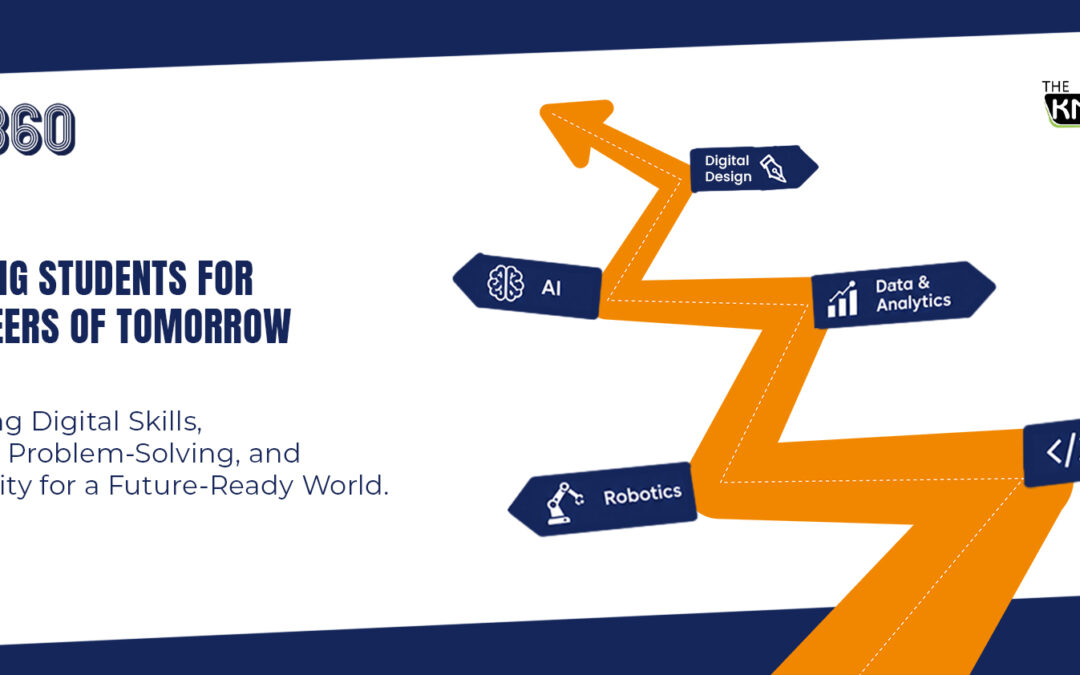
A Progressive Learning Journey (Grades 1–12)

A strong scope and sequence framework divides learning into stages, ensuring age-appropriate skill development.

1. Primary Level (Grades 1–3): Building Foundations

At this stage, students are introduced to:

  • Basic computer skills
  • Digital creativity tools
  • Simple problem-solving activities

The focus is on exploration and confidence-building, helping young learners become comfortable with technology.

2. Junior Level (Grades 3–6): Developing Core Skills

Students begin to:

  • Create presentations and digital projects
  • Learn basic research skills
  • Explore introductory coding concepts

This stage introduces structured thinking while maintaining creativity and engagement.

3. Intermediate Level (Grades 6–9): Expanding Technical Knowledge

Here, students move into more advanced areas such as:

  • Programming (block-based to text-based)
  • Web design fundamentals
  • Data handling and analysis

The goal is to build logical thinking and real-world application skills.

4. Senior Level (Grades 9–12): Future-Ready Learning

At the highest level, students engage with:

  • Python programming
  • Artificial Intelligence concepts
  • App development and automation

This prepares students for higher education and careers in technology-driven fields.

Key Skills Developed Through a Structured ICT Curriculum

A well-planned scope and sequence ensure students gain:

  • Coding & Programming Skills – from basic logic to advanced languages
  • Digital Literacy – essential for modern communication and productivity
  • Critical Thinking – solving real-world problems using technology
  • Creativity & Innovation – building projects, apps, and digital solutions
  • AI Awareness – understanding emerging technologies

These are not just academic skills—they are life skills for the digital age.

Flexibility for Schools and Educators

One of the biggest advantages of a structured ICT framework is flexibility.

Schools can:

  • Adapt content based on curriculum (CBSE, IB, British, etc.)
  • Choose modules based on infrastructure and student level
  • Integrate ICT with other subjects

This makes it easier to implement without disrupting existing academic structures.

From Random Learning to Strategic Growth

Without a defined roadmap, ICT education becomes inconsistent and ineffective. But with a clear scope and sequence, schools can transform their approach from:

  • Structured progression
  • Skill-based learning
  • Long-term mastery

This shift is crucial in building students who are not just tech users, but innovators and problem-solvers.

Conclusion: Building Future-Ready Schools

The future of education lies in structured, skill-driven learning. A well-designed ICT curriculum with a clear scope and sequence ensures that students are not left behind in the digital revolution.

For schools aiming to stay ahead, the question is no longer whether to implement ICT—but how effectively it is structured.

Because when learning is planned with purpose, students don’t just learn technology—they learn how to shape the future with it.

Introducing LEGO® Education Computer Science & AI

Introducing LEGO® Education Computer Science & AI

In today’s rapidly evolving digital world, Computer Science and Artificial Intelligence (AI) are no longer optional subjects—they are essential skills for future-ready students. Schools are actively seeking innovative ways to teach these complex topics in an engaging and meaningful way.

That’s where LEGO® Education Computer Science & AI comes in—a complete, hands-on learning solution designed specifically for Grades 6–8 classrooms.

Why Computer Science & AI Matter in Middle School

Middle school is a critical stage where students transition from basic concepts to more advanced thinking skills. Introducing coding and AI at this stage helps students:

  • Develop computational thinking
  • Enhance problem-solving abilities
  • Build creativity and innovation skills
  • Understand real-world technology applications

Traditional teaching methods often struggle to make these subjects engaging. Students may learn theory—but lack practical understanding.

What Makes LEGO® Education Different?

Unlike conventional approaches, LEGO® Education Computer Science & AI focuses on learning by doing.

Students don’t just learn concepts—they:

  • Build interactive models
  • Code using intuitive programming tools
  • Experiment with real-world scenarios
  • Solve meaningful challenges

This hands-on approach ensures deeper understanding and long-term retention.

Designed for Grades 6–8 Classrooms

This solution is carefully structured to align with middle school learning needs. It offers:

✔️ Curriculum-Aligned Lessons

Ready-to-use lesson plans that integrate seamlessly into school curricula.

✔️ Teacher Support

Comprehensive teaching resources, guides, and training to empower educators.

✔️ Progressive Learning Path

Students move from basic coding concepts to advanced AI applications step by step.

Real-World Learning Experiences

One of the biggest advantages of LEGO® Education Computer Science & AI is its focus on real-world problem solving.

Students engage in activities like:

  • Creating smart systems
  • Understanding how AI makes decisions
  • Building solutions for everyday challenges

This not only boosts technical knowledge but also builds confidence and collaboration skills.

Key Benefits for Schools

Implementing this solution helps schools:

  • Deliver future-ready education
  • Increase student engagement in STEM subjects
  • Bridge the gap between theory and practice
  • Position themselves as innovation-driven institutions

Why Schools Are Adopting Hands-On AI Learning

Globally, schools are shifting toward experiential learning models. Solutions like LEGO® Education stand out because they combine:

  • Physical learning (building)
  • Digital learning (coding & AI)
  • Critical thinking (problem-solving)

This integrated approach ensures students are not just consumers of technology—but creators.

Bring the Future of Learning to Your Classroom

If your school is looking to introduce Computer Science and AI in an engaging, practical way, LEGO® Education offers the perfect solution.

Give your students the opportunity to build, code, and solve real-world challenges—all in one powerful learning experience.

Book a Demo Today

Ready to transform your classrooms?

👉 Book a demo today and explore how LEGO® Education Computer Science & AI can redefine learning in your school.

Inquiry-Based Science Learning for Students with LEGO® Education Science

Inquiry-Based Science Learning for Students with LEGO® Education Science

Every great discovery begins with a question. In today’s classrooms, encouraging students to ask questions, explore ideas, and test their understanding is essential for meaningful learning. This is where inquiry-based science learning for students plays a powerful role.

LEGO® Education Science is designed to bring this approach into the classroom by transforming curiosity into hands-on exploration. Instead of simply memorizing concepts, students actively engage in learning by investigating, experimenting, and discovering how the world works.

The Power of Curiosity in Science Learning

Curiosity is the foundation of scientific thinking. When students ask questions, they begin to think critically and explore possible solutions.

Traditional teaching methods often focus on providing answers. In contrast, inquiry-based learning encourages students to:

  • Ask questions
  • Investigate ideas
  • Test hypotheses
  • Draw conclusions

LEGO® Education Science supports this process by creating an environment where curiosity is not only encouraged but also structured into the learning experience.

Learning Through Exploration and Discovery

Hands-on exploration helps students understand scientific concepts more effectively. With LEGO® Education Science, students engage in activities that allow them to build, experiment, and observe outcomes in real time.

This approach helps students:

  • Understand cause-and-effect relationships
  • Develop analytical thinking
  • Connect theory with real-world applications

By actively participating in experiments and problem-solving tasks, students gain a deeper and more lasting understanding of science concepts.

Encouraging Confidence Through Experimentation

One of the key benefits of inquiry-based learning is that it builds student confidence. When students are given the freedom to explore and test their ideas, they become more comfortable with trial and error.

LEGO® Education Science creates a safe learning environment where:

  • Mistakes are part of the learning process
  • Students are encouraged to try new ideas
  • Learning becomes a journey rather than a fixed outcome

This helps students develop resilience and confidence in their abilities.

Developing Critical Thinking and Problem-Solving Skills

Inquiry-based science learning goes beyond understanding concepts—it helps students develop essential life skills.

Through structured activities, students learn how to:

  • Analyze problems
  • Think logically
  • Evaluate results
  • Improve their solutions

LEGO® Education Science integrates these skills into every learning experience, ensuring that students are not just learning science but also learning how to think like scientists.

Supporting Teachers in Modern Classrooms

For educators, implementing inquiry-based learning can sometimes be challenging. LEGO® Education Science provides structured lesson plans and resources that make it easier to adopt this approach in the classroom.

Teachers benefit from:

  • Ready-to-use lessons
  • Guided inquiry frameworks
  • Hands-on classroom activities
  • Easy integration into existing curriculum

This support allows teachers to focus on facilitating learning rather than preparing complex lesson structures.

Conclusion

In a rapidly evolving world, developing curiosity, critical thinking, and problem-solving skills is more important than ever. Inquiry-based science learning for students provides a powerful way to achieve this.

With LEGO® Education Science, classrooms become spaces where students ask questions, explore ideas, and discover answers through hands-on learning. By nurturing curiosity, educators can help students build confidence and develop a lifelong love for learning.

Introducing the Future of Computer Science & AI Learning with LEGO® Education

Introducing the Future of Computer Science & AI Learning with LEGO® Education

Education is entering a new phase where artificial intelligence (AI) and computer science are no longer optional—they are essential. Schools today must equip students with the skills needed to understand, apply, and innovate with emerging technologies.

This is where LEGO® Education AI learning for schools is transforming classrooms. By combining hands-on building, coding, and real-world problem-solving, LEGO® Education introduces students to computer science and AI in a meaningful and engaging way.

To help educators explore this transformation, we are hosting an exclusive webinar on 14th April, showcasing how schools can bring AI learning into their classrooms effectively.

A New Approach to Computer Science & AI Learning

Unlike traditional methods that focus heavily on theory, LEGO Education emphasizes hands-on, collaborative learning.

Students don’t just learn about technology—they:

  • Build models using LEGO® elements
  • Code using intuitive block-based platforms
  • Explore AI concepts through real-world applications

This approach helps students understand complex topics like algorithms, data, and automation in a simplified and engaging manner.

LEGO® Education’s latest Computer Science & AI solutions provide standards-aligned, inquiry-based lessons that are easy for teachers to implement and meaningful for students.

Making AI Concepts Simple and Accessible

AI can often seem like a complex and abstract subject. LEGO® Education breaks this barrier by introducing AI through interactive learning experiences.

Students explore:

  • How computers learn from data
  • AI classification and decision-making
  • Real-world applications of AI

These lessons are designed to be age-appropriate and accessible, ensuring that every student can understand and engage with AI concepts regardless of prior experience.

Hands-On Learning That Builds Future Skills

One of the biggest advantages of LEGO® Education is its focus on learning by doing.

Students:

  • Work in teams to solve challenges
  • Test and improve their solutions
  • Develop creativity and critical thinking

This hands-on approach not only improves understanding but also builds essential future skills such as:

  • Problem solving
  • Collaboration
  • Computational thinking

Research and global insights also highlight that educators see computer science as equally important as core subjects like math and science, reinforcing the need for such solutions in schools.

Designed for Real Classrooms

LEGO® Education solutions are built with teachers in mind. They include:

  • Ready-to-use lesson plans
  • Structured curriculum pathways
  • Easy-to-use coding platforms
  • Minimal preparation time

With 45-minute, standards-aligned lessons, teachers can seamlessly integrate AI and computer science into their existing curriculum.

Join Our Webinar – 14th April

To help schools understand how to implement AI and computer science learning effectively, we are hosting a live webinar on 14th April.

What You’ll Learn:

  • How to introduce AI concepts in classrooms
  • How LEGO® Education simplifies coding and robotics
  • Practical ways to integrate AI into your curriculum
  • How to build future-ready skills in students

This session is ideal for:

  • School leaders
  • ICT teachers
  • STEM coordinators
  • Educators looking to adopt AI learning

Why You Should Attend

As technology continues to evolve, schools must adapt to prepare students for future careers. This webinar will give you practical insights into how LEGO® Education AI learning for schools can help you achieve that.

It’s not just about teaching technology—it’s about building thinkers, innovators, and problem solvers.

Conclusion

The future of education lies in integrating AI, coding, and hands-on learning into everyday classrooms. LEGO® Education provides a powerful way to make this transition smooth, engaging, and effective.

Don’t miss the opportunity to explore this transformation.

Register now for the 14th of April webinar and take the first step towards future-ready learning.