

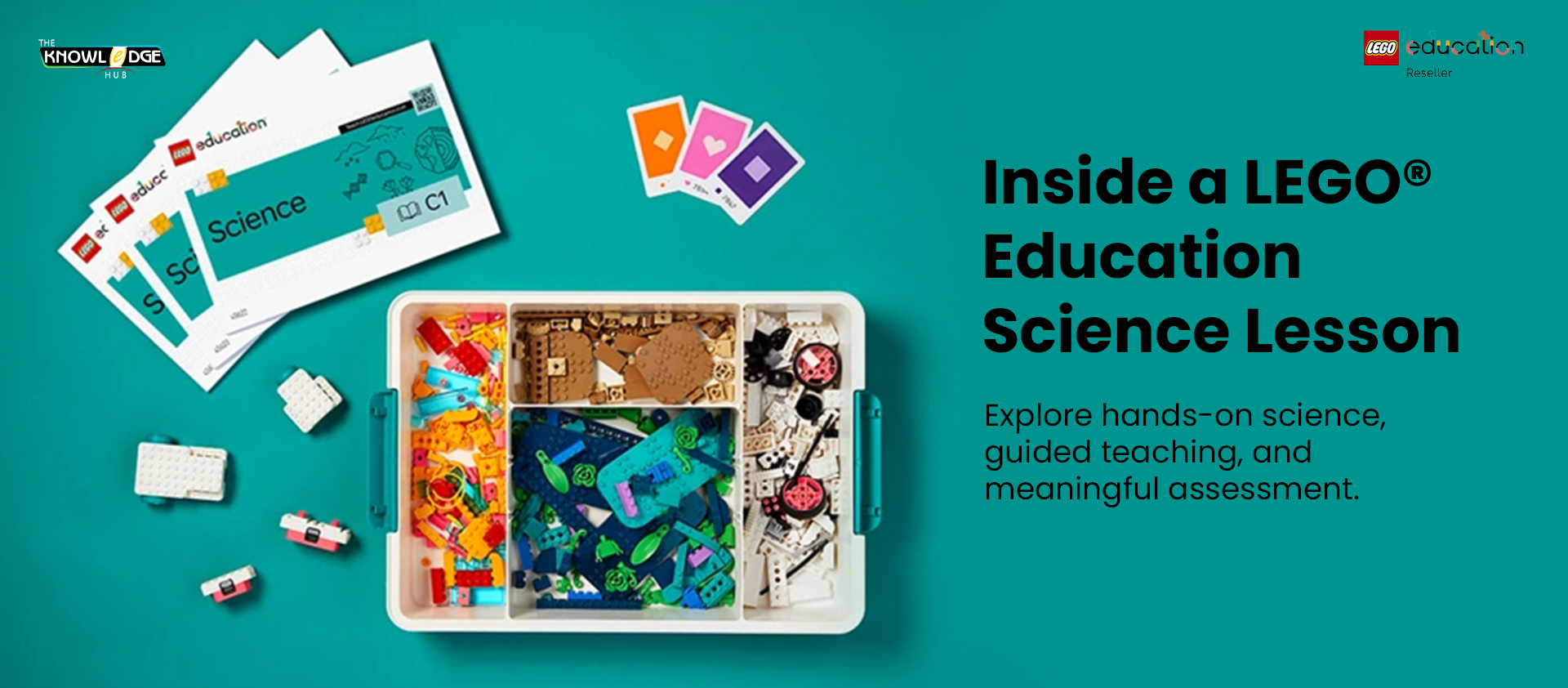
Science learning becomes more meaningful when students can investigate questions, explore concepts, and demonstrate their understanding through hands-on experiences. Instead of relying only on explanations and textbooks, teachers can create opportunities for students to actively participate in the learning process.
A LEGO® Education Science lesson brings these elements together through a structured approach to science teaching. By combining hands-on learning experiences with teacher guidance and assessment opportunities, the solution helps educators bring scientific concepts into the classroom.
For teachers looking to make science lessons more engaging, understanding how this approach works can be a useful starting point.
What Is a LEGO® Education Science Lesson?
A LEGO® Education Science lesson is designed to support active, hands-on science learning. Students explore scientific ideas through guided activities, investigate questions, and apply their understanding as they work through a lesson.
The approach connects scientific concepts with practical learning experiences, helping students engage with what they are learning rather than simply memorising information.
For teachers, the lesson structure provides a framework for guiding classroom activities while giving students opportunities to observe, investigate, discuss, and explain their thinking.
1. Start with a Scientific Question
Every meaningful investigation begins with a question.
A science lesson can introduce a phenomenon or challenge that encourages students to think about how something works and why it happens. Teachers can use this starting point to activate prior knowledge, encourage curiosity, and invite students to share their ideas.
For example, students might investigate how forces affect the movement of an object or explore how structures can be made more stable.
Starting with a question gives students a purpose for learning and encourages them to approach science through investigation.
2. Explore Scientific Concepts Through Hands-On Learning
Once students understand the question, they can begin exploring the concept through practical activities.
With LEGO® Education Science, hands-on experiences provide opportunities for students to investigate ideas, test their thinking, and connect classroom learning with observable outcomes.
As students work through activities, they can compare results, discuss observations, and reconsider their initial ideas. These experiences encourage active participation and provide opportunities to develop scientific reasoning and problem-solving skills.
This approach can also help teachers create a classroom environment where asking questions, testing ideas, and learning from mistakes are part of the process.
3. Guide Learning with Teacher Resources
Effective hands-on learning requires thoughtful lesson planning and facilitation.
The LEGO® Education Science Teacher Portal provides access to teacher resources, including lesson presentations, facilitation notes, and assessment resources. These materials help teachers prepare for lessons and guide students through the learning experience.
Ready-to-use resources can support lesson delivery by helping educators understand the learning objectives, organise activities, and facilitate classroom discussions.
This structure allows teachers to focus on student engagement while maintaining a clear direction throughout the lesson.
4. Make Student Understanding Visible
A science lesson should do more than introduce a concept. It should also create opportunities for students to demonstrate what they understand.
Evaluation and assessment activities help teachers gather insights into student learning. Through their responses, explanations, and practical work, students can show how they interpret scientific ideas and apply their knowledge.
These opportunities can help teachers identify areas that may need further explanation, revisit misconceptions, and plan appropriate next steps.
When assessment is integrated into the learning experience, it becomes part of the teaching process rather than simply an activity at the end of a lesson.
5. Bring Structure to Everyday Science Teaching
A well-structured science lesson connects curiosity, exploration, teacher guidance, and assessment.
LEGO® Education Science brings these elements together to support a classroom experience in which students actively engage with scientific concepts while teachers have resources to guide instruction.
For schools implementing or strengthening their STEM education programmes, this approach offers a way to connect practical learning experiences with planned teaching objectives.
Teachers can explore related approaches through STEM education solutions in the UAE and discover how hands-on learning can support the development of scientific thinking and problem-solving skills.
Conclusion
A LEGO® Education Science lesson is about more than building or completing an activity. It is about creating a structured learning experience in which students investigate questions, explore scientific concepts, and demonstrate their understanding.
With hands-on learning experiences and supporting teacher resources, LEGO® Education Science helps educators bring practical science learning into the classroom.
Discover LEGO® Education Science with Knowledge Hub Dubai to explore how structured, hands-on learning can support your school's science teaching and STEM education goals.