
Announcing Fun Coding Activities by Programming the MatataStudio

Announcing Fun Coding Activities by Programming the MatataStudio

Attention to all young coders! Today, let’s explore the world of programming with our friend MatataBot by undertaking fun coding activities. This cute little Robot needs your help—he overslept and needs to complete his morning tasks before rushing off to work. The best part? You get to help him out by programming the shortest route to get everything done!

The Challenge

Activity Name: Hurry Up! | Time: 45 minutes | Appropriate Age: 7-9 years old

MatataBot has three important tasks to finish before he can leave home:

  1. Go to the restroom
  2. Change clothes
  3. Eat breakfast (which includes preparing breakfast first!)

Now, here’s the catch: he has to do this as quickly as possible! Your job is to figure out the simplest route MatataBot can take, and then code it using tangible coding language.

Getting Started

Let’s break down what you’ll be doing in this lesson:

  1. Planning the Route: As a group, you’ll need to sit down and map out the best way for MatataBot to complete his tasks. Think about which tasks can be done at the same time or in the quickest order.
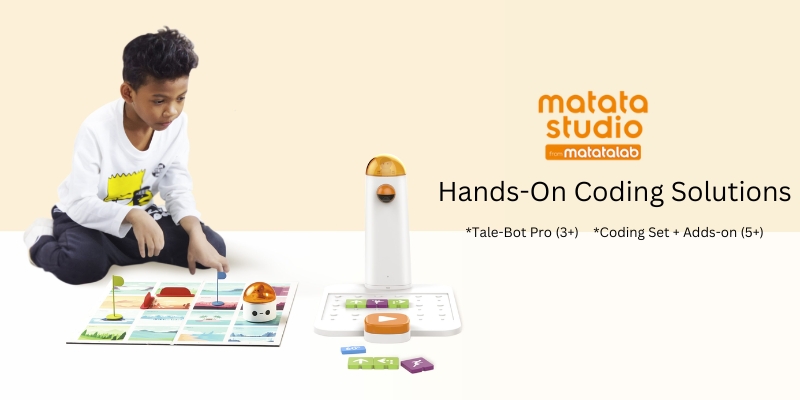
  2. Coding the Program: Once you’ve decided on the route, it’s time to code! You’ll use Matatalab’s Lite coding mode to program MatataBot’s movements.
  3. Testing and Debugging: After you’ve programmed the route, you’ll test it to see if MatataBot can complete his tasks. If he is not able to make it in time, don’t worry! You’ll debug your program to fix any errors and try again.
  4. Iterating: Finally, think about how you can simplify your program. The goal is to make it as short as possible while still getting everything done!

Planning the Route

As you gather with your group, start brainstorming. Here’s an example route you might consider:

  1. Go to the restroom (first task)
  2. Enter the kitchen (to prepare breakfast)
  3. Prepare breakfast
  4. Leave the kitchen
  5. Change clothes
  6. Back to the kitchen (to eat breakfast)
  7. Eat breakfast
  8. Exit the home (now ready for work!)

This sequence allows MatataBot to complete his tasks without doubling back unnecessarily—except for the kitchen since he needs to prepare breakfast before eating

Coding Time: Fun Coding Activities!

Now that you have a route planned, it’s time to translate that into code! You’ll be using specific commands to direct MatataBot.

  • Each command represents a movement or action.
  • Sequence matters, especially when tasks depend on each other (like preparing breakfast before eating).

As you code, keep an eye out for any potential shortcuts. Maybe there’s a way to combine tasks or reorder them for efficiency!

Testing Your Program

Once your code is ready, it’s testing time! Send MatataBot on his adventurous journey and watch him complete the tasks.

  • Did MatataBot miss any tasks?
  • Did he take too long to complete any part of the journey?
  • Are there any errors in the sequence of commands?

After fixing any issues, try running the program again. Remember, coding can be mastered only by using trial and error technique!

Iteration and Simplification

Now that you’ve got a working program, challenge yourselves to simplify it. Can you reduce the number of commands while working with fun coding activities? Perhaps you can combine some movements or eliminate unnecessary steps. The shorter the program, the better!

Wrapping Up

At the end of the lesson, each group will present their solution. This is a great time to share what you learned and what challenges you faced.

Here are a few questions to ponder during your presentation:

  • Did you complete today’s task?
  • Which group created the shortest program?
  • What was the most tedious part of the project? What did you find most interesting?
  • Did you encounter any problems while coding? How did you solve them?

Sharing experiences helps everyone learn fun coding activities, and you might even pick up new tips from your classmates!

Helping MatataBot navigate his morning tasks teaches us not just about programming, but also about problem-solving and teamwork. Remember, coding isn’t just about getting it right on the first try-it’s about exploring, testing, and improving! So next time you wake up late, remember MatataBot and think about the best way to get everything done in a hurry. Happy coding, everyone!

Contact us

Fill in your details below or send us an email on info@knowledge-hub.com

Producing Fantastic Radio Drama with a School Radio Program

Producing Fantastic Radio Drama with a School Radio Program

Life without entertainment and drama would be pretty dull! We often think of drama as something we see on stage or in movies, but radio drama is different. It’s a unique way of telling stories that have kept listeners hooked since the 1930s and 1960s. Back then, it was one of the top forms of entertainment worldwide. Even today, radio drama is still going strong, and schools are incorporating it into classrooms through in-house school radio programs. This opens up some exciting ways for students to learn. But what exactly makes radio drama so good for them? Let’s find out.

Bringing Stories to Life Through Radio

Radio drama is a form of audio storytelling where actors perform a script, using voices, sound effects, and music to create a vivid scene in the listener’s mind. It’s like a movie, but without the visuals, letting your imagination fill in the details. This unique art combines elements of theater and sound design, making it a captivating blend of spoken word and audio craftsmanship.

For example, The Archers, a popular British radio drama, has aired in the UK for decades. In the U.S., Welcome to Night Vale mixes mystery and humor, while in South Africa, the long-running Umuzi Wezinsizwa reflects local stories and culture.

Transforming Learning with Radio Dramas

Students can create their own radio dramas based on history lessons, science experiments, or literary classics. They can write scripts, voice characters, design sound effects, and even produce their own jingles. For example, a history class could create a radio drama about the American Revolution, bringing historical figures like George Washington and Benjamin Franklin to life through dialogue and sound effects. Alternatively, a science class could produce a school radio program explaining complex concepts like photosynthesis engagingly.


The Benefits of Radio Dramas in Education

 Improves Listening Skills

For students who are auditory learners, radio drama is a perfect fit—it helps them grasp concepts better through listening. Plus, radio dramas can be enjoyed on the go, whether traveling to school or running errands, making it a convenient way to learn anywhere.

Enhances Imagination

Since there are no visuals, students are encouraged to create mental images of the characters, settings, and events based on the dialogue. This active engagement boosts creativity, helping students become more inventive thinkers.

Fostering Collaboration

Drama involves roles like scriptwriting, sound design, voice acting, and editing. Working together on these tasks, students learn collaboration and develop leadership skills. Taking on roles like directors, sound engineers, or actors enables students to guide their peers and make creative decisions. For example, as a director, one oversees the entire production, while the voice actors bring characters to life. Lastly, students who volunteer to be sound engineers must ensure delivering high-quality audio.

Vocabulary Enrichment

Writing and performing a radio drama through a school radio program requires careful consideration of language, tone, and expression. Clear and accurate pronunciation helps the audience understand the dialogue and appreciate the script. By varying pitch, tone, and pace, voice actors can create vivid characters and evoke strong emotions among the listeners. Grammar, vocabulary, and creative writing skills are all improved as students develop engaging narratives.

Gaining Technical Skills

While creating a radio show with the School Radio Starter Package, students learn important technical skills. They operate the D&R Webstation broadcast mixer, balancing sound levels and managing different audio sources. Using dynamic microphones, they capture high-quality audio and understand proper placement. The Myriad 6 Playout software teaches them to schedule tracks and manage playlists for live or pre-recorded shows.

Unleashing Empathy

Radio dramas boost empathy and emotional intelligence. By playing diverse characters, students understand different perspectives. Voice acting helps them express emotions effectively, improving communication skills and fostering deeper connections. Imagine a student playing an orphan, experiencing loneliness and loss. By embodying this character, they learn to empathize and become more caring individuals.

As we’ve seen, radio drama is more than just entertainment; it’s a powerful learning tool. Educators can use a school radio program to motivate children to become more enthusiastic learners and well-rounded individuals. By engaging in extracurricular activities, students gain confidence, improve communication skills, and cultivate empathy.

Contact us

Fill in your details below or send us an email on info@knowledge-hub.com

Interesting Super Scary Stories for Middle School Readers

Interesting Super Scary Stories for Middle School Readers

Halloween, which falls in October, is a festive and eerie occasion. Now is the ideal time of year to pull out those spooky books from the loft and start reading some spine-tingling stories. Many scary stories for middle school students soon become their top choice. These captivating tales enthrall readers and keep them on the tip of their seats, in contrast to other genres that may seem repetitious. Prepare for a terrifying reading experience this season as we examine the spine-tingling selections from the Capstone Library’s collection!

I.M. Dead: The Master of Horror

The “I.M. Dead” series, aimed at middle-school students, introduces reading enthusiasts to terrifying fictitious horror author in the world. Each chapter of this book is a separate story with spooky animals, eerie events, and otherworldly terror. Despite their eerie content, these stories have satisfying narratives that allow children to experience the terror without becoming overwhelmed. For those who wish to push their bravery, these novels are an excellent introduction to scary stories because of their gripping details and quick-paced narrative.

Library of Doom Graphic Novels

With its graphic novel format, the “Library of Doom” elevates horror to a new level. The exploits of the courageous librarian who faces off against terrible monsters and scary library volumes are vividly depicted in this series. Readers will be pulled into the enigmatic universe where the Librarian battles to defend the planet from evil forces thanks to captivating artwork and an engaging plot. These graphic novels are ideal for children who may find regular chapter books less appealing but are still searching for terrifying stories that have captivating narratives and comic book illustrations.

Stories to Scare Your Socks Off!

The spine-tingling stories in this collection cover a variety of frightful topics, from ghosts and sorcery to zombies and monsters. With eight thrilling tales in each book, these scary stories for middle school readers are perfect for quick reads during Halloween, campouts, or sleepovers. Four well-known horror writers, including best-selling author Michael Dahl, bring each story to life with chilling illustrations and gripping prose. In addition to the terrifying tales, the books include writing prompts and discussion questions, encouraging readers to dive even deeper into the world of scary stories for middle school

Ghostly Graphics

Ghost stories have always captivated audiences, and “Ghostly Graphics” brings some of the most infamous legends to middle school readers. Ideal for Grades 4-6, this series covers well-known tales like the Bell Witch, the Flying Dutchman, La Llorona, and Bloody Mary. The stories are presented in graphic novel style with vivid illustrations that complement the eerie text, making them accessible to readers of all levels. This series is especially great for kids who want to explore scary stories for middle school but may struggle with longer books.

You Choose: Haunted Adventures

“You Choose: Haunted Adventures” series offers an exciting approach to explore the unknown fantasies for readers. These novels, which are meant for students in Grades 3-5, allow readers to make decisions that affect the plot as they move through different plots – castles, graves, haunted hotels, and battlegrounds. There is always a fresh way to enjoy the book because every decision has a distinct effect. For middle school readers who enjoy a little interaction in their horror stories, this is an excellent choice.

Why These Scary Stories for Middle School Are a Must-Read!

In addition to providing children with an enjoyable scare, scary stories for middle school readers can help develop critical reading skills. Young readers can enjoy the pleasure of being frightened while learning to predict events, spot plot twists, and comprehend character motivations through eerie stories. Additionally, middle school horror stories can persuade reluctant readers to take up a book since the suspense and excitement keep them turning the page.

There is something for every child horror enthusiast in these series, which accommodates a range of interests and reading abilities. The appropriate scary stories may turn reading into an adventure rather than a chore, regardless of whether students are embracing graphic novels, interactive books, or conventional chapter books.

Spooky Season Tips for Parents and Teachers

Consider incorporating some fun reading activities:

  • Read-aloud sessions: Bring the stories to life with dramatic readings that will captivate your audience.
  • Spooky storytelling contests: Encourage kids to write their own short scary stories and share them with their classmates.
  • Haunted book club: Form a club where students can discuss the stories they’ve read and share their favorite spooky books.

Embrace the chills, and let young readers immerse themselves in scary stories for middle school that will have them begging for just one more page. This spooky season, these books are bound to be a hit with students eager for a thrilling read!

Contact us

Fill in your details below or send us an email on info@knowledge-hub.com

Revealing the Value of the LEGO® Education Coding Express App

Revealing the Value of the LEGO® Education Coding Express App

To produce a more comprehensive educational experience in schools, integrated learning techniques, combine digital applications with real-world components. LEGO® Education kits offer the best of both worlds by combining interactive technology with hands-on activities. In this blog, we’ll focus on the LEGO® Education Coding Express App, which works hand-in-hand with the LEGO® Coding Express set designed for kindergarten students. This combination is beneficial for youngsters as they have the opportunity to get entertained and investigate coding topics while having fun!

LEGO® Education Coding Express App

A strong addition to the LEGO Coding Express kit is the LEGO® Education Coding Express App which provides a variety of coding tasks and activities. This software is made to appeal to both kids and teachers, providing an ideal platform for beginners to learn the fundamentals of coding.

Key Features of the App:

  • Coding Activities: The LEGO® Education Coding Express App provides a range of coding exercises that correlate with the STEAM academic curriculum. For example; consider the O-shaped track exercise, which presents the idea of ‘loops’. Children simply need to launch the app and go to the relevant section to access the Model Card for this activity. The Model Card offers comprehensive guidance on how to use the application to construct a train looping sequence.
  • Challenges: In addition to the structured activities, the app also provides coding challenges that encourage children to think creatively and apply their coding skills in new and exciting ways. These challenges can be customized to suit different learning styles and levels of difficulty.
  • Support for Teachers: Teachers need to be well-versed in lesson planning in order to interest a class of kids learning to code. The availability of comprehensive manuals that streamline the teaching process is one of LEGO® Education’s advantages. Thanks to the Coding Express App, the lesson plans and activities are created in advance for teachers to use.
  • Parent Support: By using the app, parents may take an active role in their child’s coding adventure. Kindergarten-level coding assignments can be accessed for at-home learning with a single click, giving parents the ability to track their child’s development. This practical method is an excellent means for parents to assist and stimulate their child’s coding development.


How does the App Work?

Both kids and adults can easily utilize the LEGO® Education Coding Express App thanks to its intuitive and user-friendly design. The app’s straightforward layout, along with its clear instructions and visual clues, make sure users can grasp and finish the tasks with ease.

The app also incorporates physical elements; like the DUPLO bricks, motorized train, colored action coding blocks, and other components. This allows children to connect their digital experiences with tangible creations.

Benefits of Using the App:

  • Improved Learning: Children can learn coding fundamentals in an entertaining and captivating way with the LEGO® Education Coding Express App. The software fosters a favorable attitude in kids toward coding and technology by fusing learning with play.
  • Better Problem-Solving Ability: Coders are usually able to think critically and approach challenges methodically. Children can practice these abilities and cultivate a growth attitude.
  • Future-Readiness: In the modern world, knowing how to code is becoming more and more necessary. Those who start early may build a solid foundation in coding and gear up for the future.
  • Hands-on Activity: The activity in Lesson 3 of set involves building an O-shaped track and programming a train to loop around it. Students will learn about repeating sequences and use action bricks to control the train’s actions. They will also explore the difference between O-shaped and double-ended tracks.

With its many advantages, the app piques the interest of young students as early as age 5. Early acquisition of tech knowledge and abilities lays a solid basis for the future.

Contact us

Fill in your details below or send us an email on info@knowledge-hub.com
Captcha validation failed. If you are not a robot then please try again.

Introducing AI Educational Robots: Shaping the Future of Learning

Introducing AI Educational Robots: Shaping the Future of Learning

Recognizing the significance of preparing children for an AI-driven future, schools are turning to AI teaching robots as cutting-edge tools to improve learning experiences. These intelligent companions provide a hands-on way to comprehend AI ideas, making learning more enjoyable and applicable. Let’s look at the benefits of AI educational robots and how they can improve the classroom.

Q: What is an AI educational robot?

A: An AI educational robot is like a buddy who is super smart and wants to teach you about Artificial Intelligence. It is a medium to help students learn programming and see how AI works in real word. The robot friend can even think, understand, and respond to different situations.

Q: Why should schools introduce AI educational robots?

A: There is a lot of competition among schools these days to prove that they provide the greatest education available. Parents are more concerned than ever with the quality of their children’s education, and they want to ensure that it is relevant to the world in which they grow up. Think about it: AI is everywhere, from our phones to smart homes. So, it makes sense for children to learn about it at a young age. The purpose is not only to educate kids with programming and technical skills, so they grow up to become future developers. This approach makes STEAM learning fun and enjoyable for children so that they are eager to learn and explore.

Q: How do AI educational robots help students?

A: AI educational robots can help students in numerous ways:

  1. Interactive Learning: Children learn more effectively when they can see and interact with what they are studying. Robots can be trained to answer students’ queries, solve complex tasks and make lessons more interactive.
  2. Hands-On Experience: According to research, active learning helps pupils recall approximately 93.5% of their knowledge, which is far higher than reading from a textbook. With a robot, children may touch, feel, and interact with it! This hands-on experience is extremely beneficial because it allows them to experiment, play, and generate their own creative ideas, which improves their learning and memory.
  3. Developing Essential Skills: Working with AI robots helps kids learn skills like coding, critical thinking, and creativity. These skills will be useful in many future careers, even if they don’t end up working in technology.

Q: Is it difficult for teachers to use AI educational robots in their lessons?

A: No, not at all! Even if your teachers aren’t technologically savvy, they’ll be able to deploy AI educational robots with ease. There are basic instructions, courses, and tutorials available to assist instructors in using the robots in a variety of areas, including science, math, and art.

Q: Will AI robots replace teachers?

A: No, artificial intelligence robots will not replace teachers. They’re there to help teachers and make learning more engaging. Consider them a teaching tool, similar to a computer or tablet. Teachers can employ robots to convey difficult subjects like; AI robots can provide personalized explanations and interactive exercises to help students grasp complex mathematical concepts like calculus or differential equations.

Q: Are AI educational robots safe for kids to use?

A: Yes, they are really safe. AI teaching robots are specifically intended for children, so they are safe, sturdy, and easy to use. They follow strict safety rules to ensure that children can use them without incident. Additionally, teachers are present to supervise and lead the learning process.

Q: How do schools get started using AI educational robots?

A: Schools can start by choosing an AI educational robot that fits their needs. There are many options available, some more advanced than others. The Nous AI Set by MatataStudio is a versatile educational robot designed for schools worldwide. It supports various AI functions like machine learning and speech recognition. Students can learn hands-on through data collection, programming, and building projects. The durable design and expandable modules allow for customization and growth. It’s more than just a robot; it’s a tool to inspire future AI innovators.

Let’s ensure AI becomes a tool for educational empowerment. By embracing AI educational robots, schools are paving the way for a future generation equipped to navigate and thrive in an AI-driven world.

Contact us

Fill in your details below or send us an email on info@knowledge-hub.com