
Easy Technology Projects for Kids at Home

Easy Technology Projects for Kids at Home

Easy Technology Projects for Kids at Home

Technology was and will always be an inevitable part of our lives. We have seen it evolve from the oldest centuries to the present day. The human race has incredibly outdone itself and has made tremendous progress. You name it and there has been advancement in technology in several areas be it aerospace, agriculture, architecture, artificial intelligence, business, communication, construction, education, electronics, energy, entertainment, manufacturing, medicine, nuclear power, space, transport, etc. Take Dubai for example, it was predominantly desert land and in the 21st century, it has remarkably become a top-notch Emirate of the United Arab Emirates. Like the West, Dubai has opportunities galore and it too has surpassed supreme levels of technology and indeed has the crème de la crème in terms of its affluent offerings for its residents. The other Middle East and GCC countries are also attracting people from over the globe to live and succeed here, in such places that reciprocate to technological growth in multi sectors.

Hence, in this fast-paced world, we have to be abreast at all times and keep moving along. One has to embrace innovation and every day is a work in progress in the littlest of each person’s capacity to contribute to the wellbeing of society where technology only goes uphill. There are still a few of us who prefer to be old school but the better obviously, would be to ace up our game and be tech savvy in all aspects of life to flourish collectively into even a brighter future that belongs to mankind. It is extremely imperative to utilize this technology wisely and to not misuse it for ulterior motives that are devastating, bringing doom to the very society that we wish truly prospers. Children are precious jewels to be smartly moulded. In fact, today’s gen-next kids are organically inclined towards technology from a small age and the ones who are not can be made to gravitate towards it by consciously getting them interested in ideas and things related to technology. The initial steps can be taken by introducing them to simple concepts through play, art, and craft. These will enlighten them with the current and the past technologies that were invented, will retain their interest while them being curious to learn more. You may have future astronauts, doctors, engineers, scientists, and plenty more in the making. Below mentioned are some easy technology projects for your kids at home.

Remembering Alexander Graham Bell

Neither we adults nor children can do without cellular technology. This great man invented the telephone in the 18th century and there has been revolution in the area of communication since then. This basic art and craft activity requires home items to make a string telephone with the help of paper cups and strings. Through this, children would learn how sound waves were first transferred. To demonstrate it, a tiny hole would have to be poked at the bottom of each cup. The approx. 20 meters string would have to be thread through each cup tying knots at each end of the cups. Then the parent and child can be positioned at a slight distance holding cups at either ends so that the string doesn’t touch anything. Now one person talks into the cup and the other listens while placing their cup on their ear and that is how the science behind it would be known to the child.

Secret Games

This is an absolute fun activity wherein the child will learn another science-based concept. Children love to play secret games and pass on notes to their friends all in good light. The child would write any message or draw any picture on a piece of white paper. With the aid of an adult, they would use a cotton swab and dip it in a solution of squeezed lemon juice mixed with water. That swab would be rubbed over the paper which would make the message or picture invisible. Then they would share the secret paper with their sibling and the other person would reveal the message for themselves by placing the paper under sunlight or by holding it close to a light bulb again being careful and being monitored by an adult. The learning aspect is that the water dilution to the lemon juice made it invisible and the lemon juice being a natural substance oxidizes and turns brown when it gets heat and thus the secret message or picture is revealed.

Globetrotters

Much as children enjoy secret games, they love to be navigators and search experts. This easy yet interesting activity would lead them to become travel enthusiasts and they could be happily globetrotting the world in the future. Parents can play quizzes and search games and help children navigate different places around the world on a digital world map or on digital maps of individual countries available on a computer. That way they would learn to read maps and get to know countries and their capitals and popular cities in every country. They would then be made to search for similar places on the corresponding physical world map or individual maps of countries. This is great learning for them and a good amalgam, combining digital technology and physical charts thereby strengthening Geography as well.

Coding

It is the in-thing with the children world over. Coding is known as the language of the future. These are technology based online lessons they can learn through any web-based learning platform. All the child needs at home is a computer or a laptop and an internet connection. Coding can be learnt easily without the child having any prior background with the same. It can begin as early as from eight years of age, going upwards. Coding teaches real text-based programming in a game-like manner. In simple terms, our computer functions when we give it a particular command or an order, that language here is known as a Code.

Bubble Fun

This is a most loved activity. It just gives one unimaginable joy blowing air bubbles and watching them glide in the air. There is a fun factor involved but it is excellent for building children’s oral motor skills and also helps them develop small muscles in their mouths. They are then able to eat and swallow easily and speak with clear sounds. In order to execute this task, a small hole would have to be made at the bottom base of a plastic or a paper cup. A straw would be made to pass through the hole halfway into the cup. Then the child has to dip the mouth of the cup into a bowl of bubble solution made with dish soap and water and then blow. They will gleefully see bubbles blowing in the air.

Movie time

Who doesn’t like watching movies and wouldn’t it be lovely to convert a room into a mini theatre at home? That is what this activity is all about. It is for slightly older children who can with the help of a shoebox and few other items build a smartphone projector for movie watching on a screen slide or an empty wall at home. The child would need a shoebox of which he or she would use one side to cut out a circle as per the diameter of the magnifying lens. The handle of any magnifying lens needs to be cut off and the round portion of the lens needs to be attached to one side of the shoe box. Prior to that the shoe box would have to be covered with black paper. Then once the lens is placed, the smartphone screen has to be positioned near the lens. The phone has to be supported by another cardboard for it to stay static and project the movie on the lens. The technology is that the lens will invert the video and that will be projected on the empty wall at home. The family can grab a bowl of popcorn and have an amazing time. Children can be made to feel so empowered by achieving such tiny feats.

TechnoKids’ brings to you computer-based lessons for schools, learning centers and home school. They have computer lesson plans for kids from primary to junior to intermediate to senior level. They integrate technology into the curriculum with project-based learning. ‘Techno Kids Computer Curriculum’ is a collection of technology projects that include engaging computer activities for children of all ages. Computer lessons have students apply knowledge to analyse information, collaborate, solve problems, and make decisions.

Contact us

The Pros and Cons of Multiple-Choice Questions used a Means for Evaluating the Child’s Knowledge

The Pros and Cons of Multiple-Choice Questions used a Means for Evaluating the Child’s Knowledge

The Pros and Cons of Multiple-Choice Questions used a Means for Evaluating the Child’s Knowledge

Multiple Choice Questions (MCQs) are the most fundamental questions included in the assessment sheet where the student has to choose the correct answer from the multiple options, to be able to answer the question. MCQs usually have a single correct ‘option’, however in few cases the student is asked to select ‘more than one’ options to justify the answer. Every subject has a section in the examination paper which is devoted to MCQs. Be it Math, GK, Science, or English, multiple choice format questions are popular means of evaluation.

Many competitive entrance exams in fields such as banking, MBA, and even UPSC (Union Public Service Commission) follow this format to admit the best of the best candidates to undertake the course.

Advantages of MCQs

One of the most prominent reason is that the answer is a part of the ‘four’ choices and students who struggle to remember facts, may recollect it by looking at the options. Other than this, the following are its advantages;

Easy to Create

Once you have a bank of important questions, the examiner can easily form the MCQs and also include different variations of the same question. In the digital age that we live in, there are tools that assist the educator in promoting important MCQs from the syllabus, thereby making the job of the teacher even easier. Markezy is one such easy to use platform that provides an online question bank across numerous subjects and also suggestions newer questions, as the syllabus is covered through the course of the sessions. Markezy has gained popularity in schools across Dubai and UAE, and is slowly gaining popularity in other regions across the globe.

Quicker Evaluation

Since the answer is pretty straightforward and pre-defined checking the answer sheets doesn’t take much time. Unlike essay type questions, one does not have to read two pages of lengthy answers and then assign marks. Markezy gives teachers the option to scan the exam paper and auto compute the score at just a click. This would mean eliminating errors in checking and reducing the hassle of carrying loads of paper home to check it in the wee hours of the night. If you wish to learn more about Markezy’s availability in GCC or other Middle East countries; visit Markezy

Elimination of Bias

Though exams are conducted and evaluated with utmost anonymity to avoid partiality while checking, there are instances where the teachers have slipped in extra mark for their favorite student and got them to pass the exam. With MCQs there is no chance for bias and the student’s knowledge is tested basis what he or she knows.

Covers Wider Range Of Topics

There is good scope of asking many MCQs in the paper since each one carries limited marks. Therefore, no important topic is left out and all of it can be included in MCQs. Also, if students think that they can take it lightly and not study for MCQs they might be mistaken. Many a times, the four choices are deliberately tweaked for difficulty such that all the answers seem like the right one. There is no scope to bluff and the selected choice is either ‘right’ or ‘wrong’.

Disadvantages of MCQs

The Guessing Game

Since there are defined options and one has to be the correct answer, students might resort to guessing or tic tac toe technique to tick the right answer. If the teacher propped further and maybe took a follow-up oral exam later, it would be rather shocking to find out that the student actually doesn’t know anything and was just good at guessing.

Creates More Confusion

Even though the students know the right answer, they may not be able to answer it correctly. What does that mean? When the examinee sees multiple options to the same question, he may be subject to confusion and suddenly the correct answer blanks out. Especially in Math, where there are many ways of solving a problem and calculation that the student might come to and the options that are enlisted, might be different and mislead one further.

Only a Part of The Concept is Tested

In subjective questions, the answer is written in sentences and explained by the learners in proper paragraphs. There is scope to express one’s thoughts freely and the teacher thus is able to gauge the level of understanding. This is amiss when it comes to MCQs. Often Historical events, scientific explanations, and math theorems are best tested when in subjective format.

To conclude, there are equal pros and cons to MCQs, however a balance of both subjective and MCQs is the best way to go forward while setting the exam paper.

Contact us

Teaching Children How To Measure Distance

Teaching Children How To Measure Distance

Teaching Children How To Measure Distance

Does your mind wander about when you sit to study or just to pass time? Do you ever find yourself thinking about random things like “How long is my right hand?” or “How tall is the chair in my room?” While these general ponderings are especially common in growing children, they often find themselves befuddled with the task of actually measuring even small objects especially when it is normal not to have to carry a ruler around with you.

When you want to measure linear measurements, the measurements may be in the units – inches, feet, yards, meters or kilometers. Initially, to make exact measurements, as it can be difficult without experience to make spot-on or even close to real estimations, start measuring familiar objects with tools. These tools can vary from short to long and big to small. Let us look at some:

Ruler

A ruler is an object of measurement that is usually 12 inches long but can also be 30 centimeters long. You want to make sure that any measurement you make with a ruler of an object, that object must be smaller than or as long as the ruler itself for an accurate measurement.

Yardstick or a Meter Stick

A Yardstick or a Meter Stick is approximately 3 feet long since a yard is made up of 3 feet. We can use this to measure larger objects such as a table.

Plastic Tape Measure

This tool is really cool as it does not constrict you to measure only straight objects, it allows you to measure curved objects as well such as a football. This makes it a unique tool of measurement.

Metal Tape Measure

This is very different from a plastic tape measure as its length can go up to 50 to 200 feet. This is used to measure bedrooms, swimming pools and even entire houses.

Measuring Wheel

Known as Surveyor’s Tool or Distance Calculating Wheel, this device has a calibrated wheel attached to the handle. One must only roll it from a starting point to the end point and read the numbers on the counter to read the measurement of the distance covered by the wheel.

Laser Tape Machine

It is a new and accurate replacement to the commonly known measurement tools. It uses Optics and Laser Physics to give exact measurements. It uses Phase Shift Principle, in which the reflection of the outbound laser beam and the duration of time it takes to register the reflected pulse is used to measure the distance the laser beam has traversed.

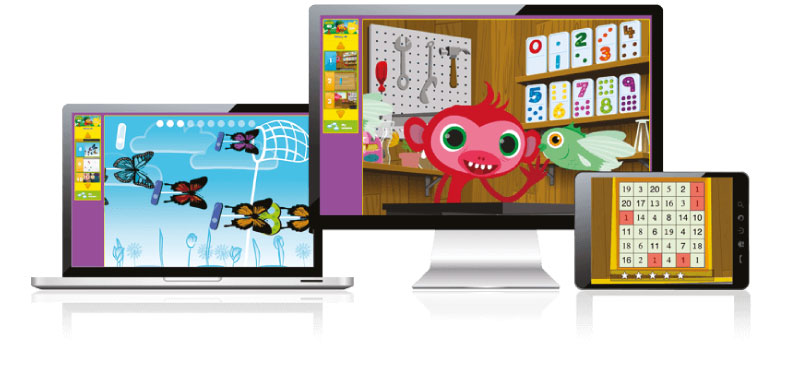
Mathletics is the appealing online Math program for hybrid classrooms and home learning. Set up various challenges for your students no matter where they are. Challenges like practice and fluency activities, problem-solving and reasoning questions, and reward their learning with certificates and points. Mathletics’ motto is “To support school and home educators to bring the love of learning mathematics to their students.” With their work they mean to provide purpose driven-education while captivating learners of all ages and create moments that inspire learning. Mathletics has received great support from the GCC. With plans to incorporate it into the lives of their countries’ youth, Middle Eastern countries such as UAE have already begun plans for schools in Dubai.

Contact us

Gadgets That Make Classrooms Smarter

Gadgets That Make Classrooms Smarter

Gadgets That Make Classrooms Smarter

Technology has changed the way education is imparted. Traditional classroom teaching methodologies have undergone an immense transformation as modern-day pays more emphasis to hands-on learning and practical approaches, rather than text bookish knowledge. Stimulating experiences within the boundaries of the classroom and interaction with the outside world, open-up new horizons for students to explore and form meaningful connections.

Thanks to digitally integrated schools, every possible information on any subject is at one’s fingertips. Gone are those days when students had to visit the computer lab and wait for their turn to browse through the net or practice their techie skills. As of today, every classroom is enabled by WiFi powering tabs, laptops, and smartboards. Amongst the most technologically advanced nations in the world, UAE makes its way to the top 20 list. Many K-12 schools in Dubai utilized advanced tools to support teaching aids. Let us understand what are the must-haves in every class today.

Smartboards

The teaching-learning experience is enriched with the use of smartboards that project audio-visual elements which create a lasting impression on the students. Learners can even interact with the smartboard by using a stylus or their finger to zoom into an image, express themselves by drawing shapes, and highlighting texts on a presentation. Even group projects are made easy using smartboards, as teams collaborate and present their ideas in a creative way before the class.

Smart Tables

Just as a Smartboard is mounted on the wall, usually maneuvered by the teacher, a smart table is individualized for every student. These digital display tables present the same information on the Smartboards, to the learner’s table, thereby allowing them to have a personalized learning experience. The Smart Tables also present various activities based on the school’s curriculum to test the child’s knowledge, in a fun and interactive way. Classmates can even collaborate with each other to work out their projects and brainstorm the way forward.

Digital Textbooks

Aside from being handy, digital textbooks are considered eco-friendly, and prevent cutting down of trees, thereby securing a greener tomorrow. The digitalization of paperback study books have many advantages such as; it saves on money for printing 100s of books each year and then dealing with discarding them at the end of the academic cycle. Digital material is available for access at anytime and anywhere on handheld devices such as tablets and mobile phones. Even children are relieved as they no more need to carry heavy loaded bags with books. Also, the 3D images, diagrams, and interesting animations with characters from the digital textbooks, make learning more fun.

Collaborative Platform

Many educational institutes adopt ERP and LMS system to create a connected platform with all stakeholders; such as parents, teachers, students, and admin staff. Next Learning Platform is one such integrated tool that allows teachers to assign homework to students digitally and track their performance over the course of the year. It also streamlines the admission process by making it paperless. To add to this, it even offers award-winning digital content covering CBSE, ICSE, IGCSE, and other board curriculum, in accordance with Bloom’s Taxonomy. In short, from administration, to academics, everything is taken care of thanks to the Next Learning Platform’s smart solutions. If you are an educator from GCC or Middle East, and wish to learn more about NLP’s offerings, visit out website https://knowledge-hub.com/

3D Printers

Learning about the Earth’s core? Studying about how the human heart functions? How about letting students design and print their own models? Instead of being told where the lower chamber of the heart is positioned, let children figure it out by practicing it on a 3D model. A boring subject like Math, can be made interesting by printing 3D shapes and learning about fractions through pieces of pizza printed live in class.

To conclude, setting up a classroom in the 21st century does not merely end at arranging desks, chairs, and a chalkboard, it means investing in creativity and digitalization that enables young minds to place their best foot forward.

Contact us

Integrating the Power of Technology in Kindergarten to Teach Preschoolers Names of Colors, Shapes, and Letters!

Integrating the Power of Technology in Kindergarten to Teach Preschoolers Names of Colors, Shapes, and Letters!

Integrating the Power of Technology in Kindergarten to Teach Preschoolers Names of Colors, Shapes, and Letters!

When children step into a Toddler environment at age 1.5 years their minds are like blank slates, with only limited information picked-up from conversations at home with parents. Stepping into a pre-school introduces children to a whole new world of learning. They observe, communicate, and learn to behave well in a social setting.

Tiny tots often replicate the adult’s actions and are very observant. Therefore, in a kindergarten setting, the teacher must be a role-model and adopt a disciplined way of action to inculcate the same values in the classroom.

Children’s brains are like sponges, they absorb information that is thrown at them with ease. Science has proven that maximum brain development that is 90% happens by 6 years of age. Therefore, to make them well-rounded individuals in the future, children need to get an exposure to numerous activities.

Parents encourage their children to participate in music, art, physical fitness, and dance, even before they start to master their ABC’s. Computer literacy is another skill that a kindergarten child is rapidly being exposed to. The world is becoming increasingly dependent on technology and people are coming even closer, thanks to the use of the web.

The question is that, can you teach a 3-year-old child to connect with the fascinating world of technology and discover colors, numbers, vocabulary and shapes, from a tab?

Well, the answer is definitely an assertive. Parents are amazed at how quick their pre-schoolers learn to ‘click’ and ‘navigate’ on their path of self-discovery. Learning-by-doing themselves is a way of instilling confidence in youngsters and they get a sense of pride when they accomplish a task.

Technokids has a deep understanding of the learning capabilities of children and thereafter designed different training modules to teach them the basics in an interesting manner. To support the learning of numbers, colors, shapes, and letters, taught by the teacher in class, children are given the freedom to experiment and use their imagination to create meaningful projects on the TechnoKids app. Have a look at what each of the module focuses on.

Techno Colors

Dive into the world of color with Techno Colors and transform your kid into a budding artist. Techno Color teaches kids the following:

  • Color challenge: Using the drawing tool, children themselves draw patterns, sceneries and add their choice of color to it.
  • Shades of color: Matching shades of color needs children to identify and pair the appropriate color shades together.
  • Feeling color: Different colors are associated with emotions and when children choose a color it demonstrates what mood they are in.
  • A colorful day: Children add color to the bright morning skyline.
  • Colorful music: This is a unique activity where children listen to music and paint a picture on the melody of the sound.

Learning objective to kids by using Techno Color

  • Identifying different colors
  • Lean about the various shades
  • Use the mouse to click, drag, hold, and double click
  • Learn to draw with tools like pencil, marker tool, crayon, and chalk
  • Choose stickers, add sounds, and paste animations
  • Add text to the picture
  • Create artwork to express mood

Techno Numbers

Develop the knack of number recognition amongst your kids with Techno Numbers. Techno Numbers teaches kids the following:

  • Number challenge: Engaging number challenges that intrigue an interest in the child for learning math passionately.
  • Numerous numbers: Counting, tracing, and painting numbers helps the child practice, while having fun.
  • Big book of numbers: Avail the student number counting workbook along with the kit.
  • Stylish numbers: Children sort, count, and draw numbers in an artistic way, from one to ten.

Learning objective to kids by using Techno Number

  • Develops recognition of numbers from 1 to 10
  • Counting skills enhance
  • Children learn to locate number keys on keyboard
  • Creativity increases with drawing tool
  • Easily print the artwork to flaunt your child’s work

Techno Shapes

Children visit the computer lab and work on the Kid Pix tool by Techno Shapes to learn about the basic shapes and geometric patterns. Techno Shapes teaches kids the following:

  • Connecting Dots: Children join the dots in a sequential manner to make shapes.
  • Shape Design: Children experience a shape Art Show and display their creativity to replicate Geometric shapes.
  • Shape Detective: Put up the child’s thinking caps on as they are on a mission to detect various shapes.
  • Lovely Lines: Draw and paint lines with different curvatures to form artistic patterns.

Learning objective to kids by using Techno Shapes

  • Identify basic shapes
  • Select appropriate drawing and painting tool
  • Create a dot to dot design
  • Use patterns or stamp to draw geometric shapes

Contact us

Teaching Children to Use a Dictionary

Teaching Children to Use a Dictionary

Teaching Children to Use a Dictionary

When children begin to learn essential skills at school whether they are curriculum-based skills or extra-curricular ones, it shapes them into bright individuals. Reading, writing, conversing, public speaking, debates, art and craft, sport, performing arts are some of the vital activities that nurture them so that they can have well-rounded personalities. Of course, this is just the beginning and there are infinite possibilities ahead of them to be achieved. One such important skill to attain in early education is to know how to use a dictionary.

The basic function, why a person would use a dictionary, is to look up the meaning of a word. Words in a dictionary are arranged alphabetically, so as for them to be found easily by the user scavenging for the meaning of a word. The moment someone finds any word in a dictionary, it will show its meaning, they can check the spelling, see its pronunciation, and the dictionary mentions the part of speech for the word. Moreover, it will show another part of speech related to the searched word. E.g., Resolve – is a verb, which means to make up one’s mind. The noun for the same word would be resolution and the adjective for it would be resolved.

Dictionaries are available in many languages. There are several dictionaries that help translate a word into another language. They also explain the origin of certain words. A dictionary helps to understand synonyms and antonyms of words, which have similar and opposite meanings respectively. There are picture dictionaries as well for little children and those are very illustrative with attractive pictures to help children understand the meaning of several things. In a game of Scrabble, which is an excellent word game to build up one’s vocabulary, a dictionary comes in handy when there is a common argument related to the spelling of a word which people would get confused with and the dictionary solves all the queries and the players can enjoy and play an error free game.

So, as we have seen, there are tremendous benefits a dictionary can offer and when a child understands the alphabetical order and the pattern of how to use a dictionary and find a word, they will gradually become a pro at it and it will become the best tool for them to improve their language, grammar, pronunciation, strengthen their vocabulary, enhance their writing skills and they will be able to speak confidently and carry themselves in great spirit with positive and smart body language, as it boosts their morale as well as their mental health. Having a strong command over any language, will not only help them in school but outside as well and will empower them in future competitive exams.

These are great assets for a child to have and they need to constantly keep working on themselves with amazing parents and teachers by their side for them to prosper in life. English is used worldwide and is the most spoken language and they must definitely master it but on the other hand it is also crucial to sharpen one’s regional or second languages. If you are one to be staying in Dubai or in another Emirate of the UAE, or in any Middle East or a GCC country, then we would urge the parent to polish the child in the local languages like Arabic and many more, where one resides. Here these non-English dictionaries will help a lot with such languages and to get a grip over them. There are English to other language convertible dictionaries and vice versa available to help the user translate the words and help themselves.

Apart from knowing English and local languages, it is imperative and supremely helpful to learn other foreign languages as well like French, German or Spanish for example that when the child gets to study abroad, it would really help them and even on a regular holiday to a foreign location, a dictionary comes in handy at all times. Not only should the adults but the children must carry them in their pockets or backpacks. Today with the internet and online search engines like Google, our gen-next children are very intelligent and they would easily find the meaning of a word online but what a traditional dictionary can do and is capable of is beyond imagination. It is essential to learn the crux the hard way around and then you will see your child rise and shine. Prep your children to use dictionaries more often, play games with them, do fun word searches and interesting activities that will excite them and they will use them.

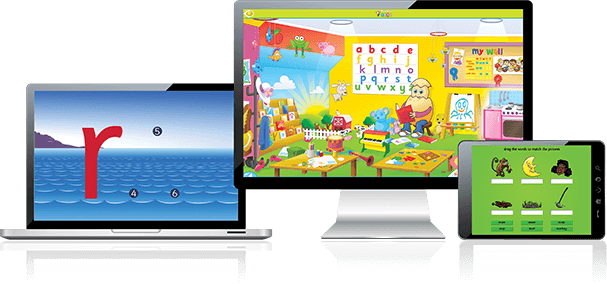
Reading Eggs” makes learning to read interesting and engaging for kids, with great online reading games and activities. And it really works! Children truly love the games, songs, golden eggs, and other rewards which, along with feeling proud of their reading, really motivate children to keep exploring and learning.

Contact us