by marketing m | Oct 20, 2026 | Blog
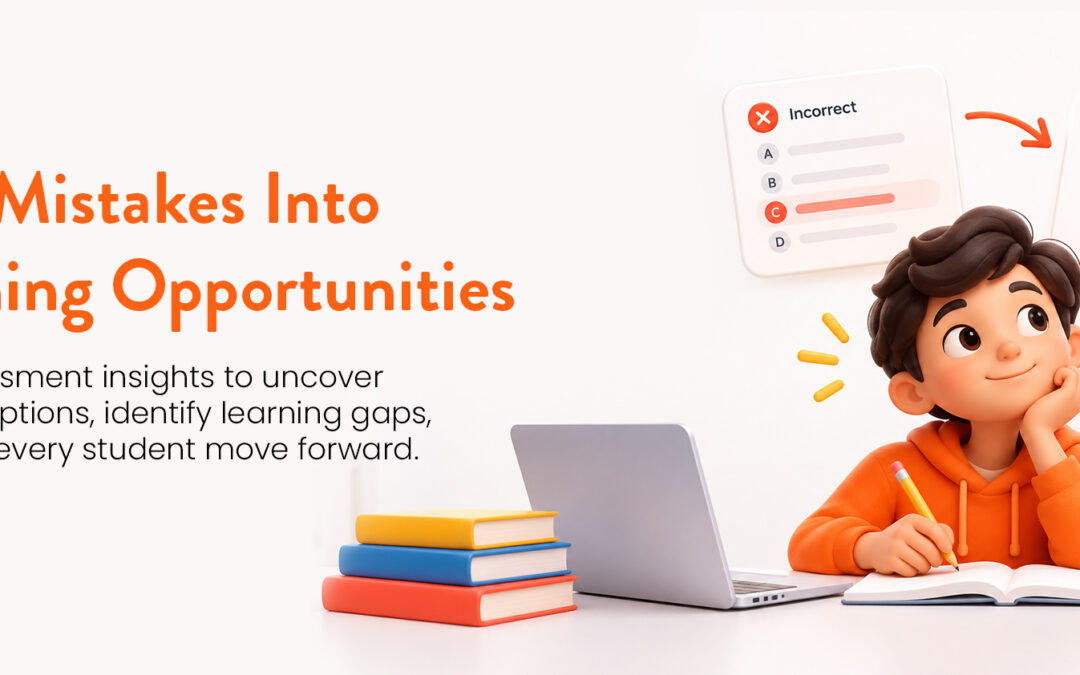
An incorrect answer doesn't always mean a student has failed.
Sometimes, it reveals a misconception.
Sometimes, it shows where more explanation is needed.
And sometimes, it becomes the starting point for deeper learning.
This is why effective assessment should go beyond identifying whether an answer is right or wrong. Assessment insights can help teachers understand how students are learning, where they may be struggling, and what support could help them move forward.
With digital assessment tools such as Redmenta, teachers can use assessment information to make learning more visible and turn mistakes into opportunities for improvement.
Why Student Mistakes Matter in Learning
A wrong answer can provide valuable information about a student's understanding.
For example, a student may select the wrong answer because they have misunderstood a concept, applied the wrong method, misread the question, or simply need more practice.
If assessment only records a score, these differences can remain hidden.
However, when teachers look beyond the final result, student mistakes can become useful learning signals.
This makes assessment more than a measurement tool. It becomes part of the learning process.
Assessment in education is most valuable when it helps teachers answer questions such as:
- What does the student understand?
- Where is the misconception?
- Which concepts need reinforcement?
- Which students need additional support?
- What should be taught or practised next?
From Assessment Data to Assessment Insights
Assessment data can tell teachers what happened. Assessment insights can help explain what may need attention next.
This distinction is important.
A class score might show that many students struggled with a particular question. But teachers need more than a percentage to respond effectively. They need information that can help them identify patterns, recognise learning gaps, and decide where additional explanation or practice may be useful.
Digital assessment platforms can make this process more efficient by bringing student responses and assessment information together.
With Redmenta, teachers can create digital assessments and use the resulting information to gain a clearer view of student learning.
Instead of treating assessment as the end of a lesson, teachers can use it as a starting point for the next learning activity.
Turning Wrong Answers Into Learning Opportunities
One of the most valuable aspects of formative assessment is the opportunity to respond to mistakes.
Consider a mathematics lesson where several students arrive at the same incorrect answer.
Rather than simply marking those responses as wrong, the teacher can investigate the pattern.
Is there a shared misconception?
Did students misunderstand the question?
Is a particular step in the process causing difficulty?
Do students need another example?
The answers can guide the teacher's next instructional decision.
This creates a simple cycle:
Assess → Identify → Understand → Respond → Learn
The mistake is no longer just an error. It becomes information that can support better teaching and deeper learning.
Supporting More Personalised Learning
Students do not always learn at the same pace or experience the same challenges.
Some may need additional explanation. Others may benefit from more practice, while some may be ready to apply their understanding to a more challenging problem.
Assessment insights can help teachers recognise these differences.
By reviewing student responses and identifying areas that require attention, teachers can make more informed decisions about follow-up activities, additional support, and opportunities for extension.
This can contribute to a more personalised approach to learning without making assessment feel like a separate activity.
Making Assessment Part of the Learning Process
Traditional assessment is often associated with grades, scores, and final results.
But assessment can play a much broader role in education.
When teachers use assessment throughout the learning process, they can gather information while students are still developing their understanding.
This is where formative assessment becomes particularly valuable.
A quick digital quiz, classroom activity, or knowledge check can reveal what students understand at that moment. Teachers can then use those results to adapt instruction, revisit difficult concepts, or provide further opportunities for practice.
In this approach, assessment doesn't simply ask, “What did the student get wrong?”
It asks, “What can we help the student understand next?”
How Redmenta Can Support Meaningful Assessment
Redmenta provides a digital environment where teachers can create engaging assessments and quizzes while gaining useful information about student responses.
Its assessment capabilities can support teachers in making learning more visible and using assessment information to inform their next steps.
For schools looking to make assessment more purposeful, this approach can help connect assessment with instruction, feedback, and student progress.
The goal isn't simply to collect more assessment data.
It is to make that information useful.
Better Assessment Starts With Better Questions
A student's incorrect answer is not necessarily the end of the learning process.
It can be a signal.
It can reveal a misconception.
It can highlight a learning gap.
Most importantly, it can show teachers where the next learning opportunity may be.
When assessment insights are used effectively, mistakes can become part of the learning journey rather than simply a reason to reduce a score.
Because effective assessment isn't just about finding out what students got wrong. It's about understanding where learning can happen next.
With Redmenta, schools can move towards a more meaningful approach to digital assessment—one that helps teachers understand student learning and turn assessment results into opportunities for growth.
Turn mistakes into meaningful learning opportunities with Redmenta.
by marketing m | Oct 17, 2026 | Uncategorized
Artificial intelligence is becoming part of how people learn, work, create, and solve problems.
But students do not develop meaningful AI skills simply by using an AI tool.
They need opportunities to question, experiment, analyse, create, test, and reflect.
That is where well-designed AI classroom activities can make a difference.
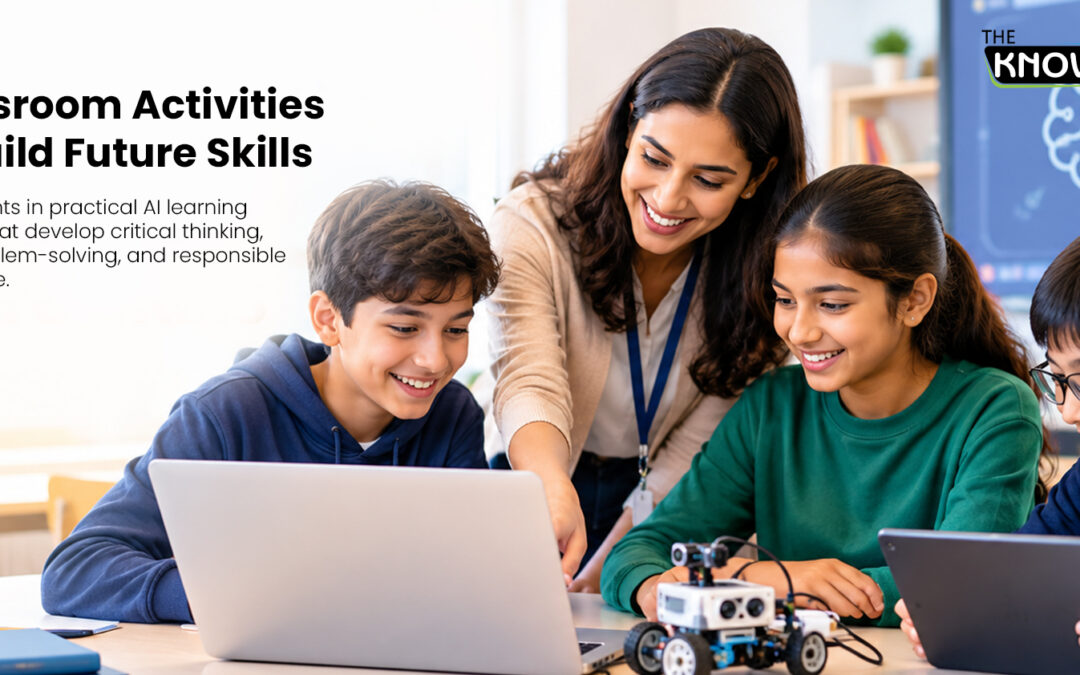
When AI learning is connected to real questions and hands-on challenges, students can begin developing skills that extend beyond technology. They can practise critical thinking, creativity, communication, problem-solving, collaboration, and responsible technology use.
For schools building an AI education programme, classroom activities can provide a practical way to move from concepts to meaningful learning experiences.
What Are AI Classroom Activities?
AI classroom activities are structured learning experiences that help students explore artificial intelligence through investigation, experimentation, problem-solving, or creation.
These activities do not always require students to build complex AI systems.
Depending on their age and learning level, students can explore:
- How AI recognises patterns
- How data influences AI outputs
- How AI-generated information can be evaluated
- How humans interact with AI systems
- How AI can support creative work
- How AI can be used to solve problems
- How bias can influence AI systems
- How AI should be used responsibly
The goal is to help students understand how AI works, where it can be useful, and where human judgement remains important.
For a broader introduction to the subject, schools can also explore what AI education means for schools through our guide to What is AI Education? A Complete Guide for Schools.
Why Use AI Activities in the Classroom?
AI learning becomes more meaningful when students actively engage with ideas instead of simply learning definitions.
Well-designed activities can help students develop several future-ready capabilities.
Critical Thinking
Students can compare AI-generated responses, identify inaccuracies, ask questions, and decide whether information is reliable.
Problem-Solving
AI challenges can encourage learners to identify a problem, explore possible solutions, test ideas, and improve their approach.
Creativity
Students can investigate how AI can support brainstorming, design, storytelling, visual communication, and other creative processes while retaining human decision-making.
Collaboration
Many AI projects can be designed around group challenges, allowing students to discuss ideas, divide responsibilities, evaluate results, and communicate their conclusions.
Digital and AI Literacy
Students learn that using technology is not enough. They also need to understand how digital systems work, how data influences outcomes, and how technology should be used responsibly.
These capabilities connect closely with the broader goal of AI literacy for students, where learners develop the knowledge and judgement to interact with artificial intelligence thoughtfully.
7 AI Classroom Activities for Students
The best activities should match students’ age, curriculum objectives, and existing technology skills.
Here are seven practical approaches schools can adapt across different grade levels.
1. Can AI Spot the Pattern?
Pattern recognition provides a simple way to introduce students to an important concept behind many AI systems.
Give students a collection of images, objects, numbers, words, or other examples and ask them to identify patterns.
Then challenge them:
What information would a computer need to recognise the same pattern?
Students can categorise the examples, explain the features they used, and discuss what might happen if the data changed.
Skills developed
- Pattern recognition
- Logical reasoning
- Classification
- Observation
- Data thinking
This type of activity can provide a foundation for later discussions about machine learning and AI classification.
2. AI Fact-Checking Challenge
AI systems can generate convincing answers, but convincing does not always mean correct.
Give students an AI-generated response containing a mixture of accurate information and potential errors.
Ask them to investigate the response and identify:
- What appears accurate?
- What needs verification?
- What evidence supports the answer?
- What information may be misleading?
- What sources should be checked?
Students then explain how they reached their conclusions.
This activity turns AI use into an exercise in critical evaluation rather than passive acceptance.
It also builds directly on the skills discussed in AI Literacy for Students: Why Every School Should Teach It.
Skills developed
- Critical thinking
- Research
- Fact-checking
- Information literacy
- Evaluation
3. Design a Better AI Solution
Give students a real-world problem and ask them to imagine how AI could help solve it.
For example:
How could AI help reduce food waste in a school?
Students could investigate the problem, identify the information an AI system might need, propose a solution, and explain how the system could support decision-making.
Other challenges could include:
- Reducing energy consumption
- Improving recycling
- Supporting school transportation
- Helping people access information
- Making public spaces more accessible
The objective is not necessarily to build a complete AI system.
Instead, students learn to think about problems, data, systems, users, and possible solutions.
Skills developed
- Problem-solving
- Creativity
- Systems thinking
- Collaboration
- Communication
4. Human or AI?
This activity encourages students to think about the differences between human and machine capabilities.
Present students with different tasks, such as:
- Recognising an image
- Writing a story
- Solving a calculation
- Understanding emotions
- Finding patterns in data
- Making an ethical decision
Ask students:
Would a human, an AI system, or both be better suited to this task? Why?
Students then discuss the strengths and limitations of each.
The activity can lead to an important question:
What should humans remain responsible for when AI is involved?
That question helps connect AI learning with judgement, ethics, and responsible technology use.
Skills developed
- Critical thinking
- Reasoning
- Communication
- Ethical thinking
- AI awareness
5. Train the Classifier
Students can explore the idea of AI classification through a simple sorting challenge.
Provide examples that belong to different categories and ask students to create their own classification rules.
For example, they could classify objects based on:
- Shape
- Colour
- Size
- Function
- Material
- Other observable features
Then introduce examples that are difficult to classify.
Ask:
What happens when the rules are unclear?
Students begin to understand that the quality of classification depends on the information and criteria being used.
This can provide a simple introduction to concepts such as data, classification, patterns, and bias.
Skills developed
- Data classification
- Logical thinking
- Pattern recognition
- Decision-making
- Understanding bias
6. Build an AI-Enhanced STEM Challenge
AI activities can become particularly engaging when connected with STEM learning.
Give students a practical challenge such as designing a more efficient structure, improving a transportation system, reducing energy use, or solving an environmental problem.
Students can investigate the problem, collect information, explore possible solutions, and consider where AI could support the process.
For example, students might ask:
How could AI help us design a more energy-efficient building?
They can consider what data would be needed, what patterns could be identified, and where human decisions would still be required.
This approach connects AI with STEM learning, engineering design, data, and problem-solving.
Schools can connect these experiences with their wider STEM Curriculum UAE approach rather than treating AI as an isolated technology topic.
Skills developed
- Engineering thinking
- Data analysis
- Problem-solving
- Collaboration
- Creativity
- Systems thinking
7. Create an AI Use Policy for Students
AI education should not only teach students what they can do with technology.
It should also help them think about how they should use it.
Divide students into groups and ask them to create a set of classroom guidelines for responsible AI use.
They could consider questions such as:
- When is it appropriate to use AI?
- When should students complete work independently?
- How should AI-generated information be checked?
- Should students disclose when AI was used?
- What personal information should never be entered into an AI tool?
- Who is responsible when an AI-generated answer is wrong?
Each group can present its recommendations and explain the reasoning behind them.
This turns responsible AI from a theoretical concept into an active classroom discussion.
Skills developed
- Ethical reasoning
- Digital citizenship
- Communication
- Decision-making
- Responsible technology use
How to Make AI Classroom Activities More Effective
The activity itself is only one part of successful AI learning.
Teachers can make these experiences more meaningful by following a simple learning cycle:
Question → Investigate → Experiment → Evaluate → Explain → Reflect
Students begin with a question or challenge.
They investigate information, experiment with ideas or tools, evaluate what they discover, explain their reasoning, and reflect on what they would change.
This approach helps students move beyond simply using AI to understanding and evaluating it.
It also reflects the broader classroom transformation possible when AI is integrated with active and project-based learning. For more context, explore How AI Is Transforming Modern Classrooms.
Keep AI Activities Age-Appropriate
Not every AI activity needs to involve sophisticated tools.
For younger students, activities can focus on:
- Patterns
- Sorting
- Sequences
- Simple decision-making
- Data awareness
- Problem-solving
Older students can explore:
- Machine learning concepts
- Data analysis
- Generative AI
- AI applications
- Bias
- Ethics
- AI-supported projects
The important factor is progression.
Students should gradually move from understanding simple AI concepts to applying, evaluating, and questioning AI systems.
Connect Activities to the Curriculum
AI activities should support learning objectives rather than become additional technology exercises.
Teachers can connect AI experiences with:
- ICT
- Science
- Mathematics
- STEM
- Coding
- Robotics
- Language
- Research
- Design and engineering
This makes AI learning more relevant and gives students opportunities to see how artificial intelligence connects with different areas of knowledge.
For schools developing a broader technology pathway, AI can complement an ICT Curriculum for Schools UAE rather than operating separately from it.
Focus on Skills, Not Just Tools
AI tools will continue to change.
A platform students use today may look very different in the future.
The skills developed through meaningful AI activities are therefore more valuable than learning one specific tool.
Students should leave an activity knowing how to:
- Ask better questions.
- Evaluate information.
- Work with data.
- Solve problems.
- Create solutions.
- Explain their reasoning.
- Use technology responsibly.
These are transferable skills that can continue to support students as AI evolves.
Building Future Skills Through AI Learning
The purpose of AI education is not simply to make students familiar with artificial intelligence.
It is to help them become thoughtful users, creators, problem-solvers, and decision-makers in a world where AI will increasingly influence how people work and learn.
Well-designed AI classroom activities give students opportunities to explore these ideas through active learning.
From pattern recognition and fact-checking to STEM challenges and responsible AI discussions, schools can create experiences that make AI understandable, practical, and meaningful.
When students are encouraged to question technology rather than simply use it, they begin developing the confidence and judgement needed for the future.
For schools looking to build a structured approach to AI learning, explore AI Education Solutions UAE and discover how AI can become part of a broader future-ready learning strategy.
by marketing m | Oct 16, 2026 | Blog
What happens when an object is pushed?
Does it always move in the same way?
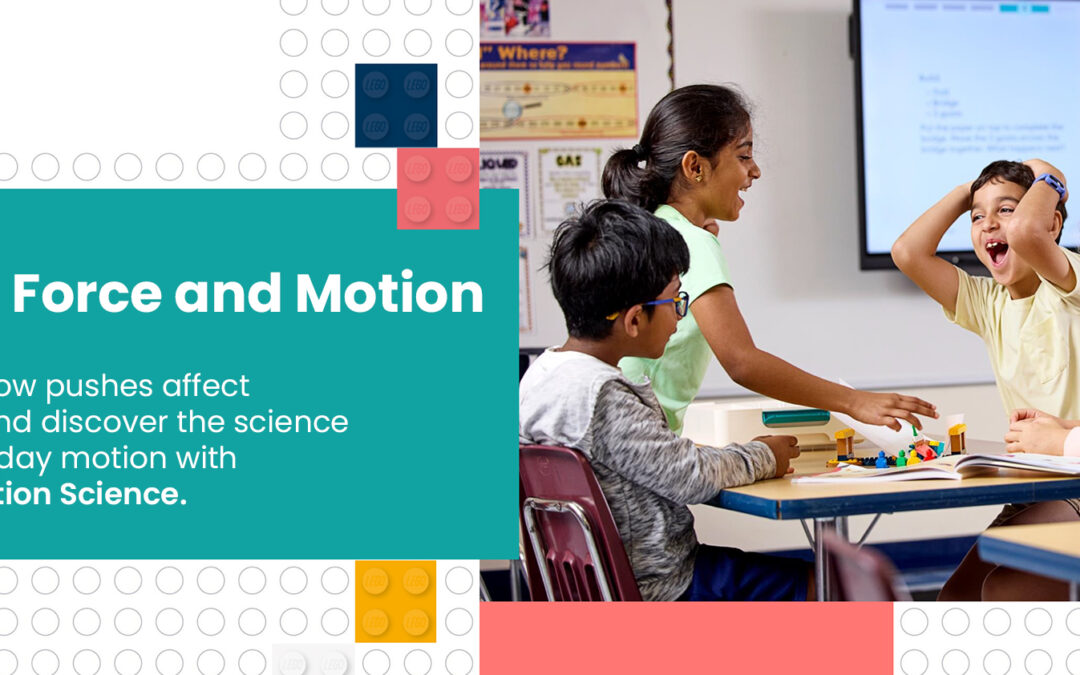
These simple questions can open the door to a deeper understanding of force and motion in science. When students investigate how objects respond to pushes, they can begin to explore how forces influence movement and recognise cause-and-effect relationships.
Rather than simply learning definitions, students can develop their understanding by asking questions, making observations, testing ideas, and explaining what they discover.
This is where hands-on science learning can make physical science more meaningful.
What Is Force and Motion in Science?
A force is a push or a pull that can affect the motion of an object.
When a force acts on an object, it can cause the object to start moving, stop, speed up, slow down, or change direction. The way an object responds can depend on different factors involved in the investigation.
For students, these concepts become more meaningful when they can observe them directly.
A simple push can lead to questions such as:
- What happens when an object is pushed gently?
- What happens when the push is stronger?
- Does an object always move in the direction of the push?
- Why might two objects respond differently?
- What can we observe about the object’s movement?
These questions encourage students to investigate force and motion in science through evidence and observation.
Exploring Forces Through Hands-On Investigation
Science is not only about knowing an answer. It is also about understanding how we arrive at that answer.
With hands-on investigations, students can begin with a question and make a prediction about what they think will happen. They can then test their ideas, observe the results, and compare what happened with what they expected.
This creates an active learning process:
Ask → Predict → Investigate → Observe → Explain
Through this process, students can develop a stronger understanding of forces and motion while also practising important scientific skills.
Understanding Cause and Effect
One of the important ideas students can explore through force and motion is cause and effect.
When students change the way they push an object and observe how its movement responds, they can begin to identify relationships between an action and its result.
For example, students might investigate what happens when the conditions of a push change. They can observe differences in movement and use those observations to develop explanations.
Instead of simply saying, “The object moved,” students can begin asking:
“What caused it to move?”
That question encourages deeper scientific thinking.
From Observation to Explanation
Observation is an important part of scientific investigation, but students can go further by explaining what they observe.
After an investigation, students can describe what happened, compare their results, and use evidence to support their ideas.
This helps develop skills such as:
- Asking scientific questions
- Making predictions
- Observing results
- Identifying patterns
- Using evidence
- Explaining cause and effect
- Communicating scientific ideas
These skills can support students as they investigate increasingly complex scientific concepts.
Connecting Science to the Real World
Force and motion are part of everyday life.
A ball changes direction when it is kicked. A door moves when it is pushed. A bicycle slows down when the rider stops pedalling. Objects move, stop, and change direction because forces are acting on them.
Connecting classroom investigations with familiar experiences can help students recognise that physical science is not limited to the classroom.
It is happening around them every day.
Hands-on experiences can give students opportunities to explore these ideas in a way that encourages curiosity and active participation.
Exploring Force and Motion with LEGO® Education Science
LEGO® Education Science provides opportunities for students to investigate scientific concepts through hands-on learning and meaningful questions.
By exploring how objects respond to pushes and other forces, students can observe movement, investigate cause and effect, and develop explanations based on what they discover.
The goal is not simply to tell students how forces work.
It is to give them opportunities to investigate, observe, reason, and explain.
That approach can help turn an abstract scientific concept into something students can explore for themselves.
Start With the Right Question
Understanding force and motion in science can begin with something as simple as a push.
What happens?
Why does it happen?
What changes when the force changes?
And what evidence can help explain the result?
Through LEGO® Education Science, students can explore these questions while developing scientific thinking and a deeper understanding of physical science.
Because sometimes, meaningful science learning doesn’t begin with an answer.
It begins with a question worth investigating.
Explore physical science with LEGO® Education Science.
by marketing m | Oct 15, 2026 | Uncategorized
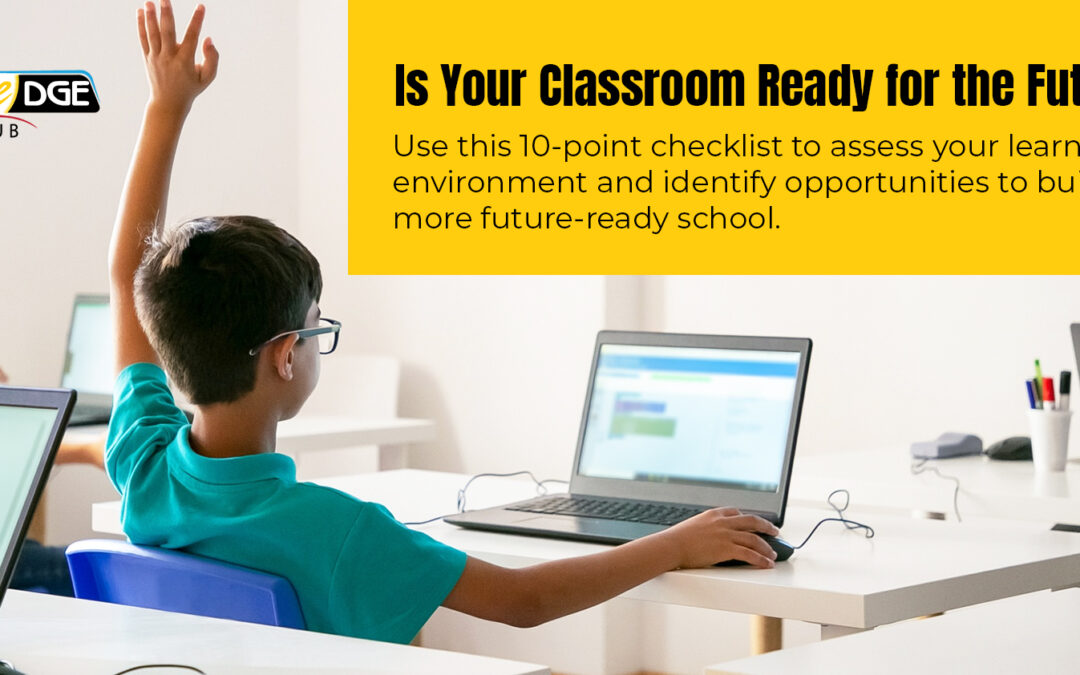
Are your classrooms prepared to meet the changing needs of education?
For school leaders, preparing for the future involves more than investing in new equipment or updating classroom facilities. It requires evaluating how learning environments support teaching, student participation, and the school’s long-term educational priorities.
For schools in Dubai and across the UAE, a structured review can help identify opportunities to improve existing classrooms without immediately committing to major investments.
This future-ready classroom checklist provides 10 questions school leaders can use to assess their current learning environments, identify gaps, and prioritise improvements.
Why Should Schools Assess Classroom Readiness?
Schools continually review their curricula, facilities, and educational resources. However, it can be equally important to evaluate whether their classrooms continue to meet the needs of teachers and students.
A classroom readiness assessment provides a starting point for these discussions. It helps school leaders identify what is working, where improvements may be needed, and which changes deserve attention first.
Rather than attempting to change everything at once, schools can use the findings to develop a practical classroom improvement strategy aligned with their educational objectives and available resources.
10 Questions to Assess Your Classroom Readiness
Use the following checklist to review your school’s existing learning environments.
1. Do Our Classrooms Support Different Learning Activities?
Consider whether classroom arrangements accommodate individual work, group discussions, presentations, and collaborative tasks.
If the same layout is used for every activity, explore whether simple adjustments could help teachers organise lessons more effectively.
2. Can Students Participate Actively in Lessons?
Review whether students have regular opportunities to ask questions, exchange ideas, contribute to discussions, and demonstrate their understanding.
Consider gathering feedback from teachers and students to identify activities that encourage participation and areas where engagement could improve.
3. Are Our Educational Resources Being Used Effectively?
Assess whether existing classroom materials and learning resources support clear educational objectives.
The priority should be purposeful use rather than simply increasing the number of resources available. Identify underused materials and consider how they could contribute more effectively to classroom activities.
4. Can Classrooms Accommodate Different Student Needs?
Consider whether classroom arrangements and learning activities provide appropriate opportunities for students with different needs and learning preferences.
Review accessibility, resource availability, seating arrangements, and the flexibility teachers have when organising activities.
5. Do Our Learning Spaces Encourage Collaboration?
Examine whether students have opportunities to work together, share responsibilities, discuss ideas, and contribute to group tasks.
If collaboration is difficult because of classroom arrangements or limited shared resources, identify practical adjustments that could improve the experience.
6. Are Classroom Improvements Aligned With Educational Objectives?
Before investing in new equipment or changing classroom layouts, establish what the school wants to achieve.
Is the priority improving participation, making better use of resources, supporting collaborative activities, or creating more adaptable learning spaces?
Clear objectives help school leaders evaluate potential improvements against actual educational needs.
7. Can Teachers Adapt Activities When Needed?
Consider how easily teachers can adjust classroom arrangements, learning materials, and activity formats to meet lesson objectives.
Ask educators which aspects of their current classrooms support their teaching and which create unnecessary limitations.
Their feedback can reveal practical improvements that may otherwise be overlooked.
8. Do We Review Classroom Effectiveness Regularly?
Classroom improvement should be an ongoing process rather than a one-time exercise.
Consider whether your school regularly gathers feedback, reviews resource usage, and evaluates how learning spaces support teaching activities.
Simple review processes can help leaders recognise changing needs and make more informed decisions.
9. Do We Involve Teachers and Students in Improvement Decisions?
The people who use classrooms every day can offer valuable insights into how those spaces function.
Invite teachers and students to share their experiences, identify challenges, and suggest improvements.
Involving them in the process can help schools focus on practical changes that address genuine needs.
10. Do We Have a Clear Classroom Improvement Plan?
Finally, assess whether your school has a documented approach to improving its learning environments.
The plan should identify priorities, responsible team members, available resources, target dates, and ways to evaluate progress.
For schools in Dubai and the wider UAE, a phased approach can help balance improvement goals with operational requirements and budget considerations.
How to Turn Your Assessment Into an Action Plan
Completing the checklist is only the first step. The next is to turn observations into manageable actions.
Step 1: Record your findings. Document the areas that are working well and those requiring attention.
Step 2: Identify priorities. Separate immediate improvements from changes that require additional planning or investment.
Step 3: Assign responsibility. Determine who will coordinate each action and which resources may be needed. Where the assessment identifies a need for additional educator support, schools can also explore relevant teacher training and professional development opportunities.
Step 4: Establish review measures. Decide how the school will evaluate whether the changes are achieving their intended objectives.
Step 5: Review progress. Revisit the assessment periodically and update priorities as the school’s needs evolve.
This approach gives school leaders a practical foundation for making informed decisions about classroom improvement.
Preparing Your School for the Next Stage of Learning
Creating a future-ready school is an ongoing process that benefits from regular evaluation, thoughtful planning, and a clear understanding of student and teacher needs.
By using a structured classroom readiness checklist, schools can identify improvement opportunities, make better use of existing resources, and plan changes around meaningful educational objectives.
For a broader overview of the learning environments, educational approaches, and solutions involved in this process, explore Future Ready Classrooms UAE by Knowledge Hub.
The goal is not simply to change classrooms. It is to make informed decisions that help schools create learning environments suited to their evolving educational priorities.
by marketing m | Oct 14, 2026 | Blog
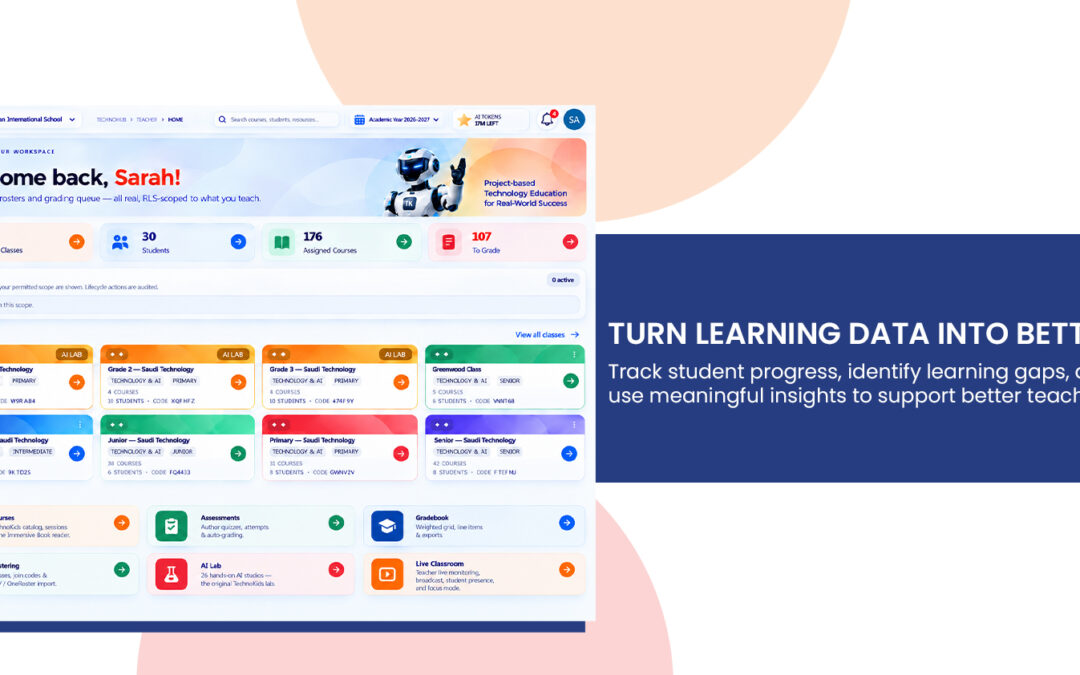
Schools collect information about student performance through assessments, assignments, quizzes, and classroom activities. But collecting data is only the first step. The real value comes from understanding what that information reveals about learning and deciding what to do next.
Student progress tracking helps schools monitor learning, identify skill gaps, recognise developing abilities, and make informed decisions about teaching and support. When connected to curriculum goals and assessment results, learning data can help educators build a clearer picture of each student’s development.
What Is Student Progress Tracking?
Student progress tracking is the process of monitoring learners’ performance, skill development, and achievement over time. It helps teachers understand whether students are meeting learning objectives, where they may need additional support, and which concepts require further attention.
Rather than relying on a single test score, effective progress monitoring considers different sources of evidence, including assessment results, assignment completion, practical projects, and classroom participation.
For schools, this information supports more informed teaching decisions and helps align classroom instruction with intended learning outcomes.
Why Is Student Progress Tracking Important?
Every student develops skills at a different pace. Some learners grasp new concepts quickly, while others need additional practice, alternative explanations, or more opportunities to apply their knowledge.
Without a structured approach to monitoring progress, learning difficulties may remain unnoticed until a major assessment highlights them.
A consistent student progress tracking process helps schools:
- Identify learning gaps: Recognise concepts or skills that require additional attention.
- Monitor skill development: Understand how students progress towards specific learning objectives.
- Personalise instruction: Adapt activities and provide targeted support based on individual needs.
- Evaluate learning outcomes: Assess whether teaching activities are helping students develop the intended knowledge and skills.
- Make informed decisions: Use assessment evidence to guide classroom interventions and wider school improvement.
The goal is not simply to measure performance. It is to use evidence to improve the learning experience.
How Can Schools Use Learning Data Effectively?
Learning data becomes more useful when schools move beyond recording results and begin interpreting what those results mean.
1. Connect Assessments to Learning Objectives
Assessment results should relate to clearly defined curriculum goals. When teachers understand which skills an assessment measures, they can identify areas of strength and concepts that require further development.
Quizzes, practical assignments, project rubrics, and skill reviews can provide complementary evidence of student understanding.
2. Monitor Progress Over Time
A single assessment provides only a snapshot of performance. Comparing results across activities and learning stages helps teachers recognise improvement, recurring difficulties, and areas where progress has slowed.
This approach makes student progress monitoring an ongoing part of teaching rather than an activity reserved for the end of a term.
3. Turn Insights into Teaching Actions
Data is most valuable when it informs the next step. Teachers can use assessment findings to revisit challenging concepts, introduce additional practice, offer extension activities, or provide individual guidance.
Regularly reviewing progress also helps educators evaluate whether their interventions are working.
4. Support School-Level Decision-Making
At the school level, consistent reporting can help educators identify broader learning trends, review curriculum delivery, and determine where additional instructional resources may be beneficial.
However, data should always be interpreted in context. Assessment results are indicators of learning, not complete measures of a student’s abilities or potential.
How TechnoHub Supports Student Progress Tracking
Managing curriculum activities, assessments, and student performance information across different systems can make it difficult to maintain a consistent view of learning.
TechnoHub, the online teaching and learning platform from TechnoKids, supports technology education through curriculum delivery, interactive student workbooks, assessment, and student reporting.
Depending on the subscription, teachers can access reporting features that help them monitor student performance. Interactive assignments and quizzes can also be automatically graded, with results recorded in an online gradebook.
These capabilities help educators review assessment information alongside learning activities and identify areas that may require further attention.
By connecting structured curriculum delivery with assessment and reporting, TechnoHub supports a more informed approach to monitoring student progress and planning next steps.
Explore the TechnoKids Lab Studios to discover technology-based learning environments that encourage students to create, experiment, solve problems, and develop practical skills.
From Measuring Progress to Improving Learning
Effective student progress tracking is about more than grades and completion rates. It helps educators understand what students have learned, which skills are developing, and where additional guidance may be needed.
When schools combine meaningful assessments, consistent progress monitoring, and informed teaching decisions, learning data becomes a practical tool for improvement.
With TechnoHub, schools can bring curriculum activities, assessment, and student reporting into a more structured teaching and learning experience.
Measure progress. Identify learning needs. Make better-informed decisions. Support every student’s learning journey.




Recent Comments