
Inclusive Education for Teachers: Practical Strategies to Transform Modern Classrooms

Inclusive Education for Teachers: Practical Strategies to Transform Modern Classrooms

Inclusive education for teachers has become a critical priority in today’s evolving education system. Classrooms are no longer uniform – students come with diverse learning needs, abilities, and challenges that require a more thoughtful and structured approach to teaching.

From students with ADHD and dyslexia to those with different learning speeds, educators are expected to create an environment where every learner can succeed. However, without the right tools and training, implementing inclusive education can feel overwhelming.

This is where Learn Studio by SpEd@School supports educators with practical, easy-to-apply solutions.

What is Inclusive Education for Teachers?

Inclusive education for teachers refers to the ability to design and deliver lessons that cater to all students, regardless of their learning differences. It focuses on ensuring equal participation and learning opportunities for every child in the classroom.

For teachers, this means adapting teaching methods, using flexible strategies, and continuously upgrading their skills to meet diverse classroom needs.

Learn Studio is designed specifically to make inclusive education for teachers more accessible, practical, and effective.

Why Inclusive Education Matters Today

The importance of inclusive education for teachers is growing rapidly. Modern classrooms are more diverse than ever, and traditional teaching methods often fail to address this diversity.

Without inclusive practices:

  • Some students struggle to keep up
  • Classroom engagement drops
  • Teachers face increased pressure

Inclusive education ensures that no student is left behind. It also helps teachers create a more balanced and engaging learning environment.

Learn Studio addresses these challenges by equipping educators with the right knowledge and tools.

How Learn Studio Supports Inclusive Education for Teachers

1. Practical Teaching Strategies

Learn Studio provides ready-to-use, evidence-based strategies that help teachers manage diverse classrooms effectively. These strategies are designed to support different learning styles and abilities.

2. Flexible Learning Through Courses

One of the biggest challenges in inclusive education for teachers is time. Learn Studio offers self-paced courses that allow educators to learn at their convenience without disrupting their schedules.

3. Expert-Led Masterclasses

Teachers gain access to masterclasses conducted by specialists inclusive and special education. These sessions provide deeper insights into real classroom challenges and practical solutions.

4. On-Demand Teaching Support

Learn Studio also offers quick, on-demand support to help teachers address day-to-day classroom issues. This ensures that educators are never alone when facing challenges.

Benefits of Inclusive Education for Teachers

When implemented effectively, inclusive education for teachers leads to significant improvements in both teaching and learning outcomes.

Key benefits include:

  • Increased confidence in handling diverse learners
  • Better classroom engagement and participation
  • Reduced time spent on repetitive planning
  • Improved student outcomes

By focusing on practical applications, Learn Studio helps teachers achieve these benefits without adding extra workload.

The Role of Technology in Inclusive Education

Technology plays a crucial role in making inclusive education for teachers more scalable and effective. Platforms like Learn Studio combine expert knowledge with digital accessibility, making it easier for teachers to continuously upgrade their skills.

With the right technology, teachers can:

  • Access learning anytime, anywhere
  • Implement strategies instantly
  • Track their professional development

This integration of technology ensures that inclusive education is not just a concept, but a daily practice.

The Future of Inclusive Classrooms

As education systems continue to evolve, inclusive education for teachers will become a standard requirement rather than an added responsibility.

Schools that invest in teacher development platforms like Learn Studio will be better prepared to handle diverse classrooms and deliver quality education.

Empowering teachers is the first step toward building truly inclusive classrooms.

Conclusion

Inclusive education for teachers is essential for creating meaningful learning experiences in today’s diverse classrooms. However, achieving it requires more than intention—it requires the right tools, strategies, and ongoing support.

Learn Studio by SpEd@School bridges this gap by offering practical, expert-driven solutions that teachers can apply immediately.

By enabling educators to adapt, grow, and succeed, Learn Studio plays a key role in transforming modern education into a more inclusive and effective system.

ICT 360 iLAB: Unlocking the Future of STEM Education

ICT 360 iLAB: Unlocking the Future of STEM Education

Education is rapidly evolving, and schools today are expected to prepare students for a future driven by technology, innovation, and critical thinking. Traditional teaching methods, which rely heavily on theory and rote learning, are no longer enough. To bridge this gap, schools need dynamic learning environments that encourage creativity, experimentation, and real-world problem-solving.

This is where ICT 360 iLAB comes in.

What is ICT 360 iLAB?

ICT 360 iLAB (Innovation Lab) is a comprehensive, technology-driven learning environment designed to transform STEM education in schools. It provides students with hands-on experiences using cutting-edge tools and resources, enabling them to explore, create, and innovate.

Unlike conventional classrooms, iLAB focuses on experiential learning. Students actively engage in projects, experiments, and collaborative activities that build a deeper understanding of scientific and technological concepts.

Why Schools Need Innovation Labs

The demands of the modern world are changing rapidly. Careers today require more than just academic knowledge—they require skills such as critical thinking, creativity, collaboration, and digital literacy.

However, many schools face challenges such as:

  • Limited access to practical learning tools
  • Lack of structured STEM programs
  • Overdependence on textbook-based teaching

Innovation labs like ICT 360 iLAB address these challenges by creating an ecosystem where students learn by doing. This approach not only improves engagement but also enhances retention and understanding.

Key Features of ICT 360 iLAB

1. Hands-on STEM Learning

Students work with real tools, kits, and technologies, making learning interactive and engaging.

2. Integration of Emerging Technologies

The lab incorporates AI, coding, robotics, and other modern technologies to ensure students stay ahead of the curve.

3. Project-Based Learning Approach

Students learn through practical projects that encourage experimentation, creativity, and problem-solving.

4. Customizable Lab Setup

Each iLAB is designed to meet the specific needs of the school, ensuring maximum impact and usability.

5. End-to-End Implementation

From planning and design to setup and execution, the ICT360 team handles the entire process, making it seamless for schools.

Benefits for Students and Schools

For Students:

  • Develop critical thinking and analytical skills
  • Gain hands-on experience with real-world technologies
  • Build confidence through experimentation and innovation
  • Enhance creativity and problem-solving abilities

For Schools:

  • Upgrade their academic offering with future-ready infrastructure
  • Improve student engagement and learning outcomes
  • Position themselves as forward-thinking institutions
  • Attract parents looking for modern education solutions

Transforming Classrooms into Innovation Hubs

ICT 360 iLAB goes beyond being just a lab—it transforms classrooms into innovation hubs where students are encouraged to think differently. It fosters a culture of curiosity, exploration, and continuous learning.

By integrating technology with education, schools can create an environment where students are not just consumers of information but creators of ideas.

Conclusion

The future of education lies in innovation, and schools that adapt early will have a significant advantage. ICT 360 iLAB provides a practical and effective way to bring this transformation to life.

By combining hands-on learning, cutting-edge technology, and a structured implementation approach, the ICT 360 iLAB empowers schools to deliver impactful STEM education.

If you’re looking to prepare your students for the future, investing in an innovation lab is no longer optional—it’s essential.

Start your journey with ICT 360 iLAB and transform the way your students learn, create, and innovate.

Hands-On Science Learning for Students with LEGO® Education Science

Hands-On Science Learning for Students with LEGO® Education Science

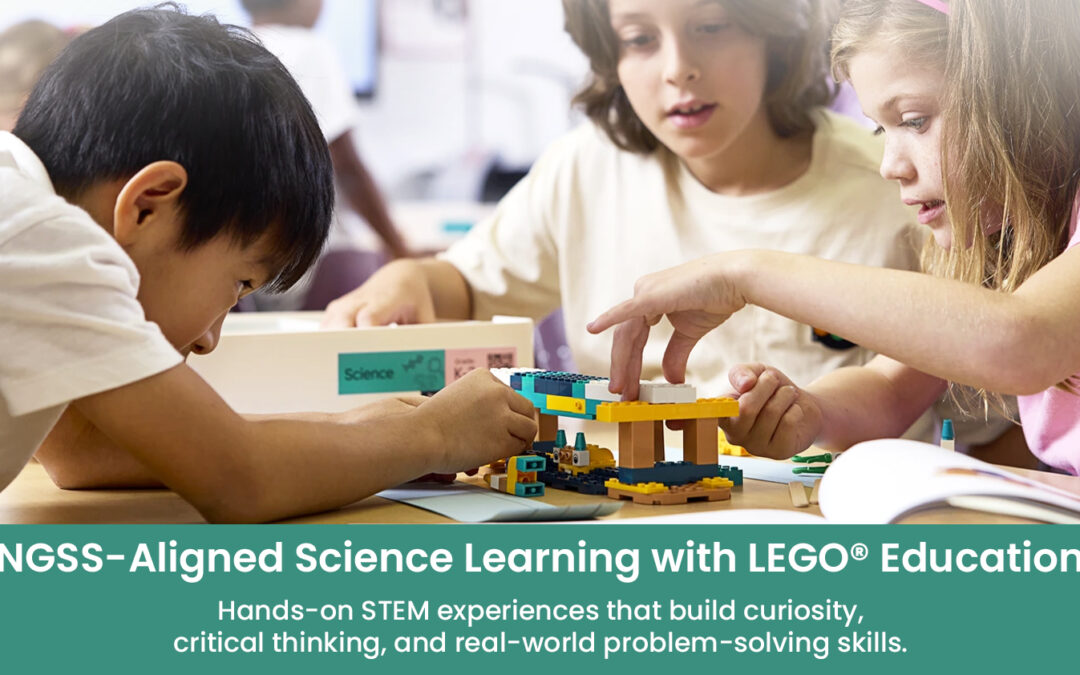
Every experiment is a new opportunity to learn. In today’s evolving education landscape, students need more than theoretical knowledge—they need experiences that allow them to explore, test, and understand concepts in real-world contexts. This is where hands-on science learning for students becomes essential.

With LEGO® Education Science, classrooms are transformed into interactive environments where students actively engage with scientific concepts. Instead of simply observing, students participate in experiments, make changes, and discover outcomes on their own. This approach not only strengthens understanding but also builds confidence in learning.

Learning Science Through Experimentation

Science is best understood through experimentation. When students actively test ideas, they gain a deeper understanding of how concepts work in practice.

Traditional teaching methods often focus on fixed outcomes, but hands-on learning encourages students to:

  • Explore different approaches
  • Test hypotheses
  • Observe results
  • Refine their ideas

LEGO® Education Science supports this process by providing structured activities that guide students through experimentation while allowing room for creativity and independent thinking.

Building Confidence Through Trial and Error

One of the most valuable aspects of hands-on science learning is the ability to learn through trial and error. When students experiment, they understand that not every attempt leads to immediate success—and that’s part of the learning process.

With LEGO® Education Science, students are encouraged to:

  • Try new ideas without fear of failure
  • Learn from mistakes
  • Improve their solutions
  • Build resilience and confidence

This environment helps students develop a growth mindset, where challenges are seen as opportunities rather than obstacles.

Encouraging Critical Thinking and Problem Solving

Hands-on science learning goes beyond understanding concepts—it develops essential thinking skills.

Through structured experiments and activities, students learn how to:

  • Analyze problems logically
  • Evaluate different solutions
  • Make informed decisions
  • Adapt and improve their approach

LEGO® Education Science integrates these skills into every activity, ensuring that students are not just learning science but also learning how to think critically and solve real-world problems.

Making Science Engaging and Interactive

Engagement plays a key role in effective learning. When students are actively involved, they are more likely to retain information and develop a genuine interest in the subject.

LEGO® Education Science uses interactive elements to make science lessons more engaging. Students can build models, conduct experiments, and visualize concepts in action. This approach turns abstract ideas into tangible experiences, making learning more meaningful and enjoyable.

As a result, students become more curious, motivated, and eager to participate in classroom activities.

Supporting Teachers with Structured Learning

While hands-on learning is highly effective, it requires the right tools and structure to be implemented successfully in classrooms.

LEGO® Education Science provides educators with:

  • Ready-to-use lesson plans
  • Guided experiments
  • Curriculum-aligned activities
  • Easy-to-use classroom resources

These tools help teachers deliver engaging science lessons without the need for extensive preparation. Educators can focus on guiding students through the learning process while ensuring that educational objectives are met.

Preparing Students for Future Learning

The skills developed through hands-on science learning are essential for future academic and career success. Fields such as engineering, technology, healthcare, and environmental science all require strong problem-solving and analytical abilities.

By engaging in experimentation and discovery, students build a strong foundation in scientific thinking. Hands-on science learning for students helps them develop curiosity, confidence, and the ability to approach challenges with a solution-oriented mindset.

With LEGO® Education Science, students are not only learning science—they are developing skills that will benefit them throughout their educational journey and beyond.

Conclusion

Every experiment offers a chance to learn, grow, and improve. Hands-on learning transforms science education by making it interactive, engaging, and meaningful.

With LEGO® Education Science, students test ideas, make changes, and discover what works. This process builds confidence, encourages curiosity, and helps students develop a deeper understanding of scientific concepts.

By embracing hands-on science learning for students, schools can create classrooms where learning is driven by exploration, experimentation, and discovery—preparing students for a future filled with possibilities.

The Future of Student Voice Starts with School Radio

The Future of Student Voice Starts with School Radio

In today’s education landscape, schools are increasingly focused on building real-world skills that go beyond textbooks. Communication, creativity, collaboration, and confidence are no longer optional—they are essential. One powerful yet often underutilized tool that brings all these skills together is a school radio studio.

A dedicated radio setup, like the SR2 School Radio Package, transforms a simple room into a dynamic broadcasting hub where students can create, produce, and share their own content. It’s not just about speaking into a microphone—it’s about giving students a platform to express ideas, tell stories, and develop lifelong skills.

What is a School Radio Studio?

A school radio studio is a professional-grade broadcasting setup designed specifically for educational environments. It allows students and teachers to create live or recorded audio content such as:

  • Morning announcements
  • Student-led talk shows
  • Interviews and discussions
  • Educational podcasts
  • Music and entertainment segments

With the right setup, students get hands-on experience using real broadcasting equipment—similar to what professionals use in the media industry.

Bridging Classroom Learning with Real-World Skills

Traditional teaching methods often focus on theory, but a radio studio brings experiential learning into the picture. Students are not just learning concepts—they are applying them in real time.

Through radio broadcasting, students naturally develop:

  • Communication Skills: Speaking clearly, confidently, and effectively
  • Critical Thinking: Planning content, structuring discussions, and asking questions
  • Creativity: Writing scripts, storytelling, and producing engaging segments
  • Teamwork: Collaborating as presenters, producers, and technicians

These are essential skills that prepare students for future careers across industries—not just media.

Inside the SR2 School Radio Package

The SR2 School Radio Package is designed to provide everything a school needs to get started with ease. It includes:

  • A professional audio mixer for controlling sound levels
  • Three high-quality microphones with adjustable arms
  • A touchscreen playout system with automation software
  • LED “Mic Live” indicators for a real studio feel
  • Studio speakers for clear and balanced audio output

This all-in-one setup ensures that schools can launch their radio station without the complexity of sourcing multiple components separately.

Easy Integration into School Life

One of the biggest advantages of a school radio studio is its flexibility. It can be seamlessly integrated into daily school activities and various subjects.

For example:

  • Morning broadcasts can replace traditional announcements
  • Language classes can use radio for storytelling and speech practice
  • Social studies can include debates and interviews
  • Clubs and extracurricular activities can create themed shows

This makes the radio studio not just a tool, but a central hub for student engagement.

Encouraging Student Confidence and Leadership

Many students struggle with public speaking or expressing their ideas in front of others. A radio studio provides a safe and supportive environment where they can build confidence gradually.

Behind the microphone, students find their voice. Over time, they become more confident speakers, better listeners, and stronger leaders.

It also opens opportunities for students to take ownership—hosting shows, managing schedules, and even mentoring peers.

Streaming and Beyond

Modern school radio systems often come with streaming capabilities, allowing broadcasts to reach beyond the classroom. Schools can share content with parents and the wider community, creating a stronger connection between students and their audience.

Additionally, access to curriculum-linked resources and ongoing support ensures that teachers can maximize the value of the studio without needing prior technical expertise.

Why Schools Should Invest in a Radio Studio

A school radio studio is more than just an extracurricular addition—it is a strategic investment in future-ready education. It aligns with modern learning goals by:

  • Promoting active, student-led learning
  • Enhancing digital and media literacy
  • Building essential soft skills
  • Encouraging creativity and innovation

Final Thoughts

In a world driven by communication and content, giving students a platform to create and share their voices is invaluable. A school radio studio like the SR2 package does exactly that—it transforms learning into an engaging, practical, and empowering experience.

For schools looking to stand out and truly prepare students for the future, it’s time to go beyond the classroom and go live. 🎙️

Transforming Classroom Coding with MatataStudio Telemap

Transforming Classroom Coding with MatataStudio Telemap

In today’s rapidly evolving education landscape, schools are constantly looking for innovative ways to make learning more engaging, interactive, and future-ready. Coding, once considered an advanced skill, is now becoming a foundational part of modern education. However, the challenge lies in how it is taught. Traditional methods often rely heavily on screens and theory, which can limit creativity and real-world understanding. This is where MatataStudio Telemap steps in as a game-changing solution.

What is MatataStudio Telemap?

MatataStudio Telemap is a customizable coding map designed to bring hands-on, experiential learning into the classroom. It transforms coding lessons into interactive storytelling sessions, allowing students to physically engage with concepts rather than just observe them on a screen.

At its core, Telemap is built with magnetic grid tiles that can be connected in various ways. Teachers and students can create different layouts, pathways, and even 3D structures. This flexibility makes it an ideal tool for both structured lessons and creative exploration.

Making Coding Tangible and Visual

One of the biggest advantages of Telemap is its ability to make abstract coding concepts tangible. Each grid is carefully designed to align with the movement of coding robots, ensuring accuracy and clarity in execution. As students program movements, they can immediately see the results on the map.

This physical interaction helps students understand key coding principles such as:

  • Sequencing
  • Logic building
  • Problem-solving
  • Cause and effect

Instead of just writing code, students see it come to life, which significantly enhances comprehension and retention.

Story-Based Learning for Deeper Engagement

Telemap goes beyond coding by introducing story-based learning. With themed cards that can be inserted into the grids, teachers can create real-world scenarios and challenges. For example, a lesson can be transformed into a journey through a city, a wildlife adventure, or even a math-based treasure hunt.

This approach not only makes learning fun but also encourages:

  • Creativity
  • Critical thinking
  • Collaboration among students

By blending storytelling with coding, Telemap ensures that students remain engaged while developing essential skills.

Supporting Multi-Subject Learning

Another standout feature of MatataStudio Telemap is its ability to support cross-curricular integration. It is not limited to computer science alone. Schools can use Telemap to teach a variety of subjects, including:

  • Mathematics: Grid navigation, coordinates, and problem-solving
  • Language: Story creation and sequencing
  • Geography: Map-based exploration and navigation
  • Science: Scenario-based experiments and simulations

This versatility makes Telemap a valuable addition to any classroom, helping educators maximize learning outcomes across subjects.

Designed for Classroom Collaboration

Telemap is perfectly suited for group activities and collaborative learning. Students can work together to design maps, solve challenges, and build projects. This fosters teamwork and communication skills, which are crucial for future success.

The modular design also allows teachers to easily adapt lessons based on class size, learning objectives, and student levels.

What’s Inside the Telemap Kit?

The Telemap package includes:

  • 16 magnetic grids (10×10 cm each)
  • Double-sided themed cards
  • Endless possibilities for creating interactive learning environments

With these components, educators have everything they need to start delivering engaging coding lessons immediately.

Preparing Students for the Future

As education shifts towards skill-based learning, tools like MatataStudio Telemap play a crucial role in preparing students for the future. By combining coding with creativity, storytelling, and real-world application, Telemap helps students develop a well-rounded skill set.

It’s not just about teaching coding — it’s about building thinkers, creators, and problem-solvers.

Final Thoughts

For schools looking to upgrade their coding curriculum, MatataStudio Telemap offers a powerful, hands-on solution. It bridges the gap between theory and practice, making learning both meaningful and enjoyable.

In a world where innovation is key, giving students the right tools can make all the difference. And with Telemap, classrooms can truly become spaces where ideas come to life.