
The Power of Good Vocabulary: Easy Ways To Improve Your Child’s Vocab

The Power of Good Vocabulary: Easy Ways To Improve Your Child’s Vocab

The Power of Good Vocabulary: Easy Ways To Improve Your Child’s Vocab

In addition to the limited vocabulary kids learn or pick up from others in preschools, parents must take extra efforts to introduce children to a bank of new words, every now and then. As per a recent survey, studies show that many students who graduate from preschools have limited vocabulary, and this affects their performance in elementary school and beyond.

Words are empowering, they give the student a gateway to understand the world around him and make sense of everything. Therefore, introducing children to a vast ocean of vocabulary, across varied topics, is the key to success for students.

How to build a robust vocabulary:

Here are a few exercises that can be incorporated to build a robust vocabulary:  

#1 Converse as Much as Possible

Often parents make a mistake by speaking to the child at home in their mother tongue. While it’s important for the child to know his regional language, it is equally or even more important to learn English. Young children can grasp new words passively while having a conversation with someone, and hence make a rule of communicating in English 60% of the time, even when the child is at home. As parents, you also need to use different words or increase the complexity of the words in a sentence, so that children are constantly learning a new ‘word’ without even realizing it. Note that repetition is the key, and hence use this newly introduced word a couple of times before you phase it out and replace it with a new one.

#2 Read a Book Together

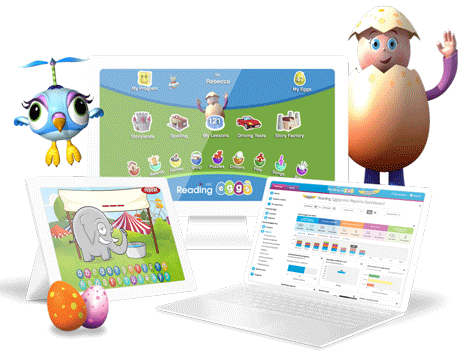
As much as your child enjoys flipping through a storybook and admires the colorful illustrious characters on the pages, he also needs to be instructed to read the text. The best way to practice this is to read to your child once or twice aloud and then make him do it. Draw the child’s attention to the book and run your finger word-by-word below the text while you are reading. The trick is to read slowly, clearly, and be mindful of the pronunciations. Pause after reading one page and then ask the child if he needs an explanation of any word that he wasn’t already aware of. Explain the meaning in simple words and then proceed with the story. You can use an e-reader or subscribe to the vast library featured by this famous reading portal called – Reading Eggs. Alongside e-books, Reading Eggs has a plethora of gamified exercises and a dedicated ‘phonics learning section’ to support the learner’s reading skills & vocabulary. This multi-award-winning platform has many loyal subscribers in Dubai and other Middle East countries.

#3 Create A Word Wall

This is a great way of constantly reminding children of the words they are learning, as they look at it every time they pass through the living room door. Place the board at a prominent position and affix a chart paper with 5 to 6 words that the child has recently learnt. Keep the word wall as-is for a couple of weeks, and then change the set of words. By repeatedly looking at the words, the child learns to process the information, such that from his short-term memory, it gets etched in the long-term memory, thereby never to be forgotten.

#4 Sing Rhymes

Together Nursery rhymes are fun, they are peppy, and have catchy tunes which make children dance. In a four-liner rhyme, think of how many new words you can accommodate to teach youngsters some additional vocabulary. It is not necessary that you need to stick to conventional ones; ‘Twinkle – Twinkle, and Humpty Dumpty’. Be free to make your own rhyme and add words that you might feel would be helpful for learning. You could also tweak sentences of an existing nursery song, to introduce synonyms and words that are unusual. Most K-12 schools in UAE and other GCC regions introduce a lot of rhymes in the Primary Year’s Program (PYP), because rhymes are easier to recall, and it helps the child in remembering words and their meanings, associated with the rhymes. Row, row, row your boat, Gently down the stream, And If you see a Pelican, Don’t forget to greet him!

Besides the above methods, you could also introduce a thesaurus to your child, once he’s old enough. An enriched vocabulary will give your child the confidence to communicate freely at school and in a social circle, thereby benefiting him manifold in life. The most important thing to remember is to be positive and support your child’s progress by motivating him.

Contact us

Fill in your details below or send us an email on info@knowledge-hub.com

Learning To Code An HTML Web Page with the TechnoHTML5 Curriculum

Learning To Code An HTML Web Page with the TechnoHTML5 Curriculum

Learning To Code An HTML Web Page with the TechnoHTML5 Curriculum

We live in a Digital World where communication, networking and business, happens online, rather than face-to-face. Digital Assets such as; websites, blogs, and social media pages, are valued the most and an absolute must-have in today’s day & age. The brand is perceived positively or negatively basis its website and reviews/ratings on the internet. All marketing efforts, including budgets, are strategically planned in a way to increase the ‘online image’ and thereby increase awareness & reach. This means, if you want to survive in the ‘Digi Age’ you need to ‘armor up’ with relevant skills.

Computer lessons in schools have undergone a major upgrade in their curriculum to match with the changing pace, especially in tech-advanced regions like UAE and other GCC counterparts. Students as early as elementary school are learning basic fundamentals of coding to power robots and bring high-tech ideas to life. By the time students graduate from school, they are even equipped to construct their own website from scratch.

Steps to Create a Web Page in HTML

Many beginners have apprehensions about coding and find it to be like rocket science, thereby staying away from the same. However, reading through this Blog will change your perspective. Let’s get started by learning about some important jargons associated with the process;

HTML

Hypertext Markup Language is a language that organizes web pages. It adds structure to the pages and its content. This essentially means making the text look presentable with bullet points, using tables wherever required, and spacing out paragraphs.

HTML Tags

With the help of tags, the browser distinguishes between HTML content and simple content. It contains three main parts, opening tag, content tag, and closing tag. Every tag has its specific task and the tag is written within such brackets < >.

Example: <tag> content </tag>

PHP

The full form of PHP is “PHP: Hypertext Preprocessor.” It is a widely used open-source language to build web applications

To Get Started We Need the Following

A Text Editor

To write an HTML code, we need to use any of the text editors you are comfortable with; Notepad on Windows or TextEdit on Mac. You are not required to additionally install any text editor from the net, just work with the one already available on your computer.

A Browser

Any browser will do; Firefox, Chrome, Safari, or any other browser that you use.

Now that we have assimilated everything we need, let’s get started…

#1 Content

A content-rich website is suitable to clearly communicate the brand’s message across and give the target audience an idea of the products/services. Pre-plan what content you wish to showcase on your website’s home page and other internal sub-pages on a word document and use important keywords to enhance your search rating for the purpose of SEO.

#2 Download Images

Use a free-pic platform to download images or get high-resolution images from a paid source. Save all shortlisted images in a folder.

#3 Website Design

Choosing a proper Web design is important, as the look & feel of the website depends upon a proper template. Avoid gaudy colors with unconventional layouts. Let the design be simple, yet effective.

#4 Write HTML Codes

Writing a proper code will allow your website to be displayed the way you want it to look. Use this below code to begin with:

<!DOCTYPE html>

<html>

<head>

<title></title>

</head>

<body>Your content here.</body>

</html>

Save the file in proper format – ‘name’ followed by ‘.html’, for example- fashion.html.

#5 Add the Content

In this step, we will add the content or text that you wrote earlier between the body tags.

#6 Add HTML Tags

Add headings correctly in h1 tags section.

<h1>

Fashion Trends: New Arrivals for Summer 2022

</h1>

#7 Add a List

Listings under bullet points need to be drafted in the following fashion;

<ul>

<li>Wear dresses for summer.</li>

<li>Choose cotton fabrics.</li>

<li>Go for light colors and floral prints.</li>

</ul>

#8 Include Images

Use the image tag to add the images from the file you saved earlier, so that It is uploaded on the web page.

<img src=”images/file-name.jpg”>

And you are kind of done! Refresh the browser to see how your website looks and make corrections wherever required.

TechnoHTML5 TechnoKids has introduced the TechnoHTML5 curriculum to allow students to code a one-of-its-kind web page with HTML and CSS lessons for beginners. Add style text, graphics, and hyperlinks to your project and display your creativity. Such interesting modules by TechnoKids are a hit in schools across the globe, including IB institutes in Dubai in the Middle East. To learn more about TechnoKids, visit our website: <link>

Contact us

Fill in your details below or send us an email on info@knowledge-hub.com

What Are 3D Shapes: An Easy Explanation For Primary Graders

What Are 3D Shapes: An Easy Explanation For Primary Graders

What Are 3D Shapes – An Easy Explanation For Primary Graders

Shapes are everywhere, they are all around us. The book on your table is of a specific shape, and the wallet you are carrying is of a different shape. Learning about shapes helps us visualize and organize information and gives students a good introduction into the world of Math & Geometry. Shapes also helps us understand various signs & symbols and infer a meaning out of it.

Difference between 2D and 3D shapes

A 2D shape is something that can be drawn on a flat surface on paper. All 2D shapes have their own specific area and perimeter, and they contain sides, corners, and curves. Square, triangle, rectangle circle, hexagon, are all examples of 2d shapes.

A 3D shape consists of 3 dimensions – length, breadth, and height vs. the 2D shapes which have only length and width. Every 3D shape occupies some space and has depth. Examples of 3D shapes are; cube, cuboid, cone, and cylinder. These shapes have different surface structures that can be felt and touched; some are round, while others are flat. Examples of 3D shapes are; sphere, cube, cylinder, cone, prism, etc.

Children often get confused between 2D shapes and their 3D equivalent. For example; a prism or a pyramid shaped object, also looks like a triangle. To avoid this disparity, we have explained the properties of each shape and its counterpart in details, so that kids can be made aware of the difference between them.

2D Shape Circle

Properties of a circle: A circle has no sides or corners. It’s made of curved lines starting from any point and ending by making one full rotation. Every part of the curved line on a circle is equidistant from the central point.

Round objects: bangle, CD, wheels, coins

3D Shape Sphere

Properties of a sphere: A sphere is a round circular shape which looks like a ball. You can say it is a bulged circle. All points on the surface of the sphere are equidistant from the central point. It has no edges or corners.

Spherical objects – ball, planets, marbles, sun

2D Shape Triangle

Properties of a triangle:

A triangle is made of three sides and three vertices. The sum of all the angles of a triangle add to 180°. Depending on the measures of the angle and the length of the sides, the triangles are classified into different types; equilateral, isosceles, and scalene.

Triangular objects: Pizza slice, ice-cream cone, birthday cap, Christmas tree

3D Shape Triangular Prism

Properties of a triangular prism: The prism is a solid shape with two identical ends in the shape of a triangle. The sides of the prism are rectangular surfaces. The cross-section across its length is uniform.

Triangular Prism shaped objects: ice cube, Toblerone chocolate bars, pyramid

2D Shape Square

Properties of a square: A square has all four sides equal and all the corners form a 90-degree angle. The opposite sides of a square are parallel to each other.

Square objects: alarm clock, window frame, biscuit, piece of chocolate

3D Shape Cube

Properties of a cube: A cube is a solid geometric 3D figure which has 6 square faces. It has as many as 8 vertices and 12 edges. All sides of the cube are of same length.

Cube objects: Rubik’s cube and dice

Some Activities to reinforce the concept of shapes:

#1 Sorting Shapes

Give children a basket with different objects example; marble, block, cone, etc. and ask them to sort it as per the 3D shape category it belongs to. So, the marble has to be placed under the picture that has a sphere shape, and the block has to be placed under the picture of a cube.

#2 Shape Hunt

Introduce child to any one 3D shape say ‘prism’ and let him go around the class/home to look for items of similar shape around. Applaud his efforts and correct the child if necessary.

#3 Shape Quiz

In this activity, the teacher gives the students hints for guessing the 3D shape. Say for example; this is a solid 3D geometric shape that has 8 vertices and 6 square faces…guess the 3D shape.

Mathletics is a cool platform that supports 2,00,000 math teachers across the globe to give students the dual advantage of mastering the subject, while having fun. Schools across the world, including Dubai in the Middle East, collaborate with Mathletics platform, to go beyond conventional textbooks and make mathematics more interesting. Students are even rewarded with a certificate of achievement to motivate them to flaunt their achievements.

Contact us

Fill in your details below or send us an email on info@knowledge-hub.com

Gamified Coding: Develop Stories, Share Ideas, and Create Animations

Gamified Coding: Develop Stories, Share Ideas, and Create Animations

Gamified Coding: Develop Stories, Share Ideas, and Create Animations

It’s very normal for kids to stay glued to laptops and mobile devices for hours, as outdoor play has now been taken over by gamified experiences online. Though entertainment is the main purpose of these digital activities, some of them have multifold benefits like; imparting knowledge, alongside being fun & game!

Well, if your child grows up to be a future programmer, then the seeds of his interest could be attributed to the ardent interest he developed during his childhood days while playing coding games.

Here are some examples of the best coding activities for beginners;

Code Combat

This gaming website is famous amongst those who enjoy playing it rough on the battlefield! With over 20 million learners across 190 countries, including Dubai in the Middle East, Code Combat has made its way to enthusiastic coders who appreciate learning programming through hands-on games. Their vision is to teach real-world skills to kids through the power of play. The level of difficulty keeps advancing, as the student gains more experience until he becomes a pro!

Codemoji

This is a super-fun, yet productively enriching platform for students. Codemoji encourages learners to create their own personalized websites using Codemoji’s HTML and CSS site builder. One can even try their hands-on curating different animations with Codemoji’s unique and user-friendly animation builder. Its computer science curriculum specially caters to students of 1st – 8th standard teaching them basics of web development and coding, including HTML, CSS, and Javascript, in a fun and easy way.

Robocode

Are you ready to ace the battlefield? Robocode is a programming game that allows learners to develop a robot battle tank and battle against other tanks in Java or .NET. The battle takes place in a real-time fashion and you can partake as a contender. The participant has to instruct the tank on what step it needs to undertake, under what event or scenario, by writing rules in AI (Artificial Intelligence). Many schools and universities have incorporated Robocode in their teaching curriculum, to make lessons light-hearted and easy to comprehend.

Tynker

Students from 5 to 18 are promised an immersive game-like experience and presented with interactive tutorials so that they can get started with coding! Through guided voice instructions, children learn to solve problems using logic, create simple apps, and delve deeper into STEM subjects. Some of their interesting games featured for the 5-7 age group include; Barbie™ Pet Vet!, Candy Quest, Wild Rumble, and many others. Now that sounds super exciting!

Robotify

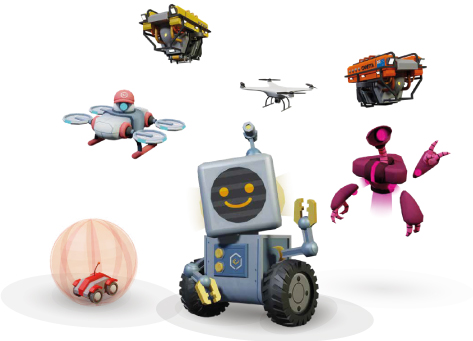
Robotify guides students to master complex skills related to math, coding, and critical thinking, which are important 21-st century skills. Learners get 24/7 access to their personal fleet of virtual robots, with over 900 gamified coding challenges to undertake. Going virtual removes the hassle and expense of hardware, thereby making coding and robotics more affordable and accessible to all. One can experience real-life challenges in incredible 3D virtual environments and even collaborate on coding projects with other students. Robotify’s popularity in the UAE and other GCC regions is very much in sync with the Middle East nation’s vision of excelling in technology and always remaining amongst the most digitally advanced economies in the world.

Robotify: https://knowledge-hub.com/robotify/

Scratch

Scratch is the simplest way to get children started with coding! It has garnered appreciation for its simple ‘drag and drop’ block coding method and has become the world’s largest coding community for children. It allows kids as young as elementary school to develop digital stories, play relevant games, and design animations via its platform. Scratch is popular in more than 200 different countries and territories and is available in over 70 languages. Scratch features recent projects that are created by budding coders so that everyone can learn from each other’s projects and broaden their ideas. Are you joining the scratch community?

Contact us

Fill in your details below or send us an email on info@knowledge-hub.com

Easy Science Experiment For Kids: Understanding The Process of Germination

Easy Science Experiment For Kids: Understanding The Process of Germination

Easy Science Experiment For Kids: Understanding The Process of Germination

It’s fascinating for kids to learn about germination and how a tinny little seed grows into a big plant. In four lines of the below poetry, you get a glimpse of how a seed grows;

“I’m a little seed in the dark,

dark ground Out comes the sun,

yellow and round Down comes the cool rain,

soft and slow Up! the seed begins to grow!”

Once children have danced and sung to the tunes and have been verbally introduced to the topic; it’s time to get hands-on and show them the process of germination.

Germination Experiment

Materials Required:

  • Plastic Ziplock Bag
  • Spray bottle with water
  • Tissue paper
  • Tape
  • Unsprouted Bean Seeds (Example: Kidney bean, chickpea, Lima beans)

Method:

  • Dampen the tissue paper by spraying water all over it. Now fold the tissue paper into half and place it in the Ziplock bag.
  • Pick any one side, and drop 3-4 the beans on that side of the bag. Zip the bag and seal it with a tape for extra caution.
  • Place the bag in sunlight at your window sill, such that the child can observe every little change through the sprouting process.
  • Wait for 24 hours and let for your kids discover the shoot growing by splitting the seed cover. The seed pops open and the bean begins to sprout.
  • After 4 days to a week’s time, the shoot is fully grown, that is, the bean is sprouted fully.
  • Wait for some more time and notice that leaves start forming at the tip of the cotyledon.
  • Its time to move the experiment outdoors in the garden or sow them in a flower pot, to continue tracking the growth stages
sprout

Planting the sprout:

  • Take sufficient amount of soil and ‘till the soil’, which means, turning the soil, stirring and digging it, until the soil is property aerated.
  • Dig a little hole in the middle of a heap of soil using your finger and gently place one sported bean in the dug hole. Keep some distance between the planted bean sprouts in your gardens.
  • Fill the hole carefully using your hands by sliding some soil over the hole.
  • Water the planting regularly with a watering can. Remember just the right amount of water is required to moisten the soil. Over watering will simply do more harm, than any good to the plant.
  • After a few days, you should be able to see the shoot appear, as it protrudes from the soil and grows upwards.
  • A few leaves grow into many others and after a period of 2-3 weeks, we can even see the bean pod hanging from the stem. Wait for it to fully grow, before you pluck the pods and collect the beans.
  • And there you have it, another plant which bears daintily little beans!

Reiterate the following points once the experiment has concluded;

  • A bean seed grows into a bean plant. The pods will have 3-4 bean seeds which can be replanted.
  • There are different varieties of beans and each have their own characteristics. Some beans are black, some are red, while others are even yellow.
  • The seed first grows a root which goes downwards into the soil, and then the shoot emerges and grows above the soil.
  • The roots hold the plant into the soil firmly as they begin to branch from the central root which grew first. Roots mainly absorb water and nutrients from the soil and keep the plant healthy.
  • The shoot grows upwards in the direction of sunlight.

Carolina specially designs & supplies kits for students, that offers lessons across different grades covering important science concepts. Schools that follow the k-12 curriculum and IB culture benefit manifold from the kit and most institutes in GCC Countries in the Middle East avail the lab kits for students to practice hands-on lessons. For the purpose of germination experiment make use of the Carolina® Seed Starter Mix and Seed Starter Kit, to delve deeper on this topic. The unit includes the following – a teacher’s guide, access to online digital resources, supplies, and materials sufficient for the entire class.

To learn more about other such interesting kits by Carolina for those in the UAE, including Dubai, head to our website https://knowledge-hub.com/carolina-biological/

Contact us

Fill in your details below or send us an email on info@knowledge-hub.com

Understanding The Pre-production Stages To Host A Radio Program

Understanding The Pre-production Stages To Host A Radio Program

Understanding The Pre-production Stages To Host A Radio Program

Radio is a multifaceted platform that is not only cost-effective but also has tremendous reach. There are far more radio listeners than TV spectators or even readers who rely on the newspaper for their information. Radio caters to mass target audiences, and people tune in to their favorite radio channel for various reasons. Some enjoy getting their daily dose of entertainment through radio, while others source their global news through radio platforms.

The current decade that we live in, is driven by content. Every brand’s marketing strategy revolves around curating meaningful content and creatively presenting it to the audience. Radio is an excellent platform to covey the brand’s message via jingles, radio Ads, and sponsorship of FM shows. Therefore, the need of the hour is preparing ‘youth’ to face the radio and teaching them ways to generate unique content, by expressing creativity.

What is School Radio?

A School Radio platform gives students an opportunity to voice their opinions, share their creativity, and build confidence by actively being involved in the production, coordination, and execution phase. Right in elementary school, children get a chance to interact with people, research the net, learn how to broadcast information, and host a radio show. School Radio is a part of the Broadcast Radio group, which boasts 18 years’ experience in supplying the radio industry with software, hardware, and technical support. They have made a mark in 430+ schools by installing handy broadcasting devices, for the benefit of students, which makes them UK’s largest provider of radio technology to the education sector. Their affordable range of fixed radio studios are suitable for all sizes and budgets. Some international schools that have their set-up in Dubai and other regions of the Middle East, readily adopt the School Radio tool to encourage children to launch their own radio station.

image005 1

Pre-Production Stages for a Radio Show

While deciding on starting a radio show, there are some preparations and planning to be done;

Deciding the theme of the Show

When you are on-air for a school radio show, there are going to be thousands of fellow students hearing you. Therefore, it is wise to choose a topic that is dear to you, so that you can passionately talk about it. However, the topic mustn’t be vague, such that there are no listeners interested in hearing you out. Some of the trending themes you could consider are; the latest movie premier launches, talks on current affairs, discussing festive celebrations, and even talking about health & lifestyle. Whatever it is, make it worthy of listening.

Preparing Content

Content is the King indeed! If you are going to be on-air for 1 hour, what is it that you are going to talk about? Do thorough research in advance and prepare notes, so that you wouldn’t fumble during the ‘live’ radio session. Practice your speech in front of a mirror, and if you are going to be having a guest speaker, prepare a proper introduction to introduce the personality & their achievements in brief. Another tip is to start the show with a ‘bang’ so that in the first 5 minutes your listeners are glued and look forward to hearing more from you, instead of changing the station. Take care of the sentiments of the listeners, and avoid talking about harsh topics that might create controversies later. Example: Don’t bring up anti-Islam news on your show, while broadcasting your show to students in UAE.

image004 1

Plan Your Music

Basis your target audience’s taste in music, decide what genre would you be playing on your show. Is it going to be retro, hip-hop, rock, or jazz? You also need to know the names of the singers and the album, to introduce the song, before it is played. Also, don’t forget to time the songs. What is the duration of each song – as all songs need to be played within the allocated time frame, without exceeding the time limit of your show.

Test the Equipment

Pre-production is incomplete without proper radio equipment and testing if it works fine. Do a quick run-through of the program a few days prior and make sure the microphones are loud and clear, the headphones are in place, and the mixer console is placed at an arm’s distance to reach it in time & tune-in some music without wasting any. Once your pre-production agenda is sorted; that is; once you have taken care of time, location, equipment, and people or guests, then just let loose and enjoy your moment of stardom. Feel free to use storytelling to amplify the message. Let your creativity flow and most importantly, be confident.

Contact us

Fill in your details below or send us an email on info@knowledge-hub.com