

Raising a Generation of Logical Thinkers By Practicing Programming

Raising a Generation of Logical Thinkers By Practicing Programming

Raising a Generation of Logical Thinkers By Practicing Programming

Logical thinking is an important trait of programming. Individuals who possess logical thinking can analyze problems and derive the right solution for the problems. Logical thinking is not only important for programming but it is also useful in our lives where you need to get a solution for an occurring problem.

Individuals should have the following characteristics of logical thinking in programming.

  1. Observe the situation.
  2. Analyze the information provided for a task.
  3. Study the information to figure out if it is related to a task.
  4. Outline ideas and break them into plans.
  5. Focus on facts.
  6. Develop solutions to problems considering the facts.
  7. Pay keen attention to details.
  8. Test the effectiveness of the solution, take feedback and revise it.

Now that we all know how important logical thinking is for programming and life in general. It doesn’t mean that all of us are given this quality by birth, we have to learn and work on the skill to make the best use of it. Here is how you can build and improve your logical thinking.

Think To Solve

The purpose of programming is to provide solutions for the problems. To get the solutions you need to understand the problem and think of the solution as only you can come up with an accurate solution for the problems you want to solve. Once you know the solution you need to divide it into smaller parts and work on them to get the desired output on it.

Practice

As we all know practice can bring the best results. Practice is the only trait that can make us master any skill. So, try to practice already written algorithms to get an idea of how a solution for a problem is formulated as algorithms by including a step by step procedure to solve a problem. Once you start studying algorithms you will build logical thinking and will be able to write your algorithms too. To make your practice fun and meaningful check the TechnoKids subscription available all over GCC, Middle East, UAE and Dubai for easy and fast learning

Learn About Data Structures

Data structures and algorithms are the key elements of programming. Now that you know how to write algorithms, study the data structures as these are the fundamentals of programming. Once you learn all the data structures available you will have a better understanding of which data structure to be used and you will be one step ahead in programming

Play Games

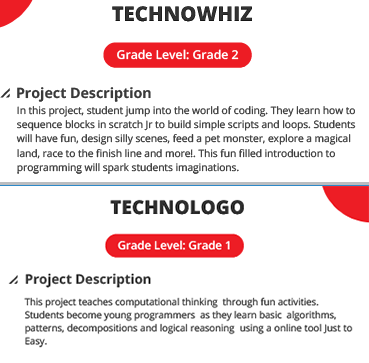
What if I say playing games improve your logical thinking, sounds cool right? Yes, many games force us to think logically like chess, sudoku and puzzles. So, the easy way to enhance your logical thinking is to play such games daily. TechnoKids presents fun games like TechnoWiz and TechnoLogo to teach youngsters the basics of coding.
Learn Programming Paradigms

Learning the programming paradigms will boost your logical thinking. There are several paradigms available but the most common and useful is object-oriented programming. Once you have your hands-on experience in this you will be able to create solutions for any problem using your logical thinking. TechnoKids subscription includes basic to advanced programming lessons for kids to learn every step of programming available all over GCC, Middle East, UAE and Dubai.

Look and study other’s code

We all agree that there is only one solution for a problem but there are possibly hundreds of ways to write a program for that one solution. Every programmer will think in their own ways depending on their logical ability so try and study other programmer’s code to better your skills. The best way to do so is to subscribe to TechnoKids subscription which has several codes to study and brush up on your programming skills.

Code challenges

As challenges bring out the best in us. Do participate in different challenges and competitions to test yourself on creating solutions, apply your logical thinking and come up with an optimal way of programming for it. The Technohub features of TechnoKids subscription will provide you with a platform to participate in code challenges more often to polish your skills with every challenge available all over GCC, MIddle East, UAE and Duba.
Read Books And Solve Examples

Reading programming books can make your basics strong and serve you with a variety of solutions, code and algorithms for a particular solution. Understanding the solutions and optimally solving them will increase your confidence and refine your logical thinking. You can check the accurate examples in Technokids subscription to make this easy for your children and any beginner.

Clean Code

Clean code embodies a better understanding of algorithms and logic behind the code. How clean the code is that simple, accurate the programming will be required for the solution. It will not only be easy for you to write programs but for other users to be able to understand and learn. However, to write a clean code you need to brush up your skills daily, this may sound a bit difficult for you but here is a tip for you. Try the TechnoKids subscription sessions and step by step procedure explained and keep practising with them.

Design Patterns

Design patterns suggest all the possible solutions for a problem and give you a clear understanding of the solution. Having prior knowledge of programming paradigms and design patterns will help you to solve logical thinking while programming for a solution.
I hope you know how to level up your logical thinking in programming now. To make this journey for your kids or you as a beginner I suggest “Techno kids subscription (5-15 years old) available all over GCC, Middle East, UAE and Dubai. The subscription will make you understand basics and advance your programming by providing step by step coaching at your speed of understanding and encourage you to be better by providing challenges and tasks on a daily basis.
Contact us

A Revolutionary Game Changer with the Introduction to LEGO® Play

A Revolutionary Game Changer with the Introduction to LEGO® Play

A Revolutionary Game Changer with the Introduction to LEGO® Play

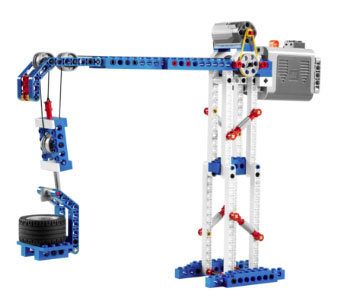
We are all familiar with the famous LEGO® play kits. Children find it intriguing to open a box full of colourful blocks & bricks and get to job right away. Young pre-schoolers have vivid imagination and are always seeking an outlet to express themselves. LEGO® kits provide an excellent opportunity for children to present their creativity and have fun while doing so.

Did you know the word ‘LEGO’ was derived from two Danish words ‘leg’ & godt’ which means ‘play well’. Now that is quite an apt name for an asset like LEGO®.

Time and again parents have witnessed numerous benefits by gifting their children the wonderful world of LEGO®. From refinement of senses to upgradation of skills, and even developing important values like co-operation, LEGO® does it all. Through this Blog let us highlight a few reasons why you must allow your kids to have some LEGO® time every day.

Development of Motor Skills

The first skill that children need to master is the Fine Motor development. It gives the child the ability to grasp and hold things with their hand & finger muscles. Holding a crayon correctly between fingers needs the child to master the ‘tripod’ grip. This comes with practice and adults need to continuously provide the child with different opportunities to enhance the skill-set. Using LEGO® bricks is an excellent opportunity for building the child’s fine motor skills. While building towers, roadways, vehicles, and characters children pick up pieces and join them to the other. This act in itself is great exercise for them. Without even realizing, the hand muscles are getting stronger and movement of the wrist gets more refined.

Greater Focus and Concentration

Children lack a sense of focus and their attention spans do not last for more than 15 minutes. It is tough to even get the child to attend online classes, especially during the current pandemic scenario. However, when it comes to playing, they proactively show interest and want to spend hours attending to their toys. LEGO® blocks provide an immersive experience for children. Focusing on mix, match and construction children lose count of time and don’t mind spend hours constructing models from scratch. You wouldn’t want to disturb your child especially when he is engaged in meaningful play activity.

Nurturing Creativity

Hands-on learning is essential as it captivates children in many ways. Powering machines and building a fantasy world from scratch requires a creative thought process. The same set of LEGO® kit presented to two children does not lead to the same outcome. Each learner has a unique style and way of expression and this is reflected in the final model they build. Thanks to LEGO® the experience is in sync with the school curriculum and follows a systematic STEAM approach for elementary graders and above.

Fosters Collaboration and Communication

Learning to work together and co-operate with team members at school level sets a strong foundation giving the learners a preview of professional life. No matter what career prospect children opt for, the need for effective teamwork is of essence. When children are assigned with a task to brainstorm, perform, and manifest their LEGO® projects, they get the opportunity to form strong bonds with classmates, they learn to assign roles and accomplish tasks taking into account each team-members prospective. Students communicate with peers more openly and learn to express themselves before a team

Problem Solving Approach

Structure play with LEGO® requires children to follow certain instructions to assemble the build in a certain way. When children get stuck on a particular step, they approach an adult or they try to figure out the solution by themselves. Either ways it’s a win-win situation. Children are learning to ask the right questions when they face with a challenge that is not solvable by oneself. They are also using trial & error method and learning to be persistent at a given task. Not to mention the important lessons of symmetry, balance, colors, and shapes that they learn along.

Basics of Science and Engineering

When a tall tower of LEGO® blocks are stacked up one over the other withstands a windy blow from the bedroom window, your child has already achieved success. Constructing a tall building and testing its capacity to withstand needs cleaver thinking. Children understand why the base of the construction needs to be strong. An attempt of failure is a lesson to them, to build stronger bases. This is the basic concept of Science and Engineering and children have already understood the principals of how it works. Amazing isn’t it?

We have seen how LEGO® is truly a game-changer for many. Many parents from Middle East, UAE, GCC, and Dubai have already found it beneficial to dedicate an hour of free play LEGO® every single say after-school to steer their children in the right direction, on their way to learning.

Contact us

The 5E Principal of NLP

The 5E Principal of NLP

The 5E Principal of NLP

Education over the years has evolved with times, and with technology. We currently are in such a transition stage for education across the globe. With the current state the world is in, an evolution of sorts is expected with education. And tech-based learning has been at the centre of this massive overhaul of systems. Only in a short duration of its existence, tech-based learning has shown us that it holds limitless possibilities for education and information at whole. Swiftly being adopted by urban landscapes such as Dubai, Abu Dhabi from UAE and the other countries in the Middle East, tech-based learning has not only shown promise but also delivered results.

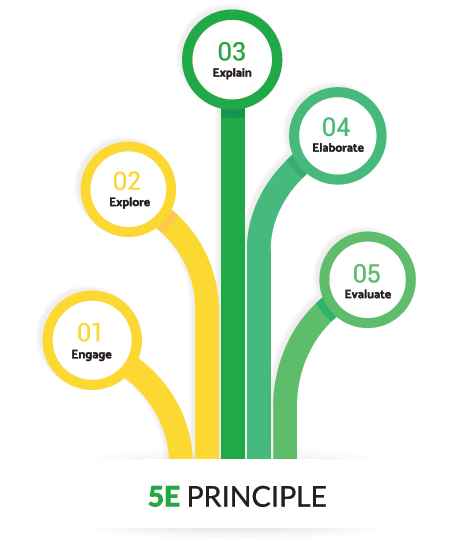
Next Education created the Next Learning Platform with the perfect blend of technology with superior pedagogy and content. Having started in 2007, Next Education has cracked the perfect approach to tech-based learning, encapsulated in the 5E Principals:

Engage

Engaging the learner is the first pillar of the 5 E approach. A learning platform that engages, is a learning platform that is effective. Research even suggests that learners that have higher engagement in the learning activity have a greater degree of attention and focus and are even highly motivated to learn the subject matter. Learning that involves engagement to the personal level of the learner even helps them have a meaningful learning experience. E-learning is able to create this higher degree of engagement with interactive media and communication that the students follow through and learn from while doing all of it on their own.

Explore

Diving deep is the only way anyone can learn in detail about any subject matter. Really exploring the concepts and topics is possible if the content is created in a flow that the learner finds appealing and interesting. The medium is also of great importance, since dynamic mediums have a simpler and straightforward user experience. The Technology with which E-Learning has advanced, allows for students to easily access and learn from the in-depth information available to them. Multiple skill sets are developed by learners in their efforts of exploration, apart from the actual topic and concept. Identifying and development of these skills takes place simultaneously as the learning progresses.

Explain

“Teaching is the best way to learn”, similarly, the Next Learning Platform allows for the learners to explain the concepts to any degree that they have understood it. This enables a round of critical thinking to take place, where the learner themself reassess their complete learning and the results of it. This ability to verbalise the concepts and bring their original ideas to life, give their learning a completely new dimension. Demonstrating these newly acquired skills and behaviours bring the student confidence in their knowledge of the subject matter, further increasing their likelihood to learn and pursue details of the subject.

Elaborate

Having a broader understanding of the subject is what brings out the actual and application of subjects. The Elaborate pillar in the 5E approach is all about building that broader understanding of concepts at large by either obtaining more information, or by refining the already developed skills. Elaboration in learning also represents forming a complete understanding of interlinked concepts and subjects. This forms the crosslinked information a learner can use and apply in their lives. Understanding the subjects in an elaborate manner also equips the learner with a broader sense around the usability of the concepts and skills learnt by them, creating a more wholesome learning experience.

Evaluate

Assessment and evaluation of learnt subjects is just as important as learning the subject itself. It helps gauge the level of understanding of the learner and in turn is a great tool in realigning learning approaches and methods, to focus on a tangible result for the learner. Evaluating is made seamless with the Next Learning Platform, as it helps understand the abilities of the learner and guides how they can be used appropriately for a better understanding and concrete learning.

The Next Learning Platform with these 5 pillars builds a holistic approach to the learning of the student, where it is not just about information processing, but about the actual growth of the learner through various subjects and experiences. This makes the Next Learning Platform a truly valuable contribution to the student and their overall learning and understanding of the world.

Contact us

Introducing Pre-writing Activities for Pre-schoolers

Introducing Pre-writing Activities for Pre-schoolers

Introducing Pre-writing Activities for Pre-schoolers

Parents get incredibly excited when their little 3 and 4 year olds join pre-school and jump into the pool of learning. Children are introduced to alphabets and numbers that lead them into the world of writing, opening a gateway to languages and excellent education ahead. So, what forms the very basis for writing? Its pre-writing activities or interesting exercises that pre-schoolers are engaged with, so that they comfortably acquaint themselves and their tiny fingers before they even begin to hold a pencil. These are foundational techniques that kids develop prior to be able to write, draw, copy or colour. Pre-writing activities aid them to handle the pencil with a firm grip and effectively produce readable handwriting. This exercise fine tunes their motor skills to exert the right force and grip and use their muscle power aptly. It gets them to build their upper body strength to also hold common objects such as a toothbrush, fork and spoon, hairbrush while maintaining hand and eye coordination. It gives them the confidence to execute basic tasks every day. Let’s understand these fun exercises.

Colourful Donuts

Kids make non edible donuts with the use of colourful play dough. So, they first make balls and then flatten them to make circles and remove the centre portion for the donut hollow. This acquaints them with shapes, colours and to utilise hand strength to mould the dough into the donut. Clay is excellent for building the child’s fine motor movements

Sand Art

A heap of sand is poured in a flat tray where children manifest their imaginations. They either draw definite letters or characters or abstract designs to create a variety of sand art with their cute fingers and this eventually leads them to create art on paper or canvas using sketch pens or paint brushes. Tracing on sand is the first step before children advance to paper and crayons.

Fun with Sponges

Kids dip pieces of sponges in water buckets, then remove them and squeeze the sponges and fill the empty cups with water. This fun exercise makes them flex their hand muscles enhancing their motor skills and improves their hand eye coordination as well while they complete the task of dipping sponges and filling the cups with the squeezed water. This exercise requires concentration too.

Candle Arrangement

Children organize candles of different shapes and sizes and put them in their respective slots of the candle stand. By using their motor skills in this activity, they get a fair judgement of holding objects in their hand, understanding grip and balance and gauging their size and accordingly matching it to where it fits. The action of picking up and placing things in its correct slot requires skill and appropriate exertion of force by the fingers

Join the Dots

This fun activity makes kids know their alphabets as well as their favourite farm animals like dogs, cats, goats, sheep, rabbits and many more. The first letter of any animal is taken for example D for Dog and a dotted outline of the alphabet is made by the parent or teacher with 5 or 6 dots. Kids then use crayons or markers, get a feel and grip of holding them to join these dots, focusing on lines and curves and complete the letter and once that’s done, they also match the letter with the correct animal on the picture chart.

Lace Craft

Small holes are already cut out in pieces of chart paper by adults. Children then use shoe laces to pass through the holes. Either they pass the lace in and out from one hole to the other which is side by side or in a ‘criss cross’ or random fashion making several designs. Post this exercise they will never find it difficult to tie actual school shoe laces since they’ve mastered the motor skills for doing so.

Playing with Blocks

Kids are made aware of simple shapes while playing with blocks. They get familiar with not just lines, curves and strokes but complete shapes like squares, rectangles, triangles and circles. While at play, they join similar shapes of blocks together to make a tower and enjoy breaking and remaking it. They also learn to mix match and join different shapes together and make abstract art out of toys.

Decorate Christmas Trees

This is by far the most enjoyable activity not just for children but for one and all. Decking up the Christmas tree with several props such as stars, bells, colourful strings and ribbons, reindeers and snowmans, caps and stockings, Santa’s face and of course presents is exhilarating. Using many of these props, children sharpen their motor skills because they are performing multiple tasks together while handling these objects and learning where to put what, how to hang it, tie it, fill up something, place it correctly and make it look amazing. Highlights offers a varied range of Arts and Crafts books to explore the child’s creative side. If you haven’t already shopped for your Highlights starter packs, get yours today. Deliverable in UAE, Middle East, GCC, and Dubai, and also all over the world.

These playful activities help kids to know the handling of objects and also be familiar with alphabets, numbers and shapes. When they’ll write they will never be unprepared or low on self-esteem. Out of many things, you will see them writing their own name and age correctly with a great sense of joy.

Contact us

Encouraging Pretend Play amongst pre-schoolers

Encouraging Pretend Play amongst pre-schoolers

Encouraging Pretend Play amongst pre-schoolers

All work and no play make Jack a dull boy! Education is important for a child’s foundation but when amalgamated with Pretend Play becomes even more effective for their growth. These are interactive activities introduced to kids from their pre-school age. They are not just fun and games but crucial in child development. Wonders are achieved through education but it is Pretend Play that complements it for children to succeed at work and in the world at large.

Children are engaged in make believe situations that are created through stories and dramatization while demonstrating with props. Although they are an imaginative act, yet children experience and feel it. They are able to think, ask questions, observe, reason and also get transported into a fairyland.

They learn how to face challenges, solve problems, handle scenarios, cooperate, coexist and dream. These activities mentioned below help them to listen to their thoughts, express their ideas and have their opinions.

Home is Heaven

Kids are made to pretend to call the shots at home. The act of being an adult, to be able to take decisions and shoulder responsibilities, doing common household chores with their tiny play sets and random home items, all of it adds to their self-esteem. They get the feel of managing and running their home which is truly empowering.

Nurturing Identities

This activity can spark up a million imaginations. Costumes are so visually exciting. Donning a ‘chef’s coat’ may want them to conquer the world of hospitality, whereas a ‘space suit’ may aspire them to be an astronaut or just simple ‘make up’ accessories and being dolled up in mommy’s garments may inspire them to be the next beauty queen or a fashion icon. How about adding some excitement to this pretend play act by offering your child thought-provoking books from Reading Egg’s Mega Book Pack.

Highlights

Cute Copy Cats

Kids love to imitate their favorite movie stars and cartoon characters. When they are asked to imitate and clone their parents and teachers in a respectful yet playful manner, it lets them step into their shoes, explore their personas, appreciate what they do for them while bringing out hilarious quirks.

The Brave Battalion

Kids get all charged up and geared with this thrilling game where they learn the meaning of security. Acting like guarding officers, soldiers on the warfront or secret spy agents defending the country, it makes them alert to protect themselves and their own in sudden dangerous situations. It teaches them to be courageous, have an undeterred spirit and be grateful of the sacrifices of the nation’s heroes.

Fit and Fabulous

Sports and the significance of fitness is ingrained into children through active games. Using toys and other objects as prop tools it acquaints them with a particular sport. Running for that matter being the most common sport and exercise is explained to them with an easy line up of toy cars set as racing tracks so they can have competitions with their siblings and friends. While emulating popular sports icons and knowing their journeys, it would drive them to be one someday.

Doctor-Doctor

Most of us dread hospitals, general medical and dental clinics. When this informative yet fun activity is played with children, they begin to understand how medicine works and cures, taking their fears away. Playing the doctor’s character with their cute teddy bear as their patient, injections and tablets may not be enemies to them anymore and they would even aspire to take it up as a profession.

Tricks of the Trade

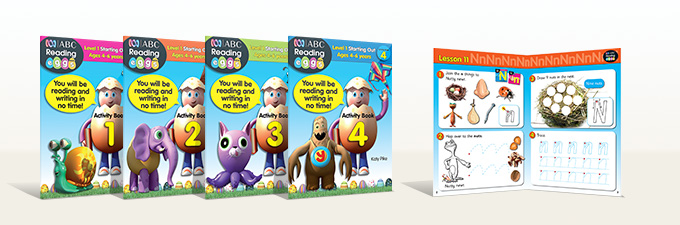
In this imaginary activity, the concept of business and shopping is brought in for the kids. They are transported into their best loved places like McDonalds, Gelato Store and Disney Land. They get to experience being into dual character modes, one as a shopper and other as a shopkeeper. They learn how to buy and sell whether it’s a burger, an ice-cream or tickets to the amusement ride. The essential bit is counting money, being accountable to their parents and moreover being mindful to keep their wallets safe in their bag packs. Compliment this play session by giving your child a picture book to read from Reading Egg’s Level 1 Activity Book subscription package available across Dubai, Middle East, GCC, and UAE.

Highlights

There is no other alternative to Pretend Play. Having started early, they’ll naturally start enjoying these games and will implement the learnings in actual sense. So, whenever they are immersed in any activity, parents must not stop them as it will never be unproductive. Allow them time, give them space and you shall see them fly.

Contact us

Why Students Find Math Difficult and How to Overcome the Fear of This Subject

Why Students Find Math Difficult and How to Overcome the Fear of This Subject

Why Students Find Math Difficult and How to Overcome the Fear of This Subject

Many bright students, who perform rather well in other subjects, have difficulty coping with Math. They have a good sense of logical understanding and numeracy skills, but still struggle to apply the same when the class teacher presents them with quizzes and tests to assess their Math skills.

A poor test score demotivates the child further and the child develops a sense of fear towards this dreaded subject. Children lose interest and skip completing homework assignments, rather than paying more attention to fractions and decimal points taught in class.

There are many reasons as to why the child may not like Math and not be able to cope with it in school. From being demotivated, to developing Math anxiety, or even not getting enough scope to practice mathematical operations in school & at home, may be some of the reasons. Sometimes, the lag in the subject may be recognized due to a learning disability that the child is undergoing.

Let us understand some of the reasons behind lack of enthusiasm for Math, so that we as educators and parents are better equipped to guide the child and change his perspective towards the subject.

Ineffective Teaching Methods

Teachers may be using obsolete teaching methods which do not interest the child. Teaching formulas by rote learning technique is not ideal and the child may get bored soon. The pace of teaching the steps to a math equation may also be inappropriate sometimes. Going too fast will confuse the child, but going too slow is equally ineffective.

Insufficient Time for Practice

Just by learning Math concepts in School is not sufficient. Children need to constantly practice Math lessons even at home. Unlike Science there is no fixed definition or solution for Math which can be remembered word to word and then reproduce. Math is all about understanding, reasoning and applying concepts to different problems. Without practice the concept might be forgotten. Only when the steps are systematically followed one can arrive at a correct answer. Hence, practice is the key.

Attention Deficit Hyperactivity Disorder (ADHD)

Does your child often get a remark in his diary which says ‘not paying attention in class? Well, this may be an alarming call to get your child examined for ADHD. Children suffering from ADHD may not be able to ‘focus’ in class and therefore have a tough time grasping Math concepts. They may skip steps while trying to solve an equation and arrive at an incorrect answer. There could be scribbled marks all over the examination paper. The child may even sometimes not take time to read the Question correctly and hurry out to solve the problem thereby using an incorrect formula. Ensure that the child gets extra help after school and try to keep his spirits high.

Child is identified with Dyscalculla

Dyscalculla is a learning disorder which affects the child’s ability to solve mathematical problems. The child takes time to identify the relationship between numbers and apply correct rules of math. Even performing simple addition and subtraction of single digit numbers mentally becomes difficult. Not having a grasp of the foundation creates stress for the learner when he is presented with more complex calculations in middle school. However, do not get disheartened. Go slow in teaching and support your child with appropriate Math aids to improve the performance.

Few Tips to help the Math Learners develop interest in the subject

Make Math Fun

Make use of colorful objects, interesting shapes and introduce a Math role model character to children so that they are intrigued to learn more. Every week, dedicate one session to play Math games and have a competition amongst classmates. Parents can assign a ‘budget’ to children and encourage them to make a report of their spending. Going for a drive? Ask your teens to calculate distance, speed, and mileage. To captivate learning, Mathletics presents fun videos and unique printables to engage the students through gamified lesson plans. The modern way of learning Math is as simple as – Learn -> Play -> Review.  Get your hands on the Mathletics subscription all over Dubai, UAE, GCC and the Middle East.

Highlights

Pair them up to participate in Problem-Solving

The emphasis of Math must not be on getting the right answer. More than the answer being important, it is the correct problem-solving techniques that one needs to adopt. Pair the learners and let each have a Math buddy. Assign problems to them and allow them to device strategies to arrive at an answer. You will be amazed at how children use their creativity to arrive at the solution by using different Math techniques keeping the core concept in mind.

Let Students learn at their own Pace

It is unfair to expect all students in the class to learn at similar speed. Some students have greater logical reasoning power and therefore are great at Math. Some may be brilliant in other subjects, but be averse towards problem solving. Understand that each child is gifted with a different skill set and hence expecting everyone to be Math Wizards in not right.

We are in this together! Let us change our perspective towards humble Math and encourage the future-generation to be savvy with problem-solving techniques.

Contact us