

Easy Static Electricity Experiments for Home Based Learning

Easy Static Electricity Experiments for Home Based Learning

Easy Static Electricity Experiments for Home Based Learning

Science experiments do not necessarily have to be practiced in a state-of-the-art chemistry, physics or biology lab in school. Science is all around us and its wonders can be discovered even at home.

What is Static Electricity

In K-12 schools across Dubai and other countries, the topic of ‘Static Electricity’ is introduced to students in Grade 4. So static electricity is the energy that can make your hair literally stand! It is a phenomenon where charged particles are transformed from one object to the other. You must have noticed that when two objects are rubbed against each other, in a dry surrounding, the objects acquire equal & opposite charges thereby developing a force between them. This is nothing but static electricity.

Some Facts About Static Electricity

  1. Static electricity builds up on the object’s surface with positive and negative ions which cancel out each other, thus making the static charge stay in one place.
  2. The two objects have different charges, one object would build-up positive charge and the other will have negative charge.
  3. Scientists discovered that lighting is a good example of static electricity. When ice particles within the cloud rub against each other, a spark or static force is generated, thereby causing a streak of lighting.
  4. Fabrics cling together due to static electricity when rubbed together. When the positive and negative ions come in contact, they attract each other and hence the materials cling.
  5. A photocopier machine that prints on paper uses the principles of static electricity. When the sheet is placed on the glass, an image is projected onto a positively charged drum and the drum conducts electricity when the light hits it. The toner on the other hand, has negative charge, so it gets attracted to the drum. This attraction between the toner and the drum, rolls out print on the blank piece of paper.
  6. In the future power banks wouldn’t be required to charge your phones. Research is being conducted to test whether phones bouncing in one’s trouser pockets is sufficient to recharge the batteries of the device. How cool is that!

Fun with Static, Try these Simple Experiments at Home

Floating Plastic Bag

Take a plastic rod and rub it against a piece of cloth for about 50 seconds. Lay the plastic bag on a table and now repeat step 1 by rubbing the piece of cloth, but this time onto the surface of the plastic bag. Move the charged plastic rod over the plastic bag and watch the charged plastic bag fly as if there were no gravity on Earth! Astonishing isn’t it?

Explanation: When you rubbed the plastic rod to the cloth, the rod got negatively charged and the same happened to the plastic bag when it was rubbed against the cloth. Now the rod and the plastic bag have negative energies and when they come close to each other, they seem to repel or move apart – as same energies seem to repel against each other.

Changing the Course of the Water Stream

Take an inflated balloon and rub it against your hair for a couple of seconds. Turn on the faucet of water attached to a sink and bring the rubbed balloon close to the steady stream of water flowing. Remember, do not touch the balloon to the water, just bring it really close. You would be amazed to see that water gets attracted and moves towards the balloon magically.

Explanation: When the balloon was rubbed on the head, it got charged with negative ions. Water naturally has a composition as H2O (two molecules of Hydrogen and one molecule of oxygen). Since more of hydrogen is present it water, it is slightly positively charged. When the positive stream of water is introduced to the negatively charged balloon, they being opposite forces attract to each other. Hence the water appears to move towards the balloon.

Separating Salt and Pepper from the Mixture

Did you know separating salt and pepper seasoning is possible with a simple static experiment! Take a bowl and mix a teaspoon of salt and pepper powder thoroughly. Rub the spoon over a cloth for 50 seconds. Bring the spoon over the salt & pepper mixture and watch the pepper jumping towards the spoon.

Explanation: When the spoon is rubbed it gets negatively charged. Both salt and pepper granules have positive energy. The negatively charged spoon when brought close to the mixture attracts the positive ions of the pepper & salt, but only the pepper jumps towards the spoon as it is slightly lighter than salt and sticks to the base of the spoon. So next time your toddler mischievously mixes salt and pepper, don’t be mad at him. Simply work through the experiment and get them separated!

If you are a working parent and don’t have time to arrange for materials required to carry out the experiments, we present to you Carolina’s Science Kits. Carolina is amongst the largest provider of Science kits to schools across all areas of physics, chemistry, and biology. In-fact most IB Schools in UAE and GCC Countries rely on Carolina to stock their science labs with dedicated pre-categories ‘science kits’ for children.

Carolina’s Triboelectric Series Kit emphasis on introducing children to Static Electricity by supplying readymade materials to carefully undertake the experiment. The kit comprises of different textures like; silk, wood, Teflon, cotton, wool, nylon, etc. so that students thoroughly understand the concept. For more details about purchasing the Carolina Kits in the Middle East, visit our website: https://knowledge-hub.com/

Contact us

Tips for Designing an Effective Curriculum

Tips for Designing an Effective Curriculum

Tips for Designing an Effective Curriculum

Everything you’ve ever learnt has been under a set curriculum. Which is why curriculums play a pivotal role in all kinds of education and learning. Right from setting the pace to the level of learning, the curriculum defines the entire learning experience of a student. Being the life line of learning, a curriculum is not only a necessity but also greatly changes how effectively a student is able to learn and absorb knowledge.

While crafting a curriculum for an effective learning experience, a few variables need to be taken into consideration.

Outcomes

Any knowledge or information is only as good as its application or end result. This is why the primary variable to be considered while crafting a curriculum is setting objectives and outcomes. Outcomes define the entire approach of instruction and learning. For example: You wish to learn how to paint. But what is it that you wish to paint, a canvas? A house? Or even a building. Approaches of learning and techniques used to learn all vary with what you wish the end result to be. By determining the outcome, you wish to come to, you can essentially determine the entire course of learning and hence shape the learning process to its optimal level.


Content

Once your objectives have been decided, the next step for any curriculum is deciding the content. The content essentially is the drawing board of a curriculum. Based on the content one decides upon, the level of learning and duration is determined. Planning the content also involves selecting and eliminating content based on what is deemed suitable for the program being designed. Content for a curriculum is determined based on the objectives set and the duration of the program. The content of a curriculum can also be used as a tool to help learners graduate into complex concepts by starting out with simpler and more basic concepts.

Instructional Strategies

How learnings are experienced and knowledge is transferred varies with whichever instructional strategy is the most effective. Based on the selected subject an instructional strategy can be created to deliver effective results. Instructional strategies can be chosen based on the outcome required from the learning. For example; arts and crafts can be taught theoretically but practical hands-on experience delivers the best knowledge transfer in this case. Similarly based on content required from the learning strategies are decided for effective learning experiences. Action strategies are also based on the student themselves so each instructional strategy is devised based on what is suitable for the learner for the subject being taught.

Technology

The technology used to teach greatly impacts the effect of the learning. The curriculum that is defined in the beginning of a learning experience must rely on the technology being used for instruction of the curriculum. For example; universities and institutes in the GCC Countries and UAE began using audio-visual tools as supplement for the common methods of teaching at the time in metropolitan cities such as Dubai in the Middle East. This greatly impacted how the learners responded to the information being taught and raised their learning experience by a great degree.

Next-Education_-ERP-Management-system-Banner

Next learning platform is developed over the above points in value. The platform helps design, create and maintain curriculums, while also providing a platform for reporting and analysis of student performance. This helps create a one-stop solution for institutions to develop a student’s learning experience holistically.

Contact us

Effectiveness of Infographics and Teaching Students How to Design an Infographics

Effectiveness of Infographics and Teaching Students How to Design an Infographics

Effectiveness of Infographics and Teaching Students How to Design an Infographics

An Infographics is nothing but a visual representation of data. They say an image speaks a thousand words! Well, infographics apply the same thumb rule. When the information is represented on charts, pie diagrams, and imagery, with minimal content of text, we refer to it as an infographic.

Where are Infographics used?

Infographics are use to convey a message to the audience without confusing them with unnecessary jargons. In today’s age, your audience doesn’t have time to read lengthy paragraphs and comprehend the meaning of the texts. Everyone appreciated crisp information and to-the-point data, which is where infographics comes handy.

One might have come across different pictorial representation of messages on social media platforms such as LinkedIn or Twitter. Many brands use infographics to drive important analytical data to the audiences, by using marketing creatives that showcase pie charts, bullet points, and thumbnails in their advertisement.

While making a corporate presentation often company statistics are presented in the form of an infographics to grab the attention of the co-workers and drive the point home. Emailers, newsletters, hoardings, you would be surprised to bump into an infographic design every now and then.

Even in schools’ infographics makes studies easier to grasp. For example: To distinguish between farm animals and wild animals, healthy and un-healthy foods, often an interesting colorful chart is represented with explainer points under each classification. Another example is; History lessons can be made easy by having an infographic representing events and dates on a timeline chart, so that it is easier to recollect the facts during exams.

working on infographics

Why are Infographics effective?

Infographics are very effective for reasons more than one. Let us see how:

  1. Visual representation of data reveals a story. The different scenes of a story are interwoven and presented in one infographic image. This makes it more intriguing for viewer and they can easily visualize the message.
  2. Interesting background colors, templates, icons, different font styles, and unique graphs make it eye-catching, rather than having to read through lengthy texts.
  3. Important facts are highlighted in an infographic. Since the design can accommodate only limited text, and it has a defined dimension, unnecessary points are done away with completely.
  4. Step by step methodologies are clearly represented to the audience. For example: ‘steps to install an App’ on your mobile and how to go about using it, can be highlighted on an infographic.

How Students Benefit from learning to Design an Infographic

For designing an infographic, one needs to have knowledge about basic computer skills and be familiar with the functioning of the design software. Here are a few benefits gained by students on getting started with curating infographics:

Applying Research Skills

To be able to factually represent data, the student must have good understanding about the topic. Information can be availed on the ‘web’ or one can read a ‘book’ on the topic from the school’s library. This primary research helps the child to understand why in-depth reading is important and how facts can be presented graphically. Subjects such as science, math, and geography can extensively make use of infographic mediums.

Using Computer Literacy

In order to design the infographics and make it visually appealing, the child should understand graphic designing elements and apply them correctly. There are numerous platforms that children can use for designing purposes like; canvas, paint, Adobe InDesign, however these are at advanced stages. To start with, schools in the UAE, including Dubai recommend the TechnoKids tool, which designs age-appropriate learning modules on computer lessons for students. TechnoEarth is one such project where students are instructed to build infographics related to an Environmental issue in a guided step-by-step manner. Children learn how to add charts, add colors, use outlines, insert text, add titles, and calculate percentages, wherever necessary on the infographic. If you reside in the Middle East or belong to the GCC Countries, you can learn more about the TechnoKids platform by visiting our website: https://knowledge-hub.com/technokids/.

Enhances Creative Thought Process

Children are allowed to let their imagination run wild. How fun it is to choose colors, create layouts, draw lines, and decide upon a theme for the infographic designs. One also needs to inset the right images, add titles, and highlights stats on the image. Students love to experiment, and this is one of their greatest opportunities to apply their creativity and design something totally out-of-the-box.

Contact us

How To Read Maps? What Do They Tell Us About Land And Water?

How To Read Maps? What Do They Tell Us About Land And Water?

How To Read Maps? What Do They Tell Us About Land And Water?

Map reading is the act of interpreting or understanding the geographic information portrayed on a map. Through map reading, the reader should be able to create a mental pathway of the real-world information by processing the symbolized information shown on the map.

There are different types of maps to choose from. You want to be sure that you have the right kind of map for your purpose. A tourist sightseeing map will be of no use to you if you’re in secluded parts of the mountains.

Here, given below, are few different kinds of maps:

Topographic Map: This details the terrain, roads, distances, and points of interest.

Road Map: A great help to have on road trips. GPS-free and extremely reliable.

Tourists map: Useful for city breaks. They show the attractions and points of interest around a city.

Along with the right type of map, you will also need to choose the right scale:

1:50,000: The most common scale to use while hiking is 1;50,000, which means that for every centimeter on the map, there are 50,000 centimeters in real life. Maps are broken into grids. Each grid measures to 2 centimeters which means that every box on the map measures up to 1 kilometer in real life.

1:25,000: These more detailed maps show features such as trees and rocks on the ground. These maps are scaled as every 1 centimeter is 25,000 centimeters in real life. Each box on the grid of these maps is measured as 4 centimeters which means that every box on the map covers 1 kilometer in real life.

There are also a few features on every map to be sure of and know well:

Legend: Gives a description and guide of the different features on the map.

Title: Tells you what area the map is.

Grid reference: Grid boxes with the first 2 or 3 digits being the x-value, and the last 2 or 3 being the y-value.

North Arrow: Tells you which way is north. It always points to the top of the map.

Scale: Tells you what the scale of the map is (1:25,000 or 1:50,000).

Now, there are certain steps to learn how to read a map:

Find where north is: Place your compass flat on your map, pointing towards the top and rotate yourself until the compass’ needle points north.

Finding your location on the map: When trying to locate your position on the map, it is most important to be able to identify your surroundings and relate them back to your map. It can be difficult to figure out your position from any grid reference so the ideal thing to do is to start from a grid reference that you do know. If you drove to your current location from some other place then it is advised to try and retrace your steps from the location you set off from. Look around for landscape features once you are sure of your location, these can be mountains, rivers, roads, etc.

Contour Lines: These are small black lines that wave around the whole map. Each contour line on a 1:50,000 scale map represents a rise of 10 meters above sea-level. Every 5th contour line will be slightly darker to make it easy to count when counting many lines.

CAROLINA’S SMITHSONIAN SCIENCE FOR THE CLASSROOM is a brilliant and efficient way to teach young children the skill of map reading especially in today’s digital age when so many people depend entirely on mobile connectivity and GPS. Students learn the patterns of land and water on Earth and how they can represent those patterns with models, including maps. Schools in Middle East, including Dubai partner with Carolina to deliver effective lessons through practical project-based methods.

Contact us

Reasons Why Young Readers And Parents Love E-Reading Platforms

Reasons Why Young Readers And Parents Love E-Reading Platforms

Reasons Why Young Readers And Parents Love E-Reading Platforms

Children often make excuses when it’s time to pick up a book and read. They find it boring and lack the focus that’s required to comprehend the verse from a story book. If you are one of those parents who have to pester and bribe your child to sit still and dedicate 30 minutes to reading time, then be assured that you are not alone in this bitter-sweet battle!

Apps That Make Reading an Enjoyable Experience

If you don’t consider yourself as a bookworm to have a dedicated reading bookshelf in your home, but still wished your child made diligent efforts to read, then we have a perfect solution for you. Simply navigate to the Google Play Store or Apple Store on your mobiles or iPads and search for ‘best reading apps for kids’. Your search query would be answered with 1,000 of relevant reading apps that are free for download. Some of the popular names amongst them are; Learn with Homer, Reading Rainbow App, Hoopla, and the Highlights Library Reading. Now let your child’s reading journey begin! Children will be amused by the app’s themes, meet new characters, interact with the platform, and learn new things, without feeling obligated to fulfil the mundane task of reading

Why should you encourage your child to read?

It’s important as a parent for you to give your child that push that is required. If you sat down and explained to your child about the many short-term and long-term benefits of reading then they would probably shrug it off as a passing remark. On the other hand, the child would get excited If he won stars for reading and collected gold coins on his way to becoming a fluent reader. It is said that ‘if you want to please your child, you need to be one yourself’. Most reading apps are gamified and come power-packed with lots of interesting activities to keep the child engaged for a longer period of time.

How do these Reading Apps Motivate Kids?

Free apps offer a variety of books to improve your child’s reading skills. So, if your child likes a particular genre of fiction tale, biography, short stories, or even poems, then he can pick that type of book and start reading it on the app. If the child wants to take a break then he can easily pause and get back to it later. It is extremely easy to access these reading apps and its user-friendliness gives the child a sense of independence. As mentioned earlier, the in-apps awards and reward points further boost the child’s self-confidence and they resume the ‘story’ with more enthusiasm.

Improves Pronunciation

Children can read stories aloud on the reading apps and learn the correct pronunciation through the apps. When children read a sentence, it is auto evaluated and a score is reflected to indicate the accuracy with which the sentence was pronounced. Some apps even have an in-built read aloud features by which the sentence is read in audio mode. Now the learner simply repeats it and the more he practices, the better he gets at pronouncing words. Also, when your child reads the story out loud, more than one sense is being used like, eyes to read, mouth to speak, brain to adapt the information and sense of touch to use the touchscreen on the smart device.

Accessibility

You can use the reading app from any part of the world. So, if your child is in Dubai or some country in the Middle East, they can still access it easily without any fuss. Few apps provide the option to download books so that learning is continued even in offline mode when one might not have access to the internet. These apps can be easily downloaded on any electronic device such as smartphones and tablets. You can fit these devices in your bag easily and even take them wherever you go, so your child will get quick access to these apps. The best part is that they won’t have to wait at a library or a bookstore to buy more books as they can simply open the reading app and start imagining to be as beautiful as Cinderella.

Rewards

Children love it when they get rewarded with something because it makes them feel like they’re being appreciated. The Highlights Library reading app goes one step further to appreciate every child’s reading skills by rewarding them with stars or points after they complete reading a certain number of pages. This motivates them to read more.

Feedback

An instant feedback is way more effective than being corrected at a later date. Feedback ensures that child doesn’t repeat the same mistake while ‘pronouncing a word incorrectly’ or ‘misspelling phonetic sounds’. The feedback is given by a virtual tutor who is experienced and expert in the field. So, you don’t have to worry anymore about your child going wrong.

More About Highlights – Highlights Library is a digital reading platform that will help your child discover their love for reading. Highlights Library offers thousands of books that are easily accessible online. It helps in improving every child’s imagination by offering a variety of genres for children to choose from. To begin your Highlights reading journey simply visit: https://knowledge-hub.com/highlights/ whether you are located in the UAE, GCC, or reside in any other continent, across the world.

Contact us

Learning Math on Mobile App vs. Tutoring

Learning Math on Mobile App vs. Tutoring

Learning Math on Mobile App vs. Tutoring

Learning in a school setting is something that most of us are used to, until the pandemic hit the world and sent it spiraling into a state of surprise. There were a lot of changes made that took a while to get used to, from offices to transports to grocery shopping, but no change was harder than schools having to conduct their day-to-day activities online. Classes conducted online had teachers scrambling and students confused regarding their studies. In such times, a fairly old yet untried method of education was opted for – online education.

Today’s digital age students have greater access than ever before to a range of mobile applications designed to act as supplemental education resources. This transition may have been a surprise but it also turned out to be a boon for some students.

Subjects like English Literature, History or Geography were easily taught and studied online, but the problem arose when a subject like Mathematics came into the picture. A subject like Maths needs hands-on work from both teachers and students as it is one of the most important subjects that is used across fields of work. Many then wondered how this would be done.

We look at some points discussing App learning and In-person learning:

The obvious convenience of eLearning

With interactive learning resources being available at the click of a button, education can be accessed anywhere at any time. No longer is there need to travel to and fro and adjusting schedules or face other such inconveniences. Families can take these apps anywhere their device can travel, meaning that on-the-go learning is now a reality.

Different ways of learning

It’s been scientifically proven that kids learn in different ways. Some are visual learners; others gain knowledge by reading and still may need hands-on teaching to get their brains going. The beauty of eLearning apps is that they aren’t limited to one format of learning. Their interactive nature makes them visually engrossing as well as ignite parts of the brain to play competitions and earn reward. They can play math games with rich graphics, simple text and challenges that stimulate the brain.

Instant, Personalized feedback

Students want prompt and personalized feedback for their efforts. A simple “good job” or “needs improvement” is not good enough. A personalized feedback highlighting the students’ strengths and what needs work helps the student feel like the teacher cares and is paying attention. Critique and praise should be customized when possible. E-learning apps are very useful here. Being automated, there is no lag time between the module completion and resulting scores. Moreover, the apps will re-route the student to missed questions and provide hints to get the correct answer rather than simply talking about the scores or the attempted questions.

Affordability

The cost of hiring in-person tutor depends greatly on the specific program, the instructor and the length of time of enrolment. Most mobile learning apps are a very cost-effective option. There might be a fee for download and in-app purchases to customize the information and this saves hundreds of dollars every month. For this reason, a lot of the parents are thinking of opting for mobile learning apps for their children and the rest, are slowly turning towards the idea. Without any overhead, such as lights, franchise fees and more, these apps can deliver the same robust educational resources, only at a fraction of the cost.

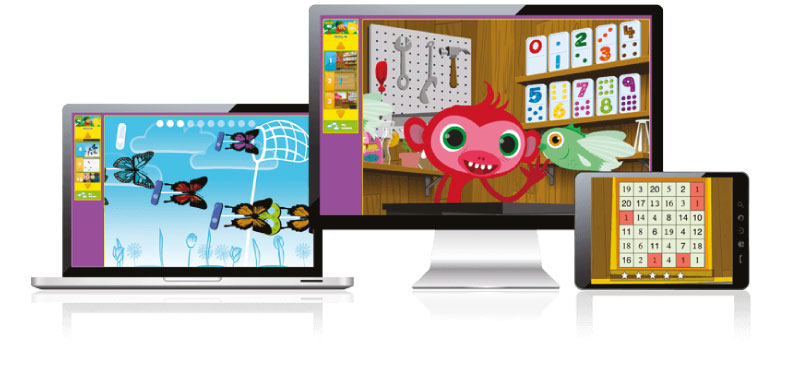
To experience how good eLearning can be, students and parents need Mathseeds. Mathseeds teaches kids aged 3-9 the core maths and problem-solving skills needed to be successful at school with fun, highly interactive and rewarding lessons. The App is available for download all over the world, including the GCC Countries in the Middle East. Mathseeds combines highly structured lessons with fun motivational elements that keep children engaged and keen to learn. Your kids can start learning with Mathseeds anytime and anywhere there is a computer, phone or a tablet – just click the ‘free trial’ button to get started. If you reside in UAE, including Dubai, simply visit our website to learn more.

Contact us