

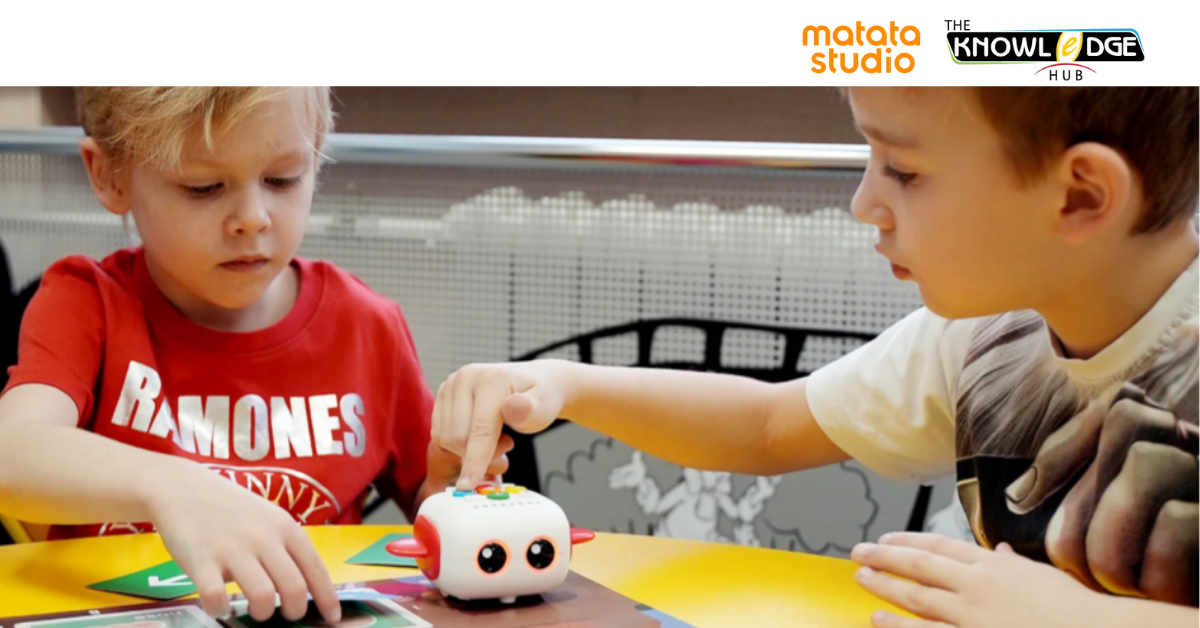
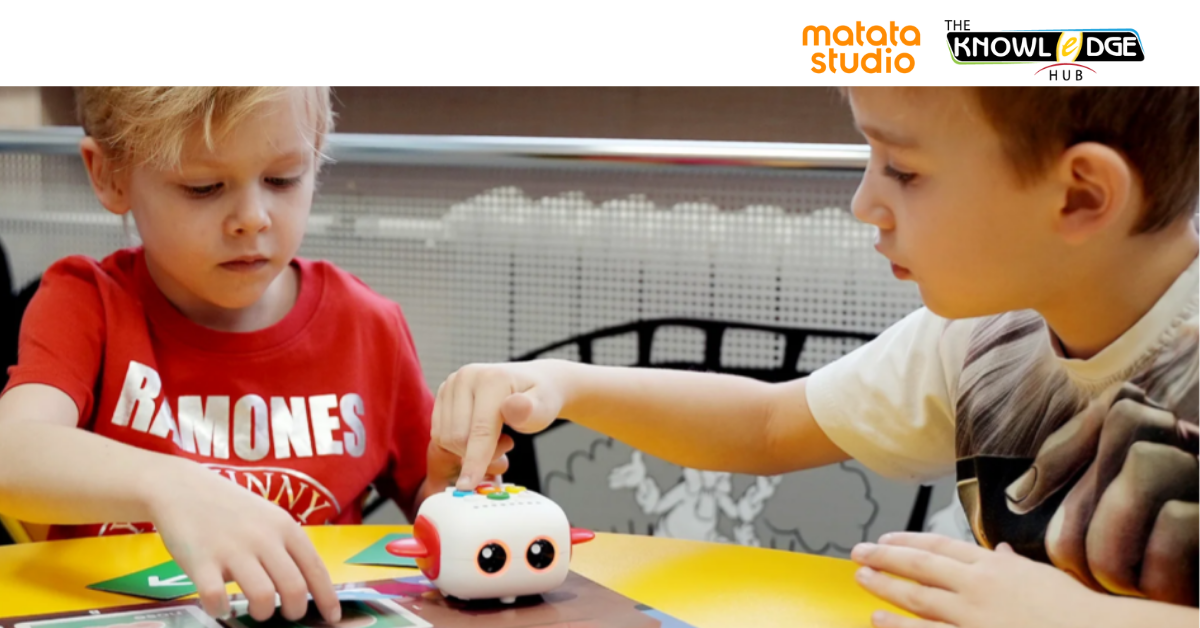
In today’s fast-paced digital world, coding and robotics have become fundamental languages of the future. For parents in the GCC, fostering these skills early can give children a significant head start. But how do you make concepts like algorithms and logical thinking fun and accessible for a young mind?
The answer lies in play-based learning. At Knowledge Hub, we believe the best introduction to STEM is one that feels like a game. Here are five engaging ways to ignite your child’s passion for technology.
1. Start with Screen-Free, Hands-On Play
Before diving into complex code, children need to grasp the core concepts of sequencing and command. Tangible, screen-free tools are perfect for this.
The Activity: Use a coding set with physical blocks. Each block represents a command (e.g., move forward, turn left). Your child can create a sequence of blocks to guide a robot through a homemade maze on the floor.
Why it works: It transforms abstract ideas into physical actions, building a solid foundation in computational thinking without the need for a tablet or computer. This hands-on approach is highly effective for young, kinesthetic learners.
A fantastic tool for this is a screen-free coding set (Matata Studio Coding set) that uses command blocks, allowing children to see the immediate physical result of their code.
2. Bring Stories to Life with Robotics
Merge the magic of storytelling with the fundamentals of programming. This approach develops both literacy and technical skills simultaneously.
The Activity: Create a storybook map with key locations (a castle, a forest, a river). Then, use a programmable robot to act as the main character. Your child can code the robot’s path to follow the story’s plot from start to finish.
Why it works: It contextualizes coding within a narrative, making it memorable and engaging. Children learn to plan a sequence of events (an algorithm) to achieve a storytelling goal.
Products like the Tale-Bot Pro are designed for this very purpose, combining storytelling with coding commands in a way that captivates young imaginations.
3. Master the Basics with a Friendly Robot
A dedicated, beginner-friendly robot can provide structured learning and instant feedback, building your child’s confidence.
The Activity: Follow the guided challenges that often come with educational robots. These usually start with simple movements and progress to more complex tasks involving loops and conditional statements.
Why it works: A structured progression ensures children master one concept before moving to the next, preventing frustration. The immediate, physical feedback from the robot reinforces correct logic.
For a comprehensive start, a robot set like Vincibot offers a complete journey from basic directional coding to more advanced concepts, all in an engaging, game-like format.
4. Dive into the World of Artificial Intelligence
Once the basics are down, you can introduce more advanced concepts like Artificial Intelligence (AI) in a simple, understandable way.
The Activity: Explore AI recognition tools. Use a set that allows children to train a simple AI model to recognize different objects, colours, or shapes. They can then code reactions based on what the AI “sees.”
Why it works: It demystifies a cutting-edge technology, showing kids that AI is a tool that can be programmed and understood. This builds digital literacy for the future.
To give your child a hands-on introduction to AI, look for sets like Nous AI specifically designed to teach machine learning and pattern recognition fundamentals.
5. Combine Creativity and Code
The ultimate goal of learning to code is to create. Encourage your child to use their new skills to build their own games and interactive projects.
The Activity: Challenge your child to design their own simple game—like a race, a maze, or a target practice game—using their coding kits and robots.
Why it works: This shifts the child from a passive learner to an active creator. It develops problem-solving, creativity, and perseverance as they debug and improve their creations.
A full coding set that includes various accessories and sensors is ideal for this stage, providing all the components needed to bring a child’s unique ideas to life.
Empowering the Next Generation of Innovators
Integrating STEM learning at home doesn’t require a technical background. It’s about providing the right tools and opportunities for exploration. By starting with play-based, age-appropriate activities, you can help your child develop not just coding skills, but also critical thinking, creativity, and confidence.
At Knowledge Hub, we are committed to supporting young learners on their educational journey. Explore our resources to find more insights and tools that can help unlock your child’s potential.
Click here for more educational resources