

Age-appropriate Puzzles for Kids: A Good Brain-boosting Experience

Age-appropriate Puzzles for Kids: A Good Brain-boosting Experience

Age-appropriate Puzzles for Kids: A Good Brain-boosting Experience

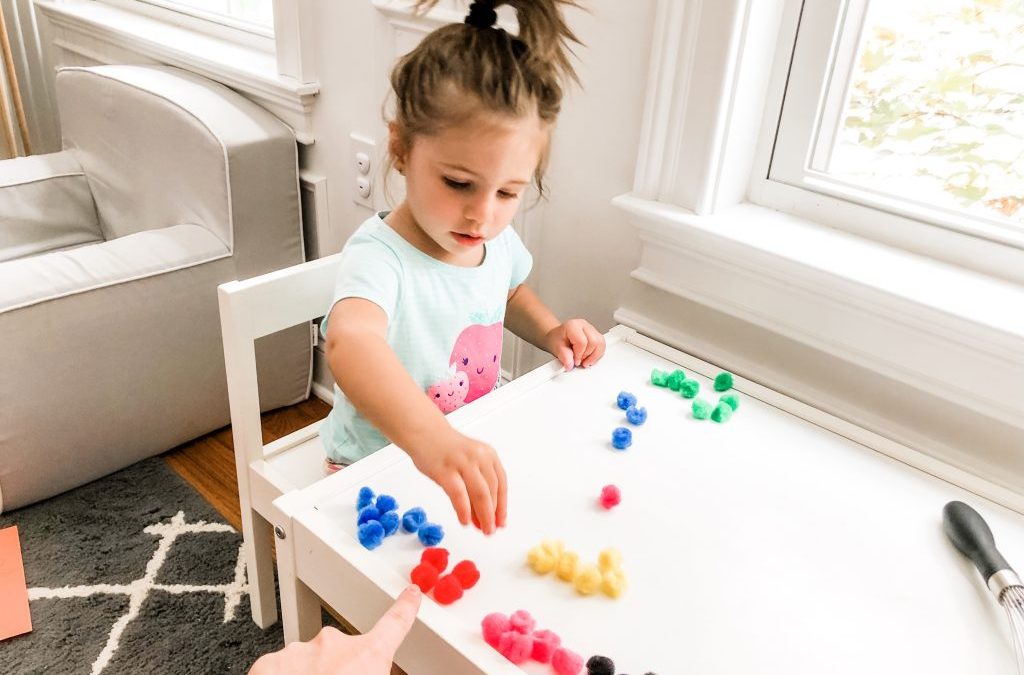
Are you planning to buy a puzzle set for your kid? If yes, then don’t have any second thoughts. There are some enormous benefits of buying puzzle for your kid. Schools in Middle East including Dubai, UAE, and many other countries recommend purchasing puzzle for preschoolers, as well as elementary-school goers, as it has many benefits. After all, if these benefits will help your child in developing his/her skills, increase memory-power and improve alertness, then you shouldn’t think too much about getting a puzzle.

Here are the benefits that kids earn by solving puzzles-

Learn Quickly

Puzzles tend to help children grasp and learn quickly. You might wonder, “How is that possible?” Well, to answer your question – when your kid tries to figure out how to make the puzzle, they tend to look at the bigger picture and this helps them understand and learn things quickly.

Increases Creativity

Whenever you notice your child feeling bored or wanting to try something new, you can give them a puzzle set and set a timer for fun. They will not just find it interesting but it also increases creativity as your child looks for different ways to make the puzzle.

Solves Problems

Joining puzzles helps your child, to learn problem-solving at an early age. As they tend to look for ways to solve the puzzle by connecting all the pieces one-by-one. This makes them subconsciously aware of problem-solving and how to not give-up easily.

Teaches Patience

Solving puzzles is likely to teach your kid to stay patient and it helps them understand that there’s no point in rushing or being impatient unnecessarily. It also develops their memory. Patience helps children control their emotions and instead spend their energy on more productive pursuits.

Helps in Coordination

Another plus point of joining puzzle pieces together is that it helps your child in hand and eye coordination. As they immerse themselves into the puzzle, the brain develops better understanding of spatial awareness, at the same time. Thus, it results in better coordination and turns out to be helpful.

Puzzles have a wide range of variety available. So, you can choose your child’s favorite cartoon character like Tom and Jerry or any other Animal Puzzles to teach them about the categorization of animals into domestic, wild, and farm that exist. You can also pick number puzzles and alphabet puzzles.

There are puzzles designed for all age-group children and they differ in the level of proficiency from beginner to intermediate. For 3-6-year-old kids, puzzles are very easy and designed on a basic level because they are just learning and have started to discover about jigsaw pieces. There are basic puzzles on shapes, pattern or letters for this age group as they are still learning.

For 6-9-year-olds the level is slightly challenging but it’s not too difficult. They might take a while to get used to it. With time and practice, your child will learn to freely rotate and join the puzzles. It might seem difficult at first but they will love to solve it once they start understanding how it’s done. There are math puzzles, pyramid puzzles, etc. for this age group children.

The degree of solving puzzles varies from child to child. So, if your child is new to the world of puzzles then try not to pressurize them and let me develop a good amount of understanding to solve the puzzle first. Once the child develops an understanding, they can even solve 250-300 pieces puzzle easily. It’s just a matter of time and level of proficiency. From problem-solving to hand-eye coordination, puzzles help in developing major skills. It’s definitely worth purchasing for your child.

Reading Eggs is a popular brand that sells reading books, workbooks, book bundles and puzzles available in GCC and all over the Middle East. They are all designed by experienced educators to help children improve their skills. They have alphabet puzzles for beginners and puzzle books that include rhyming puzzles for children who are more experienced in solving them.

So, are you ready to sign up for a fun-filled experience for your child? If yes, then look no further because this is the best purchase that you will ever make. You can check out Reading Egg’s website and place your order.

Contact us

Attributes for Designing an Effective Exam Question Paper

Attributes for Designing an Effective Exam Question Paper

Attributes for Designing an Effective Exam Question Paper

Students are often tired or bored when it comes to preparing for exams. However, it’s the only way through which the teachers can evaluate how much and how well did the students grab and learn from the subjects. It helps teachers to understand the level of proficiency of the students.

Setting question papers might seem like a huge task as teachers have to strike a balance between setting a good paper and make sure that all the students can perform well or at a satisfactory level.

It is advisable to keep the below-mentioned points in mind when designing an effective exam question paper –

Must include Important topics

As a tutor, whatever you feel is the most important part of the subjects that have been taught to the students, must be asked in the question paper. It will make you gauge if the students were able to understand and remember properly or not. The important topics cover a major part of the chapters so it’s best to include questions related to them.

Spread Awareness

To see how students are creative or can keep up with the different situation, frame some questions that will bring awareness to the community. For example, you can include a question that asks ‘how would you spread awareness about recycling in your community’. This will help them to think about such situations and how to deal with them.

Have Realistic Expectations

Involve questions that even an average student can answer. The questions shouldn’t be too tough to answer because then students who lag in a particular subject may not be able to answer the tough questions or earn sufficient score to pass the test. So, it is significant to have realistic expectations regardless of your students’ grade in school. Many IB school teachers in the Middle East including Dubai, make use of a standardized ‘question bank’ for this purpose.

Prepare a Marking Scheme

You shouldn’t give fewer marks for the same mistakes. It’s very much known for a fact that if a student makes a mistake in one answer then it is likely to be repeated in the next answer as well. They shouldn’t be given fewer marks for it time and again. Also, include notes next to the marks so that the students know the exact reason behind them. This way, they can remember what mistakes were made by them and they will try to not repeat those mistakes.

Don’t be too Strict

If a student has scored fewer marks in the exam then they should be able to cover it up with assignments and projects. You need to understand that some students aren’t able to perform well due to anxiety and pressure of doing well in the exams. You can give some grace marks to the students for attempting the exam. Nowadays marks can be covered in project work and class presentations. Most schools use a 60-40% approach where 40% is allocated to class-work activities.

Transparent Marking Criteria

The students should know exactly why they have scored good marks or fewer marks. Let them know by including it on the question paper and explaining what’s the criteria and how will mark them.

Understand Student’s Perspective

It is very important to understand the student’s perspective too. You might have asked the question with a different intention but they might’ve interpreted it differently. So, it’s essential to try and understand their perspective.

Markezy is a brand that has helped teachers to set effective question papers and evaluate the answers from the students. It is easily accessible in UAE, GCC and other Middle Eastern countries. It has been very effective and can be used anytime, anywhere. The best part is that the written assessments can be scanned easily into the Markezy system using any scanner.

Contact us

Simple Science Experiments to Amuse Kids at Home

Simple Science Experiments to Amuse Kids at Home

Simple Science Experiments to Amuse Kids at Home

Science is all around us. It’s in our homes, it’s in the garden, and even in the food we eat. Science is important to all living beings. This subject is further branched out into different streams. A few of the most common ones that are touched upon in Schools are; physics, chemistry, biology, and earth science. Few other science sub-categories include; microbiology, botany, space science, geology, oceanology, and genetics.

Though learning science formula and definitions from textbooks is beneficial, children understand the concept more thoroughly when they get to undertake hands-on experiments. Carolina provides schools in the UAE, GCC including Dubai and all over the world pre-defined science kits which include living organisms, microscopes, and even laboratory chemicals, amongst other materials. Since the recent pandemic has left us no option but to be homebound, the teaching-learning process from the school’s elaborate science labs has been disrupted. But as the saying goes, the show must go on and so must education. Here are a few simple science experiments that parents can try out with their little enthusiastic learners at home:

Travelling Colors

This sounds like an unheard-of activity! How on earth can colors travel? However, it is a must try and we promise your little ones are going to thank you for showing them true colorful magic. For this experiment you need 6 transparent jars and some food color. Squirt some yellow food color into the first jar, red food color into the third jar, and blue food color in the fifth one. The other jars do not have any food color added to them. Add 3/4th amount of water only to the jars that have food color and leave the other jars empty as usual. Now take six strips of paper towel and fold them length-wise. The tissues must fit into its own jar and the adjacent jar, like a chain. So basically, the tissues will pass through all jars alternating with the colored water one and the empty besides it. Now sit back and observe. You will see that the color is travelling through the tissue paper forming a colorful blend like a rainbow. This happens due to the capillary action which gives water the ability to flows upwards against gravity in tight spaces. This is exactly how water climbs through the roots of plants to reach the leaves. Now that’s indeed interesting!

Lustrous Coins

Everyone loves to marvel the lustre on shinny coins in a box. However, with time the shine fades away and they turn rusty with a brownish yukky coating over it. Can these copper faded coins retain its shine and look like brand new once again? Why don’t you try out this experiment and find out for yourself! Take two cups and place one old coin in each of them. In the first cup add vinegar such that the coin is covered in the liquid. In the second cup add soap water over the coin. Wait for a couple of minutes. Now remove the coin and rinse it under water. Then dry it with a paper towel and observe the two coins. When the copper of the coins reacts with oxygen, copper oxide is formed which dulls the spark on the coins. The acetic acid in vinegar dissolves the chemicals and leaves the coins looking as shiny as it were brand new. If you stay in the Middle East get your hands on an old 1 UAE dirham coin and get started!

Sink vs. Float

This is an amusing experiment that kids love trying their hands on. Take a tub of water and fill it with water, around three-fourths. Ask your child to go treasure hunting and pick up objects on their way. Give them a cloth bag to place different things like; coin, pencil, stones, twigs, rubber duck, ball, spoon, and other such objects found easily at home and in the neighborhood. Now encourage the student to drop the object one-by-one in the tub and notice what happens. Explain to them why certain objects sink and why others float. Tell them heavy things usually sink and light things float. Let them watch a video of how ships float on water and explain that when the weight force of the object is balanced by the upward push of water, things float and don’t sink.

Now its your turn to pick and try! We are sure your smart little learners are in for some awesome fun time. We promise they are going to ask for more such experiments.

Contact us

How to Teach Children About Computers

How to Teach Children About Computers

How to Teach Children About Computers

Kids are being introduced to technology and are learning about computers at a very tender age. Children as young as 3 – 4 years step into the computer labs introduced to them by their preschool teachers. When was the first time you discovered the parts of a computer? Maybe in your middle school grade!

Technology is changing rapidly and its usage is more rampant than ever before. Even an infant is put to sleep with songs played by Alexa on Amazon’s cloud-based voice service device. EdTech companies are changing the way schools’ function and Smart Home technology is slowly enveloping home owners in the lap of luxury.

By the time children enter preschool a majority of them are able to navigate through apps on a smartphone device or an iPad.

Teach Children how to Take Care of Computers

Start by teaching children that computers and laptops must be handled carefully. Ask them how to not spill water or food over these electronic devices and how to pack them safely when not in use and store it in a case. Name all the hardware devices until they learn to recognize the mouse/mousepad, screen, keys, and CPU of desktop computers. Demonstrate how to clean & dry one’s hands before using these devices. Offer a word of caution while plugging-in the charger into the electrical socket and advise them to ask for help from an adult while turning on switches.

Navigation with Mouse

After children have learnt and understood how to take care of their electronic devices, proceed to explain how to switch-on the laptop or a desktop. Children should be aware where the power button is and by watching you turn-on the device a couple of times, they will get the hang of how this function works. Now that the amusing master machine is unleashed to your children, it’s time to explore! Show them the mouse and point out to the left and right click, as well as the scroller in the middle. Demonstrate how using the mouse, helps the cursor to move about on the screen. Explain what the arrow means and when the arrow turns into a pointed finger. Now let the learners try their hands at moving the cursor with the help of a mouse. Modify the speed of the mouse to a slower pace, so that they don’t get intimidated and wonder where the cursor arrow disappeared. Since children are in the process of developing their hand-eye coordination, fine motor skills, and movement of the wrist, don’t expect them to be champs at navigating the mouse pointer.

Browsing Through Basic Applications

To explain the true utility of computers, it is necessary to witness getting work done. So, open a few basic apps such as paint, or a gaming application, or even play their favorite nursery rhyme. Now let them try their hands at opening and closing applications. Don’t restrict them, just let them explore by themselves. In the Middle East, especially in Dubai, TechnoKids has made learning of computer basics more engaging. The TechnoBasics curriculum is designed to enable educators to not only teach correctly, but also test the student’s knowledge through structurally planned assessment modules. A few topics that are covered under TechnoBasics are; What are computers? Getting to Know the Mouse. What is input and output? Computer rules and Spy apps. And there are more such topics, on similar lines.

kutubee

Familiarization with Keyboard

Let children observe the keyboard and point out to the section which has letters and the other sections which have numbers and arrows. Open a word document and encourage students to type out CVC words and 1 to 10 numbers. The TechnoLetters module by TechnoKids solves dual purposes. First it helps children identify the letters on their screens and then type out the corresponding letter to match what they see. Most schools in GCC, including the UAE have found it beneficial for children to practice their computer skills on the TechnoKids software which is integrated in the school’s computer lab.

kutubee

As the saying goes, catch them young is actually true when it comes to teaching your kids the basic computer literacy. No matter what profession they choose, the understanding of computers is going to help them excel. However, a word of caution! Do not leave your child with the computer unattended. Always be there to monitor their activities.

Contact us

Inculcating a Love for Reading Child-friendly Books Across Different Genres!

Inculcating a Love for Reading Child-friendly Books Across Different Genres!

Inculcating a Love for Reading Child-friendly Books Across Different Genres!

The first step to helping kids discover their preferred genre of reading, is by exposing them to a vast pool of books across different genres. If you think your children are too young to show a liking for one type of genre over the other, you might be mistaken. Though your little readers might be fairly at a nascent stage in reading, they already demand a book of their choice and dislike having to read a book that doesn’t interest them.

When you visit a bookstore or approach a school library, or even if you have to search for books online, as a parent or an educator, you need to be aware of the different types of genres available out there for children’s literature. When you know the genre, it becomes easier to know what to expect from the book. So now buckle-up and read on as we try to elaborate a few of them to you:

Fairy tale

A fairy tale is the most famous genre and children love to escape into dreamland after reading a good fairy tale story. The verses include magic, imagination, unique characters, and places unheard of. There’s wonder and excitement in every line of the book. It starts with once upon a time, and ends on a happy note! There are unicorns that sing and witches who caste evil spells! Sound’s familiar, doesn’t it? Most fairy tales have good and bad characters, but as all good things are meant to be, the story ultimately has a happy ending. Some famous children’s fairy tales are; Cinderella, Hansel and Gretel, The Little Red Riding Hood, and Rapunzel. Though full of emptions and glorified texts, this genre teaches children important lessons and sets the right foundation for them to understand good vs. bad and moral vs. immoral. Have a look at the extensive collection of interesting reads on Highlights Library which is available in 60 countries across the world, including UAE/GCC in the Middle East.

kutubee

Spooky Horror

A Horror story is not the most preferred choice for many children, but do you know they do teach important life lessons. Really? Reading a scary tale feels like an emotional rollercoaster with many ups and downs, twists and turns. There is a sudden rush of adrenalin and a constant thrill to know what next? It keeps the reader guessing of all the possible situations that might occur and form different scenarios in mind. And oh boy, what a sigh of relief they get when all is well at the end! Children learn that in life there may be difficulties and challenges, but there is always a way to overcome them. It teaches them to face their fears and keep calm under stressful situations. Some of the famous horror stories with friendly monsters are; Goosebumps, The Witches by Roald Dahl, and series of Halloween season books.

kutubee

Biography and Autobiography

The difference between a biography and an autobiography is that the former is a description of a person’s life written by a third party, whereas an autobiography is a description about one’s life written by themselves. So, Biographies are more to with important people who made an impact to the society or in their chosen fields of work, and may be alive or deceased, accounted by a third person. This genre helps children gain a new perspective of life. By exposing to great works, done by great leaders or heroic individuals, children get motivated and start exploring their leadership qualities. They also learn from other people’s mistakes & experiences and remember not to faulter when faced with such situations in real life. Some famous child-friendly books under this genre are; Serena Williams, The Story of Hellen Keller, I am Martin Luther King Jr. and I am Malala

Science Fiction

Also termed ad sci-fi /science fiction is a genre that speculates happenings in the future that currently don’t exist in real world. The technological advancements are exaggerated to make scenes that describe time travel, communicating with aliens, or something as dramatic as like robots taking over the world. The famous Star Wars movie was based on sci-fi. This genre definitely encourages children to develop a deeper level of interest in the field of Science, redefine imagination, and just marvel an out-of-this world experience which is pretty fascinating. Sci-fi books that you can get your hands on are; The Wonderful Flight to Mushroom Planet, Cosmic, Grosse Adventures: Stinky & Stan Blast Off! Did you know Comic Con in Dubai attracted 50,00 fans, especially to meet the sci-fi celebrities and their favorite cult heroes.

Contact us

Gearing Children to Being Green Champions of Tomorrow

Gearing Children to Being Green Champions of Tomorrow

Gearing Children to Being Green Champions of Tomorrow

Renewable and green technology has made great advancements in the past decade. From batteries that can store more energy to renewable energy extractions that are far more efficient have been created. This technological development has happened at a time where paying heed to the earth’s environment has become more important than ever. So naturally, helping young students develop a deeper understanding of the matter at hand and its solution has become pivotal for our planet’s future.

Schools and institutions across the globe have begun teaching their young students about renewable energy and the ways it can improve how we consume energy as a civilization. Schools across the Middle East in the UAE and other urban landscapes such as Dubai have adopted ways in which young students can be introduced to such ideas.

LEGO® Education aims to play an important role in this development and shift of priorities in technology. The LEGO® Education Renewable Energy Add-on Set helps young students think critically and ideate in the domain of renewable energy. Young students using the resources and instructions of the kit and the curriculum grow a deeper and more useful understanding of the concepts.

The kit enables learners to develop the following scientific practices:

Asking the right questions

What are the biggest benefits of deeply understanding the concept, is that it allows the children to ask the right questions when it comes to renewable energy and various sources that it is derived from! And as history is evidence, asking the right questions leads to the right solutions. Practically learning and creating models of renewable energy extraction enable the students to develop an innate curiosity towards the subject, further strengthening their knowledge.

Developing models and investigating

The LEGO® Education renewable energy kit enables students to learn from creating models that are representations of real-life problems faced in the energy sector. With hands-on learning the students can investigate and further develop ideas that we as adults know, thus forming the base of their knowledge in energy and renewable sources. Even Saudi Arabia which is a part of the GCC countries announced the ‘Middle East Green Initiative’ to fight climate change, under the guidance of Crowned Prince Mohammed Bin Salman. Practically learning also makes the subject of renewable energy interesting to young students by giving them engagement along with intellectual stimulation. Engaging the students in scientific and engineering investigation also allows their scientific temperament to develop and prosper at a young age.

Analyzing data and mathematics

Practical experiments in the real-world lead to data that is used to develop further technology. The kit stimulates exactly this process with the help of practical learning and allows children to calculate and further understand their readings. This solidifies their understanding of the subject with the help of learning that is applicable in the real world and only scaled down for the understanding, but not dumbed down. The mathematics involved in processing data and computing readings from their kids allows the students to be practiced with the mathematics involved in creating such models in the real world, gearing them up for future scientific endeavors.

Creatively solving problems

Scientific advancement requires the most creativity in terms of any field out there. This kit enables the student to practice and exercise the right brain muscle. Helping students develop knowledge and to help them creatively solve real-world problems through scientific innovation is the goal of this kit. With various models to experiment with, the students learn with example and with practice. The curriculum allows learners to craft explanations for general scientific phenomena while also being able to look at them with the ability to solve problems that exist.

Engaging in discussions of science

When the class works with multiple projects at the same time trying to find the best solution to the problem, students arrive at different solutions that they think are appropriate. This develops the student’s ability to argue for their ideas. And also helps simulate the real world where scientific experiments and information is exchanged and verified by peers. This collaboration of engineering and scientific endeavors is what leads to the development of technology at large. Right from design to operation and data, students can discuss and arrive at solutions that satisfies the problem at hand, giving the scientific endeavor of theirs meaning beyond only the learning.

This renewable energy kit by LEGO® Education aims to work with young students in developing the fundamental understanding of renewable energy while also developing a scientific temperament that goes deeper than knowledge and information. The kit includes; six main model activities and five complete instruction manuals to build, that help them develop critical thinking in developing engineering and design solutions.

Contact us