

What is Exam Stress and How to Combat It?

What is Exam Stress and How to Combat It?

What is Exam Stress and How to Combat It

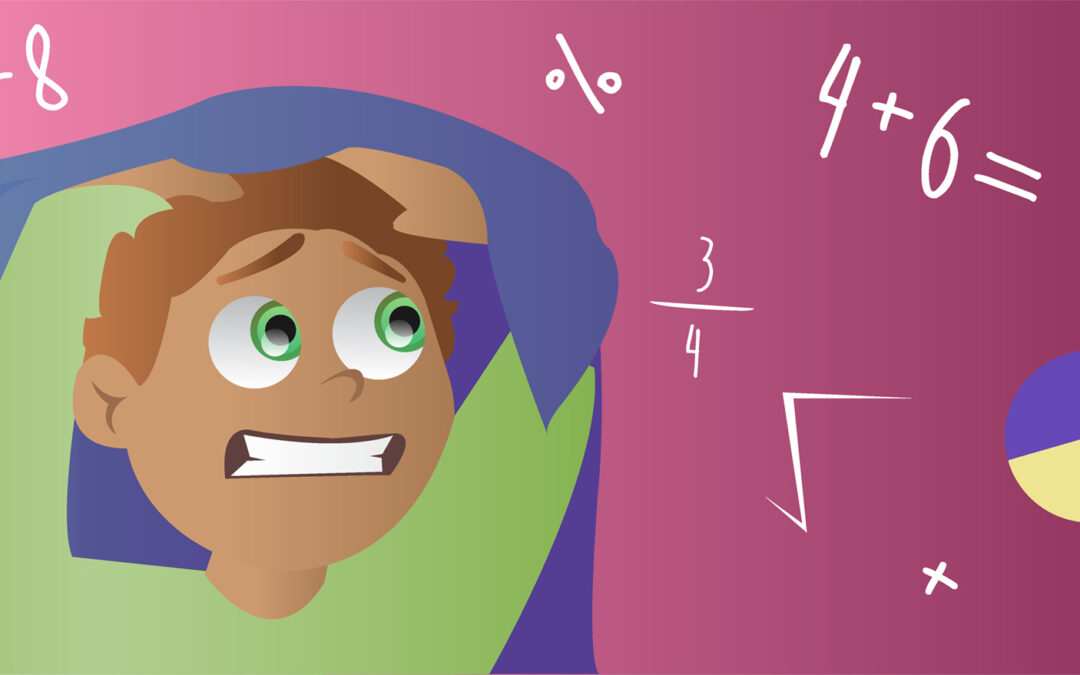
What is your first reaction when you hear the dreaded word ‘EXAMS’? Did your heart skip a beat? We are sure when you reminisce the old exam days, all you could think about is fear and stress. Exam stress affects students even today, and the undue competition to score good grades pressurizes children even more. Students have been hardwired to believe that ‘marks are everything’ and good grades equals to a brighter future. Well, this might not necessarily be true. Besides focusing on a certain ‘percentile’ can steal the joy away from learning. Children start focusing on finishing the syllabus, rather than enjoying the essence of the subject.

While all stress is not that bad, and some amount of good stress is beneficial, as it leads to productiveness. The learners assume responsibility and do their best to prepare for an exam, as they feel motivated to beat their own record and perform better with every successive exam in school. On the other hand, over stressing, may lead to anxiety, and affect the child’s mental health in the long run.

Causes of Exam Stress

In order to deal with pre-exam nervousness, it is important to first understand, what is the reason that is causing students so much apprehension. Some of the common stressors that make exam-time difficult include;

Inadequate Study Preparation

Often students don’t take studies seriously through the normal school days, and panic only at the brink of the exam date. Learning & preparation should be a continuous and ongoing process through the academic year. Last minute study is like a burden and trying to cramp too much information within a short span of time, creates anxiety. An ideal scenario would be for the student to be relaxed and continue to do his revision, until the exam day, rather than opening the subject book for the very first time & trying to finish the full portion in 2 days. This disrupts one’s pattern & the child may not be able to give his 100% while appearing for the actual exam, because he’s sleep deprived and tired.

Adult Expectations

Every parent wants the best for their children. The best education, the best careers, the best degrees, and the list goes on. In the pursuit of achieving the best, parents may unnecessarily pressurize their school going teenagers to score good grades, and even try to secure the first rank in class. For this, poor children are made to undertake additional tutoring after school hours and do oodles of homework. Sometimes, adults tend to compare peer classmates and add to the stress of children to constantly perform at sky-rocket expectations. This becomes too much for the children to handle, and they may lose interest in studies altogether.

Pressure from The Educational Institution

In today’s world, cut throat competition exists everywhere, even when it comes to the reputation of an Educational Institute. In Dubai & UAE alone, there are schools offering different curriculums under the following educational board categories; CBSE, ICSE, International Baccalaureate (IB) and IB Diploma Programme. When the institute has its reputation at stake, they would pressurise children to give their best so that the institution is further known and recognized

Tips to Combat Exam Stress

Firstly, it is important to communicate to students that exams are not a deterrent, but actually an aid in achieving educational milestones in life. Here are some tips to achieve victory over the tension of exams:

Study All Through the Year

Consistency is the key when you want to achieve success in life. Similarly, students must make consistent efforts to study and do their homework on time, such that last minute panic does not arise. Be in sync with what is taught in class, and avoid lag in studying it, because the memory is fresh when you have just learnt the concept and retention is greater.

Ask Questions to Clarify Doubts

Sometimes, seeking the correct answers and clarifying doubts can go a long way in helping students be more confident before exams. One shouldn’t enter an examination hall with ambiguity, because this affects the morale of the student. So better be prepared with the correct answers to important questions which are most likely to appear in the exam paper.

Set Aside Time for Revision

Unless you have a brilliant IQ, comparable to that of Albert Einstein, it is impossible to remember definitions, long answers, or even stages of a math problem, by just studying once. Hence, revision is of utmost importance before exams. Revision reinforces the concepts and helps the child retain facts in their long-term memory. So, prepare a proper schedule, and set aside sufficient time for 2-3 revisions before appearing for the paper.

Take Breaks

We are not machines or robots to study 12-14 hours a day before exams. It is important to set aside time for relaxation and rejuvenation too. Students must not quit their hobbies, just by the fear of exams. Continue to go for walks, do yoga and even devote 30 minutes to socialization with friends. When you sit to study again, you would have a renewed spirit of zealousness which will bring positive outcomes.

With this current social distancing scenario, assessments are being held online. Markezy is one such hybrid portal that supports online, as well as pen & paper assessments, and allows the educators to correct the answer sheets at their own convenience, from any remote location. This flexibility and convince offered by the Markezy has made it a popular tool in schools across Middle East, including GCC countries. However, whatever the mode of examination may be, stress can be efficiently managed by following the above mentioned tips.


Contact us

Tips to Improve the Child’s Diction

Tips to Improve the Child’s Diction

Tips to Improve the Child’s Diction

Diction is basically the style of speaking or writing and the choice of words one uses while communicating. The choice of words in a conversation depends on the person you are interacting with. If you are speaking to your friend casually, you wouldn’t mind using simple words and not necessarily thinking twice before using it in a sentence. However, if you are speaking to your boss at work, you would be more conscious of the kind of words you are using.

Let us illustrate this point with an example:

  1. It happened by blunder (friends)
  2. It happened by accident (boss)
  3. It happened by oversight (senior colleague)

In the above case the speaker is trying to convey the same message of ‘making a mistake’ but the choice of words are different when trying to explain the scenario to different people. Basically: blunder, accident, and oversight are synonyms, used alternatively and ‘blunder’ may sound blunt, but ‘oversight’ sounds a little subtler.

Why does Diction Matter to Students?

Diction is not just a ‘fancier’ way of writing or speaking, it also portrays the leaner’s level of proficiency over language skills. In order to know the appropriate choice of words to use, it is important for the student to have a good vocabulary. Only when the child knows that there are better alternatives to words like ‘obviously’ -which seems very informal, and can also be said more formally as; ‘certainly’, ‘undeniably’, ‘assuredly’, etc. will he start thinking and using it correctly.

When you read a story would you prefer reading; ‘Tom’s good plan helped him win against the other players in the game’ or ‘Tom’s effective strategy helped him achieve victory over other players in the game’. You see how the same context sounds way more interesting and exciting to read only because the author knows how to capture the attention of the readers!

Students become more confident are expressive by paying a little attention to diction. They wouldn’t mind participate in ‘elocution’, ‘story writing’ and ‘debate’ competitions without fear.

How to Become a Speaker with Good Diction?

Speaker with great diction is much easier to understand and comprehend, than one with poor diction. Here are some ways to improve diction:

Enhance Your Vocabulary

Read, read, read! This is the best way to learn new words and enrich your vocabulary. The Reading Eggs App has over 2,000 story books and you can get started with a simple click. This highly recommended 4-stars Reading Egg App is much popular amongst parents in Dubai and GCC Countries in the Middle East. It is intelligently designed to give children practice with reading, spellings, speaking, and reinforce concepts through fun activities. To know more about the Reading Eggs App in the UAE region and get your queries related to its subscription sorted, we urge you to visit our website https://knowledge-hub.com/reading-eggs/

Tongue Twisters

“Betty Botter bought some butter. But she said the butter’s bitter. If I put it in my batter, it will make my batter bitter. But a bit of better butter will make my batter better. So, it was better Betty Botter bought a bit of better butter.” As a child you must have tried competing with your friends to correctly remember and reproduce a tongue twister, as you read it. Besides being fun and adding a bit of humor to your day, tongue twisters are not only a great mental stimulating activity, but also great for improving diction. Tongue twisters are full of alliteration and its great to practice it as a warm-up exercise before you have to deliver a speech or go-up on stage and enact a play sequence. Enunciation exercises work really well and one needs to start gradually before speeding up and saying the sentence out aloud fast.

Listen to Speeches by Eminent Personalities

To be able to mimic good speeches one needs to know how Eminent speakers present themselves by using clear pronunciation and vice modulation. Thanks to YouTube access, students can browse through Ted Talk speeches and understand how leaders and people who have achieved success in life, express themselves.

Contact us

Recommended Reading Books for 7th Graders

Recommended Reading Books for 7th Graders

Recommended Reading Books for 7th Graders

Books are the ultimate holy grail of education. Take any book and the knowledge one derives is immense. To be able to have the power of reading is to continuously pave the way for infinite learning and have a winning streak for life.

One has to develop a zest for reading and the joy will only increase manifold. Children have to be encouraged to read books and the habit has to be initiated from a small age to become a way of being. School study books give them degrees and careers which are supremely crucial but at the same time story books or intriguing novels on various genres transport them into a world of imagination and other informative books in general broaden their horizons. More importantly it strengthens their language and vocabulary. It helps them to effortlessly communicate and moulds them into confident individuals ready to take on challenges.

With the advent of audio books, pronunciations can be mastered by children. Mostly you would let your child read on their own but in certain cases you may read the book aloud to them but never miss this fabulous activity and keep aside a few hours each day for reading. Every book has a special meaning and a takeaway for children. They need to discover it for themselves. In the current times, where children are hooked onto social media, we would say, get them to befriend books and you will see your precious gems, rise and shine.

A majority of institutions across Dubai, UAE, the Middle East and the GCC countries are nurturing reading activities for children alongside regular academics and are making sure that parents are investing their children’s time into reading. We would like to bring to you a couple of recommended reading books for 7th graders.

The Diary of a Young Girl by Anne Frank

You may have already spotted this popular book in most bookstores, libraries or e-book readers. It has been published in more than 70 languages. Anne was about 13 years old while she was writing her diary, the age equivalent to a 7th grade student. Her writings were penned when she was in hiding with her family when Nazi Germany invaded the Netherlands in 1940. She passed away in 1945. The diary was retrieved by Miep Gies who gave it to Anne’s father, Otto Frank, the family’s only survivor, just after the Second World War was over. It does make an inspiring read of a brave heart.

Eragon by Christopher Paolini

While the text immerses children in a world of fantasy where magical creatures exist, this exciting book would even motivate them further to face real life tough situations. The story revolves around Eragon, a simple farm boy, who discovers a dragon as a unique treasure. He decides to raise the creature himself and face the wrath of a cruel leader who wants to snatch the dragon away from him and the rest is up to the reader to find out whether Eragon was successful in protecting his friend from the evil enemy.

The Remarkable Journey of Coyote Sunrise by Dan Gemeinhart

This is a beautiful story with a meaningful narrative that returning or going to one’s home can sometimes be the hardest journey of all. The storyline is adventurous and explores the wonderful father-daughter relationship. The duo travels the county in an old school bus and over the course of thousands of miles, Coyote, a young woman, will discover her destination home is the most difficult to reach.

Alone by Megan Freeman

The story revolves around the protagonist Maddie who wakes up one day to find her entire town empty and she must depend on her survival instincts. She faces human and animal opposition. How she deals with a never experienced scenario is why we urge you to have your child read this book. In this fast-paced competitive world, situations often get too overwhelming where young minds succumb to anxiety and depression, in spite of family and friends around them. So, whether they are in a crowd or alone it would empower them to fight their battle and not let the loneliness overpower them. As they say, being alone is a sign of strength but certainly not being lonely.

To Kill a Mockingbird by Harper Lee

The author considers her book to be a simple love story. It is a novel of a childhood in a sleepy Southern town. The story is compassionate, dramatic, and deeply moving which takes readers to the roots of human behavior that have extreme levels of emotions with kindness and cruelty, love and hatred, humour and pathos all packed into a masterpiece of literature that got translated into 40 languages and over 18 million copies sold. This instant bestseller won a Pulitzer prize in 1961 and was later made into an award-winning film. You definitely do not want your child to miss out on reading this classic.

All you Knead is Love by Tanya Guerrero

This book makes for a thought provoking read that would bring in awareness and empathy in the mind of a child, that abusive relationships exist which is the harsh reality of life and to be grateful if they are not in such a situation and are blessed to be brought up in loving families. 12-year-old Alba’s mother who lives in New York has decided to leave her abusive father and wants Alba to live in Barcelona with her estranged grandmother. Much as Alba initially did not want to live in Spain, she develops love for the place as well as a close relationship with her grandmother and meets another supportive father figure. All of this while discovering another love and passion for bread baking and facing threats towards her bakery’s closure. She fights all odds to save her bakery and also decides to make her family whole again. It is a courageous story that must be read.

Out of my Mind by Sharon Draper

This book is sure to embolden the reader which is why we recommend your child to read it. Every individual is remarkable whether they are abled or differently abled. No one must ever underestimate the potential or the skill of a person if they lack in other areas or are not fortunate like other children to be considered normal as they put it out. The story is about Melody who is disliked by most people. She has cerebral palsy and cannot walk, talk, or write. What she does have is a genius photographic memory to remember every little detail that she has ever experienced. She is undoubtedly the smartest kid in her entire school but no one knows about it. It is a fascinating story saying every child is indeed special and inclusivity is all we need.

Highlights Library’ is a global media brand with major presence in Dubai and UAE, and a digital reading platform that fosters a child’s love for reading. With thousands of books at their fingertips, students can enjoy a world of imagination and exploration personalized for them. It supports children’s many interests through stories, videos, and rewards that engage and delight. Spanning 10 content areas and 30 reading levels, ‘Highlights Library’ let’s children choose what they read and thus they are excited to discover even more books. If you are a resident of the Middle East or GCC Countries, subscribe to the Highlights platform via our website https://knowledge-hub.com/ 

Contact us

Maths Related Art and Craft Projects for Kids

Maths Related Art and Craft Projects for Kids

Maths Related Art and Craft Projects for Kids

Maths is a daunting subject. It is dreaded by most kids in their formative years of school. In actuality, fear should not be present in the first place and Maths can be fun too. The concepts must be instilled in kids in a manner that is intriguing and which would develop their liking for such a tricky subject. Then it would be smoother along the higher grades as they progress with complex topics. How would this be achieved? One of the best ways to initiate a solid foundation, would be to smartly integrate Maths along with Art and Craft. Many educators in Dubai, the UAE, and the Middle East, in the GCC countries and across the globe follow this widespread approach. It is an interesting blend of explaining a relatively difficult subject like Maths with the use of creative Art and Craft that is loved and enjoyed by a majority of young kids. This kind of inclusive learning boosts their memory, enhances their creativity, kids certainly grasp better and retain the knowledge for a long time. We have mentioned below some delightful Maths Art and Craft projects for kids.

Pretty Plants

The basic concept of addition in Maths is taught to children with this elementary art activity of drawing beautiful plants on paper. The petals of the flower and leaves of the stem would be used to convey how addition happens. Plants will have multiple flowers and their corresponding stems with leaves. Kids would be made to count the number of petals they have drawn on the flower and the number of tiny leaves drawn on the stems. Then they would be made to sum up the petals and leaves on each different flower of the plant and declare a total. Later they would add colour to their cute creations. So, art and craft through drawing and colouring and maths through counting and adding makes an engaging activity.

Colourful Paper Plates

In this activity, each kid would be given 4 white paper plates. Then they would be made to stick different coloured paper onto different plates and cut out the round shape correctly, trimming off the extra paper. Now they would be learning Maths fractions like 1, 1/2, 1/3 and 1/4. Each coloured plate will have 4 separate fractions written on them and as per the number division the plate would be cut off in those many pieces. E.g., 1 – The plate would remain whole as it is and for 1/2 – The plate would be cut into 2 pieces, likewise for the other fractions into 3 and 4 pieces. So, they are learning Maths concepts, experiencing joy with craft and colour, and are developing motor skills too.

Fun Ice-Cream Sticks

Kids get to make fun stick characters on paper using ice-cream sticks and alphabets. Here the maths concept of Odd and Even numbers is introduced to them. So, they are asked to make 2 guys, one would be Mr. O and the other would be Mr. E with each letter drawn out big with sketch pens on paper. Then the ice cream sticks would form each characters’ body, hands, and legs. Mr. O would have numbers 1,3,5,7 written on him and Mr. E would have numbers 2,4,6,8 written on him. In this manner they are taught this concept of odd and even numbers, initially beginning with single digit numbers and then teachers can move to higher odd and even numbers all with art, craft, fun and play.

Eye Catchy Beads

This particular activity is to help kids learn shapes of objects which are later going to be used in Maths calculations and theorems such as square, rectangle, triangle, circle, and a 6 faced cube. Colourful plastic beads of these different shapes are given to them. These beads have pre-cut holes in them. Kids are then made to pass strings through the holes to make creative necklaces out of the many shapes. Hence this becomes a great activity along with knowing shapes, colours, and making lovely art and craft abstract necklaces with beads.

Wonderful Blocks

Which kid wouldn’t want to play with blocks? This is by far the most loved activity. Kids get to make creative colourful block towers stacking up blocks above each other. The art of stacking is one, the main idea behind this is to teach them multiplication. If you gave kids multiplication tables to learn otherwise, it would get bland for them and they would just mug it up without understanding the calculation or the logic behind it. That can be done after this activity so they will be familiar with tables and multiply like a pro. Through this favourite fun activity while stacking blocks they are going to learn this Maths concept very well. So, there are different denominations of blocks made to be stacked by them and each block will have a number. For e.g., a block tower of 3 blocks with digit 1 on them will be explained as 3 X 1 = 3, a block tower of 4 blocks with digit 2 on them will be explained as 4 X 2 = 8. So, this is how they will excitedly learn and play and the art of stacking again strengthens their motor skills.

Mathletics’ is an amazing mathematics platform for educators and learners. They support learning for students in the classroom and home, through interactive activities, games, and challenges. They offer students the chance to put their mathematical skills to use through relevant, attention-grabbing activities. It is the perfect mathematics engagement program for schools and homes.

Contact us

Helpful Tips To Overcome The Fear of Math

Helpful Tips To Overcome The Fear of Math

Helpful Tips To Overcome The Fear of Math

Math phobia or Math anxiety is a deterrent in one’s learning journey and creates insecurities amongst the learner, such that the student starts feeling this subject is ‘not my cup of tea’.

As a parent you might just shrug it off when your child comes and tells you he has a ‘fear of math’. However uncanny it may sound; Math phobia is a real thing! It is a very common type of stressor that students face and it gets worse before exams. Students find it extremely difficult to remember formulae, theorems, and calculations, especially when they are being timed & have to submit their answer papers before the examiner rings the bell.

“Feel the Fear and Do It Anyway” were the words of Jillian Michaels. Parents and teachers must encourage the learners to overcome the fear of Math and embrace it by following a few helpful tips that we will share with you in this article.

Tips to overcome Math Fear

1) Acknowledge the Phobia: Acknowledging the fear is the first step to overcoming it. Have a conversation with your child and explain that it’s okay to feel afraid of ‘numbers’ and that it can be resolved with some extra support. Even a bright student who performs exceedingly well in other subjects might develop Math Phobia. That doesn’t mean the student needs to be labelled as a ‘slow learner’ or ‘Incapable of studying’.

2) Practice Solving Math Problems Daily: Math is a subject which cannot be learnt by giving it just ‘one glance’. There is no scope to ‘mug up’ the answer and hence the only way to master Math is by setting aside 30-40 minutes everyday for math homework. Revise the ‘theorems’ and ‘calculations’ taught by the teacher in class and keep practicing them by referring to a Math guide book. And if you feel the Guide Book is such a bore, the new trendy thing is to download Math E-Learning Apps and have fun while solving problems. Mathseeds is one such dedicated Math learning App available in UAE, designed as per the K-2 curriculum. It focuses on reinforcing core Math concepts and problem-solving skills amongst learners.

3) Use Math in Everyday life scenarios: When children express their hilt of frustration and question ‘what is the use of studying Math?’ ‘would the distinction between a rhombus and a hexagon ever come handy to me?’, simply sit them down and talk them through. Math becomes meaningful when concepts are applied in day-to-day scenarios. So next time you set budget for groceries, involve your children and allow them to take the lead. Baking a cake for Christmas? Let your little one weigh the amount of flour required as per the recipe. Ordered a bedside table from Ikea? Let your little one sit besides you and figure out recognizing ‘angles’ and ‘shapes’ comes handy, while putting together a piece of furniture. The more you involve them, their interest grows and finally figure Math is not all that bad a subject!

4) Encourage Competitions and Group Learning: Solo studies are great, but when likeminded students come together, the level of excitement is increased manifold. Divide your child and his friends into groups and play a game or two of treasure hunt, where the clues are revealed only on solving the problem correctly! If it is not feasible to gather students at one place, simply log-in to the same e-learning Math Apps and compete with other Math learners remotely. Mathseeds features numerous challenges and activities which can be played remotely, and of course there is always a surprise in store for the winner. That means if you are in Dubai or any other country in the Middle East, you can compete with another learner from Australia who you have never met before.

Each learner is different, and it is unfair to set ‘sky high’ standards or expectations, especially when it comes to learning Math. Pressurizing a child to perform better in Math and forcing him to solve problems from a textbook may only create more frustration and add to the dreaded ‘Math anxiety’. We suggest parents to make math fun, interactive and a way of life.

To learn more about Mathseeds or to subscribe to them from GCC, visit out website: https://knowledge-hub.com/

Contact us

Easy Static Electricity Experiments for Home Based Learning

Easy Static Electricity Experiments for Home Based Learning

Easy Static Electricity Experiments for Home Based Learning

Science experiments do not necessarily have to be practiced in a state-of-the-art chemistry, physics or biology lab in school. Science is all around us and its wonders can be discovered even at home.

What is Static Electricity

In K-12 schools across Dubai and other countries, the topic of ‘Static Electricity’ is introduced to students in Grade 4. So static electricity is the energy that can make your hair literally stand! It is a phenomenon where charged particles are transformed from one object to the other. You must have noticed that when two objects are rubbed against each other, in a dry surrounding, the objects acquire equal & opposite charges thereby developing a force between them. This is nothing but static electricity.

Some Facts About Static Electricity

  1. Static electricity builds up on the object’s surface with positive and negative ions which cancel out each other, thus making the static charge stay in one place.
  2. The two objects have different charges, one object would build-up positive charge and the other will have negative charge.
  3. Scientists discovered that lighting is a good example of static electricity. When ice particles within the cloud rub against each other, a spark or static force is generated, thereby causing a streak of lighting.
  4. Fabrics cling together due to static electricity when rubbed together. When the positive and negative ions come in contact, they attract each other and hence the materials cling.
  5. A photocopier machine that prints on paper uses the principles of static electricity. When the sheet is placed on the glass, an image is projected onto a positively charged drum and the drum conducts electricity when the light hits it. The toner on the other hand, has negative charge, so it gets attracted to the drum. This attraction between the toner and the drum, rolls out print on the blank piece of paper.
  6. In the future power banks wouldn’t be required to charge your phones. Research is being conducted to test whether phones bouncing in one’s trouser pockets is sufficient to recharge the batteries of the device. How cool is that!

Fun with Static, Try these Simple Experiments at Home

Floating Plastic Bag

Take a plastic rod and rub it against a piece of cloth for about 50 seconds. Lay the plastic bag on a table and now repeat step 1 by rubbing the piece of cloth, but this time onto the surface of the plastic bag. Move the charged plastic rod over the plastic bag and watch the charged plastic bag fly as if there were no gravity on Earth! Astonishing isn’t it?

Explanation: When you rubbed the plastic rod to the cloth, the rod got negatively charged and the same happened to the plastic bag when it was rubbed against the cloth. Now the rod and the plastic bag have negative energies and when they come close to each other, they seem to repel or move apart – as same energies seem to repel against each other.

Changing the Course of the Water Stream

Take an inflated balloon and rub it against your hair for a couple of seconds. Turn on the faucet of water attached to a sink and bring the rubbed balloon close to the steady stream of water flowing. Remember, do not touch the balloon to the water, just bring it really close. You would be amazed to see that water gets attracted and moves towards the balloon magically.

Explanation: When the balloon was rubbed on the head, it got charged with negative ions. Water naturally has a composition as H2O (two molecules of Hydrogen and one molecule of oxygen). Since more of hydrogen is present it water, it is slightly positively charged. When the positive stream of water is introduced to the negatively charged balloon, they being opposite forces attract to each other. Hence the water appears to move towards the balloon.

Separating Salt and Pepper from the Mixture

Did you know separating salt and pepper seasoning is possible with a simple static experiment! Take a bowl and mix a teaspoon of salt and pepper powder thoroughly. Rub the spoon over a cloth for 50 seconds. Bring the spoon over the salt & pepper mixture and watch the pepper jumping towards the spoon.

Explanation: When the spoon is rubbed it gets negatively charged. Both salt and pepper granules have positive energy. The negatively charged spoon when brought close to the mixture attracts the positive ions of the pepper & salt, but only the pepper jumps towards the spoon as it is slightly lighter than salt and sticks to the base of the spoon. So next time your toddler mischievously mixes salt and pepper, don’t be mad at him. Simply work through the experiment and get them separated!

If you are a working parent and don’t have time to arrange for materials required to carry out the experiments, we present to you Carolina’s Science Kits. Carolina is amongst the largest provider of Science kits to schools across all areas of physics, chemistry, and biology. In-fact most IB Schools in UAE and GCC Countries rely on Carolina to stock their science labs with dedicated pre-categories ‘science kits’ for children.

Carolina’s Triboelectric Series Kit emphasis on introducing children to Static Electricity by supplying readymade materials to carefully undertake the experiment. The kit comprises of different textures like; silk, wood, Teflon, cotton, wool, nylon, etc. so that students thoroughly understand the concept. For more details about purchasing the Carolina Kits in the Middle East, visit our website: https://knowledge-hub.com/

Contact us