

An Easy Guide To Curating A Professional Newsletter

An Easy Guide To Curating A Professional Newsletter

An Easy Guide To Curating A Professional Newsletter

A Newsletter is a medium of communication used by organizations to share information with customers and other stakeholders within the business network. They are sent to the recipient’s inbox via email or a print version is posted to their home address. Though we are in the age of a social media revolution where snippets of content are spread in an easily understandable & engaging manner, a newsletter acts as a back-up to support the social media campaigns. What can’t be elaborated in a 3-liner post on Instagram, can be explained in greater detail in the newsletter.

There could be numerous purposes for which a newsletter is drafted such as; promoting the launch of a new product/service in the UAE region, simply keeping in touch with followers, or even appealing to audiences to subscribe to the brand’s social pages. Whatever the aim is, a good newsletter has the potential to achieve it all.


Here are a few steps to create your newsletter:

#1 Prepare a Strategy

Have clarity as to what is the aim of sending the newsletter. Also, be clear about your target audiences. The communication must be in sync with the marketing strategy. As per the goal, the content specialist can curate the wordings. A newsletter announcing a discount offer is worded differently, from the one which highlights the star performer for the month or the one that sends across e-greeting wishes on specific festivals. Another important factor to consider is how often would you be shooting out the newsletter. Keep in mind that the frequency and timing are as important as the content. If you keep bombarding inboxes every now & then, you may lose subscribers and the click-through rate may be very low. Some may even mark you as spam and ignore the message. The aim is to not be too pushy, but to stay on top of your target audience’s mind so that they don’t forget about you.

#2 Newsletter Content & Headline

In case you are sending an e-newsletter, make sure the subject line is catchy, but not too confusing. Even the titles and sub-titles must be cleverly chosen so that there is no ambiguity about what lies ahead when one decides to scroll further or turn the pages of the printed copy. Keep the wordings crisp, make it fun to read, and be unique with the content. Set the flow right, by establishing a strong introduction, followed by a body copy, and then conclude using positive statements, followed by a call to action button that leads them to a landing page.

#3 Design and Images

An important element to consider is how presentable the newsletter looks. There are so many interesting templates and layouts to choose from if you use the right newsletter-making software which is easily available online. Make sure the images aren’t pixilated and ensure you crop them correctly before inserting them into the newsletter. The color contrast must be carefully decided such that the background blends well with the font. Even the logo should be placed in a prominent position and look as though it all fuses together.

#4 Add Personal Touches

Make the recipient feel special by customizing content based on their taste & requirements. These small acts of going out of your way and making audiences feel special will go a long way. Spell names correctly and send special newsletters on birthdays wishing your customers. Shoot-out welcome emails and special surprises to new buyers and acknowledge the loyalty of the old ones by giving them gift points that can be converted into cash discounts.

#5 Mailing List

Preparing a detailed mailing list is like a treasure trove that needs to be valued. It is like a holy grail that needs to be kept up-to-date so that the emails are sent to the correct recipient.

Flipped Learning

So now that you know the tricks & trades of curating a newsletter, get started right away! Wait, but what if you are in school and had to make a newsletter as your classwork project assignment?

This module is dedicated to school students who wish to learn how to prepare a professional-looking publication using Google Docs or Microsoft Word platforms. TechnoKids has marked its way into educational institutes across Dubai in the Middle East and other regions like GCC. The kit furnishes you with resources and lesson plans that allow learners to create a front cover for the newsletter, draft content & add taglines, and finally distribute it amongst their classmates in print and online formats.

Contact us

Fill in your details below or send us an email on info@knowledge-hub.com

Make Learning Interesting – Activity Books For Kids

Make Learning Interesting – Activity Books For Kids

Make Learning Interesting – Activity Books For Kids

It is such a pleasure to watch your kid be immersed in productive activities through the day, rather than just whiling time away playing with toys or scrolling on their tabs. Now that the pandemic isn’t clearly giving us signs of complete eradication, staying indoors and away from the public has become the new normal. This means, that children have way more time to spend indoors at home, and the chances of them getting bored easily, is a given. Parents are exploring ways to keep kids productive and what better than giving them a bunch of activity books to work with.

Here are some types of activity books that are available in the market:

  1. Brain Games
  2. Puzzles
  3. Art and Craft DIY Books
  4. Coloring Books
  5. Find the difference
  6. Join the dots
  7. Riddles
  8. Word Search
  9. Tracing numbers and letters
  10. Mazes

The best part about these activity books is that students of any age can benefit from them. There are picture books for toddlers who can’t read and more complex ones like sudoku books for 13-16-year-olds. So if you are contemplating buying some cool & thought-provoking books for yourself and your child, continue reading the blog.

#1 Learning Through Fun

Undoubtedly learning about shapes is much more fun from an activity book, rather than from a textbook. Imagine how interesting it would be if you could pluck stickers of different shapes and match them with the respective objects in the book. In this way, children learn a great deal without even realizing it. The process is so immersive that they’d lose track of time.

#2 Improves Confidence

On completing a puzzle or brain teaser quiz successfully, the joy kids get knows no bounds. This process helps them build confidence and they feel elated to undertake more such activities as head-on challenges. Eventually, this will translate into the child displaying greater involvement in school sports events and other co-curricular & curricular domains. The greatest gift you can give a child is confidence and a chance that will allow them to soar and fly.

#3 Creativity

Thinking outside the box is best stimulated when children work with art & craft activity books and clay dough to curate scenes & pictures to express their emotions creatively. These books are a medium to put one’s imagination onto paper and discover hidden talents. They say ‘creativity starts at home and lasts a lifetime,’ which is indeed true & valid.

#4 Reduced Screen Time

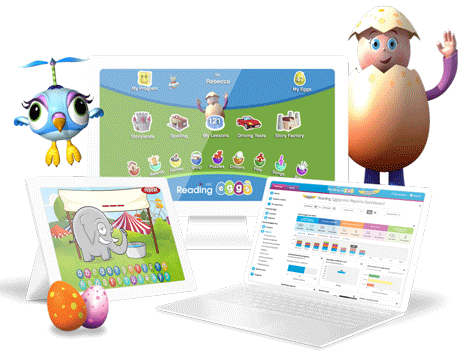
Without even realizing it, your kid could be spending anywhere between 1 hour to 3 hours of screen time per day. That’s a lot of stress for their eyes and it also causes serious sleep problems like insomnia. By giving them an activity book, they will be spending time doing something useful and also improve their attention span by focusing on completing the task on hand. Since you use your hands to touch, feel, color, and fold, while doing various activities, it improves your fine motor skills and refines the senses. Reading Eggs is an excellent program based out of the UK that offers an extensive library of activity books to support your child’s overall development. This award-winning online & offline publication has earned a favorable repute in the GCC regions and all over the Middle East. To learn more about Reading Eggs, visit this link: https://knowledge-hub.com/reading-eggs/

#5 Improves Reading Skills

There are numerous phonics practice books that encourage children to learn the phonetic sounds of letters and then use blending & segmentation techniques to construct words. Introduce simple reading books which have 1-2 lines of text on the page and short sentences, so that children can participate in reading and develop an interest. Reading Eggs is one such platform that aims to make learning to read fun for kids. Through games, songs, and activities, children expand their vocabulary and feel motivated by earning reward points. Reading Eggs is quite a popular learning tool amongst kids and many parents in Dubai and other regions of the UAE, support the Reading Eggs way of teaching.

So, if you wish to prepare your little one for success in school and focus on their overall development at an early age, then choose a range of activity books and stack them on your bookshelf!

Contact us

Fill in your details below or send us an email on info@knowledge-hub.com

List of Topics Under Biology and Career Opportunities for Students

List of Topics Under Biology and Career Opportunities for Students

List of Topics Under Biology and Career Opportunities for Students

How did life come into existence? Who created the first man and woman? Are we all predecessors of apes? These burning questions are answered to some extent, by studying biology.

Biology offers a detailed research on the evolution of the human race and other species of animals & organisms, on this planet and presents an interrelation between them. It also helps solve problems related to sustainability of life, including ecosystem, food quality, environment, and finding of new medicines to cure illnesses in the human body.

Biology is a compulsory substream of the Science domain in High school where students learn about different organisms and how they adapt to the environment around them. The biology laboratory is a haven to conduct hands-on experiments and analyze data, thereby understanding phenomena & applying the reasoning behind them. Carolina is a trusted lab supplier and equips school biology laboratories with the latest equipment for students to be able to conduct their experiments in a safe & hygienic manner. Being a leading player, it has a global presence including supplies in schools and colleges across Dubai and GCC regions in the Middle East.

Here are some topics that are covered as a part of the biology curriculum;

#1 Cells and Homeostasis

Learn about single cellular and multicellular organisms. Discuss the cell structures in detail and know the characteristics of each of them. Students conduct experiments to understand how the cell stores resources in terms of energy & chemical building blocks and then use this energy when needed. They are also made to compare the homeostasis in different organisms and note their differences

#2 Energy Needs for Living Things

Where do plants get their energy from? Why do humans and animals need the energy to function? These pondering questions are answered in great detail by the Biology teacher in class. Plants trap the energy of the sun to make food via the process of photosynthesis. Cellular respiration is a chemical reaction performed by the cells of our body to change the food we eat, the water we consume, and the oxygen we breathe into energy, that can be used for our day-to-day functioning.

#3 Study of Genetics

Why do children look like their parents? Someone must have noticed your character traits as being similar to that of your mother or father. So, genetics is basically the science of genes that passes on from one generation to the other. Also, you must have often come across the term DNA which is the abbreviation of Deoxyribonucleic Acid. DNA resembles two polynucleotide chains that are intertwined with each other and carry genetic instructions for the development, growth, functioning, and reproduction of organisms. Biology students go into further depth about gene alteration and how genetic counseling influences society.

#4 Ecology

Under this topic, you will study the biotic and abiotic factors in the environment which includes living and non-living things and their interaction with the environment. We can delve deeper into the understanding of the human population, diversity, ecosystem, and biosphere, by learning more about our ecology. Ecology is further classified into different types; community ecology, population ecology, landscape ecology, and molecular ecology.

What are your career options after securing a Biology degree?

#1 Research Scientist

This is a very stimulating career opportunity, as a research biologist gets to work on a number of interesting research topics that can have a great positive impact on life and its existence. The scientist can specialize and be involved in any of the following streams; medical research, neurology, genomics, microbiology, and pharmacology.

#2 Healthcare Biologist

The healthcare industry is ever-evolving and the number of diseases is on a rise. A healthcare biologist works on introducing new-age drugs or improving the existing ones, to cure life-threatening ailments such as; cancer, aids, tuberculosis, and heart problems. They are mostly hired by pharmaceutical companies or by hospitals & research institutes.

#3 Environment Conservationist

Wish to be an earth-protecting ninja? Then a career as an environmental conservationist suits you best. You will be helping protect our planet’s natural resources, wildlife, and vegetation, to offer sustainability for future generations. You will be at the forefront and run campaigns to make the general public aware of the consequences of their ill habits and subsequently educate them to be more responsible earth-dwellers.

Besides the above top 3 enlisted careers, there are plenty of other options for biology graduates. One can choose to be an educator in any of the top science colleges in UAE, or work alongside the police department as a forensic expert. The complexity of the subject and constant interaction with people and nature makes Biology an interesting stream for students.

Contact us

Fill in your details below or send us an email on info@knowledge-hub.com

What Makes A Confident Online Math Tutor

What Makes A Confident Online Math Tutor

What Makes A Confident Online Math Tutor

Online tutoring has become a fad and thanks to the pandemic phase, students are now comfortable learning online. Undoubtedly, online classes have their own advantages such as saving costs, usage of interesting digital resources, and flexibility to learn anytime & anywhere.

#1 Display Enthusiasm

A Math teacher needs to keep students engaged through the 1-hour online class. Especially for a subject like Math, which is anyways considered boring, the the teacher should put in extra effort to make it likable. Use the blank canvas to your creative advantage and introduce colors, characters, and fonts, to present the topics in an easily palatable manner.

#2 Access Student’s Needs

Since the student is not physically present before you in a class, there may be a lag in understanding if the student is actually grasping the concept or not. Are students listening to the explainer video on ‘prime & composite numbers’ or have they muted the same and dozed off to lalaland? The lecture shouldn’t be a one-way conversation, but a two-way train. Students must get a chance to ask questions and raise their hand on a zoom call when they have doubts. Alternatively, the teacher can ask questions to learn whether participants are paying attention.

#3 Follow Online Etiquette

Just because Math is being taught online, doesn’t mean that the tutor can take it easy and be laidback. Adopt etiquette like being on time, dressing appropriately, testing the microphone & camera before the online session begins, and sitting in a secluded room in your home to avoid disturbances of any kind.

#4 Have Patience

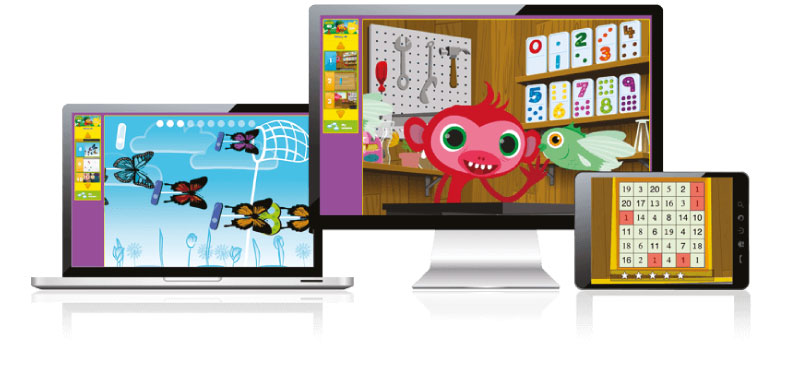
Remember that online teaching is very different from regular classroom sessions, as you don’t have access to the chalk and board. Online math is taught using videos, making drawings on the paint app, or using PowerPoint presentation slides. Children who are not too tech-savvy will find it difficult to link the steps to a complex & lengthy ‘word problem’ as the slides turn one by one since the entire solution can’t fit on a single slide. The presenter, therefore, needs to be patient and not get frustrated if she has to repeat the solution multiple times and keep going back & forth with the slides. Making use of online platforms like Mathseeds is also a great idea. Here kids have to simply log in and practice Math concepts through simple gamified lessons assigned by their teacher. Mathseeds customizes modules based on the student’s age and capabilities, thereby becoming a hit amongst learners in UAE & other Middle East regions.

#5 Prepare Additional Teaching Aids

Since there is no one fixed method to teach online, the teacher needs to be prepared with multiple teaching aids and techniques. If the student doesn’t understand by way of referring to PDFs or pre-recorded videos, you might have to be ready with flashcards to explain something like; tables and fractions. Always have a marker and empty sheets of paper, which will act as a whiteboard to help explain the topic effectively. Also keep links ready on other tabs of your browser’s window, so that you don’t waste time fumbling when you need to change the screen.

#6 Word of Encouragement

Though the lecture may be of a shorter duration online, it doesn’t mean that you don’t find the time to say words of encouragement. Students need to be continuously motivated so that they make friends with numbers. Unlike physical class, the teacher doesn’t get a chance to check the notebook with a red pen and share her positive comments. However, online assignments need to be shared regularly and the teacher should write her remarks in the notes section. Mathseeds is cleverly designed to keep children motivated by offering them coins & reward points, which can be exchanged for some cool goodies. To learn more about Mathseeds and its availability in Dubai or GCC regions, simply visit this link https://knowledge-hub.com/mathseeds/

#7 Technically Soundness

Distractions due to technical glitches are unavoidable in an online class, but that shouldn’t be the reason for the lecture to go for a toss completely. The teacher needs to practice and train on how to handle minor setbacks like; re-connecting immediately if the WiFi connection gets disconnected or swiftly muting a student who is having a conversation with his family at home. Some sort of technical professionalism is required for the online session to be conducted smoothly.

#8 Be Organized

At the end of every session, parents expect the teacher to send notes and links referred to while teaching. Hence it’s important to keep all digital resources well organized. Make a folder with the grade you are reached, followed by folders for each month to store the monthly curriculum, and lastly sub-folders with dates to store daily topics. Soon after the class concludes, simply reopen the folder and send the email effortlessly.

Teaching math online isn’t rocket science! Simply keep all the charts, diagrams, calculations, flashcards, and links at a hand’s distance so that you are prepared & confident to deliver a kickass session.

Contact us

Fill in your details below or send us an email on info@knowledge-hub.com

Ways To Be Expressive While Writing Remarks For A Report Card

Ways To Be Expressive While Writing Remarks For A Report Card

Ways To Be Expressive While Writing Remarks For A Report Card

Students often dread coming to school when it’s Report Card day. There is an innate fear of facing the ‘scores’ and having to read the teacher’s remarks. However, if you are still in school and are reading this, let us assure you that there is nothing to be afraid of and even a bad remark can be taken in a good spirit. The report card aims to provide a transparent picture to learners of their progress and motivates them to perform better in subsequent examinations. Also, the report doesn’t just reflect upon the academic aspects but also focuses on the overall behaviors of students.

When so much is at stake and the child’s development not only academically, but also overall depends upon the teacher’s comments in the Report Card, it is advisable to spend time & effort in thinking through properly, before the report is presented to the students & their parents.

Here are some tips for teachers to consider while curating the Report Cards:

#1 Use Easily Understandable Language

Parents are not experts at understanding the technical terms used in the education system to describe the child’s progress. For example; instead of writing this ‘The child’s cognitive capacity is progressively developing.’ choose simple words such as; ‘The child is able to apply reasoning skills and his memory power is developing.’ In such a manner, the statement is elaborated properly and is easy to understand.

#2 Make Frequent Notes

On the eve of Report Day, if the teacher sits to write the comments, she won’t be doing complete justice. It is not a 10-minute job to summarize the child’s performance, especially when his future depends on it. All through the academic year, the teacher must carefully observe each child in class and make regular notes in her diary, so that the comments are authentic and genuine. Be like a detective and collect pieces of evidence by recording incidents where the child outshone himself or accidentally made a mistake, and enumerate the same in the notes section. Though not everything can be accommodated in the limited space as comments, teachers can refer to these notes while meeting parents one-on-one during open house sessions. If you are not comfortable with pen & paper notes, just log in to the school’s integrated NLP (Next Learning Platform) tool and prepare detailed comments in their report card notes section. NLP is a SaaS-based ERP platform that integrates all aspects of an educational institute and has won the trust of 1200+ schools across the globe, including those in Dubai in the Middle East.

#3 Be Brief Yet Effective

There is no need to include unnecessary jargon and run around the bush, just be straightforward while choosing your words. You are not writing a story about the child’s time in school, it has to be a brief picture of his behavior, grades, and overall development. For example, something like this, ‘Max always raises his hand in class to answer a question and likes to be picked by the teacher, or else he gets sad.’ All these details can be very well elaborated in person, but in the report card stick to this, ‘Max shows eagerness to answer questions asked in class.’

#4 Try To Say Things Positively

A negative comment may put off the learner and he may lose confidence in himself. Therefore, being too harsh while sharing your thoughts is unfair. Try to word the sentence in a manner where parents don’t feel you are complaining about their kid, but instead trying to draw attention to an area that needs improvement. For example; rather than saying this, ‘Riya does not participate in group discussion and is in her own world distracted’, word it differently, ‘Riya should proactively participate in group discussions and show more interest in the class.’ In this way, you are not hurting the sentiments of the student.

#5 Offer Suggestions

Personalized suggestions must be offered to each student, to show a direction and steer them on the correct path. You could use a sandwich approach, i.e. begin the comment with a positive statement, and try to fit in the not-so-pleasant comments in the middle, followed by suggestions at the end. Suggestions could be anything such as; offer more puzzles to the child at home to develop his problem-solving skills, let the child help with household chores so that he learns to become more independent, or even something like; introduce the child to more people & friends of his age-group to overcome shyness. A bit of guidance will go a long way! As we mentioned earlier, the NLP tool provides detailed analyses of each and every individual student’s progress, which comes in handy at the time of preparing the report cards. Most schools in the GCC regions, including UAE, prefer to digitalize important tasks, especially report making, to ensure seamless functioning.

To conclude, just remember these easy-to-apply tips and you will never go wrong when it’s actually time to express your thoughts on D-day. Keep your notes organized, offer positive suggestions, communicate the weaknesses of the student in a subtle manner, and we’re sure you’d play the part of a good mentor well.

Contact us

Fill in your details below or send us an email on info@knowledge-hub.com

Strategies To Be Adopted While Teaching Math To Slow Learners

Strategies To Be Adopted While Teaching Math To Slow Learners

Strategies To Be Adopted While Teaching Math To Slow Learners

Slow learners are not different from every other learner in the class. They just take some time to grasp concepts and need individualized attention without which they feel lost. Especially for a subject like Maths, children have some kind of phobia and are anyways scared of numbers. We can’t even phantom the plight of a slow learner!

Educators must apply some kind of special teaching technique and use attractive learning aids which make the slow learners comfortable with numbers and eventually cope with the class.

#1 Stepwise Learning

Slow learners need to climb the ladder gradually and not jump to level 5, without ascending levels 1-4. It simply means you can’t expect them to understand and solve 3-digit addition until they are thorough with 1-digit and 2-digit addition problems. Even for a small thing like filling in the blank with the missing number, let them practice only 7___ 8 i.e. one set at a time, rather than having multiple blanks in a row, 4 ___ 6 ___ 8 ___. Break down every concept into easily understandable steps for the child to not feel burdened. Even for multiplication of tables 2 x 3 = 2 + 2 + 2 = 6 simplify in such a manner, so that the child is not pressurized to remember so many tables by-heart all at once.

#2 Practice and Revision

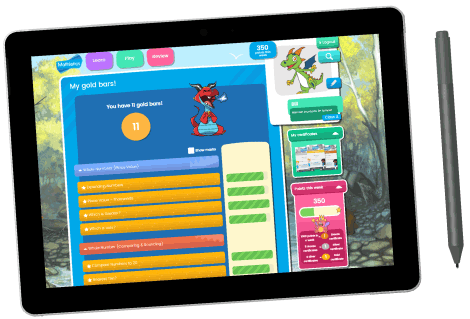
Slow learners tend to forget things until they constantly keep practicing sums that were taught in class. Even when they transition from Grade 1 to Grade 2, it becomes difficult for them to recollect what was taught previously and they might go blank. So before you begin with a fresh batch of concepts, keep revising the basics, like, counting, greater than less than, and addition/subtraction, until they are confident enough to proceed further. Time & again revision and practice is a must. At the beginning of every Math class, 15 minutes must be dedicated to revision. Mathletics is a fabulous platform that kids enjoy practicing Math on, simply cause it is user-friendly and has attractive animations, which everyone loves. Simply download the App on your tab or phone via the online stores, no matter where you reside. Schools across Dubai in the Middle East promote fun Math activities by encouraging parents to assign after-school homework via the Mathletics platform.

#3 Dedicate Shorter Spans

Imagine having to sit and study for 2 hours straight. Boring right! Children have a very limited attention span and they get restless if they have to focus for too long. What the teacher is saying may not even register after a point and children drift into wonderland. Slow learners especially don’t have the capacity to concentrate for long periods. So, keep the important studies for the first half of the lecture, followed by a short hands-on activity where children feel involved & get energized, and conclude by taking a revision test. In this manner, you would be able to keep the child’s attention span alive all through the session. Having said that, don’t be too hard on them, and sometimes give breaks, when required. You could also find the best tutor in GCC region and enroll your kid there for some extra help and personalized teaching.

4 Make Studies Relatable

Imaginary concepts are more difficult to grasp than the concrete ones. For example; X is greater than Y by 3 and Y is two times of Z, which is such a confusing word problem to deal with. To make this easier, give students real-world examples and maybe worksheets that have pictographic representations of the problem. For example; have red balls to represent X, yellow balls for Y and blue balls for Z. Now try and explain the sum to the learner.

#5 Provide Motivation

Slow learners suffer from low confidence and compare themselves to other bright students in class. Their morale is at an all-time low, therefore instead of being too hard on them, be kind and pep-talk them with words that will keep them motivated. Celebrate every milestone in learning and reward them with a good remark in the diary. Highlight the positive achievements like finishing homework on time & answering correctly in class, all through the child’s learning journey. Many gamified Math learning apps like Mathletics, encourage students by giving them points or coins as reward and then redeeming them for exciting in-app goodies. To download Mathletics in your UAE region, simply visit the link https://knowledge-hub.com/mathletics/

#6 Allow Mistakes

One learns by making mistakes. Instead of scolding or taunting, let the child make mistakes, till he perfects the concept. Be very patient, even if it takes 10 wrong answers, to finally get the right one. In order to teach slow learners, one may have to undertake a special training program and be very patient, till the subject matter is fully understood.

Contact us

Fill in your details below or send us an email on info@knowledge-hub.com