
Unveiling the Value of Guided Reading Resources with 2Simple

Unveiling the Value of Guided Reading Resources with 2Simple

Unveiling the Value of Guided Reading Resources with 2Simple

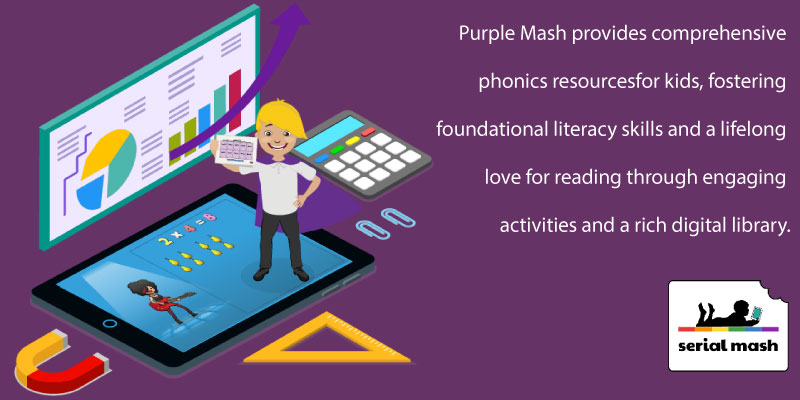
In the fast-paced digital age, 2Simple dedicates itself to instilling the joy of reading in young minds. They meticulously curate various tools and materials, recognizing the importance of guided reading resources to make the literary journey exciting and profoundly enriching for students and educators. 2Simple ensures seamless integration of guided reading resources, fostering a love for reading that transcends the challenges of the modern era through the immersive online library of Serial Mash and the comprehensive Authors and Poets area in Purple Mash.

Serial Mash: A Treasure Trove of Literary Delights

Welcome to Serial Mash, the go-to online library for immersive reading experiences and comprehensive comprehension. With a new chapter released every week of the term, Serial Mash transforms the often-daunting task of planning guided reading into a breeze. The collection boasts over 200 guided reading resources, carefully crafted to ignite the love for reading and enhance literacy skills.

What sets Serial Mash apart is its interactive nature. Each chapter concludes with a cliff-hanger, encouraging children to keep returning to find out what happens next in the story. Each chapter’s guided reading resources encompass comprehension, grammar, and writing activities, offering a holistic approach to literacy education.

Serial Mash doesn’t end within the classroom walls. Home access ensures every child can continue reading beyond school hours in the comfort of the home. Independent reading or following along with an author enhances the reading experience, fostering a connection between students and literature. As a testament to its success, Serial Mash has witnessed over 3.9 million hours of reading, underlining its effectiveness in capturing young readers’ imaginations. Plus, the collaboration with DK Learning introduces six new full non-fiction books each term, ideal for topic-based research lessons. Try Serial Mash today with the 14-day free trial, easily integrated into Purple Mash accounts.

Purple Mash: A Literary Oasis for All Ages

Authors hold the key to unlocking the wonders of literature. Within Purple Mash, 2Simple provides rich guided reading resources for delving into the lives and works of literary giants such as Hans Christian Andersen, Charles Dickens, Julia Donaldson, and Roald Dahl. Students can write profiles and book reviews and engage in activities centered on their favorite authors’ captivating works.

In the ‘Resources’ on ‘Popular Texts’ section, Purple Mash offers many materials for beloved books across various age groups. From the enchanting tales of “The Gruffalo” and “The Very Hungry Caterpillar” for ages 5-7 to famous reads like “Charlie and the Chocolate Factory” and “Fantastic Mr Fox” for ages 7-9, and thought-provoking reads like “Wonder” for ages 9-11, Purple Mash covers a broad literary spectrum.

Non-fiction fans, rejoice- you’re included, too! Purple Mash hosts over 40 DK Learning texts, with six new additions every term, ensuring continuous guided reading resources of fascinating facts at students’ fingertips.

In embracing the 2Simple approach to reading, they encourage literacy and open doors to a world of imagination and knowledge. Join 2Simple in this literary adventure, where every chapter turned is a step towards a brighter, more enlightened future.

In conclusion, 2Simple’s commitment to fostering a love of reading is evident through their digital platforms, Serial Mash and Purple Mash. Serial Mash captivates young minds with its interactive and suspenseful guided reading resources, fostering independent reading at home. The vast array of resources, from literary giants’ profiles to popular text materials on Purple Mash, ensures a comprehensive and engaging literary exploration for students of all ages. With a 14-day free trial in Dubai and other parts of the UAE, 2Simple invites educators to seamlessly integrate these tools into Purple Mash, opening doors to a brighter future through the transformative power of literature. Dr. Seuss beautifully captures the transformative power of reading with his famous saying, “The more that you read, the more things you will know. The more that you learn, the more places you’ll go.”  

Contact us

Fill in your details below or send us an email on info@knowledge-hub.com

How is Data Analysis in STEM Education Useful

How is Data Analysis in STEM Education Useful

How is Data Analysis in STEM Education Useful

Data analysis in STEM education involves a systematic process that allows students to explore, interpret, and draw meaningful conclusions from collected data. The steps of the data analysis process can be adapted for different grade levels, ensuring that students develop foundational skills in science, technology, engineering, and mathematics. Here are the main steps in the data analysis process:

  1. Asking Questions: Encouraging students to ask questions is the foundational step in the data analysis process in STEM education. These questions should be thoughtfully crafted, clear, and aligned with the objectives of the investigation. Open-ended inquiries stimulate critical thinking and curiosity, fostering a sense of curiosity that propels the entire analysis.
  2. Collecting Data: The second step involves developing a well-defined plan for collecting data. This plan should outline the type of data to be gathered and the methods to obtain it. Whether through observations, measurements, surveys, or experiments, students learn the importance of precision and consistency during data collection, laying the groundwork for accurate analysis. (For example, Sarah’s science class built a ramp for a toy car. They pushed the car with different strengths and saw how far it rolled. By collecting this data, the class could see how the strength of the push (force) impacted how far the car moved).
  3. Organizing and Cleaning Data: After the collection phase, students dive into the critical process of organizing and cleaning data, a cornerstone in the realm of data analysis in STEM education. This phase involves structuring the data in an organized format, such as tables or spreadsheets, and meticulously reviewing for errors or inconsistencies. By emphasizing the significance of clean data, students ensure the reliability of their findings during subsequent analysis.
  4. Analyzing Data: The heart of data analysis in STEM education lies in utilizing mathematical and statistical tools to derive insights from the collected data. Students learn to calculate averages, read graphical representations, and apply relevant formulas. This step lets them discern patterns, trends, and relationships, fostering a deeper understanding of the subject matter. (For example, Sarah creates a table with columns for “Force applied” and “Distance traveled.” Plot the force on the x-axis and distance on the y-axis. Each data point represents one trial, which can predict specific patterns or trends).
  5. Drawing Conclusions: Drawing meaningful conclusions synthesizes data analysis. Students are prompted to reflect on their findings and articulate how they relate to the initial questions or hypotheses. This step bridges raw data and scientific or engineering principles, facilitating a comprehensive understanding of the investigated phenomenon within the context of data analysis in STEM education.
  6. Communicating Results: Effectively communicating results is crucial in STEM education. Students are guided in presenting their findings through written reports, presentations, or multimedia formats. Emphasis is placed on clarity and conciseness, ensuring that their communication effectively conveys the outcomes of their data analysis to a broader audience.
  7. Representing Data: Visualization is a crucial aspect of the data analysis, offering a visual representation to enhance understanding. Once data is collected and organized, students delve into graphing and charting, translating raw numbers into insightful visuals like bar graphs, line graphs, and pie charts. This step deepens comprehension and hones their ability to convey complex concepts visually. Mastering this skill enables effective communication of findings and aligns with STEM education’s goals, integrating technology and graphical representation to efficiently convey scientific and mathematical principles. (For example, Sarah can prepare pictorial slides that will showcase the findings with images, data tables, and distance vs. force graphs so that the inference is clear that stronger pushes make the car travel farther).
  8. Reflecting on the Process: In the culmination of data analysis in STEM education journey, the final stage invites students to reflect on the entire learning. Students are encouraged to consider the challenges encountered, the decisions made, and the lessons learned. This reflective practice solidifies their understanding of scientific or engineering concepts and instills a mindset of continuous improvement and learning from each analytical endeavor.

LEGO® Education BricQ Motion ignites young minds by letting them explore the fascinating world of forces and motion through the power of LEGO® bricks. This hands-on solution, perfect for elementary and middle school students, allows them to experiment without needing technology. Students can build engaging models, conduct investigations, and discover how forces impact movement, fostering a deep understanding of these core scientific concepts. Notably, the set is readily available in the Middle East, including Dubai, bringing the excitement of BricQ Motion to students in the region.

Contact us

Fill in your details below or send us an email on info@knowledge-hub.com

Carolina Certified Version of OpenSciEd: A Path to Excellence in Middle School Science Education

Carolina Certified Version of OpenSciEd: A Path to Excellence in Middle School Science Education

Carolina Certified Version of OpenSciEd: A Path to Excellence in Middle School Science Education

In the ever-evolving landscape of education, high-quality instructional materials that align with educational standards and promote effective teaching practices are paramount. The Carolina Certified Version of OpenSciEd for grades 6–8 has recently earned a remarkable all-green rating from EdReports, a recognition that underscores its commitment to excellence in science education. Let’s delve into why this achievement is significant and how the Carolina Certified Version stands out in the realm of middle school science curricula.

EdReports: A Beacon of Quality in Educational Materials

EdReports is pivotal in evaluating educational programs, offering evidence-rich insights into a program’s alignment with standards and overall quality. Led by expert educators, EdReports empowers schools and districts to identify the highest quality materials, ultimately contributing to improved student outcomes. The all-green rating bestowed upon the Carolina Certified Version attests to its alignment with the Next Generation Science Standards (NGSS), coherence, scope, and usability.

Meeting Expectations Across Three Gateways:

Gateway 1: Designed for NGSS

The Carolina Certified Version of OpenSciEd aligns seamlessly with the NGSS, reflecting the commitment to providing students with a robust and standards-based science education. The alignment ensures that the curriculum is comprehensive and addresses the fundamental principles and practices outlined in the NGSS, fostering a deeper understanding of scientific concepts.

Gateway 2: Coherence & Scope

A curriculum’s effectiveness lies in its ability to present content coherently and comprehensively. The Carolina Certified Version excels in this aspect, offering a well-organized and logically structured curriculum that allows students to build a solid foundation in science. The scope of the curriculum ensures that students’ progress seamlessly from one concept to the next, promoting a holistic understanding of scientific principles.

Gateway 3: Usability

Usability is an essential factor in the success of any instructional material. The Carolina Certified Version focuses on ease of use, safety, and accessibility. The enhancements made to the curriculum, including a user-friendly online digital platform, contribute to a more seamless teaching and learning experience. This user-centric approach empowers teachers to adapt and customize the content to meet the unique needs of their students.

The OpenSciEd Vision and Collaboration with Carolina:

OpenSciEd, as a nonprofit science developer, envisioned an open-source science curriculum that empowers teachers to customize and localize content for their students. The collaboration with Carolina represents a significant step towards achieving this goal. The Carolina Certified Version builds upon the OpenSciEd curriculum, maintaining its high standards while offering additional features such as redesigned print materials, simplified equipment, and an enhanced digital experience.

Jim Ryan, Executive Director of OpenSciEd, emphasizes the positive impact of the collaboration, stating, “Working with Carolina as a certified partner resulted in another excellent version of our curriculum.” The Carolina Certified Version not only upholds the quality of the original curriculum but also facilitates a smoother transition to three-dimensional, student-centered, and phenomena-driven learning.

The all-green rating from EdReports solidifies the Carolina Certified Version of OpenSciEd as a beacon of excellence in middle school science education. By aligning with NGSS, ensuring coherence and scope, and prioritizing usability, this curriculum exemplifies a commitment to providing students with a top-tier science education. The collaborative efforts of OpenSciEd and Carolina have yielded a curriculum that meets educational standards and enhances the overall learning experience for teachers and students. As educators seek innovative and effective instructional materials, the Carolina Certified Version stands out as a model for excellence in science education.

Contact us

Fill in your details below or send us an email on info@knowledge-hub.com

Spark Curiosity, Ignite Imagination with the Best Graphic Novels

Spark Curiosity, Ignite Imagination with the Best Graphic Novels

Spark Curiosity, Ignite Imagination with the Best Graphic Novels

Embark on extraordinary adventures as you soar through the skies with fearless superheroes, unravel the mysteries of ancient Egypt, or dive into thrilling science expeditions—all within the captivating pages of graphic novels. This imaginative storytelling magic isn’t just for kids anymore! Whether you’re a teacher sparking a love of reading in your classroom, a student seeking a fresh literary adventure, a librarian curating a diverse collection, or an avid reader exploring new horizons, graphic novels offer a unique and enriching experience for all ages. Discover the best graphic novels and let your imagination reach the clouds!

Beyond Capes and Tights: A Universe of Stories Awaits

Forget the stereotypical image of graphic novels solely focused on superheroes. While ‘capes’ hold a special place in the genre, the world of graphic novels explodes with diverse themes and styles. From heartwarming tales of friendship and family to historical epics and thought-provoking science fiction, there’s a graphic novel ready to educate you on any topic you choose. Delve into the depths of historical mysteries with “March” by John Lewis and Nate Powell, laugh out loud with Raina Telgemeier’s “Smile,” or lose yourself in the captivating world of Neil Gaiman’s “Sandman.”

Here’s why Best Graphic Novels are Beneficial

Visual Storytelling: Words and pictures work hand-in-hand to tell the story, making them perfect for visual learners, reluctant readers, and those struggling with traditional text-heavy books. The vibrant illustrations capture attention, enhance comprehension, and ignite the imagination.

Gateway to Literacy: Engaging visuals and relatable characters make graphic novels a steppingstone for young readers, fostering a love for reading and building confidence in their literacy skills. Studies have shown a significant increase in readership and library circulation when introducing some of the best graphic novels, proving their effectiveness in drawing even the most reluctant readers into storytelling.

Learning Made Fun: From complex scientific concepts to historical events, graphic novels can be powerful tools for educators. They present information in an engaging and accessible way, sparking curiosity and making learning complex topics enjoyable.

Choice and Empowerment: With an enormous library of genres and topics, readers have the power to choose stories that resonate with their interests. This sense of ownership fosters a deeper connection with the material and encourages them to explore new subjects enthusiastically, thereby choosing from amongst the best graphic novels.

Deciphering the Page: Your Guide to Graphic Novel Elements

Understanding key elements is crucial for those new to graphic novels. Imagine each page as a canvas where words and pictures collaborate. Like individual frames in a movie, panels showcase a scene or moment in the story. Speech bubbles carry characters’ voices, while narrative boxes provide additional information or context. The gutter section provides the spaces between panels and invites the reader to participate in the storytelling by using their imagination to fill the gaps and transition between moments.

Start Your Journey: How to Read a Graphic Novel

Reading a graphic novel is much like reading any other story but with a visual twist. Start by following the natural flow of the panels, typically from left to right and top to bottom. Pay attention to the details in each panel, the expressions on the characters’ faces, and the background imagery. Let the words and pictures work together to paint a vivid story in your mind. Many of the best graphic novels also include helpful guides within the book to explain the key elements and make the reading experience even smoother.

Capstone: Your Gateway to Graphic Adventures

Ready to embark on your graphic novel adventure? Capstone is your ultimate guide! They offer a diverse collection for readers of all ages and reading readiness levels, ensuring a story is waiting to capture their heart. Explore the adorable adventures of “Ollie & BEA,” delve into the gripping mysteries of the “GRAPHIC LIBRARY,” or lose yourself in the action-packed world of “JAKE MADDOX GRAPHIC NOVELS.”

Beyond the Pages: Explore, Learn, and Connect

Capstone, widely available in Dubai, is more than just a collection of books; it’s a community of passionate learners and educators. Explore their website for valuable tips and resources and discover the best graphic novels based on your interests. Subscribers can also join the conversation with fellow enthusiasts, share favorite stories, discuss characters, and delve deeper into the world of graphic novels.


Contact us

Fill in your details below or send us an email on info@knowledge-hub.com

Emerging STEAM Education Trends: Navigating the Future of Learning

Emerging STEAM Education Trends: Navigating the Future of Learning

Emerging STEAM Education Trends: Navigating the Future of Learning

In the ever-evolving landscape of education, trends in STEAM (Science, Technology, Engineering, Arts, and Mathematics) have evolved as a beacon of holistic learning, propelling young minds toward a future brimming with possibilities. As we step beyond 2023, let’s explore some exciting STEAM education trends.

Virtual Reality and Augmented Reality (VR & AR): A Glimpse into the Future

STEAM education trends such as Virtual Reality (VR) and Augmented Reality (AR) create a dynamic learning experience by enabling students to explore intricate 3D models and simulations, fostering a more profound connection with complex STEAM concepts. These technologies bring abstract ideas to life, offering a safe space for students to delve into scenarios that may be challenging or impossible in the physical realm.

VR and AR make learning enjoyable, providing interactive experiences that turn education into a captivating adventure. Tailoring these experiences to individual learning styles empowers students to progress at their own pace, enhancing comprehension and retention.

Collaboration is facilitated through these technologies, encouraging students to share ideas and work collectively, transcending physical boundaries. STEAM education trends like VR and AR make learning inclusive, offering students with disabilities a unique and immersive way to explore concepts.

Robotics and Artificial Intelligence: Shaping Young Innovators

Robotics and AI ignite critical thinking, fostering innovative problem-solving skills vital for navigating future challenges. Children develop coding proficiency through languages like Python and Scratch, a crucial asset as technology continues its relentless advance. Robotics and AI projects instill teamwork and collaboration, nurturing skills essential in future workplaces.

In the current landscape of STEAM education trends, these technologies provide a canvas for creative expression, allowing children to ideate, construct, and program robots, unleashing their imaginative potential. Designing physical objects in robotics enhances spatial awareness, nurturing spatial reasoning skills crucial in STEAM fields. Integrating robotics and AI equips children with a profound understanding of technology, preparing them for tomorrow’s dynamic job market.

Project-Based Learning (PBL): Where Learning Meets Real-World Challenges

In the context of STEAM education trends, Project-Based Learning (PBL) immerses students in active, hands-on learning, making education more meaningful and relevant. Students apply and develop science, technology, engineering, art, and math skills through real-world projects. They hone communication, leadership, and teamwork skills when working collaboratively. PBL nurtures creative thinking and innovation as students devise solutions to authentic challenges. The approach promotes curiosity and lifelong learning as students inquire, investigate, and analyze information.

Interdisciplinary Learning: Connecting the Dots for Future Innovators

Through multidisciplinary learning in STEAM, children connect different themes and witness their real-world application, fostering both a broader viewpoint and the ability to think creatively and apply their knowledge in innovative ways. This activity equips them with the adaptability and resilience needed to thrive in the digitally evolving 21st-century world.

LEGO® Education: Building the Future, Brick by Brick

In this dynamic landscape of STEAM education trends, LEGO® Education stands out as a leader in fostering creative learning experiences. Their innovative products, like STEAM Park, empower children to explore various concepts through playful exploration and collaborative building. With its diverse elements, students can construct theme park attractions, role-play different characters, and engage in storytelling, all while developing essential skill sets.

As we journey beyond 2023 and onboard 2024, STEAM education in Dubai and other regions emerges as a powerful catalyst, propelling young minds toward a future of innovation and adaptability. STEAM education lights the path for the next generation of creators, problem-solvers, and leaders, whether through the immersive realms of VR/AR, the hands-on experiences with robotics and AI, or the real-world challenges of project-based and interdisciplinary learning. In the ever-evolving education landscape, STEAM is not just a curriculum; it’s a transformative journey into the future, and LEGO® Education is a valuable companion on this exciting path, reflecting the ongoing STEAM education trends.

Contact us

Fill in your details below or send us an email on info@knowledge-hub.com

Unlock The Rewarding Power of 3D Coding for Kids with Robotify

Unlock The Rewarding Power of 3D Coding for Kids with Robotify

Unlock The Rewarding Power of 3D Coding for Kids with Robotify

In today’s tech-driven world, coding literacy, including the innovative concept of 3D coding for kids, is no longer a niche skill but an essential tool for navigating the future. But what if learning to code wasn’t just about memorizing syntax and staring at screens? Enter the captivating realm of 3D-stimulated learning environments, where coding transforms from abstract concepts into interactive adventures.

Benefits of Coding in a 3D World:

Enhanced Engagement and Motivation: Forget dry lectures and monotonous exercises. 3D environments bring coding to life, gamifying the learning process. Imagine building virtual robots, designing interactive games, or navigating through immersive landscapes, all while mastering coding fundamentals. This interactive approach sparks curiosity ignites a passion for learning, and keeps students engaged for longer durations.

Visualizing Complex Concepts: Coding can often feel abstract, with lines of code translating into unseen functionalities. However, 3D coding for kids leverages the power of visual representation to bridge this gap effectively. Students can see their code come alive in real time, manipulating objects, animating characters, and witnessing the tangible outcomes of their efforts. This visual feedback fosters a deeper understanding of coding principles and their practical applications.

Improved Problem-Solving Skills: Coding inherently involves problem-solving. In a 3D world, these challenges become even more engaging. Students encounter obstacles within the virtual environment, requiring them to debug their code, identify errors, and find creative solutions to make their creations function as intended. This iterative process hones critical thinking skills, teaches them to approach problems systematically, and equips them with the resilience needed to overcome challenges in the real world.

Promoting Spatial Reasoning: 3D environments inherently involve spatial awareness, a crucial aspect enhanced through 3D coding for kids. Students need to visualize objects in three dimensions, understand their relative positions, and manipulate them accordingly. This focus on spatial reasoning strengthens cognitive skills, improves mental imagery, and lays the foundation for future engineering, design, and gaming endeavors.

Collaborative Learning and Social Interaction: Coding can sometimes seem solitary. However, 3D VLEs can foster a collaborative learning environment. Students can work together on projects, build virtual worlds collectively, and share their creations with others. This collaborative aspect enhances communication and synergy skills and allows children to learn from each other’s approaches and problem-solving techniques.

Robotify: Your Gateway to the World of 3D Coding:

At Robotify, learning to code becomes an engaging and empowering experience through their unique platform that leverages the power of 3D coding for kids. That’s why they have created a unique platform that leverages the power of 3D-stimulated environments to make coding accessible and enjoyable for learners of all ages.

The platform features:

  • Intuitive drag-and-drop interface: No prior coding experience is necessary. Students can drag and drop code blocks to create their programs.
  • Interactive 3D worlds: Explore diverse virtual environments, from bustling cityscapes to fantastical landscapes, while learning valuable coding concepts.
  • Engaging challenges and missions: Solve problems, overcome obstacles, and level up your coding skills through gamified challenges and missions.
  • Collaborative features: Work with friends or classmates on projects, share creations, and learn from each other in a supportive community.
  • Join Axel on a daring mission to Mars: Embark on an interplanetary adventure with Axel as you navigate the red planet Mars in a groundbreaking educational experience that combines the thrill of exploration with 3D coding for kids. Solve challenging puzzles and conduct scientific experiments, all while honing basic coding skills.
  • Test piloting skills in the drone park: Master the art of drone control by maneuvering through obstacle courses, performing daring tricks, and completing thrilling challenges, all within a dynamic 3D environment.
  • Dive into the ocean’s depths: Embark on a marine biology expedition, where your students will program underwater drones to collect data, explore coral reefs, and encounter fascinating marine life, all while expanding their coding knowledge.

Learning to code in a 3D-stimulated world is not just about mastering technical coding skills; it’s about unlocking a world of possibilities, particularly with 3D coding for kids. By fostering engagement, visualization, problem-solving, and collaboration, 3D VLEs empower learners to become not just coders but creative thinkers, innovators, and problem-solvers ready to tackle the challenges of the future. So, step into the world of Robotify, available in schools across Dubai and the Middle East, and embark on an exciting 3D coding adventure for kids that will transform how you learn and interact with technology.

Contact us

Fill in your details below or send us an email on info@knowledge-hub.com