
Prominent Advantages of Using Fee Management System by Education Institutes

Prominent Advantages of Using Fee Management System by Education Institutes

Prominent Advantages of Using Fee Management System by Education Institutes

School admins & finance teams are often under the constant stress of managing ‘fee payment deadlines’ effectively and making sure the ‘fee schedule’ is followed by all parents. The workload further increases when fees are not paid on time, and computing ‘late fee’ is another task in itself. This manual process may cause errors, accounts may not tally, and there are chances of misplacing invoices. Thus, the only other feasible option that makes sense, is to automate the process by opting for a ‘Fee Management System’ and customizing the parameters as per your school’s requirement. These days most IB schools and many local institutes in Dubai and other regions of the Middle East, have found it utmost beneficial to automate the entire ‘fee process’, thereby saving costs, unnecessary wastage of time, and reducing error to nearly a nil percentage.

#1 Transparency

As the end-to-end fee payment process is automated, there is no chance of fraud or misrepresentation of information. Parents who falsely claim to have made the tuition fee payment or deny paying the late fee, are immediately identified so that school authorities can take necessary action in time. You can even track the past fee payment records and history, as every child is allocated a ‘unique ID’ through which all data can be retrieved.

#2 User-Friendly Process

Digital payment systems integrated with the school management software are absolutely user-friendly. One can login and make fee payments at any time of the day or night via credit/debit cards or even through digital wallets. No need to write cheques, no visiting banks, and no issues with cheque bouncing as well. This saves time and effort manifold for both parties involved. Some schools even have a dedicated fee-payment app with an auto-deduct facility from time to time, thereby further reducing hassles.

#3 Clear Overview of Accounts

The school accountant has a huge responsibility to ensure all fees are collected on time and even account for salary payments to staff, teachers, and other stakeholders associated with the school. If proper records are not showcased, one might not get a clear picture of ‘cash inflows’ and ‘cash outflows’. The digital payment system creates buckets such as; sum collected, sum due, and list of defaulters so that there is no ambiguity and proper financial planning can be undertaken.

#4 Timely Notifications

A fee payment software sends automatic notifications to parents before the deadline, so that they can make necessary arrangements and avoid any delay. It is no more a hassle for the admin staff to send individual SMS/emails to parents as reminders. The ERP system is capable of sending customized reminders to the phone numbers fed into the system, on an advanced date as per the quarterly or half-yearly fee schedule structure. Also, if students avail for special classes arranged by the school; such as; guitar or coding classes; parents can securely pay the fee online by logging into their child’s Fee ID account.

5 Easy Invoice Generation

Once the fee payment is complete, parents often seek an invoice for record and it also serves as proof. An educational ERP auto-generates the invoices for all transactions in a real-time manner and passes on a copy to the registered email address. An option is available to download the invoice in .pdf or excel format, thereby offering convenience.

Next-Education_-ERP-Management-system-Banner

NLP is a comprehensive ERP platform adopted by over 1,200+ schools across the globe, including UAE and other GCC regions in the Middle East. This all-in-one platform offers integration of LMS, ERP, and other Digital Add-Ons, in an endeavor to progress towards paperless education and administration.

NLP’s Fee Payment Module Has the Following Benefits;

  • Convenience in creating ‘Student Fee Categories’ gives the flexibility to create different fee structures for a different set of students across various grades
  • Seamlessly review the Free Structure Overview and filter class-wise to quickly check the status of late payments, defaulters, etc.
  • Any ad-hoc fines, concessions, or scholarships, can be mapped to the individual student Fee ID and the calculation is computed automatically, such that there is no error in the amount of fee needed to be paid in that particular installment.
  • Admin can select a Fee Receipt template in three sizes: A4, A5, or A6 format, as per convenience.
  • It is easy to enter details of the Bank to which the fee money should be credited and track whether the transaction has been successful.

Contact us

Fill in your details below or send us an email on info@knowledge-hub.com

Intelligent Humanoid Robot That Can Interact and Entertain

Intelligent Humanoid Robot That Can Interact and Entertain

Intelligent Humanoid Robot That Can Interact and Entertain

Modern social robots employ a range of analogue sensors to communicate with humans, with the inputs being translated to digital data that the robot’s programming can understand. Artificial senses and outwardly perceptible responses, with the latter being mediated by artificial intelligence, which is the product of all protocols by which they are designed to process and respond to data received and memories stored, can be broadly divided into artificial senses and outwardly perceptible responses.

MiRo-E is a character made up of a vast range of sensors, motors, and software controlled by a breakthrough brain-based control system, the product of a unique blend of mechanical engineering and software.

MiRo’s mechatronics and software are completely re-engineered to build a perfect companion that has been evolved for education, based on expertise from our MiRo-B, which is being utilized by academics and developers in universities all over the world.

Moving

MiRo-E can move and interact with the surroundings since it has 11 degrees of freedom and an animal-like form. MiRo’s range of neck and head movements allows for exceptional eye contact and interaction with users. The multiple ranges of motion allow the user to fully immerse into the character that MiRo-E is. It also enables the user to programme MiRo-E for a variety of activities and actions

Feeling

MiRo’s head and torso are covered in touch sensors, as well as sonar, light, and cliff sensors, which enable MiRo to view and perceive the environment as well as interact with the humans (and animals) in it. With its cutting edge sensors, MiRo-E processes data and enables self preservation. The sensors act as inputs for the robot, while outputs can be programmed by the users themselves.

Thinking

MiRo’s animal-like behavior is the result of years of study into biomimetic robot behavior, and its brain-based controller produces a brilliant organic thought process behind each action/response, allowing for natural interactions. You will find yourself wondering if the robot were actually thinking for themself, due to the thought process built organically with years of study.

Observing

MiRo-E is fitted with two cameras that capture high-resolution images of the environment, allowing him to detect and recognise faces, forms, and objects in real time. This enables MiRo-E to identify and differentiate between visual inputs. Recognising faces also helps it segment different memories and actions for the particular face the robot is observing.

Speaking

MiRo-E utilizes a loudspeaker to transmit its feelings to the world, using a pleasant voice pattern created by imitating mammalian vocal chords. Taking the real-like feel a notch further, the voice emanating from the robot is designed to sound organic. This brings a sense of reality to MiRo-E being an independent organic animal.

Hearing

MiRo-E features two directional microphones in each ear (which spin like rabbits) so that MiRo may respond to any sounds in a natural manner, such as speaking or clapping. MiRo’s tail also has a third microphone to aid with sound localization!

Miro-E

MiRo-E allows learners to acquire teamwork, problem-solving, and AI coding abilities while learning and expanding their knowledge and imagination through robotics and technology. The one-of-a-kind educational programme allows you to test and simulate your student’s code in real time using a web browser.

For students, educators, researchers, and developers in the USA,UK and the UAE, the newly developed MiRo-E is a highly specified, low-cost, adaptable, autonomous, and completely programmable robotic platform. MiRo is being used by universities and colleges all around the world including frontier cities such as Dubai, the GCC and the rest of the Middle East, as a platform for robotics and artificial intelligence research and education.

Contact us

Fill in your details below or send us an email on info@knowledge-hub.com

Reading Eggs: Tips for Using Pauses in Speech

Reading Eggs: Tips for Using Pauses in Speech

Reading Eggs: Tips for Using Pauses in Speech

In today’s day and age, it is vital for young learners to develop a strong vocabulary. However, that goes hand in hand with clear speech, which is often not given too much importance in the conventional education scenario. However, various universities, schools and other institutions across Dubai, UAE, GCC and the Middle East have started recognising the importance of effective speaking in a children’s career.

One of the most important concepts here is learning how and when to pause, which is why new-age learning platforms such as Reading Eggs are coming up with engaging new modules that teach young children concepts like vocabulary, pauses in speech, comprehension, phonics and much more through games and activities. Before we get into the effective ways for children to use pauses in their speech, let’s understand why it is so beneficial.

Reading-Eggs_ Products

Benefits of using pauses in your speech

Below are the benefits of using pauses in your speech

Control over your pace

If you teach your child how to correctly pause, it gives them ample time to pace their content according to what they feel comfortable with. This presents them as someone who is confident and composed.

Time to breathe

Using pauses between a speech allows students time to breathe properly. We often see them get nervous while delivering a speech and that tends to cause breathlessness among many. To prevent this from happening, Reading Eggs uses interactive stories and activities that teach young kids how to pause properly while talking.

Gives the audience time to think

What is the point of someone reading in front of you if you do not find time to comprehend what they are saying. If a speaker uses pauses effectively between their speech, it gives the listener ample time to digest information and react appropriately.

Tips to use pauses effectively in speech

Now that we know some of the many benefits of using pauses in speech. Here’s how you can use it while reading, talking or teaching.

Lay emphasis on the keywords

One of the best places to pause is right before you are about to say something important. This allows you to highlight the key word and leads to more retention among those who are listening.

Time your pause

One of the simplest ways to do this is to teach students to pause for one second every time they see a comma and for two seconds when they have reached the end of a sentence. This easy formula plays a significant role in making speech sound clear.

Make eye contact

One of the most widely popular ways of pausing is while making eye contact with the listeners. This not only makes you sound more confident and composed but also builds a strong connection with the audience.

Practice makes perfect

This is not something anyone can master in a day; it is a gradual process towards continual improvement. It is best for children to dedicate some time in the day towards practicing their speech along with learning how and when to take pauses.

Get feedback

Get a friend to listen to you speak and gather objective feedback. Teachers can also conduct group activities in class where students get a chance to listen to their classmates’ talk and gather points of constructive feedback.

While these are just a few important tips on how to effectively use pauses in speech, there are multiple ways to master this skill. With the past-faced education system around the globe, it is key for young learners to develop objective techniques like these, which will help them become more confident and well-spoken individuals in the 21st century.

Contact us

Fill in your details below or send us an email on info@knowledge-hub.com

5 technology fundamentals that all kids need to learn now

5 technology fundamentals that all kids need to learn now

5 technology fundamentals that all kids need to learn now

What do young learners absolutely need to learn to get a good head start? Everybody asks this question every once in a while. Is it coding ? or is it social skills? What helps a young learner develop a strong Foundation for the future they are about to experience.

TechnoKids make tech projects. A technological project is a series of activities in which students build a project such as starting a business, marketing a theme park, coding a game, or creating a budget. Project-based learning is an educational strategy in which students are asked to answer difficult questions or solve real-world issues. Students research these topics, provide answers, and create unique works of art.

Here’s a few fundamental key skills a kid needs to achieve their complete potential.

Algorithms must be understood mathematically

Algorithms are now trusted by the entire globe. Algorithms have a role in social media, search, education, and entertainment. However, algorithms offer both advantages and disadvantages. If tomorrow’s grownups don’t comprehend how algorithms employ mathematics to interpret data, they won’t know which aspects of life’s processes can be automated and which require human intervention.

Analytical Data Understanding

Advanced data analytics has begun to offer certain people with a competitive advantage in almost every business. Even when confronted with figures and measurements, however, most of us have little comprehension of how to assess data and rely on guesswork. Meanwhile, organizations that use predictive algorithms (which make use of large amounts of data) are upending whole industries. Adults who can think of new methods to evaluate data will be the most successful in the future.

Economics on a global scale

We are not only able, but also needed, to engage with individuals all over the world thanks to digital information technology. Our children will need to grasp how digital technologies affect the global economy in order to be prepared for a future in which knowledge is one of the most valuable commodities. They must, for example, comprehend the implications of Bitcoin. They must be able to weigh the economic advantages and disadvantages of businesses like Uber in the Middle East and AirBnB in Dubai and the rest of GCC. They must be able to critically evaluate revenue models that we haven’t even considered.

Critical Media Literacy is the ability to think critically about the media

Advertising, dubious pictures, sponsored journalism, disguised sales pitches, and more abound on the internet, just as they do on television. Race, gender, ethnicity, and socioeconomic status are all represented be it USA,UK, Aisa or UAE. There are memes that tell specific stories about joy, achievement, and intellect. Adults of the future will lack the autonomy to make their own judgments if they are unable to gain the required distance to think objectively about the concepts presented by digital media. Of course, knowing how algorithms function, how data is processed, and how economics impact ideas is required for this level of critical literacy.

Entrepreneurship and creativity go hand in hand

If there is one thing we can be certain of, it is that we know very little about the economy of the future. We can only speculate on which abilities will be the most useful. We can’t train our children to have abilities that we haven’t yet envisioned, so we must teach them to be creative and entrepreneurial instead. They must be versatile and flexible. They must be able to recognise opportunities and learn how to identify and acquire the abilities required to succeed.

Computers will undoubtedly continue to play an important role in future economies. Will students who don’t know how to code, on the other hand, be at a severe disadvantage in the future economy? No. Writing code will swiftly become low-wage work, outsourced first and then to A.I. engines that create all the complex scripts.

One of the most important requirements for professional success will be a sophisticated understanding of how computers handle digital information. As a result, I don’t think entirely about coding skills when I consider how to provide my own children with the type of computer literacy that I believe will enable them to engage in a global information economy.

Contact us

Fill in your details below or send us an email on info@knowledge-hub.com

15 Interesting Math Trivia – Questions and Answers

15 Interesting Math Trivia – Questions and Answers

15 Interesting Math Trivia – Questions and Answers

Looking to have some fun with numbers? Math doesn’t always have to be boring. The next time your mate at school tricks you into a Math trivia question, be prepared to answer it with confidence. We have compiled a list of interesting brain-wrecking Math Quiz questions & answers for you to memorize.

#1 Is Zillion a real number?

Many get confused about whether zillion is an actual number or just a made-up figure. It rhymes just like million, trillion, and billion, and hence zillion sounds like an actual number. However, zillion is just an informal term to address an enormous or indefinite number. Zillion isn’t actually a number.

#2 How many configurations does a Rubik’s Cube have?

The famous Rubik’s cube is an iconic puzzle toy, and many children struggle to find a correct solution, often feeling frustrated. It’s pretty enthralling to solve this messy-looking colorful cuboid. After a few years of trial & error, it was discovered that the cube can be solved in as many as 20 moves and there are about 43 quintillion possible configurations of the Cube. Wow, that gives us enough motivation to pick up one and get cracking!

#3 What is the longest side of the right-angle triangle called?

The hypotenuse is the longest side of a right-angle triangle and it is always the side opposite to the right angle itself.

#4 Who was considered the fastest human calculator?

Scott Flansburg is a Guinness World Record Holder (2001) for the fastest mental calculation after adding the same number to itself 36 times in 15 seconds.

#5 Which number is spelt with letters in descending order?

‘One’ is the only number that is spelt with the letters arranged in descending order.

#6 What is the smallest perfect number?

A perfect number is a positive integer that is equal to the sum of its proper divisors. Number ‘6’ is the smallest perfect number, as the sum of 1, 2, and 3, together make 6.

#7 Which number is a ‘magic number’?

Number ‘9’ is considered as a magic number, as the sum of the digits of the multiples of 9, is always 9. For example; (18) 8 + 1 = 9, (54) 5 + 4 = 9, (81) 8 + 1 = 9.

#8 How many colors are needed on a map to ensure that no 2 colors share the same border?

In mathematics, the four-color theorem states that you only require four colors to depict the regions on a map, such that no two adjacent areas share the same color.

#9 Is -40 degrees Celsius equivalent to -40 degrees Fahrenheit?

True. Though Celsius and Fahrenheit are two different temperature scales, -40 always shows the same measurement in °C and °F.

#10 Is Pi a rational or irrational number?

Pi is called an infinite decimal and it’s a real number that cannot be expressed in a simple fraction.

#11 What is zero to the power of zero?

Any number to the power of zero is 1, so (30 = 1) and zero to the power of any number is always zero (02 =0). But when it comes to zero to the power of zero, the answer is undefined (00 =??).

#12 When two circles have the same centre, what is it called?

Concentric circles are circles with a common center.

#13 When something is going to occur, which mathematical term is used to express the likelihood of the event?

‘Probability’ is the extent to which something is likely to happen or be the case.

#14 The number hundred is derived from the ancient word, “hundrath,” which actually means what?

The word “hundred” comes from the old Norse term, “hundrath”, which actually means 120.

#15 Which number has the most synonyms?

‘Zero’, which can also be addressed as; nil, nada, zilch, zip, nought, and many more.

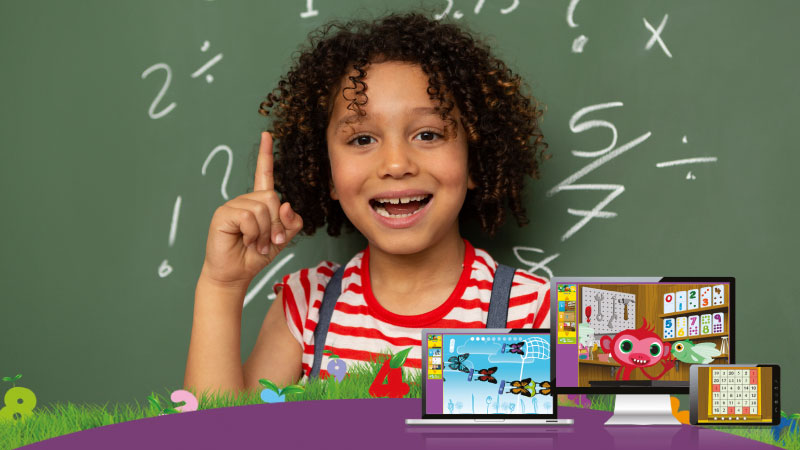
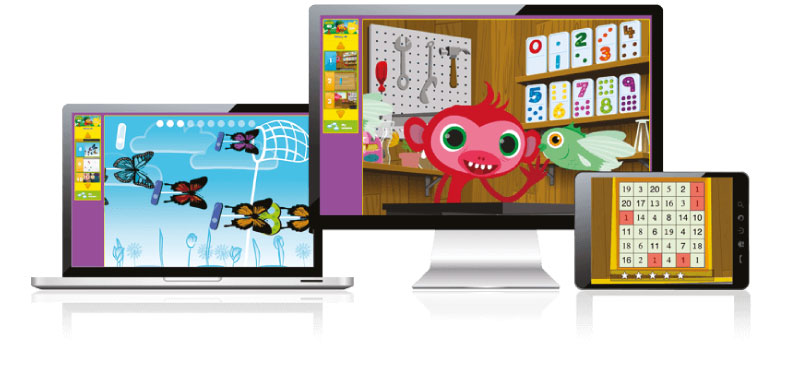
Mathseeds is an euphoric online Math program that caters to children between ages 3 to 9 years. Schools in Dubai and Middle East Regions, promote Mathseeds and even include activities from this platform into their lesson-plan, to make the session more interesting for kids. The activities are carefully created by educational experts and hence ensures age-appropriateness. It even showcases the Mathematical progress of children and they are encouraged to create a custom Avatar – to keep themselves motivated. Mathseeds availability in the UAE and other GCC regions.

Contact us

Fill in your details below or send us an email on info@knowledge-hub.com

Strategizing An Effective Lesson Plan

Strategizing An Effective Lesson Plan

Strategizing An Effective Lesson Plan

Ever wondered how an educator is able to effectively deliver lessons day-in and day-out without faltering. There are so many topics to be covered and concepts to teach the class, but the subject teacher does it with precision and grace. She knows how to pace the learning and estimates the grasping power of students. All this is only possible with the help of proper planning and a bit of back-end effort.

What is a Lesson Plan?

A lesson plan is put together by the teacher so that she can navigate through the loads of lessons she needs to deliver in class. It is prepared in advance and serves as a blueprint for referencing, whenever required. Just like in the corporate environment employees have some targets enlisted clearly on the goal sheet, teachers have to refer to the lesson plan to set their teaching goals and achieve them in a timely manner.

Importance of Lesson Plans

  • It provides a step-by-step guide for the teacher to know what to teach in class
  • The plan guides the teacher to keep the materials ready for the session in advance
  • The ‘objective’ of the lesson is ‘penned down’ clearly, so there is no ambiguity on what the student should know by the end of the session
  • Teachers gain confidence and are less stressed about delivering the lecture
  • You can also be prepared to answer queries that might be asked by the students
  • Effective time-management is possible; as teachers know in advance how to divide the one-hour class cycle and devote time to teaching, conducting activities, and also allowing students to ask queries & do some brainstorming
  • Avoids repetition of topics or forgetting to introduce a particular lesson in class
  • Reference for a substitute teacher, in case the main teacher is absent
  • Helps to strategize teaching and encourages educators to use innovative learning aids, to make the sessions more interesting

Steps for Preparing a Lesson Plan

As a general thumb rule, the lesson plan is designed to include three steps:

  • Learning Objectives
  • Learning Activities
  • Assessment to check for student understanding

Learning Objectives

The objective for a lesson plan must be in sync with the learning readiness of students in class. To device the objectives, ask the following questions;

  • What is the topic to be covered?
  • What should the students learn from this lesson?
  • What are the skills that students must be able to grasp and apply?
  • What is the primary objective and which is the secondary objective?

Example:

Topic:

‘A detailed lesson plan of teaching Pronouns’

Objectives

  • To be able to understand the concept correctly
  • Read the phrase and identify the pronouns
  • Complete the assessment on pronouns
  • Participate in group work and discussions

Learning Activities

The learning activities should be related to the objective. You also need to understand the level of involvement children will have if you present that particular learning activity to them. Choose an activity that offers an immersive experience to students. Make sure it isn’t boring and alongside learning, children enjoy participating in the activity. Prepare for the following tasks;

  • How will I explain the topic to students?
  • How will I present the illustrations to them?
  • How will I make the topic engaging?
  • Are there any relatable examples that I can cite, for kids to understand the concept in a simpler manner?

Writing Objectives for Lesson Plans Using Bloom’s Taxonomy and Associated Action Verbs:

Learning level Associated action verbs

Knowledge

define, describe, state, list, name, write, recall, recognize, label, underline, select, reproduce, outline, match

Comprehension

identify, justify, select, indicate, illustrate, represent, name, formulate, explain, judge, contrast, classify

Application

predict, select, assess, explain, choose, find, show, demonstrate, construct, compute, use, perform

Analysis

analyze, identify, conclude, differentiate, select, separate, compare, contrast, justify, resolve, break down, criticize

Synthesis

combine, restate, summarize, precise, argue, discuss, organize, derive, select, relate, generalize, conclude

Evaluation

judge, evaluate, determine, recognize, support, defend, attack, criticize, identify, avoid, select, choose

Assessment to check for student understanding

This is the final step in the process, but the most important one. Regular assessments are to be conducted to understand the child’s retention capacity and clarity of the topics. Teachers can give homework, conduct quiz, take a surprise class test, and even assign project work, to evaluate and measure the child’s progress. Now that you know how to prepare a ‘lesson plan’ you are all set to take over the classroom session with confidence! However, as we can see preparing a lesson plan is pretty time-consuming, especially when it has to be mapped on paper. To make this process simple for teachers, the Next Learning Platform (NLP) – a school ERP tool, provides ready-made lesson plan templates. One has to simply input the pointers under each category and get started. Also, once the plan is made, it is saved on the system and can be retrieved, thereby saving time & effort to create it all over again. Tech-advanced regions like Dubai and other GCC counterparts, have already adopted NLP and are happy with the enormous time-saving benefits that it offers.

Contact us

Fill in your details below or send us an email on info@knowledge-hub.com