
Learning To Read: A Step-by-Step Approach For Preschoolers

Learning To Read: A Step-by-Step Approach For Preschoolers

Learning To Read: A Step-by-Step Approach For Preschoolers

Reading is not something that happens overnight. Children are not born readers but they need to be steered in the right direction by an adult to be able to develop this wonderful skill. Every child is gifted differently and their learning styles may not be the same. Therefore, it is unfair to compare your child with another preschooler of the same age.

Learning to speak happens quite naturally amongst children, as they start by picking up words from conversations being spoken by adults around them. The child starts by learning to speak his own mother-tongue, as it is spoken most at home. This seems rather simple, doesn’t it?

However, learning to read is different from being able to speak in a particular language. Though the child may speak ‘English’ quite well, he may not know how to read the words or connect his vocal speech to the word characters in a book.

The four stages of language development are; Listening, Speaking, Reading, and lastly Writing. Reading is at stage ‘three’, that is after the child has learnt to listen & speak. Reading is a slightly complex process affected by a number of factors. Reading literacy requires practice, proper instructions, and the development is a gradual process occurring in different stages.

Ever wondered what are the various stages of learning to read?

Explore the magnificent world of ‘books’ and help your little kiddos embark on their reading journeys by taking notes on the following phased approach.

The Emergent pre-reader (between age 6 months to 6 years)

This stage is all about discovery. Children are still exploring the world around them and trying to make connections. They are constantly observing words on sign-boards, television shows, in their classrooms, and on their handheld tabs. The letters seem familiar to them, as they have studied their ABCs in classrooms. While exploring, they discover that when letters are combined together, they form words. Previous knowledge about phonics helps them identify the ‘letter sound’ and apply a technique called blending to join the letter sounds into a word.

Children start by recognizing and naming things by the shape of it. They know what an apple looks like and they can identify a bat, and a cupboard. Instructional worksheets with simple CVC (consonant vowel consonant) words are presented to the child at this stage. The worksheet has simple three letter words with corresponding pictures of the objects. The child observes the word and finds a meaningful connection to the picture right next to it.

There is something called as ‘sight words’ that are commonly used in English language. Some examples of sight words are; ‘at’, ‘the’, ‘them’ and ‘they’. These words don’t follow the phonics rules and must be learnt as it is. It is beneficia to have a ‘sight wall’ in classrooms and your home where the child will be exposed to these words over & over again. This helps the child memorize the ‘sight words’ easily, making them more prepared for reading.

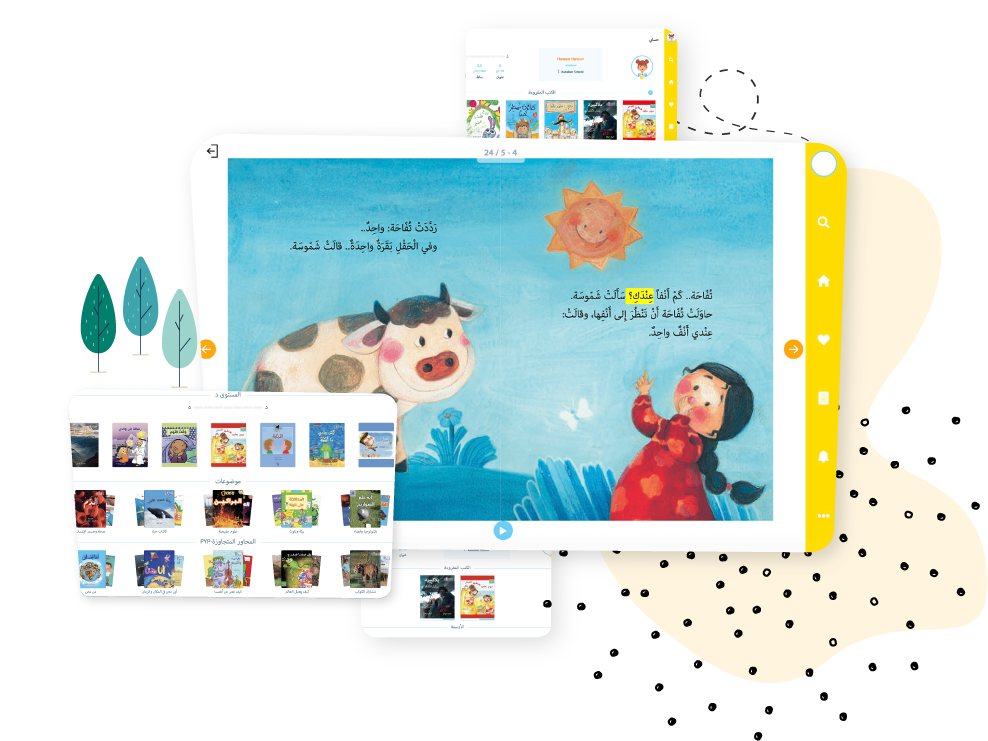
Many parents owe the success of their child’s reading capabilities to Kutubee. This app, makes reading fun for the emergent readers by making available a vast library of e-books. The illustrations, colors, and animated characters not only make the story come to life, but also present the sentence in easily legible format for the young child to practice reading.
Mathletics_ screen

The Novice reader (between age 6 years to 7 years)

These early bird readers are familiarizing themselves with printed words and sounds. They no longer require an ‘image’ to associate the words. Meaningful connections are formed basis the vocabulary stored in their memory. At this stage, the child begins to read stories with little or no help from an adult. They apply phonetic rules to four – five letter printed words and learn to pronounce them correctly.

Often children are presented with ‘short stories’ with simple sentences. The words that describe the main character ‘pink pig’ or ‘big bad wolf’ are repeated through the story to drill the context clearly.

KutuBee makes the job of the teacher/parents easy by recording the audio of children while they practice reading. In this way, the adult can correct the child wherever needed and give him guidance to read words with more fluency.

The Transitional reader (between 7 years to 9 years)

During this phase children get to read easy chapters from school text books and novels with increasingly greater level of fluency. The sentence is broken down by the child and read in parts, if it is too long for them to read. The child re-reads the paragraph to make meaning out of the printed matter.

Usually the font used in these stories are still large and the words are evenly spaced out. The chapters are short and limited to 3 to 4 pages.

Kutubee has a good collection of stories for the transitional reader. Books about fantasy, adventure and those which have a moral are more interesting for the children to read.

The Fluent reader (between 9 years to 15 years)

The fourth stage is when children finally have the confidence to read and are on a journey to expand their vocabulary and gain knowledge from reading. This is when they start focusing on studies through textbooks, read newspaper to stay updated with current affairs, and refer to articles on the ‘web’ to research on various topics. Learners gain new ideas, undergo various experiences, and are building strong attitudes.

Contact us

Integrating the Power of Technology in Kindergarten to Teach Preschoolers Names of Colors, Shapes, and Letters!

Integrating the Power of Technology in Kindergarten to Teach Preschoolers Names of Colors, Shapes, and Letters!

Integrating the Power of Technology in Kindergarten to Teach Preschoolers Names of Colors, Shapes, and Letters!

When children step into a Toddler environment at age 1.5 years their minds are like blank slates, with only limited information picked-up from conversations at home with parents. Stepping into a pre-school introduces children to a whole new world of learning. They observe, communicate, and learn to behave well in a social setting.

Tiny tots often replicate the adult’s actions and are very observant. Therefore, in a kindergarten setting, the teacher must be a role-model and adopt a disciplined way of action to inculcate the same values in the classroom.

Children’s brains are like sponges, they absorb information that is thrown at them with ease. Science has proven that maximum brain development that is 90% happens by 6 years of age. Therefore, to make them well-rounded individuals in the future, children need to get an exposure to numerous activities.

Parents encourage their children to participate in music, art, physical fitness, and dance, even before they start to master their ABC’s. Computer literacy is another skill that a kindergarten child is rapidly being exposed to. The world is becoming increasingly dependent on technology and people are coming even closer, thanks to the use of the web.

The question is that, can you teach a 3-year-old child to connect with the fascinating world of technology and discover colors, numbers, vocabulary and shapes, from a tab?

Well, the answer is definitely an assertive. Parents are amazed at how quick their pre-schoolers learn to ‘click’ and ‘navigate’ on their path of self-discovery. Learning-by-doing themselves is a way of instilling confidence in youngsters and they get a sense of pride when they accomplish a task.

Technokids has a deep understanding of the learning capabilities of children and thereafter designed different training modules to teach them the basics in an interesting manner. To support the learning of numbers, colors, shapes, and letters, taught by the teacher in class, children are given the freedom to experiment and use their imagination to create meaningful projects on the TechnoKids app. Have a look at what each of the module focuses on.

Techno colors

Carolina-Kits

Dive into the world of color with Techno Colors and transform your kid into a budding artist. Techno Color teaches kids the following:

  • Color challenge: Using the drawing tool, children themselves draw patterns, sceneries and add their choice of color to it.
  • Shades of color: Matching shades of color needs children to identify and pair the appropriate color shades together.
  • Feeling color: Different colors are associated with emotions and when children choose a color it demonstrates what mood they are in.
  • A colorful day: Children add color to the bright morning skyline.
  • Colorful music: This is a unique activity where children listen to music and paint a picture on the melody of the sound.
Carolina-Kits

Learning objective to kids by using Techno Color   

  • Identifying different colors
  • Lean about the various shades
  • Use the mouse to click, drag, hold, and double click
  • Learn to draw with tools like pencil, marker tool, crayon, and chalk
  • Choose stickers, add sounds, and paste animations
  • Add text to the picture
  • Create artwork to express mood

Techno Numbers

Carolina-Kits

Develop the knack of number recognition amongst your kids with Techno Numbers. Techno Numbers teaches kids the following:  

  • Number challenge: Engaging number challenges that intrigue an interest in the child for learning math passionately.
  • Numerous numbers: Counting, tracing, and painting numbers helps the child practice, while having fun.
  • Big book of numbers: Avail the student number counting workbook along with the kit.
  • Stylish numbers: Children sort, count, and draw numbers in an artistic way, from one to ten.
Carolina-Kits

Learning objective to kids by using Techno Number

  • Develops recognition of numbers from 1 to 10
  • Counting skills enhance
  • Children learn to locate number keys on keyboard
  • Creativity increases with drawing tool
  • Easily print the artwork to flaunt your child’s work

Techno Numbers

Carolina-Kits

Children visit the computer lab and work on the Kid Pix tool by Techno Shapes to learn about the basic shapes and geometric patterns. Techno Shapes teaches kids the following:

  • Connecting Dots: Children join the dots in a sequential manner to make shapes.
  • Shape Design: Children experience a shape Art Show and display their creativity to replicate Geometric shapes.
  • Shape Detective: Put up the child’s thinking caps on as they are on a mission to detect various shapes.
  • Lovely Lines: Draw and paint lines with different curvatures to form artistic patterns.
Carolina-Kits

Learning objective to kids by using Techno Shapes

  • Identify basic shapes
  • Select appropriate drawing and painting tool
  • Create a dot to dot design
  • Use patterns or stamp to draw geometric shapes

Contact us

A Journey of Reading with Highlights

A Journey of Reading with Highlights

A Journey of Reading with Highlights

Reading is a lifelong journey that needs constant support from a variety of sources such as parents, teachers and friends. But these are not the only sources that one needs to rely on when instilling a love of reading your child. In recent years, the rise of companies offering services for a fee has risen due to the immense reliance on technology as well as the ease of interaction with it.

Many parents have therefore turned to service providers who can reliably provide them with a tool or resources that parents are able to use on a frequent basis. One such tool is Highlights. What is Highlights you might ask? Happy to oblige.

Highlights is a book and magazine vendor that provides engaging material that stimulates creativity and curiosity in children up to 12 years of age. Deliveries of all material are made monthly so that you have a never-ending supply of engaging material for your children. Let’s have a look at what magazines Highlights stock.

Highlights Magazine

Each monthly issue of this magazine enables generations of kids (aged 6-12 years) grow into their best self by being curious, creative, caring and confident. This magazine also brings out the vivid imagination in children, expands their world view and outlook and keeps their mind active and challenged in each issue.

High Five Magazine

high-five-spring-2021_1

Preschoolers have a limitless supply of questions that need to be satisfied speedily. Thankfully, the High Five magazine helps in satisfying this curiosity by including age-appropriate puzzles, stories can be read long with and much more!

Hello Magazine

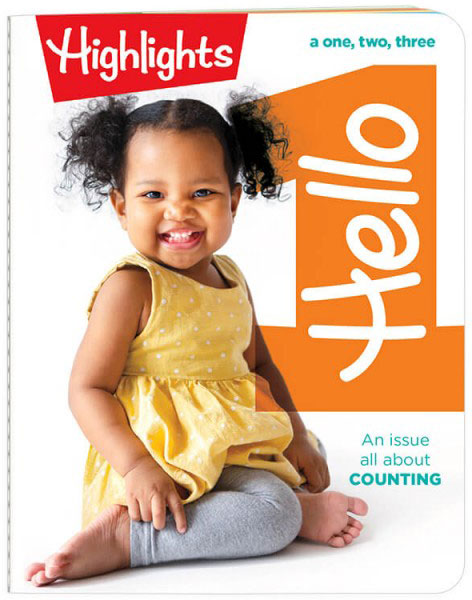
The Hello magazine is targeted at little babies and toddlers who just want to be entertained. The best part is that the pages are able to be wiped clean in an instant so that you will have a clean book every time.

Now, let us look at the book clubs that are provided by Highlights. In all these book clubs, you will receive materials and support themed around a particular topic like preschool. This will ensure that your child can continue to build upon the specific skills and values taught in each book club.

Early Learners

These subscription boxes come with grade specific reading materials and activities that will keep each child active and engaged until the next monthly issue arrives. Each subscription box comes with fun activities that do not stress the child out. Tools like a double-sided wipe clean practice board are also included to facilitate learning. The box also contains rewards for wonderful progress, like stickers and a progress poster to keep the children happy and motivated.

Hidden Pictures Lovers

For the children who love investigating text and photos for really small details, we have got just the right tool for you! The Hidden Pictures magazine will enable children to be captivated by pages of poems and mazes, along with other hidden-object activities. This touches upon much of the skills that children will need later on in school such as reading and creative thinking.

Highlights_ banner

Puzzle Fans

Each issue contains puzzles, secret codes, word games along with number and logic activities to boost the brain power of your child. These activities focus on the writing, reading and math skills together with other skills to develop your little puzzle solver!

Top Secret Adventurers

For the adventurous, this book club is themed around a big mystery that your child must solve in order to complete the mission. They will get to crack the code, dig for clues and then follow these clues to glory and beyond. All while being safely at home!

Highlights also have digital tools and resources to complement the physical tools that your children interact with. These include a mobile app to explore the concept of shapes, a critical concept which needs to be understood well for maths.

Highlights has a very comprehensive offering of products that will satisfy your child’s craving for challenging and fun material to read and interact with.

Contact us

Integrating the Power of Technology in Kindergarten to Teach Preschoolers Names of Colors, Shapes, and Letters!

Chemistry and Biology Unpacked – 3D Lab Kits to Learn in Style

Chemistry and Biology Unpacked – 3D Lab Kits to Learn in Style

Science, as a subject, is very well known for its intense demands of knowing the theoretical aspects behind the processes as well as the practical elements of experiments. It can lead to an information overload. Children need comprehensive yet easy-to-follow guides and tools in order to get a leg up in this subject. They also need to have the right equipment to safely carry out their investigations.

When the COVID-19 pandemic struck, carrying out lab experiments became very challenging as children often had no access to the tools needed in order to explore and learn effectively. Carolina devised and developed 3D lab kits that could be shipped to children so that they could learn in the comfort of home. This would also give them an opportunity to learn concepts at their own pace, in an environment of their choosing. Let us have a deeper look at what these lab kits are based on, and how they help children to achieve competency in science.

Kutubee Teacher Portal

The Carolina Kits 3D Flex program comprises of individual student kits that enable each student to embark on a year-long Chemistry or Biology lab program. Teachers are equally well supported, with a copy of all student material plus tailored material for teachers included in every instructor kit – this material also includes all digital resources needed for teachers to conduct a guided lab experiment online

Each lab experiment and its learning outcomes is delivered by hands-on investigation, teacher demonstrations through an online format, as well as digital student investigations to supplement their physical learning. Students also receive all their necessary materials and tools in a handy storage box for easy packing and portability – perfect for those living room science experiments that need to disappear in a flash!

This program is very versatile and assures students and teachers that they will be receiving authentic lab experiments that replicates the very feeling of tinkering with science. Be it at home, in class or online, each experiment is guaranteed instructional consistency – ensuring that each student is able to achieve the same outcomes irrespective of location.

Carolina-Kits
3D-kits-2

No matter what lesson mode the student is in, both synchronous and asynchronous, these lab kits are able to deliver the same outcomes across learning modes, ensuring that there is flexibility in learning. Ultimately, flexibility is important when teaching a student a new concept.

The Carolina Kits 3D Flex program strives to provide consistent and unique lab experiences for all students. This ensures that these kits can be deployed in a school environment alongside a curriculum to enhance the knowledge of science uniformly across individual classes and grade levels.

The biology program focuses on 4 main topics that are the core foundations of the program. In the topic From Molecules to Organisms, various sub-topics like food and nutrient analysis and biofuels are covered.

Next, the Ecosystems topic explores how small actions can affect a large ecosystem and covers sub-topics ranging from group behavior and social insects to oil spill remediation.

The third topic, Heredity, focuses on how humans, plants, and animals are formed and covers sub-topics like chromosome simulation.

The last and final topic in the biology program is the Biological Evolution module that deals with the combined role that genetics and biology play in our lives. This module thus covers topics like natural selection and genetic kinship.

Likewise, the chemistry program also has 4 main topics that enhance the understanding of content. This is done through a variety of sub-topics that present targeted information and require students to extract the relevant information needed for mastery of the concept.

In summary, the Carolina Kits 3D Flex program is a robust tool that can enhance the pursuit of science knowledge in a world dominated by the COVID-19 pandemic. The program ensures that each student receives instructional consistency across various environments while having fun and learning about science in a safe manner.

Contact us

New-age Teaching, Not Just Limited to Whiteboards and Markers

New-age Teaching, Not Just Limited to Whiteboards and Markers

New-age Teaching, Not Just Limited to Whiteboards and Markers

Introducing a modern revolution to classrooms, schools are keeping up with the trend of combining the power of technology with the teaching expertise of educators to introduce to children new ways of learning. Though whiteboards and markers are powerful tools, its scope is limited. The explanation by a teacher with the help of drawings on a whiteboard is restrained to the drawing capabilities of the teacher and physical constrains of the writing board.

When technology is integrated into classrooms, the opportunities are limitless. One can only imagine the depth and creativity that can be added to a subject to make the student thorough with the lessons. Moreover, audio-visual teaching aids have proven to be a clear winner, as the retention power of the child increases by watching videos, sound, pictures, and graphs, on a particular topic.

The use of technology also encourages the student to proactively take-up assignments and add their touch of creativity to it. Using their personal handheld tabs, students are often more actively engaged in project work when technology is integrated in school for the learning process.

The TechnoKids Computer Curriculum is a step in this direction. TechnoKids is specially designed to engage children in computer activities in sync with the K-12 school curriculum objectives. The platform focuses on project-based learning and makes available computerized lesson plans along with other resources for students. Each of the TechnoKids project kit includes a curriculum planning guide, a student workbook and handbooks, besides the integration of software into the classrooms which can be used by unlimited number of teachers & students.

Advantages of integrating TechnoKids lessons into the teaching curriculum:

Kutubee Teacher Portal

Focusing on teamwork:

Project-planning requires teamwork and learning to work in a team at an early age, gives the child a good start to getting used to what it would be like in a professional office set-up. Collaborating with peers in the class to complete a ‘project’ gives an opportunity to the child to hone various skills. Sharing ideas requires good communication and the child learns to put across his point-of-view through group assignments. Some children naturally take up the role of a leader. The hidden leadership skill of the student is recognized and he may be assigned more responsible duties to further strengthen the leadership quality. Also being a good team player requires listening skills.

Kutubee Teacher Portal

Adding creativity to lessons:

Technology-based projects widen the scope of the students in showcasing their talent. The ‘topic’ of research can be presented creatively without any constraints or restrictions. Original ideas to solutions are encouraged and out-of-the-box thinking is promoted in classrooms. Learners can apply their computer skills to subjects such as ‘Geography’ by showing impressive animations and 3-D models to create a magnificent visual display in class.

Making the curriculum relevant to the outside world:

Integrating technology to the entire teaching-learning process is extremely relevant in today’s tech-savvy world. Children who are trained in school to adopt software and use presentation platforms to display their homework, are more prepared for the outside world. No matter what profession they choose in the future, technology is going to play a vital role. Engineers, marketers, and doctors are all making use of technology to run their work. Hence the transition from education to workplace will be comparatively smoother for students who are familiar with new-age gadgets & platforms.

Supporting well-tested teaching methods:

Limiting the knowledge of the child to textbooks alone and testing them on their memory to recreate the answers on paper is a primitive method of learning. The modern education system offers ample opportunity to the students to not just limit their understanding to ‘workbooks’ but delve further by exploring the web. Students are encouraged to watch videos, stream documentaries, conduct research and further expand their knowledge on the subject. Schools hold debates, discussions, and group presentations to create a healthy competitive environment in class to test the child’s participative skills along with knowledge of the topic.

The integration of technology can make learning interesting for teachers and empower students to gain confidence thereby armouring themselves to face the challenges of a digitally connected world.

Contact us