

Why Students Find Math Difficult and How to Overcome the Fear of This Subject

Why Students Find Math Difficult and How to Overcome the Fear of This Subject

Why Students Find Math Difficult and How to Overcome the Fear of This Subject

Many bright students, who perform rather well in other subjects, have difficulty coping with Math. They have a good sense of logical understanding and numeracy skills, but still struggle to apply the same when the class teacher presents them with quizzes and tests to assess their Math skills.

A poor test score demotivates the child further and the child develops a sense of fear towards this dreaded subject. Children lose interest and skip completing homework assignments, rather than paying more attention to fractions and decimal points taught in class.

There are many reasons as to why the child may not like Math and not be able to cope with it in school. From being demotivated, to developing Math anxiety, or even not getting enough scope to practice mathematical operations in school & at home, may be some of the reasons. Sometimes, the lag in the subject may be recognized due to a learning disability that the child is undergoing.

Let us understand some of the reasons behind lack of enthusiasm for Math, so that we as educators and parents are better equipped to guide the child and change his perspective towards the subject.

Ineffective Teaching Methods

Teachers may be using obsolete teaching methods which do not interest the child. Teaching formulas by rote learning technique is not ideal and the child may get bored soon. The pace of teaching the steps to a math equation may also be inappropriate sometimes. Going too fast will confuse the child, but going too slow is equally ineffective.

Insufficient Time for Practice

Just by learning Math concepts in School is not sufficient. Children need to constantly practice Math lessons even at home. Unlike Science there is no fixed definition or solution for Math which can be remembered word to word and then reproduce. Math is all about understanding, reasoning and applying concepts to different problems. Without practice the concept might be forgotten. Only when the steps are systematically followed one can arrive at a correct answer. Hence, practice is the key.

Attention Deficit Hyperactivity Disorder (ADHD)

Does your child often get a remark in his diary which says ‘not paying attention in class? Well, this may be an alarming call to get your child examined for ADHD. Children suffering from ADHD may not be able to ‘focus’ in class and therefore have a tough time grasping Math concepts. They may skip steps while trying to solve an equation and arrive at an incorrect answer. There could be scribbled marks all over the examination paper. The child may even sometimes not take time to read the Question correctly and hurry out to solve the problem thereby using an incorrect formula. Ensure that the child gets extra help after school and try to keep his spirits high.

Child is identified with Dyscalculla

Dyscalculla is a learning disorder which affects the child’s ability to solve mathematical problems. The child takes time to identify the relationship between numbers and apply correct rules of math. Even performing simple addition and subtraction of single digit numbers mentally becomes difficult. Not having a grasp of the foundation creates stress for the learner when he is presented with more complex calculations in middle school. However, do not get disheartened. Go slow in teaching and support your child with appropriate Math aids to improve the performance.

Few Tips to help the Math Learners develop interest in the subject

Make Math Fun

Make use of colorful objects, interesting shapes and introduce a Math role model character to children so that they are intrigued to learn more. Every week, dedicate one session to play Math games and have a competition amongst classmates. Parents can assign a ‘budget’ to children and encourage them to make a report of their spending. Going for a drive? Ask your teens to calculate distance, speed, and mileage. To captivate learning, Mathletics presents fun videos and unique printables to engage the students through gamified lesson plans. The modern way of learning Math is as simple as – Learn -> Play -> Review.  Get your hands on the Mathletics subscription all over Dubai, UAE, GCC and the Middle East.

Highlights

Pair them up to participate in Problem-Solving

The emphasis of Math must not be on getting the right answer. More than the answer being important, it is the correct problem-solving techniques that one needs to adopt. Pair the learners and let each have a Math buddy. Assign problems to them and allow them to device strategies to arrive at an answer. You will be amazed at how children use their creativity to arrive at the solution by using different Math techniques keeping the core concept in mind.

Let Students learn at their own Pace

It is unfair to expect all students in the class to learn at similar speed. Some students have greater logical reasoning power and therefore are great at Math. Some may be brilliant in other subjects, but be averse towards problem solving. Understand that each child is gifted with a different skill set and hence expecting everyone to be Math Wizards in not right.

We are in this together! Let us change our perspective towards humble Math and encourage the future-generation to be savvy with problem-solving techniques.
Contact us

Sharpen Your Child’s Spelling Skills

Sharpen Your Child’s Spelling Skills

Sharpen Your Child’s Spelling Skills

Have you noticed a problem in the way your child spells a certain word? Is it a pattern that you have come across often but aren’t aware of how to deal with it? Is your child struggling with getting the spelling correct? Are you afraid that your child will not be able to cope up with other students in terms of his or her spelling skills?

Well, if your answer is a ‘yes’ then don’t panic as we are here to share some tips with you that’ll help your child to spell the words correctly. These are some basic tips that you can try out at your home itself.

You don’t need to be a professional in any particular field. Just be consistent and don’t forget to stay patient with your child. Everyone takes their own time in learning. Children are at a stage where they are adapting and trying to learn new skills every day as they are at a stage where their memory starts developing. Here are a few steps that you can follow to sharpen your child’s spelling skills!

Play Spell-O-Right

Make it like a fun game of interaction between you and your child. In this game, you can write some words and ask your child to spell them. If they are able to spell correctly then they get a star & if they spell incorrectly then they’ve to practice more. This will make you understand if your child is able to spell the words properly.

Say It Out Loud

If you notice that your child is not being able to speak a particular word or some words correctly, then you should ask them to repeat after you. You need to say it out loud with proper pronunciation and make them repeat it again and again until they get it right. Kutubee’s read along feature is an excellent option to be introduced to your child. The app is well recognized and used widely in the UAE.

Make Puzzles

You can make it fun by adding some excitement to it! Yes, that’s definitely possible! You can create puzzles with some letters and ask your child to align the letters, make a word and spell it out loud. This will help your child in also understanding the formation of a word and increase their thinking skills.

Find the Error

Purposely write wrong spellings and check if your child is able to notice the error. If not, then ask them to find an error in that particular word this will sharpen their spelling skills & they will also be able to avoid spelling errors easily from next time onwards.

Five Word Rule

Every day ask your child to spell five new words this will not just improve their spellings but also make their vocabulary better by learning new words often. Reward them or make 2 stars on their book, this makes the child feel like they’ve achieved something great and encourages them to do better.

Clear their Doubts

Keep a doubt clearing session with your child. If they have any doubts regarding a particular spelling then they can get it cleared by asking you. If they can’t spell the word correctly at their first attempt itself then don’t be hard on them. Spell it slowly and ask them to repeat it five times. We often remember what we keep hearing or repeating, so this one is a great strategy to put into action.

Choose the Correct One

You can quickly write down three spellings of the same word and ask your child to select the one with the correct spelling. At first, they might get a little confused but they will be able to select the correct spelling in no time.

Apart from following these steps, you’ve to make sure you encourage your child and not discourage them even when they’re wrong. Tell them they will get there and boost their confidence.

Contact us

Pre-math Activities for Pre-schoolers

Pre-math Activities for Pre-schoolers

Pre-math Activities for Pre-schoolers

Math! Is it too complicated a subject? Well actually not if the seed is ingrained in kids early on by parents from their pre-school age. When taught in a fun environment using exciting play activities and hands on techniques, it enhances their cognitive and motor skills. It shapes their young minds and gets them thinking. They develop the confidence to accomplish tasks. They learn and grasp tiny yet important concepts in an interesting way. Mentioned below are some enjoyable pre-math activities for your children. So, whether you enroll them in a class or incorporate these engaging games at home, your child is going to love it and so will you, when you see them perform.

Highlights

Match the Shapes

Kids get a chance to work with shapes in assorted colors. The activity is executed by using a hexagon framework which has shapes of triangles and diamonds inside the main outline of the hexagon. They will fit the pieces of the triangles and diamonds into its empty shape brackets and slots to fill and complete the hexagon. Mathseeds too has a fun way of teaching patterns. Hop along with dancing and singing characters to find & match patterns and shapes. 

Matching Objects with Numbers

This is one of the most popular and loved activities among pre-schoolers. They first get to count the number of objects present in a given box and then declare the numeral. So, if there are 8 balls in a box, they count them and then match it to numeral 8 given in the chart of numbers. If your child gets bored of matching objects physically, an alternative is to download the Mathseeds App and practice the same. It has become quite popular in the Middle East, UAE, Dubai, and GCC regions.

Highlights

Fill and Empty Cups

This one is an interesting activity that requires pre-schoolers to multitask. So empty cups numbered from 1 to 10 are placed on the table in random order. With a bottle of water handy with them, on instruction they would be made to fill water in the cups. So, pour water in cup 3, next in 7 and so on. The exciting part here is another simultaneous instruction is whether to fill the cup full or half. In between they would be asked to pour water from any filled numbered cup into an empty cup. So, it’s constantly challenging them to identify numbers, remember instructions and gauge measurements.

Sing Number Songs

Kids are taught to memorize and sing math songs in this interactive activity involving numbers but definitely not without actions and it gets even interesting when visuals and objects are teamed up to match the lyrics and make it an entertaining learning experience.

Labelling with Numbers

This is an activity where pre-schoolers are required to count objects placed in various cartons. They are then made to tear out numbered stickers and stick the corresponding number with the right carton matching the number of items. Then post the sticking of numbered labels they would write the word of the numeral next to the label and complete the carton labelling.

Number Jumble

Where most activities usually aim to match the numbers with the same denomination of objects, this task is amazingly tweaked for kids. So, 5 jars are kept in a row, numbered from 1 to 5. A pack of 15 straws are given to the kid. The teacher / parent then calls out numbers in no particular order. They would then ask them to put 1 straw in Jar 6 and 2 straws in Jar 5 and so on. This number jumble focuses them to count, identify and match even mixed match number combinations.

Tally Marks Fun

Learning to count through tally marks is introduced to kids in this innovative activity. Using chalk or pen to draw plain sticks would be quite mundane but when their favorite fruity lollypop sticks are added to demonstrate this concept, learning does become delightful.

Mixed Bag

This is an activity involving multiple little objects placed in a bag in various colours and denominations such as buttons, bows, hair ties and clips. Upon instruction the kid would accordingly have to remove the said item correctly based on denomination and colour. So, it could be removing 2 white bow ties or remove 1 pink clip and so on.

Number Dessert Mania

This lovely activity involves pre-schoolers to sort and pack already baked chocolate cookies that are present in shapes of oval, circle and square. So, they are assigned to make sets of 9 cookies per box with 3 cookies of each of the 3 shapes. So, count cookies, sort the shapes and pack them with colorful ribbons tied to boxes and at the end of the class, take a box home and share the chocolate cookies with family.

Involving children in such playful tasks naturally help them understand beginner Math with ease and thereby establishes their foundation to achieve larger goals in life.

Contact us

Why Harp about Digital Assessment Tools in 2021

Why Harp about Digital Assessment Tools in 2021

Why Harp about Digital Assessment Tools in 2021

Technology has changed the way we do everything. How we communicate, how we experience the world and even how we learn. Markezy is a digital platform that allows educators to create and grade assessments for students. And never has the need for such a functional tool been this high. With remote education picking up pace and even replacing offline schools in some cases, the other parts of education too have to move online.

Unlike physical assessments, digital ones are quick, convenient and far more precise. And with digital assessments educators can ensure the students are tested and well checked on their abilities and knowledge even with remote learning.

Ease of use

One of the primary advantages of Digital assessments is the ease of use. Being digitized the assessment can be created, reviewed and graded, whenever and wherever convenient to the educator. The digitization also ensures that all tests are accounted for and fairly graded. Another benefit of having digitized assessments is completely eliminating paperwork. As done in several industries across the world, reducing paper usage is not only a need but a responsibility to be carried out by organizations. Digitizing thus is a much greener option and helps eliminate the cumbersome paperwork.

Accuracy

Digitization naturally also makes the scoring of the assessments accurate and easy. The computerized process evaluates based on parameters designed by the educator themselves, thus allowing a great deal of modularity.

Various test patterns

With the digital way educators can also include various types of scoring methods with ease. Multiple choice questions, matching, fill in the blank and more. This range of test patterns enables an overall assessment from the scores, which is calculated automatically. The automatic calculation takes away the possibility of wrong grading and scores, thus making the digital assessment far more accurate than regular ones.

Highlights

Simplicity

Educators across the world have been adopting digitized assessments due to their nature of being simple and direct. With countries like the UK, USA and UAE adopting technology into education, digitization is the easiest and most effective solution forward.

Improved learning outcomes for students

As beneficial for the educators, digitized assessments are great help to learners as well. They improve learning outcomes by delivering accurate scores on subjects and assessments types that allow for a fair judgement and analysis of students’ knowledge in the subject. The students are better able to improve on sections of the course they lagged behind on, by receiving feedback from the assessments. This feedback being objective, allows them to take measures and get better at subjects and programs altogether.

Highlights

Convenience of review for student

Digitization also makes sure that all course work is in a single place and preserved like it should be. Having access to the entire semester’s worth of work and assignments gives the learner a wider perspective into their course program, and also helps them keep track of their performance and understanding level, thereby promoting self-study and improvement habits. The online portfolio also gives the student a deeper understanding of the course they are in, which helps them achieve the desired goals through it.

Object insights for students

Another plus side of having digital assessments is that it provides the learner with specific insights into their performance in the curriculum. The feedback received by the learner helps them improve in specific terms and adds a great deal of modularity in the learning process. The insights since based on individual performance are created only to cater to the student, making the experience personalized as well.

As similar to the educator, the learners have access to the assessment and feedback anytime and anywhere they like. This gives the learner an opportunity to improve their performance and create a better learning experience. Quality of learning is also improved with unbiased and objective feedback that in turn improves the quality of education.

Markezy with its tech-based assessments and transformative analytics makes online learning or remote learning as effective, if not more than, the standard education practices. Improving one online assessment after another with usable and functional tools, Markezy aims at making the education experience better in places where remote learning is already on the rise, such as North- America, the Middle East and Asia Pacific

Contact us

Early Literacy Fun Activities for Toddlers and Preschoolers

Early Literacy Fun Activities for Toddlers and Preschoolers

Early Literacy Fun Activities for Toddlers and Preschoolers

We have heard the saying; practice makes a man perfect. In early childhood years, ongoing repetition is the foundation for learning. Repetition helps to improves confidence, reinforces learning, and increases the fluency of the child.

At the preschool stage, students learn to speak, read and write. Educators and parents must take every opportunity to develop the child’s language skills in order to help him communicate his thoughts & feelings better.

Complementing preschool studies with fun & games at home is one of the most effective ways of practicing letter sounds, words, syllabus, and much more.

No matter what time of the day it is, your little one will never refuse a game or two. Enlisted here are simple early literacy games that you can design for your children at home without much hassle and get started right away!

Flip Over Cards

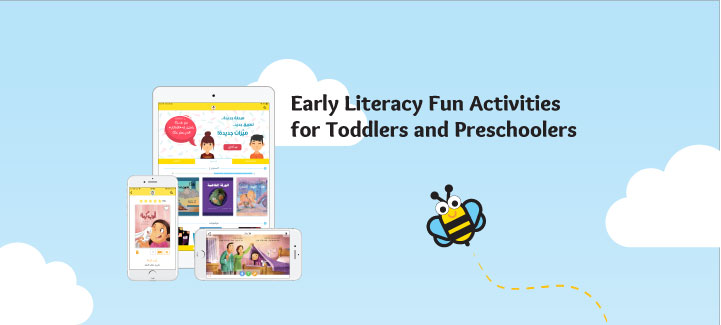
Select about five to ten words from a book that your child has just read on the Kutubee app. Write down each word on a piece of card paper and arrange them neatly in a row with the word hidden under. The child flips two cards and reads the words on them. He decides whether the words match or are they different. Continue this activity until the child finds a pair to each of the words. This game is great to boost memory power and improve recognition of word skills.

Sort as per the Letter Sounds

Choose a few letter sounds and write them down on separate flashcards. Write down 5 words along with its corresponding picture, to match each letter sound. Jumble the flashcards and ask the child to sort the words that belong to a particular letter sound. This increases the child’s phonemic awareness as he places an ‘arrow’ card under the /a/ sound.

Rhyming Word Game

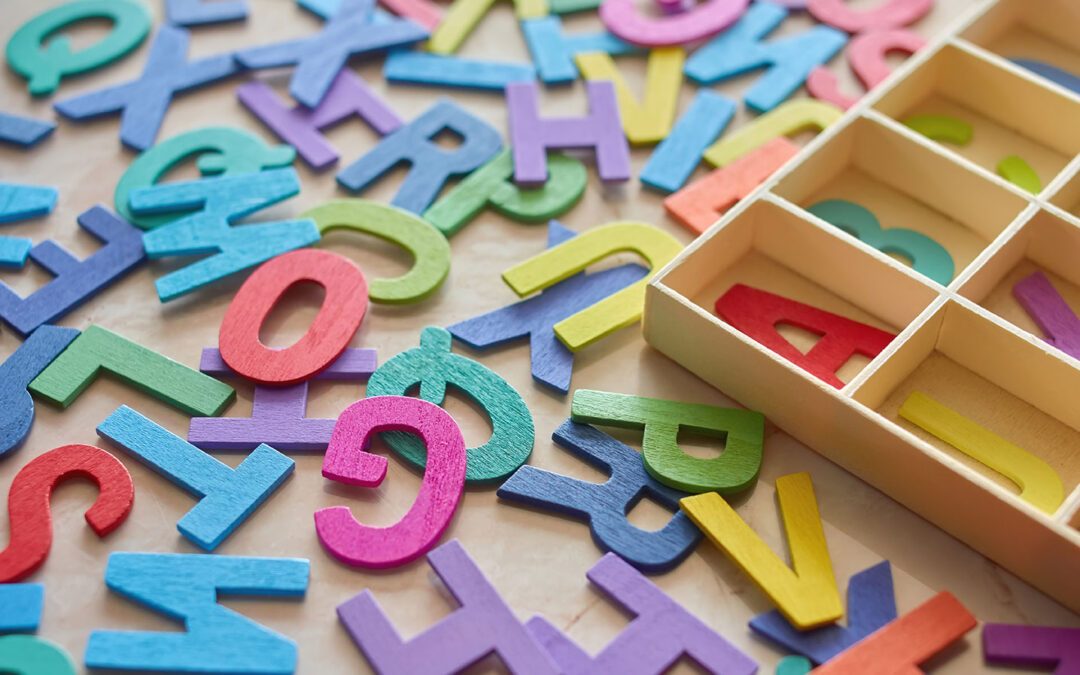
Rhyming is an important skill to master for reading. Words like ‘cat’, ‘pat’ and ‘rat’ or ‘cook’, ‘look’ and ‘hook’ can be identified under one rhyming family. The parent can use scrabble pieces and arrange them to form a word. The rhyming sound can be separated from the rest of the word by spacing the pieces of scrabble blocks. For example: J – UMP | L- UMP | B – UMP or L – OVE | D- OVE | GL – OVE. The child follows the pattern and constructs similar words that fall under the word families. This activity will positively lead to reading and writing success. You can also use fill in the blank sentences, such as; The __ is fat. The child fills the blank with rhyming words like ‘cat’ or ‘rat’.

Syllable Counting Game

Syllables are nothing but breaking down the word into ‘chunks’ to help the child pronounce the word correctly and later spell it appropriately. Display a few words from a storybook he has just read on the Kutubee app on a whiteboard and ask the child to break it up as per the syllable. Some words have only one syllable and others may have up to three in them. The words ‘took’ and ‘book’ are examples of single syllable. While words such as; ‘banana’ – ‘ba/na/na’ or ‘bicycle’ – ‘bi/cy/cle’ have three syllables. Play a clapping game with your child and clap out every syllable in the word. In the word ‘picnic’, clap once on ‘pic’ and then clap again while pronouncing ‘nic’. Once the child gains confidence, ask him to look around, shout out words and count the syllables by playing the clapping game.

Highlights

Magic Letter Tracing

Anything that appears and disappears is magic! How about a letter appearing and disappearing in a tray full of ‘magic sand’? This makes for a great pre-writing activity. The toddler takes a while to develop the ‘pincer grip’ by which he can hold a crayon or a pencil in hand. These fine motor skills slowly start evolving as the child practices writing ‘letters’ in sand or salt and then running a finger over it multiple times to practice the pattern.

So, are you ready to utilize your little one’s energy and leverage it by making ‘play time’ a fun-filled learning experience?

Contact us