

Introducing The World of Internet to Children In A Prudent Manner

Introducing The World of Internet to Children In A Prudent Manner

Introducing The World of Internet to Children In A Prudent Manner

The Internet is ruling our lives today, and we use the net for just about everything. A study done in 2020 suggests that a person spends on an average 2 hours and 25 minutes daily on the internet browsing through websites, social media platforms, and using the search engine.

Children shouldn’t be introduced to the internet before the age of 8 years. Parents need to lay down certain guidelines and continuously monitor the child’s activities until they are responsible enough to know what’s right for them.

Education Institutes in Dubai and other Middle Eastern countries take the help of the TechnoInternet Curriculum by TechnoKids to promote responsible digital citizenship and introduce junior graders to the world of the Internet. The topics covered hereunder are as follows;

1. Developing Search Strategies

Search engines have a massive pool of information and they search through 625 million websites to provide you with appropriate content. The most popular search engines are Google®, Bing®, and Yahoo®. Search strategies include –

  • Use Correct Keywords:

The keywords that you input lead to the search results, and hence keywords entered should be very specific. For example, if you are looking for ‘headphones’ online, then only by typing ‘headphones’ may lead you to many pages and all different sorts of products. By mentioning the specifications ‘Bluetooth headphones white color’ you will get the exact option that you needed.

  • Eliminating Any unwanted Elements:

When you search a ‘word’ or a ‘phrase’ there are chances you might use punctuation marks like ( – ) hyphen, ( ; ) semicolon, or apostrophe ( ‘ ) which may cause the search query to not be properly interpreted and thereby leading to an erroneous result.

Reading-Eggs_ Products

2. Collecting Bookmarks

After reading a particular webpage on the net you would close it without realizing that it could come in handy to you the next time. Bookmarking a URL makes it easy to re-visit the page later on. Students are taught the steps to bookmark a page and then learn how to reference it to revisit later, from the toolbar at the top.

3. Check the Authenticity of the Website

The rampant amount of Internet frauds and scams are making it increasingly unsafe for users, especially children to browse the net, without taking precautions. Students are introduced to different ways by which they can identify which sites are genuine. Here are some tips to gain confidence about the authenticity of websites;

  • Usually, HTTPS (Hypertext Transfer Protocol Secure), is an indication that the site is secure.
  • View the digital certificate by clicking on the address bar and selecting the certificate section.
  • Visit the brand’s social media sites to further cross-verify, how genuine the brand is.

4. Following Safe Practices

Millions of people fall prey to cybercrime and hence basic safety etiquette needs to be practiced, such as; 

  • Setting strong passwords on websites 
  • Not sharing your personal details on any suspicious web link or landing page 
  • Do not fill important forms on public WiFi networks 
  • Avoid saving credit/debit card details on Payment Gateway sites 

All the above topics are discussed with children via games and activities to make the learning process interactive & fun, instead of referring to a computer textbook. TechnoInternet is therefore driving fundamentals of correct internet usage amongst learners across schools in GCC Countries and the UAE, to raise a generation of prudent net users. 
Contact us

How to teach Phonics at home without having done a Phonics course

How to teach Phonics at home without having done a Phonics course

How to teach Phonics at home without having done a Phonics course

Learning undoubtedly begins at home. At any stage of one’s life, a person can definitely receive elementary learning at home. In the case of toddlers and pre-schoolers, home is their first base and a very crucial one indeed. It is where they take their baby steps to understand the little and the larger things in life. When they have a strong background that nurtures them holistically, they will find it easier to deal with the complexities thrown at them later in school and at the world at large.

Parents or guardians are the best teachers. The learning that encompasses love, affection, and personal touch, that a child receives from a parent is incomparable. School and higher education are inevitable in this fast-paced modern competitive world whether you reside in Dubai, in a GCC country, or any place across the globe, but the learning that one gets at home paves the way to get to a level that one desires. Today you may be in the UAE or the Middle East and tomorrow you could be fulfilling your dreams anywhere in the world.

fast-phonics-animated-teaching-videos

Talking about Phonics, yes, there are a ton of courses available outside where parents can enroll their children but like we said, learning at home is super important. Even for parents to be able to impart this knowledge, whether it is Phonics or any other topic, it is not mandatory for them to be knowing it all or get themselves enrolled in a class in order to teach their children.

Phonics is the initial step for children to learn to read and write. It is about the sounds that are created that help them understand the basic words. Phonics helps the child know which letters to precisely use when writing any word. The English language is a tad complicated and the alphabets are symbols that represent speech sounds. A particular letter or a combination of certain letters represents a single sound in the English spoken language. Individual speech sounds are called “phonemes” and the written symbols that represent those sounds are called “phonograms”.

A “phonogram” can be a single letter or a combination of letters. For example, when we say the word “dog” and then write it on paper, the speech sound /d/ is represented by the letter “d”, the speech sound /o/ is represented by the letter “o” and the speech sound /g/ is represented by the letter “g”. It gets easy to read the word “dog” when one knows the sound that each letter represents. 

There are 26 alphabets in the English language from A-Z. Why we say it is complicated since there are more “phonemes” beyond the 26 alphabets or letters of the English language. There are approximately 44 various speech sounds and about 70 “phonograms”. With Phonics, your preschooler and kindergartner will slowly learn the relationship between sounds and letters and will develop the strategies to sound out words, and eventually they will be able to do it quickly without any hassle or stumbling over words. Below are some ideas and activities that you can engage with your children at home to get them started with Phonics.

  • Get them to adapt to listening sounds around them, they should try to copy those sounds and then try and remember who makes what kind of sound.
  • Motivate them as per their liking and hobbies they love. For E.g., If they like birds, animals, nature sounds, vehicle sounds then boost them to make similar sounds.
  • Get them to break up the spoken words and split the word into separate sounds. For E.g., C-a-t makes Cat.
  • Let children spot rhyming words in a nursery rhyme.
  • They could also learn to tap and clap as per the rhythm.
  • You must read-aloud storybooks with them and then ask them to sound out the words and help them wherever they struggle.
  • Have fun playing games that have picture cards. That way they are learning more about different objects, their images, words, spellings, and sounds.
  • Out of home, whenever you’re stepping out with children ask them to observe the neighborhood, surroundings, and frequently visit places like malls, supermarkets, parks, railway stations, airports. Get them to recognize, memorize and spell and speak out words of the signs on the boards of these places.
Reading-Eggs_ Products

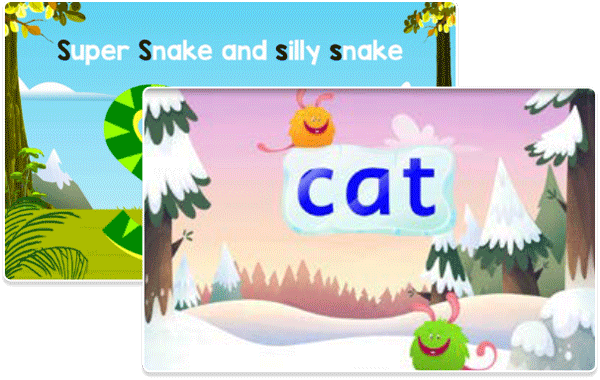
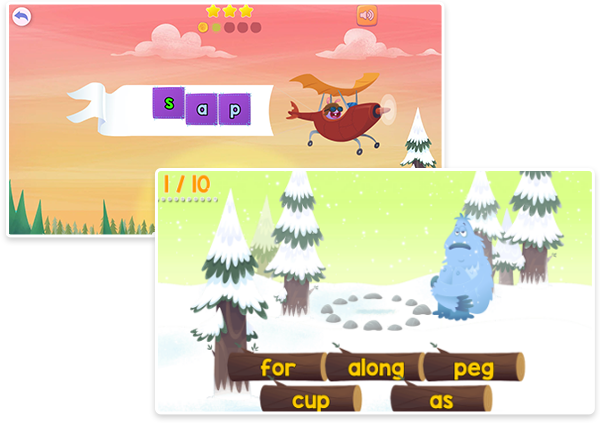
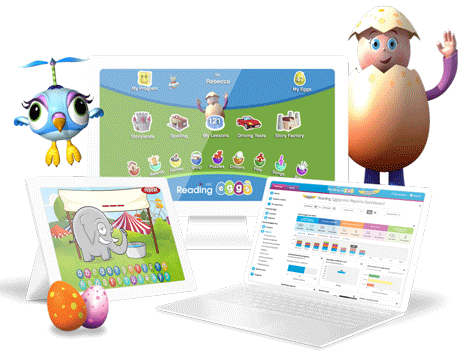
“Reading Eggs” has a wonderful Phonics program that will nurture confidence in your child from the very beginning. It is highly engaging and motivating since it focuses on a core reading curriculum of phonics and sight words. In addition, the program also builds vocabulary, fluency, and comprehension. It comprises highly structured, systematic, and sequential skills-based lessons and activities that match an individual letter, or letter combination, with its appropriate sound. It teaches children to blend sounds all the way through a word in order to read it, as well as how to spell it through interactive games. Watch your child embark on their journey to becoming a confident lifelong reader.

Contact us

Freshwater Resources and Their Management

Freshwater Resources and Their Management

Freshwater Resources and Their Management

Freshwater is important for life and its very existence. It supports the ecosystem and human civilization thrives on freshwater. However, the reserves of freshwater are getting threatened and our future generations may not have access to this ‘treasure’ if we don’t take steps to conserve it today. Out of the total 71% of the water on Earth, only 3% is made up of freshwater.

Major Sources of Freshwater:

Freshwater is stored in lakes, rivers, reservoirs, creeks, and streams. Most of the usable water in our houses today comes from these sources.

Lakes 

The water in lakes comes from rain, snow, melting ice, streams, and groundwater. These sources are of different sizes and depths, and they make for most of the freshwater reserves.

River 

River water can be used for household purposes and it plays an important role in the water cycle. The levels of water in the river change through the seasons.  

Reservoirs 

A reservoir is where water is collected and stored for purpose of irrigation and for supplying to the community.

How Does Freshwater Reach Our Homes?

The public water supply system arranges to carry water from the source to our homes via pipes. The water is filtered and treated upon with chemicals to get rid of any impurities or bacteria in the water. Even the water that comes in our taps is not safe for drinking. One needs to further treat it or pass it through a water purifier system before consuming it.

What is threatening freshwater reserves?

Greater Demand 

The reserves of fresh water on Earth is not matching up to the growing population’s needs. The demand is exceeding supply and there is too much pressure on the existing resources. Some of these water bodies are already kind of turning dry.

Excessive Pollution 

Industrial waste is being dumped in to the water and thus making the freshwater unfit for drinking. The fish having their habitat in lakes & rivers consume the polluted water and die, causing an imbalance in the ecosystem. The more contaminated the water is, the more money public water services have to spend in order to treat it. There are also chances of treatments not being effective and thereby harming human health.

Climate Change 

Along with changes in climatic conditions, the water cycle gets adversely affected. Too much evaporation due to excessive heat causes the source to dry up. In turn, very little rainfall or scanty showers may not be sufficient to fill up the levels in the freshwater bodies, thereby causing a huge problem.

Carolina’s Smithsonian Science for the Classroom lesson on – How Can We Provide Freshwater to Those in Need?

This is a new curriculum series by Carolina for students of 5th grade all across the world, including Dubai and the UAE. The module focuses on the following:

  • Understanding the need of freshwater for humans and learning about the scarcity of freshwater reserves on Earth, thereby defining the problem.
  • Curating a study and developing a model to understand how human activities interfere with the components of Earth to cause pollution in groundwater.
  • Discussing and devising strategies to find solutions to treat contaminated water.
  • Debating on the causes and the effects of an environmental crisis.
  • Devising and testing a solution to pump out water from a freshwater source, followed by its treatment and then finding a way to carry it to households.

This module also delves into the aspects of water treatments at a household level: 

Water that you feel suspicious about in your homes that is used for various purposes like; washing, drinking, cooking, and brushing, needs to be treated effectively before using it for the respective purposes. There are many simple ways to treat water at home and include the following;

Boiling 

Treat water by boiling it on a stove in a vessel for one minute and then cool it down before drinking it. The quantity of water may be reduced as boiling causes evaporation.

Chlorination

Add bleach to water that contains 5.25 to 6.0 percent sodium hypochlorite. Only 8 drops of bleach need to be added to a gallon of water. This procedure needs to be used in emergency case scenarios and not on a regular basis.

Distillation  

The above two methods may sometimes not kill all microbes and the water still might have some germs. Therefore, distillation is a process by which you need to boil water and collect the vapor that condenses on the lid of the vessel. This condensed water will not contain any salt or impurities and is safe for drinking. 

To learn more about Carolina’s Smithsonian Science for Classroom, for your institute in GCC Countries in the Middle East, visit our website: Click here

Contact us

Tracking Every Learner’s Progress in Classrooms Through School Monitoring Systems

Tracking Every Learner’s Progress in Classrooms Through School Monitoring Systems

Tracking Every Learner’s Progress in Classrooms Through School Monitoring Systems

Exams are an inevitable part of every student’s learning journey at school. Regular formal or informal assessments are vital to understand the efficiency of the teaching-learning process and determine whether the goals of education are being met. Moreover, students get a chance to improve their grades, based on the regular feedback given by the subject teacher.  

In the advent of the current digital transformation, schools are opting for ERP modules to manage day-to-day activities and make calculated decisions based on a data-driven approach. The Next Learning Platform is an effective ERP software adopted by schools across the globe, including Dubai in the Middle East, to enhance operations. One of its modules is the School Analytics software, which gives deep insights into the school’s performance at different levels and the individual student’s performance at the classroom level.  

Through this blog, we aim to highlight a few benefits that are linked to effective monitoring, to both students and educators by using the school monitoring system.    

This is How School ERP Systems help to analyze student’s performance: 

Digitalizing Examinations:

Mostschool ERP software offers a module that allows institutes to conduct online exams in a fair and vigilant manner. Digitalizing the examination process is also convenient to the educator as the test paper is auto-generated from the question bank available on the system basis of the school’s board – ICSE, CBSE, IB. Since the answers are attempted by children using their laptops, the test answer papers are stored on the cloud and there are no chances of mishandling, misplacement, or damage. Even the grading process is streamlined, as the marking system is pre-fed into the system by the subject teacher and so the software is capable of grading the sheets when the correct ‘objective answer’ matches the answer on the model answer sheet.  

Assignment Management:

Besides the scheduled quarterly examinations, students also have to attempt a number of internal assignments given to them as homework. Ideally, immediately after completion of important topics or concepts taught in class, an assignment is given to the students, to test their level of understanding. Educators can send assignments at the click of a button from anywhere and students have the liberty to complete it from their homes. The software captures important details like; whether the assignment was submitted on time, how many correct answers did the student manage to attempt, and what section of the assignment was difficult for the students to cope with. Hence with the help of a good assessment management system, educators are in a position to give timely feedback to students and extend help if required.  

Generating Reports:

As soon as the child steps into an educational institute, one has to maintain academic records until he or she leaves the school. Manually managing these records is an extremely tedious task and report files may not stay in the proper condition through the years. Hence, ERP systems such as NLP, take the onus of maintaining digital records of exams, assessments, projects, and any other activity to which the school decides to assign grades. These records are useful in guiding students by analyzing graphs. The student knows where he stands in terms of consistency of performance, or whether he is performing well only in certain subjects like; Science and Language, but poorly in Math and History.

Notification To Parents:  

Not only do students receive feedback on time, but parents too are kept in the loop thanks to the digital process. That means there is no more hiding of grades and bad remarks from parents! There is utmost transparency and the automated notification system reveals the student’s attendance, grades, internal assessment marks, and remarks or comments by school authorities via an email or SMS system. Also, parents need not have to wait until an open-day session is scheduled by the school to learn about their child’s academic progress and disciplinary behavior in school.   

The above-listed points are just the icing on the cake, there are many more benefits of monitoring learners’ progress through an ERP system. For collaborations with The Next Learning Platform in UAE and GCC Regions, visit our website.

Contact us

Essentials Skills Required to Be A Successful Programmer

Essentials Skills Required to Be A Successful Programmer

Essentials Skills Required to Be A Successful Programmer 

Besides knowledge of coding, does the programmer need any skills to be good at his job? Computer programming is a profession that demands a lot from the professional and not just good knowledge of coding. The coder has to be able to understand the exact requirements of teams and therefore he needs to have effective communication skills, and so on. Technical skills and soft skills go hand in hand. Here are some skills that could complement your knowledge of coding and make you better at your task:   

Problem Solving Skills  

Even a small ‘bug’ can hamper the functioning of the program. The programmer should be quick in identifying the problem, so the first step to solving any ‘bug’ is identifying that it exists. No matter how grave or easy the problem might be, problem-solving is an integral part of software development. A good developer always finds the best solution and the most viable one, after weighing various options. Problem-solving skills evolve as the developer practices them over & over again, and also uses his past experience and applies it to solving new problems.  

cc

Managing Deliverables on Time 

It goes without saying, for any job role there are project timelines and deadlines which need to be adhered to. The same applies to the role of a software coder. It is advisable for coders to make a priority list and focus on the most important tasks first, to proceed with the project in an orderly manner. Real-time analytics will help the developer stay focused and stick to the schedule effortlessly.  

Being a Team Player  

Apps and robotic innovations are put together by a team and not an individual alone. Each person is assigned a role depending on his level of expertise and experience. Therefore, the coder is expected to be in sync with the team and coordinate effectively to realize the goals of the project. If you are a senior developer, there will be many juniors or inexperienced coders working under you. As a leader and a guide, the senior person needs to be sensitive enough to answer questions that might be asked by subordinate coders and pass on the knowledge to others.  

An eye for Detail  

Computer languages like C and C++ are complex and require undivided attention to write them. However, no matter how simple or difficult the coding language is, it is the responsibility of the coder to keep his eye on detailing. Paying attention helps avoid any mistake in the very initial stages so that later time and resources are not wasted in trying to find the ‘bug’ and solve the problem. A habit of ‘attention to detailing’ helps one keep an eye on semicolons, spacing, brackets, and other formatting details that affect the code’s execution.  

aaa

A Patient Approach  

Coding can be very frustrating and complex at times and hence keeping a calm mind and being patient is necessary. If you get overworked and try to rush things up, it might lead to errors and unnecessary back-and-forth, which is uncalled for. Ultimately you are dealing with a machine and sometimes there may be technical glitches that need to be tended to.   

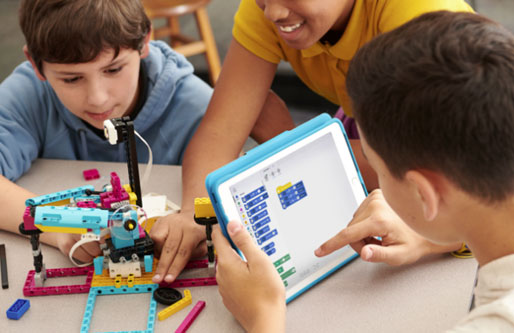
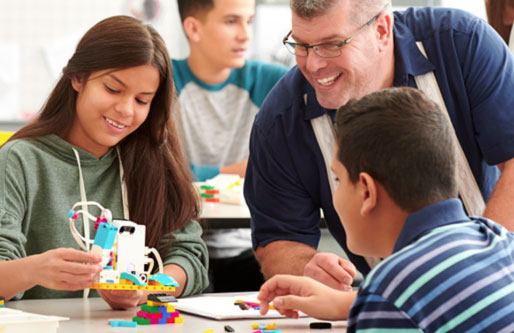
LEGO® Education SPIKE™ Prime set is the go-to STEAM learning solution for secondary school graders, to practice critical thinking, analyzing data, and prototyping, which are skills required for the 21st century. Children make use of Scratch- and Python-based coding languages and therefore get familiarized with the tasks performed by coders in an office set-up while applying their skills. Lessons under LEGO® Education SPIKE™ Prime platform are even included by schools in their learning syllabus across the IB culture curriculum, especially in Dubai and UAE regions. If you want to learn more about LEGO® Education SPIKE™ Prime and wish to subscribe to it in GCC regions or anywhere else in the Middle East, simply visit our website

Contact us