
Introducing Prudent Science Lab Practice at Home: Safety First!

Introducing Prudent Science Lab Practice at Home: Safety First!

Introducing Prudent Science Lab Practice at Home: Safety First!

Schools across the world, partner with Carolina, who pioneers in supplying Science Lab Kits with a commitment to make study of Biology and Chemistry more exciting. Carolina is a common name in most educational institutes across Dubai in the Middle East.

Thanks to Carolina’s homeschooling kits, virtual science experiments are continuing as usual. While Carolina kits are tried and tested, one needs to take extra precaution to ensure utmost safety to the student and the home environment.

Teachers, parents, and science supervisors can collectively make home science a safe experience for our little Scientists in the making! The idea is not to be scared, but to be cautious.

Here are some practical tips to practice:

Conduct Experiments only under Adult Supervision

If science needs to happen at home, make sure you are around to supervise and guide. Be in the same room where your child is undertaking the experiment and not away in the kitchen or in another room tending to your client meetings.

Follow Step-by-Step Rules

The gradual progression of a Chemistry experiment follows a sequential order and therefore it is wise to abide by rules, especially when at home. If it’s a video conferencing session, allow your kids to use the apparatus and chemical composition, only when the teacher asks them to and not just randomly. Usually schools also share an ‘experiment handbook’ that highlights the stages step-by-step. Parents or guardians can read through the handbook prior to the session and be prepared to follow suit.

Keep All Materials Ready

In a one-hour virtual Home Science Experiment session, there is limited time at hand and students are expected to follow their Lab Teacher’s instructions, to get the best results. Therefore, organizing and keeping all materials ready before class begins, is advisable. Last minute panic and running around to find materials during the lecture, only creates more confusion, and the chances of accidents may increase.

Use Personal Protective Equipment

It goes without saying that Personal Protective gear is a must, even when the experimentation is being conducted at home. Just like you would wear gloves, safety goggles, aprons, and cover your head, before entering the Science Lab at school, the same needs to be followed at home. Also, it is better to wear full sleeved clothes to cover any exposed skin, to avoid getting hurt or burnt.

Get Lab Safety Agreement Signed

Parents need to sign a safety agreement shared by the school. The undertaking will have certain rules and precautionary guidelines to be followed while conducting the experiments with your kids at home. The agreement usually states a clause that if anything goes wrong, the school authorities will not be responsible.

Choose An Ideal Place In Your Home

What’s the ideal spot to safely conduct experiments at home? Choose a space that doesn’t have too much furniture around. Any delicate items like glass frames or showpieces need to be moved away from the place where the experiment is to be conducted. If you are choosing to work in the living room, make sure that part is cordoned off using a blanket, so that other kids & adults moving around do not accidently bump into each other and create chaos. Ensure utmost peace and make arrangements for extra newspaper sheets, cotton cloth, and paper bags.

Clean-up Immediately

Students usually get excited when their ‘litmus test experiment’ comes out correct and can’t wait to share this experience with their friends. In all the fun and frolic, they may just the place without clearing-up the mess. Cleaning-up is as important as organizing material orderly at the beginning of the session. Instruct them to dispose liquids carefully in the sink, use a cloth to wipe the table, and throw the used pincers & droppers in the dustbin.

Whether you are learning at school or at home, lab safety is very important. Carolina also promotes safety supplies, being the world’s leading one-stop platform for all science lab essentials. If you reside in UAE or any other GCC country, consult your school administrator to get more details or go through our website to learn more: Carolina Biological 

Contact us

Fill in your details below or send us an email on info@knowledge-hub.com

Understanding Dyscalculia and Finding Ways To Manage It

Understanding Dyscalculia and Finding Ways To Manage It

Understanding Dyscalculia and Finding Ways To Manage It

Globally, a lot of misconceptions surround the concept of Dyscalculia. While a lot of people think it’s just a ‘numbers dyslexia’, it’s not. Dyscalculia goes beyond just having difficulty in writing the correct numerical answer. It is used to describe learning difficulties that are related to the overall concepts of math. While this is commonly found among students in all across the world, Dyscalculia is treatable and apps like Mathseeds make it even easier.

How to notice Dyscalculia

While it can look different for every individual depending on their age, circumstances and mental development. Here are a few symptoms that are commonly found:

  • One finds it challenging to comprehend wider concepts of math such as algebra, geometry, greater-than & less-than etc.
  • Difficulty in remembering functions such as addition, multiplication, subtraction, carry-forwarding a number, or dividing a sum.
  • Difficulty in understanding the sequence of a sum or remembering the steps that are needed to find an answer to an equation, no matter how simple it is.
  • One faces consistent trouble in expressing their mathematical knowledge or completing mathematical homework.
  • It is also more likely to diagnose Dyscalculia in children and adults who also face anxiety, ADHD, depression, or dyslexia. However, a lot of more research is required in order to detect a firm cause.

How to manage and treat Dyscalculia

A lot of you may ask ‘can it actually be treated?’ The answer is YES. Dyscalculia can be managed and treated. There are a wide range of options available for both children and adults that can help them combat it. A few easy strategies for children include:

  • Continuous practice of basic concepts of math. Sitting with students one-on-one and going over practices such as addition, subtraction etc. can prove to be quite helpful.
  • Breaking down complex concepts and modules into smaller bits of information so it becomes easy for them to comprehend.
  • While giving personal attention to the child can prove to be fruitful, it is also highly recommended to teach small groups of students together, which can facilitate easy understanding and higher relatability. Most IB Schools all over, including Dubai and GCC, follow a practice of conducting after school classes for students who need extra support, and even arrange for a shadow teacher who is specially appointed for the child suffering from Dyscalculia and pays individualized attention to bring out the best in the child.
  • Going over the same concepts over and over again in a demonstrative manner can prove immensely helpful as it encourages deeper understanding among children.
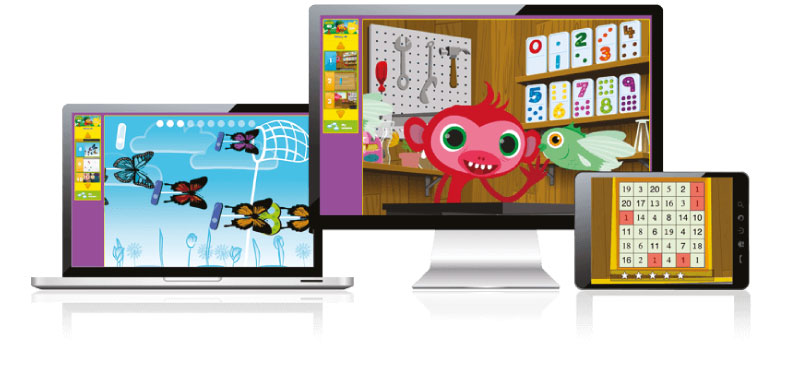
  • A lot of students in UAE in the Middle East are also using the Mathseeds app that allows kids to learn mathematical concepts in an easy and interactive manner. It combines highly structured lessons with motivational prompts so the children are not only engaged in learning but also develop a positive approach towards the subject.
  • Consulting an education specialist is also a great way of managing Dyscalculia as they can help you with mental exercises and educational resources as per your needs.

While it can be relatively challenging for children and adults to learn mathematical concepts with Dyscalculia, but on the brighter side, it is treatable. Diagnosing it at an earlier stage can make a big difference so don’t shy away from speaking to a credible consultant doctor or child psychologist about this.

Contact us

Fill in your details below or send us an email on info@knowledge-hub.com

Robotics by Misty: Your Personal Programmable Companion

Robotics by Misty: Your Personal Programmable Companion

Robotics by Misty: Your Personal Programmable Companion

Misty II is the first of its kind professional-grade ‘personal robot’ which allows developers to experiment and unleash the magic of this new-age Robot. She has a lot of promise as a teaching tool for educators who have some experience with coding. Misty may aid you in accomplishing your objectives in a variety of ways. She is happy to cooperate with you on anything from coding to robotics ideas to cutting-edge technology.

Misty is a pal even to students, as numerous schools following the STEAM curriculum have introduced this super-Robot to middle school and high school children. Especially in countries like Dubai, in the Middle East, and GCC areas allow children to learn by hands-on activities and watch their ideas come to life, which keeps them interested and enthusiastic in learning about computers, technology, and Robotics. Misty delivers scalability as a single development platform with a lot of characteristics. She is adjustable and fascinating for youngsters with numerous hobbies, ranging from 3D printing attachments, to face recognition activities and even coding abilities on the Arduino.

Capabilities Demonstrated by Misty

Misty is ready for developers to design skills that make full use of her powers when it comes to recognizing and identifying humans, interacting through speech (third-party NLP integrations), snapping images, gathering data, and sharing. Much effort has been concentrated on making it simple for developers to construct. Developers may access a large variety of tools, such as a pre-built Command Center, Skill Runner, and API Explorer, utilizing Misty’s user-friendly JavaScript or C# SDK interface. Her items are accompanied by thorough documentation, sample code, and tutorials.

Character Customization

Customizing your characters is a cinch due to Misty’s huge range of eye and voice packs. Misty can show everything from adoration to fear, love to silliness, surprise to tiredness, and anything in between because of her features. Misty can sway, point, dance, or lift her arms in enthusiasm with a single line of code, or you can employ her three-degree-of-freedom neck to do it automatically. Misty has you covered a range of tasks like; bespoke 3D-printed grabbing arms, sensors for your company, or teaching your youngsters how to construct attachments for aesthetic purposes. The CAD models for Misty’s shell can be easily sourced, as well as a number of “blank” components for several of her attachment points that will help you to construct & code (such her arm sockets, head panel, and trailer hitch).

Capacitive Touch

Each of Misty’s six capacitive touch panels is situated in a separate section of her head—four on top, one beneath her chin, and one on the back handle. You may program Misty to respond to human contact by moving and expressing personality, or you can utilize these panels to let people participate with your talent (for example, tap Misty’s head to change settings and touch her chin to choose). Misty’s abilities mainly depend on capacitive touch.

Picture Capturing, Collection, and Sharing

Misty’s visor features a high-resolution camera that enables her to capture images and record movies. Misty may be photographing intruders while doing a security assignment, or she may be evaluating visual data in pursuit of a particular object. It is absolutely up to you how Misty utilizes this information. We tested giving visual data for in-depth analysis using Microsoft’s Cognitive Services APIs, which offers information about Misty’s surroundings for her to apply elsewhere in the ability. You can send Misty a text message, and she’ll respond with a snapshot of what she’s watching. These are just two instances of how Misty’s picture capturing, collection, and sharing capabilities may be put to use.

If you reside in UAE; speak to our Knowledge Hub ‘sales executives’ to learn more about Misty and her unusually quirky antics:

Contact us

Fill in your details below or send us an email on info@knowledge-hub.com

Kickstart your Online Math Sessions with Mathspace: Five Easy Steps for Educators

Kickstart your Online Math Sessions with Mathspace: Five Easy Steps for Educators

Kickstart your Online Math Sessions with Mathspace: Five Easy Steps for Educators

Teaching remotely is not an easy task. Firstly, there is no tried and tested model where educators can follow a particular agenda that works best in a ‘virtual set-up’. Since the golden rules are not prepared, many teachers resort to experimentation. However, Mathspace has laid down ‘five’ simple steps that can be followed to kick-start the Math learning journey online. Most schools across the world, especially IB boards in developed countries like Dubai in the Middle East use Mathspace as a digital Mathematics classroom, and pre-plan lessons by referencing the following points;

Pre-plan the Schedule in a structured manner

Usually when a child attends physical school the timetable is pre-decided and handed over to the students & their parents so that there is no ambiguity on what next to expect and learners can be more prepared to sit through the sessions. This practice should ideally continue even when lectures are moved to remote or digital platforms. Share a schedule or timetable for every month in advance, with every little detail covered. Students must be aware of when to complete their homework, what question to ask the teacher, which Math topic is being covered, and when they need to be prepared for the internal evaluation exam.

Inculcate Proper Online Etiquette

Just like there are rules in a physical school setup such as; no eating or talking during class hours, the same needs to be re-iterated if you want to continue conducting Math lessons in a disciplined and organized manner online. Students should not interrupt the session and wait for their turn to ask questions, at the end of the class. Also, Math homework needs to be completed on time & each student must commit to completing the coursework as allocated by the teacher.

Encourage self-learning & Exploration

The advantage of online learning is that students have access to a robust ‘Learning Management System’ which has a library of reference materials & explanatory videos that can be referred by them anytime & from anywhere. Encourage students to go beyond what is taught in class and delve deeper into the Math topic. For example, if the lesson taught in class is on fractions, ask children to learn more about it themselves and solve practice sums.

Monitor Progress & Give Frequent Feedback

Appearing for exams and attempting homework online has its own advantages. In real-time, educators are exposed to data such as; how much time did the student spend on the assignment, what section of the paper was he stuck at, and if the student struggling with basic Math concepts. Mathspace is an integrated platform that captures all the data in its ‘activity log’ and makes it available to the subject teacher. This helps the teacher give timely feedback, hold sessions with students & their parents individually, and even clarify doubts & queries that the learners might have.

Conduct Virtual Presentations

Though physically conducting project work is not possible in a virtual classroom space, there are ways to set up an online ‘project space’ on zoom or google hangout by creating special break-out rooms where students are divided into groups and can work together on ideation & presentations, before showcasing it to the class. This ensures that students continue to get the opportunity to enhance their communication skills, creativity, and critical thinking abilities.

Mathspace developed its platform a ‘decade ago’ with an aim to integrate technology into gaining Math skills. Students are benefitted from one-to-one support which helps them develop a growth mindset and other core capabilities. Mathspace has a mission to help students excel at Math with the right help at the right time. If you reside in GCC or are a part of UAE, availing Mathspace is just a click away: <link>

Contact us

Fill in your details below or send us an email on info@knowledge-hub.com

Teaching Synonyms & Meaning of Words To Kids

Teaching Synonyms & Meaning of Words To Kids

Teaching Synonyms & Meaning of Words To Kids

To be literate and to be knowing to read, write and speak is an asset for life. It is a gift that one receives and then it is up to the individual to hone their skills and further nurture, develop and expand their capabilities and knowledge. When one is born, they get their mother tongue by default and as they grow older, they learn different languages which become the essence to communicate, English being one of them. The language is widely used across the globe. The English grammar and the other components are the main elements that form the crux of the language. Synonyms are a very important factor as part of the English language. Here we are referring to English since it is largely spoken around the world but as a matter-of-fact synonyms are crucial to all languages. Take Arabic for example, which is commonly spoken in Dubai, across the UAE, in the Middle East and GCC countries. Of course, there are a ton of synonyms there too. The dictionary would tremendously help one with their usage of words. Pick up any language of these regions or another foreign language and you will find the relevant synonyms.

Let us understand why synonyms are imperative to be used. Wouldn’t it be the dream of any parent to see their child carry themselves with confidence? The initial steps to achieving that would be, for their child to communicate effectively and speech becomes a vital part of the same. In the English language, there are thousands of words that one can include as a part of their speech and written text. Wouldn’t it be so mundane for your child to be using commonly used words while they talk and write? Wouldn’t you want them to explore, go beyond their limits and appear extraordinary? Here is where synonyms fantastically come into play. They are actually very simple but supremely beneficial. Imagine taking up any word and upon being made to look further, your child will find at least five to six new words which in meaning will be similar to the original word. Isn’t that amazing? They are truly making their vocabulary powerful. With every new word that they come across, they are learning new spellings and pronunciations. With more practice, they will know how to make the best use of the dictionary, of course find the exact synonyms, and know where to fit what kind of word aptly and more than that they are improving their grammar and parts of speech since the dictionary not only shows the meaning and synonym of a particular word but also the adjective, adverb, and tenses of the word. It is an absolute win-win situation.

Apart from the basic dictionary, there are other ways in which a parent can teach synonyms to their children. By adopting these means, more than literally teaching, children will organically learn new words which will be equivalent to mastering synonyms. Reading is their best teacher. The reading activity must be inculcated in children which will open up a gamut of words for them. Likewise, even watching educational content and videos on the internet will boost their vocabulary to unimaginable levels. A good idea would be for children to be made to form the habit and a routine exercise, that whenever they encounter any new word through any medium internally at home or outside, they must note down that word in a diary. Then they must be made to write down the meaning of the word and find better synonyms to that word. Their knowledge is amplified in so many ways. These methods can be easily used with slightly older children and bigger kids. With small children, who are still away from actually reading proper books and understanding videos, they can be made to learn synonyms in a graphic way by using picture cards or flash cards. Colours and pictures attract little children and that is how their foundation to learning synonyms will begin early on without them realizing that they are learning them. They will get the hang on quickly with pictures, letters, and words. Once they will see that one particular picture has a meaning to it and that word can have similar other words, they will learn the complex bits in the most fun way with graphic cards. Synonyms are one huge aspect, as we have seen, but as these children will learn them slowly, they will also be made to understand that antonyms do exist as well. So, the learning will always continue to multiply many fold.

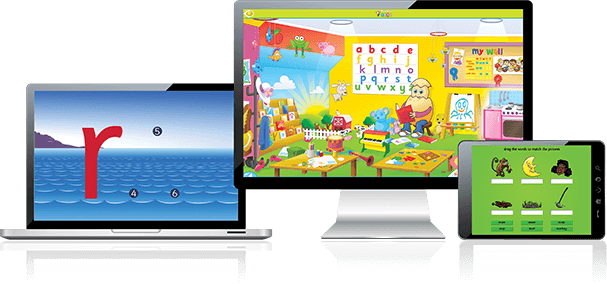
The Reading Eggs programme has been developed by a highly experienced team of teachers, educational writers, animators, and web developers. It focuses on a core reading curriculum of skills and strategies which are essential for sustained, reading success. It completely supports what children learn at school. Reading Eggs is designed for 2–13-year-olds. The programme begins at an absolute beginner level, so children need no prior knowledge to start. There are three programmes within Reading Eggs – Reading Eggs Junior for 2–4-year-olds, Reading Eggs for 3–7-year-olds and Reading Eggspress for 7–13-year-olds. Reading Eggs makes learning to read interesting and engaging for kids, with great online reading games and activities.

Contact us

Fill in your details below or send us an email on info@knowledge-hub.com