
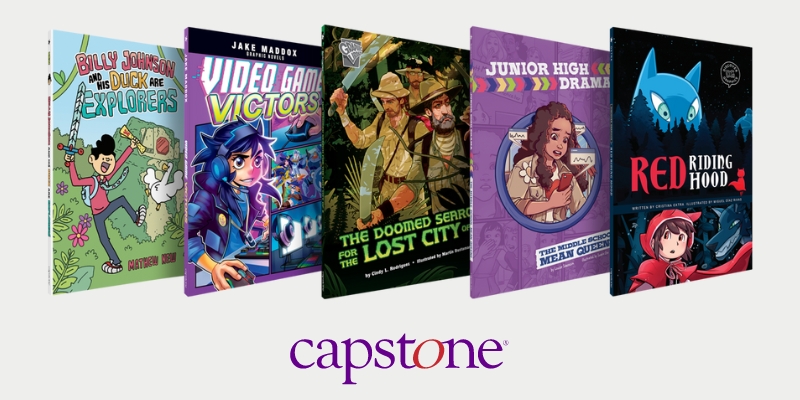
Ignite a Love of Reading with Early Reader Books

Ignite a Love of Reading with Early Reader Books

Early reader books carry simple and educative stories designed for young learners. Your little emerging readers (ages 3 to 8 years) can enjoy their favorite tales even if they are simply starting to learn to read. As students venture into independent reading, the chapters are segmented into short stories to build confidence among students. Even the vocabulary is simple, with repetitive language and eye-catching visuals.

Early Reader Books Support Vocabulary

Early reader books serve as invaluable tools in expanding a child’s vocabulary. By introducing new words in a familiar context, these books facilitate gradual language acquisition. For instance, a book about farm animals might introduce words like ‘barnyard,’ ‘haystack,’ and ‘calves,’ while a story about a Christmas might include words like ‘mistletoe,’ ‘carols’ and ‘marzipan.’ Repetition of these words throughout the book reinforces learning, aiding vocabulary retention. Additionally, early reader books often introduce descriptive words that enhance comprehension, such as ‘outstanding,’ ‘zesty,’ or ‘gigantic,’ encouraging children to use more vivid language while conversing with their pals. The complexity of themes, storylines, and language can vary significantly, with word counts ranging from 500 to over 5,000 words.

Characteristics of Early Reader Books

Early reader books include elements that support new readers, such as ample illustrations, easy-to-read fonts, short line breaks, and extra space between paragraphs. These features help children decode words and understand the story better.

Capstone Library‘ offers a treasure trove of early reader books designed to ignite a love of reading in young minds. One shining example is the captivating story called “Yasmin the Vet” aimed at Grade K-2 readers. This delightful story authored by Saadia Faruqi has heartwarming illustrations, of the cat, a girl, and her family.

The Importance of Familiar Characters

Familiar characters in early reader books help children decode language and story meanings more easily. Books with recognizable characters from movies or TV shows, like Batman™ and Superman™, offer an additional layer of familiarity, making it easier for children to focus on reading. The illustrations in these books also play a crucial role in helping children understand new words and concepts.

Inclusivity and Representation

Early reader books also play a significant role in promoting inclusivity and representation. Books that feature diverse characters and cultures, allow children to see themselves in the stories. This leads to children imagining themselves as the character and gradually building confidence. It also inculcates socio-emotional skills, fostering empathy and understanding.

Tips for Choosing Early Reader Books

  1. Match Interests: Let the child choose books that interest them. Whether it’s sports, biographies, or the superhero genre, finding a topic they love will make reading enjoyable.
  2. Explore Different Formats: Graphic novels and comic books can be great for reluctant readers. They offer visual literacy benefits and reduce reading anxiety.
  3. Select Achievable Lengths: Start with shorter books to build confidence. Gradually move to longer books as their reading skills improve.

Early reader books are essential for developing proficient and enthusiastic readers. They offer the right mix of simplicity, engagement, and familiarity, helping children transition from picture books to chapter books. Capstone’s extensive range of early reader books, available in Dubai and other regions, feature popular characters and relatable stories. So, start your child’s reading adventure, one book at a time!

Contact us

Fill in your details below or send us an email on info@knowledge-hub.com

Revealing the Usefulness of Educational Microscopes

Revealing the Usefulness of Educational Microscopes

Microscopes are powerful instruments in any science laboratory that help students and researchers see what the naked eye cannot. Over the years, this indispensable equipment has changed the way we comprehend what is out there in the environment. Thus, microscopes are essential to what researchers are doing today across all these different domains, without which we simply couldn’t imagine the progress we’ve been able to make. For students embarking on their scientific journeys, educational microscopes are more than just a tool – it catalyzes curiosity and exploration.

Function and Applications in Science Labs:

Typically, a light source illuminates the specimen placed under the microscope, and a series of lenses magnifies the image for viewing. Educational microscopes are an indispensable asset in the school’s biology labs for studying cells, tissues, and microorganisms like bacteria and viruses. The versatility of the microscope makes it an essential tool across numerous scientific fields. 

Learning Through Exploration:

By directly observing the microscopic world, children can:

  • Visualize Scientific Concepts: Textbooks and lectures come alive as children witness real-world examples of cells, tissues, and other biological structures. Microscopic observations solidify abstract concepts and enhance understanding.
  • Develop Critical Thinking Skills: Using educational microscopes encourages children to ask questions, make observations, and draw conclusions. They learn to analyze what they see, forming a foundation for scientific thinking.
  • Spark Curiosity and a Passion for Science: The ability to view a hidden world ignites a sense of wonder and excitement about science. Microscopy can inspire children to delve deeper into the natural world and explore its mysteries.

Traditional Microscopes vs. Modern Microscopes:

Traditional microscopes are optical instruments relying on lenses and light to magnify an image. They are generally robust and relatively simple to operate, making them ideal for educational settings. However, they may have limitations in magnification power and image resolution.

Modern advancements have led to the development of more sophisticated microscopes, such as electron microscopes. These instruments use beams of electrons instead of light, achieving significantly higher magnifications and providing detailed images of even smaller structures like molecules and atoms. While electron microscopes offer unparalleled resolution, they are typically expensive and require specialized training to operate.

The Future of Microscopic Exploration

Digital microscopes are gaining traction, offering features like image capture and display on a computer screen. These advancements can enhance collaboration and facilitate the sharing of observations. Furthermore, researchers are exploring the potential of artificial intelligence in microscopy, with applications in image analysis and automated specimen identification. 

MatataStudio: Fostering Scientific Discovery

MatataStudio is dedicated to developing innovative educational tools, including digital educational microscopes like the MT3 (MT3-2 / MT3-4) series. These high-definition digital microscopes, support comprehensive observation with adjustable incident and transmitted light sources. The software is compatible with Chrome OS, macOS, Windows, App Store, and Google Play, ensuring accessibility across various platforms.

With the Digital Microscope MT3-2 / MT3-4 you can:

  • See the tiniest details: With up to 1600x magnification, you can explore the building blocks of life, like cells and tissues, or get a closer look at the intricate details of an insect or a plant.
  • Multiple ways to see: This microscope is like having two light sources in one! You can use transmitted light to see thin, flat objects or switch to incident light for viewing 3D objects.
  • Capture your findings: Share your amazing discoveries with friends and family! The microscope lets you take high-quality photos and videos of everything you see.
  • Big screen adventures: Want to see your discoveries on a larger screen? Connect the microscope to your TV or monitor using the HDMI output.
  • Sharing of information: The microscope has a USB-C socket, so you can easily transfer your photos and videos to your computer.
  • Long-lasting fun: With a rechargeable battery, you can explore for hours on a single charge.

 The MT3 Microscope comes with everything you need to get started, including:

  • A foldable 7-inch screen – perfect for viewing your magnified world!
  • Microscope (either MT3-2 or MT3-4 model)
  • 3 different lenses (4x, 10x, and 40x) for various magnification levels
  • A built-in ruler to measure those tiny specimens
  • An 8GB SD card to store all your photos and videos
  • A rechargeable battery
  • A storage bag to keep your microscope safe

The microscope has played a pivotal role in scientific discovery and continues to be an invaluable tool in science education. By enabling students to observe the invisible world firsthand, microscopes foster curiosity, critical thinking, and a passion for science. As technology advances, the field of microscopy is poised to offer even greater opportunities for exploration and understanding of the world around us.

Contact us

Fill in your details below or send us an email on info@knowledge-hub.com

Important Phonics Resources for Kids with Mini Mash and Purple Mash

Important Phonics Resources for Kids with Mini Mash and Purple Mash

Phonics, the link between letters and sounds, is a building block for strong reading skills. Ideally, children can begin exploring phonics as early as 3 or 4 years old through songs, games, and activities that focus on letter sounds. By understanding phonics, children can decode unfamiliar words, become better spellers, and gain the confidence to tackle any reading challenge. Through this blog, let us explore how Mini Mash provides the necessary phonics resources for kids to support education for young learners.

Mini Mash: A Vibrant Phonics Playground

Mini Mash, a free add-on or included feature with a subscription, is designed specifically for Early Years learners. It turns phonics from a theoretical concept into an engaging adventure. Here’s how Mini Mash contributes to successful phonics development:

  • Engaging Letter Recognition: Mini Mash uses vibrant letter sounds slideshows and pairs games to make letter recognition enjoyable and social. Children can participate in creative activities like letter painting projects, which help reinforce letter shapes in a fun way. Interactive initial sounds quizzes offer a playful assessment of their understanding, ideal for group sessions on a projector or individual practice on tablets.
  • Sound & Grapheme Development: As children move beyond basic letter recognition, Mini Mash’s phonics resources for kids provide resources to deepen their understanding of sounds and the letters (graphemes) that represent them. Missing sound quizzes challenge learners to identify absent sounds in words, strengthening their phonics skills. Cloze activities (filling in missing letters) in Phases 2 and 3 offer targeted practice, supporting both advanced learners and those needing extra help. Writing templates reinforce these skills by providing a framework for practicing newly learned sounds.
  • Visual Aids and Printables: Recognizing the power of visual reinforcement, Mini Mash offers alphabet printables that teachers can use to create eye-catching classroom displays. These displays provide constant visual cues, aiding letter recognition and retention.

Purple Mash: Advancing Phonics Skills

As children transition from Mini Mash to the broader Purple Mash platform, their phonics journey continues with resources for Phases 2 to 5:

  • Phase-Specific Activities: Purple Mash offers a structured approach to phonics development, with dedicated resources for each phonics phase. Activities include cloze tasks for various skill levels, sound flashcards for quick letter-sound practice, and word flashcards to build vocabulary and solidify understanding.
  • Exploring Complex Phonics: For Phase 2 learners, compound word flashcards help them identify and understand compound words (e.g., “butterfly”). Phase 5 resources include alternative spelling flashcards, teaching children to recognize and spell words that do not follow typical phonics rules (e.g., “though”).
  • Free Trial: Unsure if Purple Mash is appropriate for your class? Take advantage of their free trial to explore the phonics resources for kids, firsthand. Mini Mash is always included free with a Purple Mash subscription, providing a fantastic start for Early Years learners.

Beyond Phonics:

Purple Mash’s commitment to literacy extends beyond phonics with Serial Mash, a dedicated library within the platform that opens up a world of engaging books: 

  • Diamonds Library: Serial Mash curates age-appropriate books for younger readers, sparking curiosity and a love for reading.
  • Serialized Reading: Teachers can break down longer books into manageable sections, making reading less daunting and encouraging consistent reading habits.
  • Online Reading Journals: These journals allow students to record the books they’ve finished, keep track of their progress, and recognize their reading milestones.
  • Motivating Reluctant Readers: Serial Mash includes the Firebolts collection, designed to engage and motivate reluctant readers with captivating stories, intriguing characters, and vibrant illustrations.

Purple Mash transcends traditional educational tools by offering a well-rounded approach to literacy. With its comprehensive phonics resources for kids and extensive library, Purple Mash not only builds foundational skills but also fosters a lifelong love for reading.

Contact us

Fill in your details below or send us an email on info@knowledge-hub.com

Design a Newsletters: Microsoft Word Lessons for High School Students

Design a Newsletters: Microsoft Word Lessons for High School Students

A newsletter is one of the most powerful mediums of marketing to stay in touch with your subscribers and reach out to new audiences. Most businesses follow a fixed calendar to send out Newsletters to a set of targeted people via email. Even Government bodies, banks, and educational institutions share Weekly Newsletters to communicate news, updates, and information about certain topics. Given the importance of this medium, schools can teach students to create meaningful Newsletters using Microsoft Word, as a part of the computer curriculum. Through this Blog, let us elaborate on Microsoft Word lessons for high school students where young minds are taught to explore its features effectively.

Types of Newsletters

  • Company Newsletters: A corporate Newsletter is usually rolled out to customers & vendors who are associated with the organization, or even targeted towards employees. Regular communication from the management ensures that the staff stays motivated and feels included like a huge family. They frequently feature segments on corporate accomplishments, forthcoming events, employee highlights, and industry updates.
  • Product Newsletters: All types of product-focused brand content form a part of the Product Newsletter category.  New products with compelling visuals and thought-provoking taglines keep the customers engaged and informed about the company’s offerings. Any special sales discounts and offers can also be included here.
  • Educational Newsletters: These are used by schools, colleges, and other educational institutions to communicate with students, parents, and staff. They can include information on upcoming events, academic achievements, school policies, and educational resources.
  • Industry Newsletters: These give the latest information and highlight current events with regards to a particular Industry. They are usually adopted by the practitioners to update with the current trends, research, and practice within the area of specialization. For example, Automobile Enthusiasts share auto-related content, from cutting-edge electric vehicle developments to updates on safety regulations and the latest trends in car design, etc.

How to Produce Professional Publications

Creating a professional Newsletter involves several steps and the application of various formatting and design techniques. Here’s a guide to producing a professional newsletter using technology, as often taught in Microsoft Word lessons for high school students.

 Apply a Style and Customize the Appearance

  • Choose a Template: Students can be asked to select a theme that suits the purpose of the communication. Many programs, like Microsoft Word, offer a variety of templates to choose from.
  • Branding: There may be certain colors, fonts, and design elements that audiences identify your brand with. Incorporating these tangible branding elements helps maintain consistency and make the Newsletter easily recognizable.

Format Paragraph and Character Spacing

  • Paragraph Spacing: Adjust the spacing before and after paragraphs to make the content easy to read. This prevents the text from looking cluttered.
  • Character Spacing: Ensure that the spacing between characters is consistent and suitable for the font being used. This improves readability and overall aesthetics.

 Adjust Page Orientation, Border, Margins, and Watermark

  • Page Orientation: Choose between portrait and landscape orientation depending on the design and layout requirements.
  • Borders and Margins: In Microsoft Word lessons for high school students, they also learn to set appropriate borders and margins to frame their content neatly. This also ensures that the text does not run too close to the edges of the page.
  • Watermark: Add a subtle watermark, if necessary, to denote the confidentiality or branding of the Newsletter.

 Pictures, Clip Art, Shapes, SmartArt

  • Pictures and Clip Art: Use high-quality images and clip art that enhance the viewability of the content. Ensure that these graphics are well-placed and do not overshadow the text. This is an important tip while teaching Microsoft Word lessons for high school students.
  • Shapes and SmartArt: Utilize shapes and SmartArt to create visually appealing elements such as Infographics, flowcharts, and callouts.

Organize the Document into Sections

Create sections to include subheadings and accommodate relevant content under it. This makes it easier for readers to navigate and find the information they are interested in reading.

Create and Format a Table

Use tables to organize data and present it clearly. Format the cells by adjusting the borders, shading, and alignment to enhance readability.

Insert and Format a Header and Footer

Include headers and footers to provide essential details like the newsletter title, issue number, date, and page numbers. Customize these elements to align with your overall design as a part of the Microsoft Word lessons for high school students.

Merge Data into a Form Letter

Mail merge can be used to send bulk emails to a database without compromising on addressing each recipient individually. It’s now possible to efficiently manage large-scale communications while maintaining a personal touch.

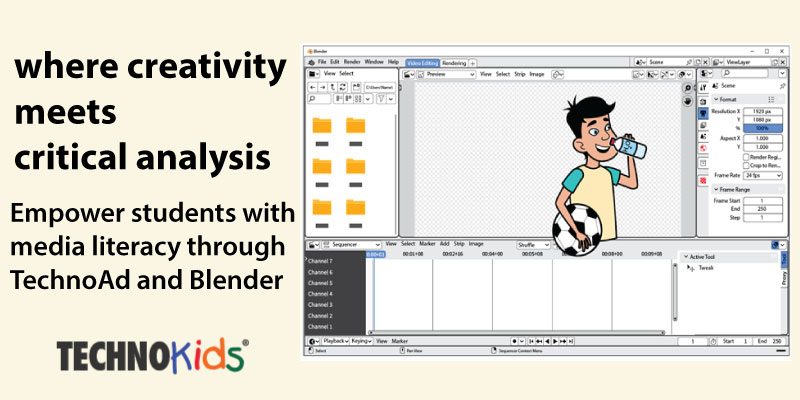
TechnoKids‘ innovative TechnoNewsletter module, in conjunction with Microsoft Word’s advanced functionalities and engaging learning activities, empowers students to develop proficiency in crafting professional and captivating Newsletters. This dynamic curriculum fosters the acquisition of essential technical skills while simultaneously preparing students for future success in communication-intensive careers.

Contact us

Fill in your details below or send us an email on info@knowledge-hub.com

How To Teach Pre-Math Concepts for Kindergarten Students

How To Teach Pre-Math Concepts for Kindergarten Students

Pre-Kindergarten and Kindergarten are stages when children begin to explore the world. A sense of curiosity seems to reflect in their personalities as they want to make sense of everything they see, touch, and feel. As a Kindergarten educator, it is important to support and stimulate the child’s thirst for knowledge, by introducing fun & playful lessons in class. One such interesting concept is of ‘distance’ because understanding spatial relationships is a foundational skill for navigating their world. This blog explores effective strategies to teach the concept of ‘distance’ to Pre-K & K students, ensuring the lessons are both educational and enjoyable. Integrating these strategies supports the development of pre-math concepts for kindergarten students.

Strategy 1: Using Visual Aids and Manipulatives

Visual aids and manipulatives are powerful tools in early childhood education. For teaching distance, these can include:

  • Measuring Tapes and Rulers: Simple, colorful measuring tapes or rulers can be introduced to show how distance can be measured. Children can use these tools to measure objects in the classroom or even decode their own height.
  • Blocks and Building Materials: Using blocks or building materials, children can build structures and measure the distances between them. This can be incorporated into playtime, making learning seamless and enjoyable.

Strategy 2: Incorporating Movement and Games

Movement-based activities and games are excellent for teaching distance to young children. Here are a few ideas:

  • Obstacle Courses: To reinforce pre-math concepts for kindergarten students, arrange cones at irregular intervals in the classroom and create an exciting indoor obstacle course. Now include words like ‘near’ and ‘far’ as children move around collecting cones.
  • Measuring Footsteps: Encourage children to measure distances using their footsteps. They can count how many steps it takes to reach different points in the room or playground. This activity not only teaches distance but also integrates counting skills.
  • Distance Races: Organize simple races where children have to run or walk certain distances. Mark the starting point with a chalk and the finishing point with a tape. Now invite students to discuss the distances involved between these two points.

Strategy 3: Storytelling and Interactive Read-Alouds

Pre-math concepts for kindergarten students can be brought to life through the magic of storytelling! Select stories that involve characters traveling distances, such as journeys or adventures. During read-aloud sessions, use props or visuals to illustrate the distances covered by the characters.

Strategy 4: Everyday Situations and Practical Examples

Incorporate discussions about distance into everyday classroom activities:

  • Classroom Layout: Talk about the distances between different areas of the classroom, such as the reading corner, art station, and play area. Encourage children to think about and describe these distances.
  • Nature Walks: Take the children on nature walks around the school grounds. Discuss the distances traveled and use simple maps to illustrate the routes taken.
  • Comparative Language: Use comparative language to discuss distance, such as “closer,” “farther,” “longer,” and “shorter.” For example, compare the distance between their desks and the door or the playground and the classroom.

Strategy 5: Technology Integration

While hands-on activities are crucial, technology can also enhance learning about distance:

  • Interactive Apps: Utilize age-appropriate educational apps that introduce the concept of distance through interactive games and activities.
  • Digital Stories and Videos: Show short videos or digital stories that involve characters traveling distances. Follow up with discussions and questions about the distances covered.
  • LEGO® Education Coding Express: The Coding Express Set offers an optional, tech-infused approach to learning distance. This playful set allows students to program the movement of a train based on distance. By building tracks and assigning distances between stops using the app’s interface, children can experiment with moving the train to various lengths. This interactive experience reinforces their understanding of distance in a fun and engaging way.

Teaching pre-math concepts for kindergarten students requires a blend of visual aids, hands-on activities, movement, storytelling, everyday examples, and technology. By creating an engaging and interactive learning environment, educators can help young children develop a foundational understanding of distance. This exercise not only teaches children about spatial awareness but also instills a sense of confidence among them. Try some of the above-listed activities to get started and guide young learners to understand important pre-math concepts and abstract ideas.

Contact us

Fill in your details below or send us an email on info@knowledge-hub.com