

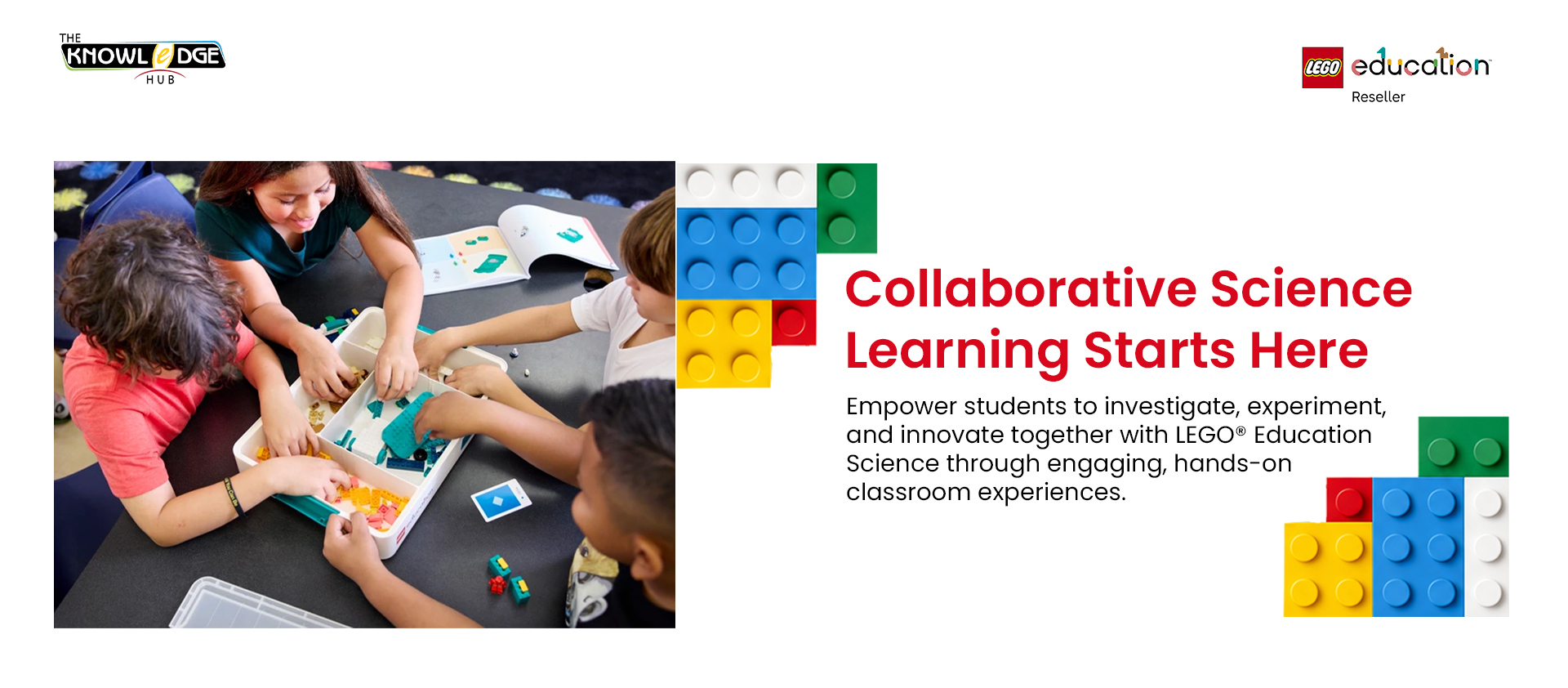
Science has always been driven by curiosity, discovery, and collaboration. From groundbreaking inventions to life-changing innovations, the greatest achievements have emerged when people worked together to solve challenges. Today’s classrooms should reflect this same approach by encouraging students to explore, investigate, and learn as a team.
Collaborative Science Learning empowers students to ask meaningful questions, conduct experiments, share ideas, and develop solutions collectively. Rather than simply memorizing scientific concepts, learners become active participants in the discovery process, strengthening both their academic knowledge and essential life skills.
Why Collaboration Matters in Science Education
Science is rarely an individual pursuit. Researchers, engineers, and innovators rely on teamwork to analyze data, test hypotheses, and develop new ideas. By introducing collaborative learning experiences early, educators prepare students for the realities of higher education and future careers.
Collaborative classrooms help students:
- Develop critical thinking skills
- Improve communication and presentation abilities
- Build confidence through teamwork
- Learn to evaluate different perspectives
- Strengthen problem-solving capabilities
- Foster creativity and innovation
These competencies are equally valuable inside and outside the science classroom, making collaboration an essential component of modern education.
Hands-On Learning Creates Meaningful Understanding
Students learn science most effectively when they actively engage with concepts rather than passively receiving information. Hands-on activities encourage learners to observe, experiment, make predictions, and evaluate results through real-world experiences.
LEGO® Education Science transforms traditional lessons into interactive learning opportunities where students construct models, investigate scientific principles, and collaborate to solve challenges. This practical approach improves engagement while making complex scientific concepts easier to understand and remember.
Instead of simply reading about scientific phenomena, students experience them firsthand, leading to deeper comprehension and long-term knowledge retention.
Developing Essential 21st-Century Skills
Beyond scientific knowledge, classrooms should prepare students for the skills demanded in tomorrow’s workforce. Employers increasingly value communication, collaboration, adaptability, and analytical thinking alongside technical expertise.
Through Collaborative Science Learning, students naturally develop these competencies while participating in investigations and group activities. They learn how to divide responsibilities, listen actively, provide constructive feedback, and work toward shared goals.
These experiences help learners become confident communicators and effective team members—qualities that will benefit them throughout their academic and professional journeys.
Inspiring Curiosity Through Inquiry
Inquiry-based learning encourages students to become active explorers rather than passive observers. Instead of simply providing answers, teachers guide students to ask questions, test ideas, collect evidence, and draw conclusions based on their observations.
LEGO® Education Science supports this process by providing engaging, hands-on experiences that spark curiosity and encourage experimentation. Every activity becomes an opportunity for students to investigate, reflect, and improve their understanding through collaboration.
This approach nurtures independent thinking while maintaining the supportive environment that teamwork provides.
Preparing Future Innovators
Tomorrow’s scientists, engineers, healthcare professionals, and innovators will face increasingly complex global challenges. Solving these problems will require not only scientific knowledge but also the ability to collaborate across disciplines and cultures.
Schools that integrate collaborative, inquiry-driven science education are equipping students with the confidence and capabilities needed to succeed in an evolving world. By combining hands-on exploration with teamwork, educators inspire lifelong learners who are ready to think critically, innovate responsibly, and contribute meaningfully to society.
Conclusion
Science education should do more than teach facts—it should inspire curiosity, encourage teamwork, and develop future-ready skills. LEGO® Education Science enables students to explore scientific concepts through engaging, hands-on experiences that promote collaboration and meaningful learning.
By embracing collaborative approaches in the classroom, educators create environments where every student has the opportunity to investigate, communicate, and grow. The result is a new generation of confident learners prepared to discover, innovate, and solve the challenges of tomorrow—together.