

The world is changing faster than ever before. Many of the careers today’s children will pursue may not even exist in the next decade. Rather than preparing students for a single profession, educators and parents must equip them with transferable skills that help them adapt, innovate, and solve complex challenges.
One of the most valuable future-ready skills is Computational Thinking for Kids. This approach encourages children to break down problems, identify patterns, think logically, and develop step-by-step solutions. These foundational abilities extend beyond computer science and become valuable in mathematics, science, engineering, and everyday decision-making.
Why Computational Thinking Matters
Computational thinking is more than learning to code. It teaches children how to approach challenges systematically while developing creativity, collaboration, and resilience. Students learn to analyze situations, test different solutions, and improve their ideas through experimentation.
By developing these skills early, children become confident learners who are better prepared for emerging technologies such as artificial intelligence, robotics, automation, and data science.
Schools worldwide are increasingly integrating computational thinking into their curriculum because it supports both academic success and lifelong learning.
Learning Through Hands-On Exploration
Young learners grasp concepts best when they can actively explore and experiment. Traditional teaching methods often rely heavily on screens or theoretical instruction. However, hands-on learning creates stronger engagement and improves knowledge retention.
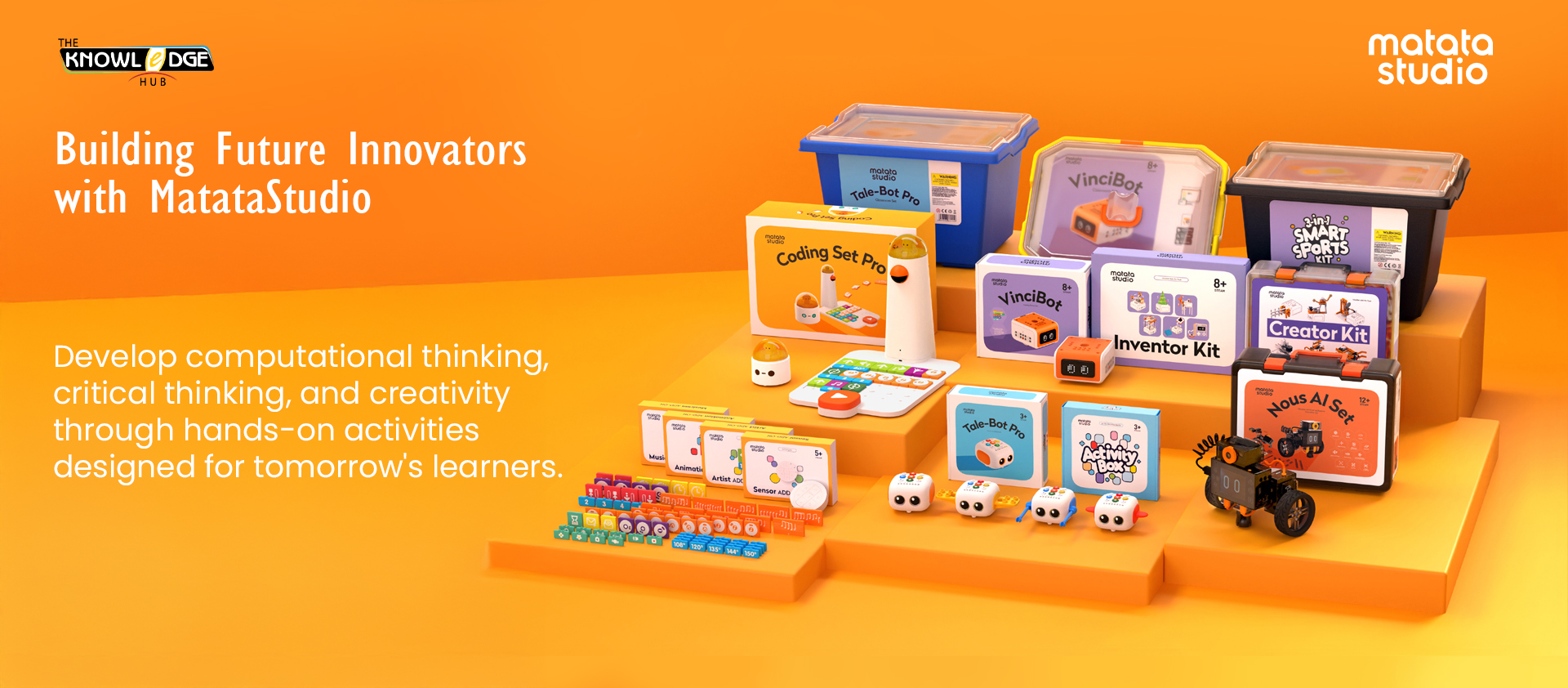
MatataStudio transforms coding education into an exciting adventure through interactive, screen-free activities that encourage exploration and discovery. Children manipulate physical coding blocks, solve engaging challenges, and immediately observe the outcomes of their decisions.
This tactile approach keeps students actively involved while reducing screen time, making learning both enjoyable and meaningful.
Building Essential Future Skills
MatataStudio is designed to nurture skills that extend far beyond programming. As students complete activities, they naturally develop:
- Logical reasoning
- Critical thinking
- Creativity
- Problem-solving
- Communication
- Collaboration
- Spatial awareness
- Sequential thinking
- Confidence in experimentation
These competencies prepare children not only for STEM careers but also for leadership, entrepreneurship, and innovation across every industry.
Screen-Free Learning That Inspires Creativity
For younger learners especially, minimizing unnecessary screen exposure while maintaining engagement is increasingly important. MatataStudio addresses this need with intuitive, interactive learning experiences that encourage movement, teamwork, and creativity.
Students build programs physically, observe outcomes, refine their ideas, and celebrate successful solutions. This iterative process helps children understand that mistakes are opportunities to learn rather than obstacles to success.
Teachers also benefit from structured lesson plans and classroom-ready resources that make implementation simple and effective.
Preparing Students for Tomorrow
Innovation begins with curiosity. When children are encouraged to ask questions, explore possibilities, and solve challenges independently, they develop confidence that extends into every aspect of learning.
Educational institutions looking to create future-ready classrooms increasingly recognize the value of nurturing computational thinking from an early age. By combining creativity with structured problem-solving, MatataStudio helps build a strong foundation for lifelong success.
As technology continues to evolve, the ability to think critically, adapt quickly, and solve problems creatively will remain invaluable. Investing in these foundational skills today empowers students to become tomorrow’s innovators, creators, and leaders.
Conclusion
Curiosity today. Innovation tomorrow.