

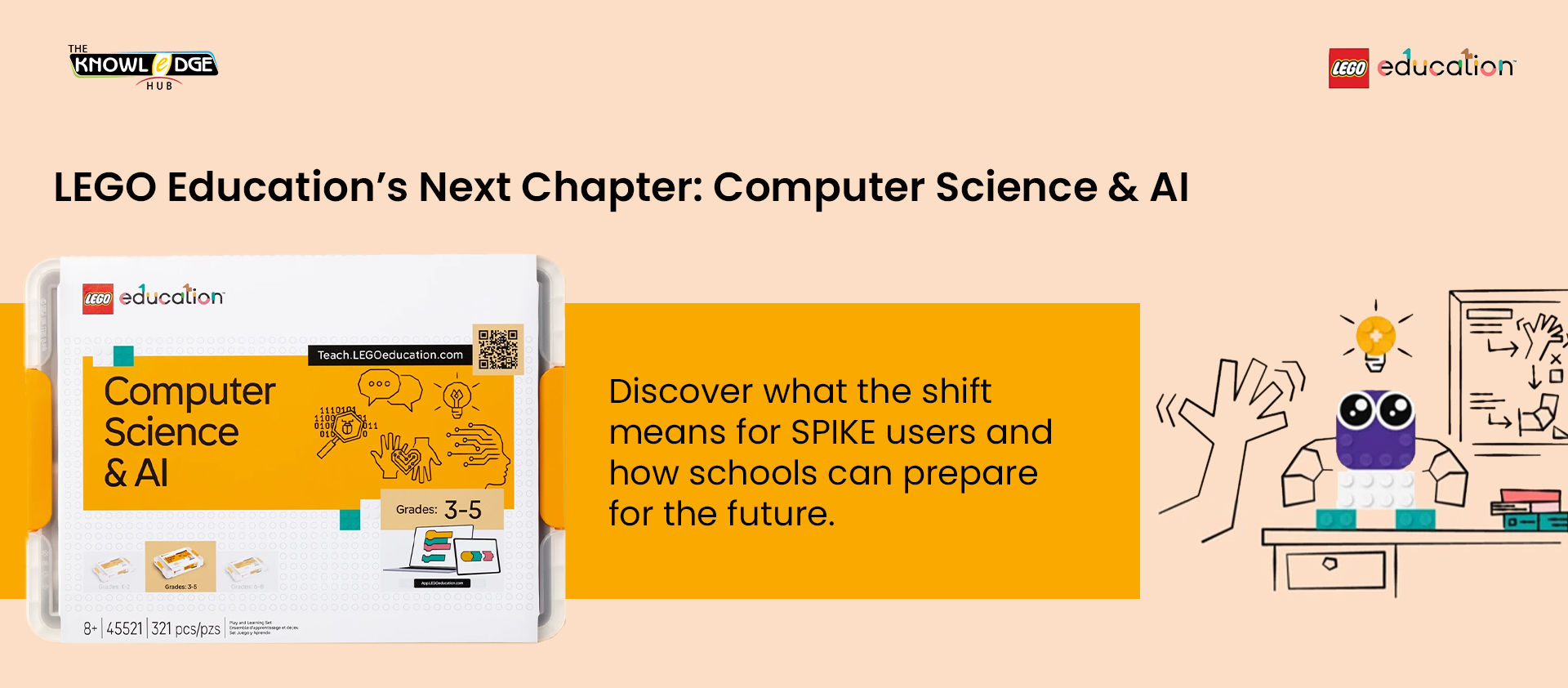
Technology education is entering a new phase. As artificial intelligence, coding, computational thinking and digital skills become increasingly important, schools are looking for learning solutions that prepare students for a rapidly changing world.
In response to this shift, LEGO® Education is evolving its portfolio with a stronger focus on Computer Science and AI education.
For schools already using LEGO® Education SPIKE™, this transition may raise an important question: What happens to our existing SPIKE investment?
The good news is that schools do not need to stop using SPIKE simply because the portfolio has retired. LEGO® Education has confirmed continued software support and access to learning resources through June 30, 2031, giving schools time to continue using their existing resources while planning their next steps.
Why Is LEGO® Education Moving Toward Computer Science and AI?
Computer Science and AI are becoming essential areas of education.
Students are no longer only learning how to use technology. They increasingly need to understand how technology works, how algorithms make decisions, how data can be used, how systems can be designed and how artificial intelligence can be used responsibly.
This creates new opportunities for schools to develop:
- Computational thinking
- Coding and programming skills
- Problem-solving
- Digital literacy
- Artificial intelligence awareness
- Creativity and innovation
- Collaboration and communication
LEGO® Education’s move toward Computer Science & AI reflects this broader evolution in technology learning.
Importantly, the shift does not mean moving away from hands-on learning. Instead, it brings hands-on building, coding and problem-solving into a broader learning experience focused on the technologies shaping the future.
What Does the SPIKE Retirement Mean for Schools?
LEGO® Education has officially retired the SPIKE portfolio, including SPIKE Essential and SPIKE Prime. Direct sales of the portfolio ended on June 30, 2026, although reseller availability may vary while remaining stock is available.
However, retirement does not mean that schools must immediately stop using their existing SPIKE sets.
LEGO® Education states that the SPIKE App will continue to be supported until June 30, 2031. During this period, LEGO® Education will continue to provide bug fixes and support for current versions of supported operating systems, including Windows, macOS, Chromebook, Android and iOS.
The existing SPIKE curriculum and related resources will also remain available through June 30, 2031.
This gives schools an important period of continuity.
Retirement Does Not Mean Immediate Loss of Support
For school leaders, one distinction is particularly important:
Product retirement and software support are not the same thing.
Schools that already have SPIKE equipment can continue using it for classroom learning, summer programmes and after-school activities during the support period. LEGO® Education specifically reassures users that SPIKE remains a valuable tool for teaching STEAM skills and concepts.
There will not, however, be new SPIKE features after June 30, 2026. The remaining support period is focused on maintaining the existing experience rather than adding new functionality.
What Happens to SPIKE After 2031?
The June 30, 2031 date is an important milestone for schools planning their technology education strategy.
After this date, the SPIKE App will remain available online, but LEGO® Education will no longer provide updates or bug fixes. As a result, compatibility with operating systems released after that date cannot be guaranteed.
This means schools do not need to make an immediate, disruptive change, but they should begin thinking about their longer-term Computer Science and AI strategy.
From SPIKE to Computer Science & AI
The transition can be viewed as an opportunity rather than simply an end-of-product announcement.
LEGO® Education Computer Science & AI is designed to carry forward hands-on coding and technology learning while introducing students to new Computer Science and AI concepts.
The new approach combines physical building, digital applications and coding experiences designed around relevant Computer Science and AI learning outcomes. LEGO® Education also states that its new Computer Science & AI solution uses elements from the LEGO® System in Play, allowing those elements to work with LEGO® bricks from previous sets.
For schools, this creates an opportunity to gradually expand their existing technology programmes.
Instead of thinking:
“We have to replace everything.”
School leaders can think:
“How can we build from what we already have toward the skills students will need next?”
A Practical Transition Strategy for Schools
Schools using SPIKE can take a phased approach.
1. Continue Using Existing SPIKE Resources
There is no need to abandon existing classroom programmes simply because the SPIKE portfolio has retired.
Teachers can continue using existing sets, lessons and activities during the support period while making full use of the investment already made.
2. Start Preparing Teachers
The transition to Computer Science and AI is not only about purchasing new technology.
Teacher confidence is equally important.
Professional development can help educators understand coding, computational thinking, AI concepts and how these skills can be integrated into existing classroom activities.
3. Continue Using Existing SPIKE Resources
Schools can begin evaluating the new LEGO® Education Computer Science & AI solutions alongside their existing programmes.
This allows educators to understand how the new approach fits their curriculum, student age groups and technology-learning objectives.
4. Create a Long-Term Technology Roadmap
Rather than making a rushed replacement decision, schools can create a phased roadmap covering:
Existing SPIKE investment → Teacher preparation → Computer Science & AI exploration → Future-ready technology curriculum
This approach provides continuity while preparing students for emerging technologies.
What About FIRST® LEGO®® League?
Schools and teams involved in FIRST® LEGO®® League should also consider the transition timeline.
LEGO® Education states that SPIKE can continue to be used through the 2027–2028 season. After that, SPIKE and other legacy LEGO® Education solutions will no longer be eligible for participation under the changed FIRST LEGO® League experience. Teams can transition to LEGO® Education Computer Science & AI, which is available for the relevant programme starting from the 2026–2027 season.
For competition-focused schools, this makes early planning particularly valuable.
The Bigger Picture: Preparing Students for an AI-Driven Future
The move toward Computer Science and AI reflects a much bigger change in education.
Students will increasingly encounter artificial intelligence in their studies, workplaces and everyday lives. Schools therefore have an opportunity to move beyond simply teaching students how to operate technology and begin helping them understand, question, create and innovate with it.
Hands-on learning remains an important part of that journey.
Building a model, writing code, testing an idea, identifying an error and improving a solution can develop the same habits of curiosity and problem-solving that students need when working with emerging technologies.
The technology may evolve, but the underlying learning principles remain valuable.
A Transition, Not an Ending
For schools already invested in LEGO® Education SPIKE, the message is clear: there is no need for panic or an overnight transition.
Existing SPIKE solutions can continue to support classroom learning, while the SPIKE App and related resources remain supported through June 30, 2031. At the same time, schools can begin preparing for the next stage of Computer Science and AI education.
The future of technology education is moving forward.
For schools, the opportunity is to use the transition period wisely — building on existing investments, supporting teachers and gradually introducing students to the Computer Science and AI skills that will shape tomorrow.
The goal is not simply to replace one product with another. It is to prepare learners for what comes next.