

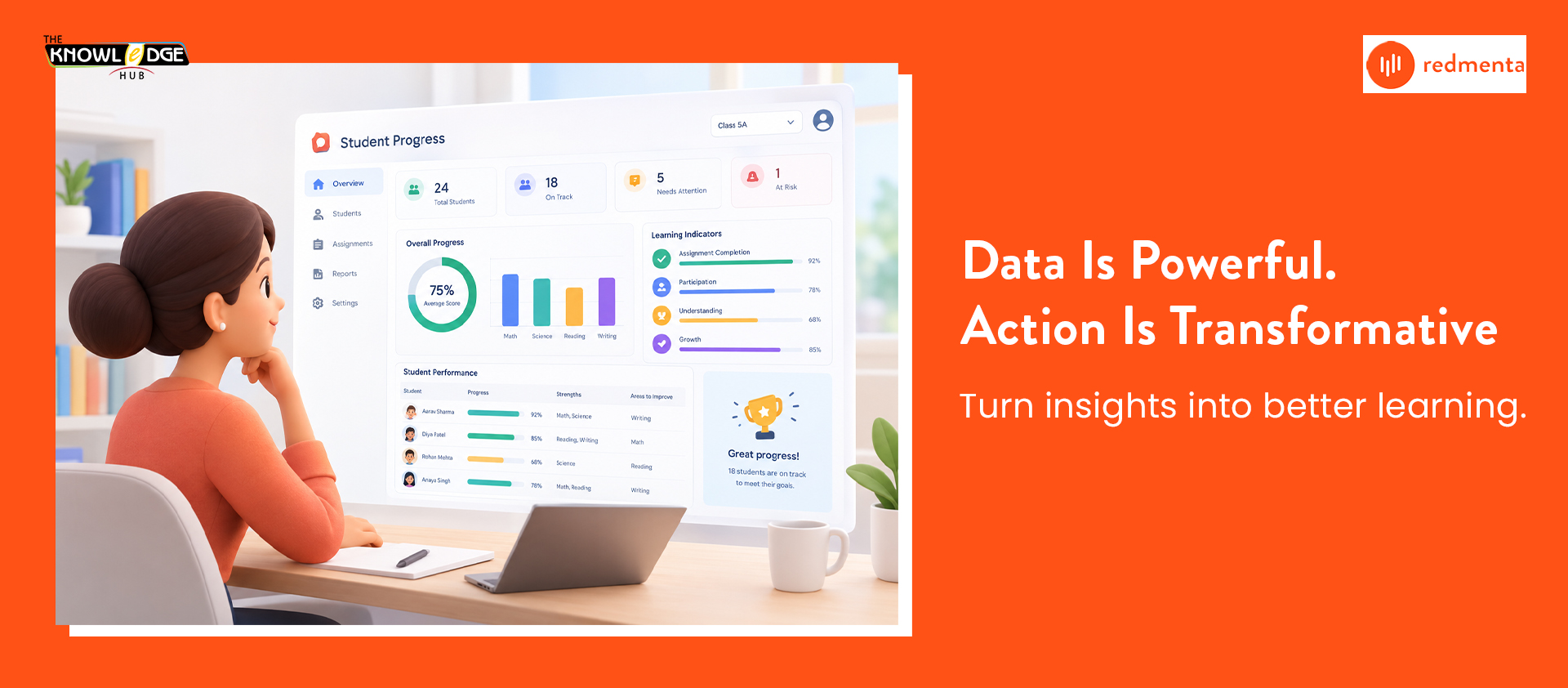
Every classroom generates valuable learning data. From quiz responses and assessment scores to patterns in student participation, this information can reveal how learners are progressing and where they may need additional support.
But collecting data is only the beginning.
The real value of learning analytics in education comes from understanding what the data means and using those insights to make better teaching decisions.
When educators can identify strengths, challenges, and learning gaps, they can move beyond a one-size-fits-all approach and provide students with more targeted learning support.
What Is Learning Analytics in Education?
Learning analytics refers to the process of collecting, analyzing, and interpreting information about student learning and performance.
In a traditional classroom, a teacher may need to review multiple assessments manually to identify patterns. While teacher observation remains essential, digital learning platforms can make this process faster and more structured by bringing student performance information together.
Learning analytics can help educators understand questions such as:
- Which concepts are students struggling to understand?
- Which students may need additional support?
- Which areas have been mastered successfully?
- Where are common learning gaps appearing across a class?
- How is student performance changing over time?
These insights can provide teachers with a clearer picture of learning progress.
From Student Data to Actionable Insights
Data alone does not improve learning. Actionable insights do.
For example, if an assessment shows that a large number of students are struggling with the same concept, an educator can revisit that topic, introduce another explanation, or provide additional practice.
Similarly, if a student consistently performs well in a particular area, the teacher can introduce more challenging activities rather than continuing with content the student has already mastered.
This turns student performance data into practical teaching strategies.
Instead of asking, “How did my students perform?” educators can begin asking, “What should I do next?”
That shift is at the heart of effective data-driven education.
Supporting Personalized Learning
Every student learns differently. Some may need additional practice, while others may be ready to move ahead. Identifying these differences can be difficult when educators have limited time and large classrooms.
Learning analytics can support personalized learning by helping teachers recognize individual learning patterns.
Performance insights can highlight areas where students are confident and areas where they require reinforcement. Teachers can then adapt activities, provide targeted feedback, or recommend additional resources based on individual needs.
This does not mean technology replaces the teacher. Instead, it gives educators better information to support the professional decisions they already make every day.
Identifying Learning Gaps Earlier
One of the biggest advantages of learning analytics is the ability to identify potential learning gaps before they become larger challenges.
A student may achieve an acceptable overall score while still struggling with specific concepts. Looking beyond a single final grade can reveal these smaller patterns.
When educators identify these challenges earlier, they can provide targeted intervention and additional learning opportunities.
For schools working toward more responsive and inclusive learning environments, this can make performance data a valuable part of the teaching process.
How Redmenta Supports Data-Driven Learning
Digital assessment and quiz platforms can make it easier for educators to gather meaningful learning information without adding unnecessary complexity to classroom workflows.
Redmenta helps educators create AI-powered quizzes and use student performance insights to better understand learning progress.
Instead of treating assessment as simply a way to assign a score, educators can use assessment results to identify strengths, challenges, and areas that require further attention.
This creates a more continuous connection between assessment and instruction.
Teachers can use these insights to refine learning activities, provide more relevant support, and make informed decisions about what students need next.
Turning Better Insights Into Better Learning
The goal of learning analytics is not to collect more information. It is to make the information educators already have more useful.
When schools combine meaningful assessment, learning analytics, teacher expertise, and personalized support, student data can become a powerful tool for improving learning experiences.
The process is simple in principle:
Better insights → Better decisions → Better support → Better learning outcomes.
As schools continue to adopt digital learning environments, the ability to understand and act on student performance data will become increasingly important.
With the right tools and strategies, every assessment can become more than a score. It can become an opportunity to understand learners better, respond to their needs, and help every student move forward with greater confidence.