

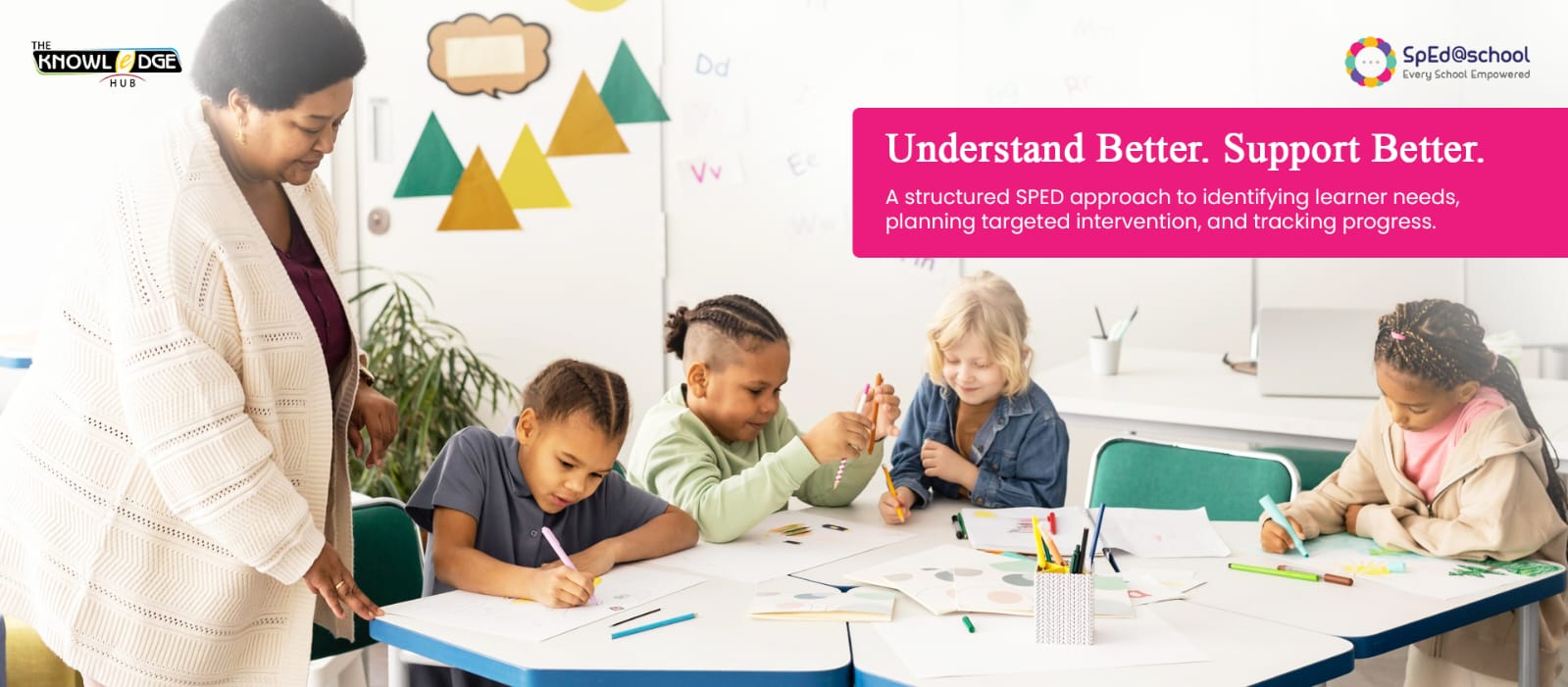
When a learner is struggling, the first step should not be to assume what they need. Effective student learning support begins with understanding where the learner is, identifying their individual needs, and planning the right support.
For schools supporting diverse learning needs, this requires more than observation alone. A structured process of identification, assessment, intervention, and progress monitoring can help educators make informed decisions and provide support that is purposeful and personalized.
This is where SPED can support schools with a structured approach to managing the learner support journey.
Understanding the Learner Comes First
Every learner has different strengths, challenges, learning patterns, and support requirements. When a learner experiences difficulty, educators need a clear understanding of what may be affecting their progress before deciding on an intervention.
A structured student learning support process helps schools move from assumption to evidence.
Instead of asking, “What should we do?” the process begins with:
- Where is the learner currently?
- What are their strengths and areas of need?
- What type of support may be appropriate?
- Is intervention helping?
- What should happen next?
This approach allows educators to make support decisions based on the learner's individual needs.
Identification and Assessment
Early identification can play an important role in providing timely support. Through structured assessment, schools can gather relevant information about a learner's academic, developmental, behavioural, communication, or other identified areas of need.
SPED provides a structured framework that can help schools organize information and understand learner needs more systematically.
The objective is not simply to identify a difficulty. It is to develop a clearer picture of the learner so that appropriate support can be planned.
From Assessment to Targeted Intervention
Once needs have been identified, the next step is creating an appropriate intervention plan.
Effective intervention should be connected to the learner's identified needs and have clear objectives. Rather than applying the same strategy to every learner, educators can use assessment information to determine what type of support may be most relevant.
With SPED, schools can bring greater structure to this process, helping educators move from identification and assessment to planned intervention.
This creates a more consistent approach to supporting learners across the school.
Monitoring Progress Matters
Providing intervention is only one part of the process. Schools also need to understand whether the support being provided is making a difference.
Student progress tracking allows educators to monitor changes over time, review outcomes, and make informed decisions about the next steps.
A learner's needs may change as they develop. An intervention that works at one stage may need to be adjusted later. Continuous monitoring therefore helps ensure that support remains responsive rather than becoming a fixed plan.
SPED's structured approach helps schools maintain this connection between assessment, intervention, and progress monitoring.
Creating a More Personalized Support Journey
Effective personalized learning support is not about creating a completely separate system for every learner. It is about using meaningful information to understand individual needs and making appropriate decisions based on that information.
With a structured SPED approach, schools can establish a clearer support journey:
Identify → Assess → Plan → Intervene → Monitor → Review
This helps bring greater consistency to the way learner support is managed while giving educators the information they need to make better-informed decisions.
Supporting Better Outcomes Through Understanding
The most effective student learning support starts with understanding.
When schools identify learner needs carefully, plan targeted interventions, and monitor progress consistently, support becomes more purposeful. Educators can respond to individual needs rather than relying on assumptions, while learners receive support that can evolve with their development.
SPED helps schools bring structure to this journey—from identification and assessment through intervention and progress monitoring.
Because when we understand better, we support better.