
LEGO® Education Professional Development Supports Educators with Meaningful Teaching Methodologies to Promote Active Learning In Classrooms

LEGO® Education Professional Development Supports Educators with Meaningful Teaching Methodologies to Promote Active Learning In Classrooms

LEGO® Education Professional Development Supports Educators with Meaningful Teaching Methodologies to Promote Active Learning In Classrooms

A teacher can deliver lessons successfully, only when she is prepared for the class well in advance and has all the resources planned out. For delivering an hour of lecture, it takes double the time for preparation. So, keeping aside 2 hours each day for researching topics, making lesson plans, and arranging for appropriate teaching aids, is absolutely necessary to be able to conduct class smoothly.

What is LEGO® Education Professional Development?

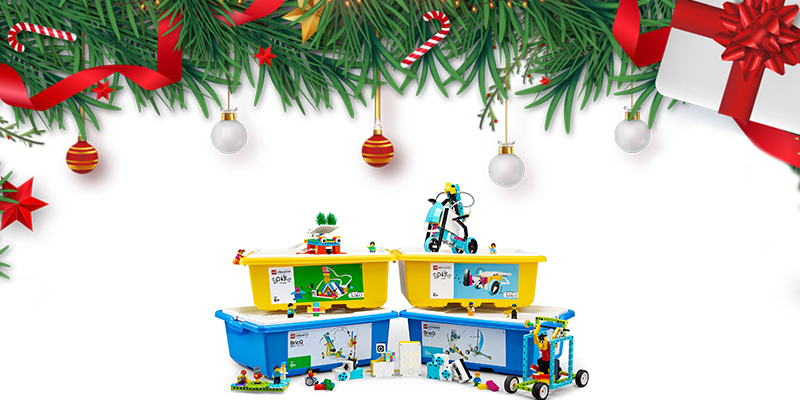
Understanding the needs & struggles for preparatory efforts by teachers, Lego® Education has devised a personalised learning program for educators to learn & practice STEAM related topics that can be delivered through hands-on medium using various LEGO® Education kits available in the Middle East and other GCC regions.

When a teacher demonstrates enthusiasm, only then will students look forward to attentively attending the classroom sessions and have fun themselves. Lego® Education trains the trainer to follow techniques to be competent enough to create engaging experiences in the classrooms and unique instructional skills, to foster student development. And for doing this, teachers are rewarded with micro-credential points, which is otherwise unheard of in any other learning program. In this way, Lego® Education not only cares about the progress of children but creates a strong ecosystem for teachers to stay interested and upgrade their STEAM capabilities.

Four Important Core Competency Strategies

To facilitate positive outcomes in students, Lego® Education believes in focusing on 4 important pillars, that assure maximum success;

The 21st Century Skills further comprise the following:

Facilitating Collaboration and Teamwork Group projects lead to brainstorming and exchange of ideas as a team-bonding exercise.
Facilitating Pupil Communication Children express their thoughts and learnings with each member of the team and also get acquainted with presentation skills.
Facilitating Creative and Critical Thinking Thinking out of the box to solve important problems leading to new solutions will develop confidence and creativity.

Further Delving on STEAM Concepts:

Facilitates Science Learning The benefits of scientific investigations are elaborated and children are encouraged to start using scientific terms and vocabulary.
Facilitating Engineering Design Learning Learning some key engineering characteristics and using them to test & improve solutions.
Facilitating Computer Science Learning Pupils start to understand the benefits of computer science learning and follow step-by-step sequencing.

Improving Classroom Management Techniques:

Managing Small Groups Smart classroom management starts with identifying student capabilities and dividing them into appropriate groups.
Managing Lessons and Materials Designing and adapting the resources as per the child’s progress. Managing logistics and tending to troubleshooting issues & technical setbacks.
Managing Hands-on Learning Educators should be able to communicate the purpose of hands-on learning and device norms & procedures to facilitate it.

Preparing Proper Pedagogy:

Using Formative Assessments Evaluating a child’s metacognitive skills and providing constructive feedback
Facilitating Learning Through Play Create a learning environment that fosters play and encourages productivity through play
Facilitating Project-Based Learning Can make children understand the tasks during, after and before, the project work is completed.

As we can see from the above tabulations, LEGO® Education Professional Development gives educators access to knowledge, product trainings, and supports their thirst for further enrichment through Learning Quests and Learning Bursts. Since the modules are digitally accessible, educators from all over the world, including Dubai and other UAE regions can get acquainted with the practice programs.

Learning Bursts – Short bite-sized modules focusing on single high-level competency. Just 5 – 10 minutes of duration.

Learning Quests – These are slightly longer lessons and focus on 4 competencies. Each one is about 30-40 minutes each.

The self-guided video tutorials are excellent for teachers to refer to topics from the convenience of their homes and at any time of the day or night. But if you happen to get stuck, the LEGO® Education helpers are at your service and will guide you through your professional development journey.

Contact us

Fill in your details below or send us an email on info@knowledge-hub.com

Learning To Use an Abacus: Helps Boost Confidence and Prevents Math Phobia

Learning To Use an Abacus: Helps Boost Confidence and Prevents Math Phobia

Learning To Use an Abacus: Helps Boost Confidence and Prevents Math Phobia

An Abacus is a wooden frame with a series of sticks (horizontal or vertical) that have 10 beads on each layer. The colorful beads are used to teach children counting. The aim is to improve mental calculations like addition, subtraction, division, and multiplication, which are the basis of learning Math. Abacus was first used during Babylonian times in 2,400 B.C. by African and Asian traders to help them with counting large numbers. Through Abacus, children develop lifelong skills that would help them with cognitive development.

Math as a subject is stressful for kids, so much so that they avoid studying it at any cost. So how can educators get children to focus and become friends with numbers? Thanks to platforms like Mathletics, institutes now have a dedicated program that introduces fun math lessons, alongside tracking results and formulating interesting teaching aids. Mathletics is available in the Middle East region, including Dubai and GCC.

An abacus is another popular tool used to teach math by manipulating the beads and moving them across the stick which needs high levels of concentration by the participant.

teacher-showing-abacus-to-children

Enlisted below are a few advantages of using an Abacus

Improves Concentration

Essentially, good eye-hand coordination is involved in navigating the beads up and down or side-wards, in an orderly manner to solve a difficult math calculation effectively. After sufficient practice, there will be a point where the child will not even need a physical abacus device but will perform the calculation in their head. Slowly and gradually, he will get the confidence to solve large numeric problems by the method of visualization, without the need to use a device or pen & paper.

Enhances Speed of Calculation

Studies have shown that children who are trained to use an abacus are able to produce the correct answer in a shorter span of time, rather than those who have never tried working with one. When students use their right fingers to move the beads, the left side of their brain sensors gets activated, and when the left hand is used, the right brain gets active. This stimulation enables one to perform calculations faster and improve their memory. Your child will soon be a human calculator, capable of solving sums faster than a scientific calculator.

Induces Creativity

Problem-solving requires the child to be creative. Using an abacus prepares children to solve problems with a cool & calm sense of mind and apply creative techniques, rather than panicking. Just like you would enroll your kiddo into dance class or music class to boost his confidence and creativity, the abacus is another such after-class program that helps improve creativity and also sharpen math skills. Since the beads are colorful, it excites students to experiment with equations and motivates them to take up more challenging calculations, rather than shying away.

Focuses on Logical Thinking

Capabilities Have you decided what your next move is going to be? Which bead needs to move where? The child now has to apply logic and reasoning. This comes with practice, and using appropriate techniques to solve different kinds of problems, is an art that one masters over time. Solving fractions, decimals, and integers becomes seamless by applying simple logic

Reduces Stress

According to research, it is found that working with an abacus improves mental health by reducing the effects of stress. Since it has a game-like approach vs. studying out of a textbook, learners are more likely to create a positive association with the abacus, rather than resisting opening a book to study. Abacus training reduces anxiety and students become almost 30% less likely to get nervous about an upcoming exam.

Motor Skills

The movement of beads requires some level of physical dexterity and a good tripod grip. This enhances your little one’s pincer movements and the wrist supports in moving the beads across the rod, thereby developing fine & gross motor skills. When small muscles are worked upon, everyday activities like buttoning a t-shirt, holding a crayon, threading a string, etc. becomes easier. Since the beads are of different colors, one also learns to identify the names of colors, which improves their sensory skills.

Now that you know the advantages of an abacus set, why not be a Secret Santa and present it to your little one as a gift this Christmas Season? The abacus set is readily available in UAE in any toy shop or you can order it online from Amazon.

Contact us

Fill in your details below or send us an email on info@knowledge-hub.com

Ways To Encourage Positive Development In Children

Ways To Encourage Positive Development In Children

Ways To Encourage Positive Development In Children

Most parents want their children to be good at studies and co-curricular activities but forget to pay emphasis on proper behavior and personality development. Success is not only measured by good grades and winning medals at school but is equally attributed to demonstrating positive character traits and being a good person at heart.

A positive parenting approach focuses on preparing kids to be well-rounded individuals so that they can achieve career goals, and personal goals, while also contribute to the upliftment of society, by balancing all aspects of life seamlessly.

To inculcate such high-value practices, educators & parents must start by setting an example and encouraging open communication, so that children are comfortable sharing their thoughts, and fears, & in turn learn a great deal by asking questions. Here are a few techniques to practice every day, to train your child from an early age, to lead emotionally satisfying & purposeful lives:

#1 Be a Role Model

Children as young as 14 months copy what they see around them and the two-year old’s start imitating the behaviors of people they interact with. This means that children have great observation skills and a big part of their personality development will get affected by their surroundings. If you as an adult demonstrate good traits, the child will notice and learn the same. Every action of yours is being carefully evaluated and accessed, so be sure to demonstrate; healthy eating habits, speaking positively, using proper body language, always being cheerful, respecting everyone, and setting realistic goals.

#2 Inculcate a practice of Learning

Learning doesn’t necessarily have to be in the classroom, it can happen anywhere. Probably enrolling into a hobby class can teach children how to play an instrument or learn a new language; like Spanish. Reading Eggs is an excellent platform used by most students in Dubai and other Middle East regions to practice vocabulary and teach kids the rules of phonics in a fun & engaging way. Simply download the Reading Eggs App or subscribe to their monthly magazines. There are numerous avenues for hobby classes in Dubai and GCC regions, and signing up for one is only a matter of a click on your phone. Occasionally, you might want to encourage kids to visit a library over the weekend and spend time browsing through books. The aim is to make your kid a lifelong learner!

#3 The Act of Contentment

It is natural for children to want toys, gadgets, games, & anything that their friends have. Wanting the latest edition of ‘smart watch’ just to flaunt it around and not to feel left out from the crowd, is actually an unhealthy behavior. Contentment is a state of satisfaction that puts your mind & body at ease. Practicing contentment on an ongoing basis will only increase the ‘happiness quotient’ and foster a feeling of awesomeness. To start with, teach kids to be grateful for the smallest things they have; house, food, good health, education, and friends. Ask them to start their day with a prayer and read out all the things they already have, thereby thanking God. Teaching the value of money is equally important and a habit of savings in a piggy bank ensures that they restrict the urge of spending, to save for a better future tomorrow.

#4 Teach Them To be Resilient

While growing up children are constantly experiencing positive and negative situations around them. Being scolded at is very common and getting into a tiff with a fellow student happens on & off. All these little instances seem small but can affect the child’s mental & emotional well-being to a great extent. Apart from day-to-day stressors, there could be some major episodes, like having to deal with death in the family or feeling traumatic due to unfavorable conditions at home. Pilling up negative emotions & experiences plays on the child’s mind and greatly affects his morale. To cope with these unfavorable stressors, teach your child to practice self-care. Start by encouraging them to take part in activities that uplift their mood, which could be related to sports or drama. Ask your child to follow a healthy schedule and sleep & eat on time. Talk your child through his trauma and explain that everything is temporary. Practice positive affirmations every single day and inculcate the habit of helping others, as this gives the child more confidence. Most importantly have loving bonds with family members and create an environment of free-flowing conversation between all.

Contact us

Fill in your details below or send us an email on info@knowledge-hub.com

Interesting Hobbies That Improve Coding Skills

Interesting Hobbies That Improve Coding Skills

Interesting Hobbies That Improve Coding Skills

If you think coding proficiency can only be achieved by learning a difficult programming language that is gibberish to understand, you might want to redefine your statement. It is a misconception that only if you are good with technology, can you practice programming and be a successful coder. Nowadays, even if you are raw at STEAM subjects which are quite in demand in schools across UAE, you can take it upon yourself to start your coding journey. Basically, there is no age bar, no special educational background, or any super skill, that you need to possess in order to develop coding skills.

Having said that, coding is now becoming a compulsory subject in schools, especially across Dubai and other advanced Middle East regions. Here are a few advantages that parents need to know, to strengthen their resolve about encouraging young learners to be committed to their efforts of learning to code in school and after-class programs.

  • The world is becoming digitalized, and most employment opportunities are revolved around those who have some experience in programming skills
  • New inventions and innovations are possible with the advent of coding
  • Robotics and Artificial Intelligence are the talk of the town, making our lives easier
  • Coding inculcates problem-solving abilities
  • It encourages creativity
  • Coding improves computational thinking
  • It is one of the highest paying professions and much in demand


Hobbies that improve coding skills

You must be wondering what coding has to do with pursuing a hobby? Can participating in a hobby improve some coding skills? Read on to find out;

Blogging

One cannot be a successful blogger just by being a geek and sitting behind the computer screen. Building an app requires designing, graphics, curating content, and presenting the back-end and front-end elements in an orderly manner. Practicing blogging as a hobby is universal and also popular in GCC regions, and it opens up a plethora of opportunities for budding coders to explore topics, research the latest trends, and share information with a community of like-minded members. Knowing what’s being discussed on the internet and what the preferences are of digitally savvy audiences, helps in gaining some direction in which you can prepare your app or software program.

Playing Video Games

Spending too much time on video games often gets kids into trouble, but not anymore! Playing video games for an hour or two and defeating a battalion of warships, does have its own advantages. Firstly, the challenging levels and complexity of gameplay keeps your mind agile. Secondly, it develops a practice of quick thinking where you have to devise a strategy to be able to make smart moves. Lastly, teamwork is important if you are playing a multi-player game and coordination is key to winning big. All these skills come in handy while strategizing a coding platform that is unique and makes pathbreaking waves in the industry. Lead your child into his coding journey by subscribing to the Code Monkey platform. CodeMonkey is an award-winning tool that teaches kids of ages 4 years to 14 years from Dubai and other Middle East Regions, real-world coding languages such as; Python and CoffeeScript.

Art

Needling, painting, mandala art, and doodling, require a lot of concentration and creativity. Similarly, a programmer needs to think out of the box and go beyond the ordinary. The ability to understand the problem and create a valuable application that provides a solution to the existing problem is like art in itself. Devising a solution that has never been dealt with before needs a fresh outlook and going back to your drawing board can offer a refreshing perspective to help the coder be a better programmer.

Cooking

What similarities does cooking have with coding? Well, just as a chef would follow the recipe step-by-step, coding is a practice that requires following step-by-step procedures. The ingredients for a smart coder are to put together all layers which include; analyzing the problem, designing an algorithm, preparing a flow chart, coding, debugging, testing, and finally running the code. Every step is vital to the conceptualization of a software or app, and nothing should go amiss, just like a chef can’t manage to miss out on any ingredient.

Contact us

Fill in your details below or send us an email on info@knowledge-hub.com

Math Lessons for Kids by Mathseeds

Math Lessons for Kids by Mathseeds

Math Lessons for Kids by Mathseeds

The pandemic has steamrolled us into the digital era and more so beneficially. Initially, educational institutes took a bit of time to get their e-learning bearing, but once they got into the swing of things, schools in the Middle East especially in Dubai flourished at the remote learning concept and proved that effective learning can take place from home as well. The UAE has since then discovered numerous e-learning platforms that provide learning in a fun, educative and engaging manner.

One such e-learning platform widely used especially in GCC areas is Mathseeds. It is the brainchild of 3P Learning Mathletics and Australian-owned Blake E-learning. Mathletics is the world’s leading online math’s program with over 3 million students using it world over. Mathseeds is a premium learning programme for children between the ages of 3 to 9 years which aims to teach early math skills in a fun and motivating way. It keeps children engaged and entertained throughout their learning journey.

Mathseeds has award-winning learning resources that are aligned to numerous international school curriculums. It works at individual levels as per the aptitude of the learner and hand-holds from there on. The learners will complete a series of self paced lessons that will build their confidence, rejoice their achievements and encourage them to keep learning. Let us discuss some of these lessons and games to get a deeper understanding of how Mathseeds can be used to our benefit.

Lessons 1 to 50 are teachings for learners who have little to no maths skills. The basic fundamentals of maths are introduced here along with rudimentary 2D & 3D shapes and their recognition. For example, the lesson “Catching the butterfly” consists of colourful butterflies flying past on the screen; each carrying a number. The learner must recognise specified numbers and guide the butterflies into the net. This allows them to distinguish between different numbers in an interesting and mildly challenging manner.

Another lesson involves Waldo and Ruby assisting in teaching comparison (big and small objects) to young math students. Children have to identify which objects are big and which ones are small and then segregate them. As they progress, players become more familiar with the two loving characters Aldo and Ruby who are involved in teaching them other mathematical concepts as well. Students look forward to undertaking these challenges and are engrossed in the learning process, as they are presented in an enjoyable, lively and colourful manner.

Lessons 51 to 100 cover the topics related to counting of numbers backwards and double-digit math functions of addition and subtraction. These lessons also cover the topics of learning how to tell the time and volume of objects using songs and games.

Lessons 101 to 150 are included in Year 2 where they touch upon new concepts as well as reinforce the skills previously learnt. Number counting upto 1000, place value, multiplication and division are all taught at this level. Tally charts and graphs are those curriculum topics that are covered right from the earlier lessons. With every lesson, complexity levels are increased bit by bit to keep things stimulating and age-appropriate.

Lessons 151 to 200 cover a range of topics from order of numbers to geometry and measurements. Themes such as area and perimeter are taught in a simple manner first by counting the number of squares one can fit within a given image. The students will learn to count squares to find out exactly what the area of that image is. Gradually, learners begin adding formulae (Ex. Length x breadth) to these topics which involves using the measurements of the lengths and breadths of the given shapes. The topic of Currency too is explored in depth at this stage in relation to terminology, counting and word problems.

Studies have shown that students achieve more through Mathseeds as it is self-paced and therefore stress-free as the learner is not pressured to keep up with the rest of the class. This leads to better student satisfaction resulting in more enhanced learning. Since it has aids such as slideshows, gamification, videos, images etc.; retention is faster and continuous as compared to physical school. Mathseeds lets the learner progress at his own pace, tailoring the program and personalising it to every preferred style. Progress is recorded and analytics utilized, to provide educational support, assessment and tracking opportunities.

Mathseeds is a boon to math enthusiasts who enjoy numbers and even for those who don’t. With its attention to detail and appealing maths games, Mathseeds is proven to increase maths skills in just 15 minutes of usage per day.

Contact us

Fill in your details below or send us an email on info@knowledge-hub.com

Different Types of Triangles & Detailed Explanation of Each

Different Types of Triangles & Detailed Explanation of Each

Different Types of Triangles & Detailed Explanation of Each

What is a Triangle?

Triangle is a figure that consists of three edges and three vertices. To make a triangle we need to draw three straight lines and join them together. The sum of all the angles of the triangle adds up to 180 °. This is common for all the different types of triangles that we are going to learn about in this Blog today.

What is a Vertex?

A point where two sides of a triangle meet is called the vertex of the triangle. In the below △ ABC sides AB and BC are intersected at point B, therefore, B is called the vertex. Similarly, sides AC and BC are intersected at point C, so C is the vertex, and for sides AB and AC, the vertex is A.


Different Types of Triangles

As we have read earlier, the sum of all the angles of the triangle is 180 °, but, does that mean that all triangles look the same? In Geometry, there are three main classifications of triangles which are as follows:

Scalene Triangle

Scalene Triangle

In a scalene triangle, all sides of the triangle are of different measures. If you take a ruler and check the length of sides AB, AC, and CB, you will notice that each one has a different measure. Also, all the angles of the scalene triangle are different degrees. Use a protractor to measure the angles and you will find that the angles are also different, though their sum is 180 °.

Isosceles Triangle

Isosceles Triangle

In an isosceles triangle, two sides are equal and the length of the third side is not the same as the other two. In the below diagram sides, DE and EF are of the same length and thus it is categorized as an isosceles triangle. Notice the interior angles of the triangle below? Theory states that the angles opposite to the equal sides of the isosceles triangle are of equal degrees. In △ DEF, where sides DE and EF are of equal length, ∠D = ∠F (vertex D and vertex F are of the same degree)

Equilateral Triangle

Equilateral Triangle

As the name suggests, an equilateral triangle has equal sides and qual measure of angles. Each of the interior angles measures 60 °. In △ PQR, sides PQ, QR, and PR are of the same size, and ∠P = ∠Q = ∠R = 60°.

As an educator, you must be wondering how to teach kids ‘types of triangles’ in an engaging manner, such that they remember the concepts thoroughly. Well, the Mathletics online platform integrates the same curriculum of International Schools in the Middle East & around the world, to offer well-researched modules to students. Learners can first access the resources to understand the basic concept and then put their skills to test by engaging in over 1200 activities. To learn more about Mathletics and its availability in the UAE region, simply visit this Link: https://knowledge-hub.com/mathletics/

Classification by types of Angles

With reference to angles, triangles can be further classified as; Acute angle, obtuse angle, and right angle.

Acute Angle

An acute angle is recognized when its internal angles are less than 90 °. That means the angle can be anything like; 45°, 30°, 83 ° and so on, unless it is lesser than 90°. In the below figure, the angle formed at the intersection of Ray 1 and Ray 2 is 60° which is lesser than 90° and hence it forms an acute angle.

Obtuse Angle

An obtuse angle is defined when the degree of the angle is more than 90 °, but less than 180°. In the figure, Ray 1 and Ray 2 intersect at vertex Y which is 120° and thus greater than 90 ° & lesser than 180 °, indicating it is an obtuse angle. Practice your Math concepts in a game-like program through the Mathletics platform whose trial version is available for Free to all in Dubai and other GCC regions.

Right Angle

A right angle is made by two rays that meet at a vertex at 90°. This means the two rays need to be perpendicular to each other. The right angle is therefore referred to as 90-degree angle.

Contact us

Fill in your details below or send us an email on info@knowledge-hub.com