
LEGO® Education SPIKE™ Prime Set: A Must-Have Kit for Every Middle School Student

LEGO® Education SPIKE™ Prime Set: A Must-Have Kit for Every Middle School Student

LEGO® Education SPIKE™ Prime Set: A Must-Have Kit for Every Middle School Student

Being in middle school means learning to become more confident and mature individuals. Most middle schoolers are between the ages of 11 to 15 years and would be in sixth, seventh or eighth grades. These young adults are constantly growing, each at their own pace, both physically and emotionally.

There are certain skills that a middle school grader is expected to develop to ready themselves for the complexities of the 21st century world. Some of the cognitive milestones that are achievable in this age bracket are:


  • Improved decision-making skills
  • Enhanced reasoning capacity
  • Effective problem-solving
  • power Constructive creativity

Tapping the developmental skills of a middle school students

Incorporating the STEAM system of learning, Lego® Education introduces the SPIKE™ Prime Set which is go-to kit for every 6th to 8th grader. Students always seek newer opportunities and learning techniques to sharpen their skills. It is every educator’s prerogative to provide ample hands-on project-work opportunities to encourage the students to use their creativity and imagination.

The classroom is like a playground where the foundation of a great future is anchored. When the playground is powered by the right tools such as the SPIKE™ Prime Set, it develops a pathway for correct attitudes and behaviors needed to be successful individuals in future.
eee

Brining Ingenuity to Classrooms

Ingenuity means being clever and original. We are aware that products which are innovative, sell faster in the market. So why not ask our young adults to be inventive and design their own product solutions by using the LEGO® Education SPIKE™ Prime Set.

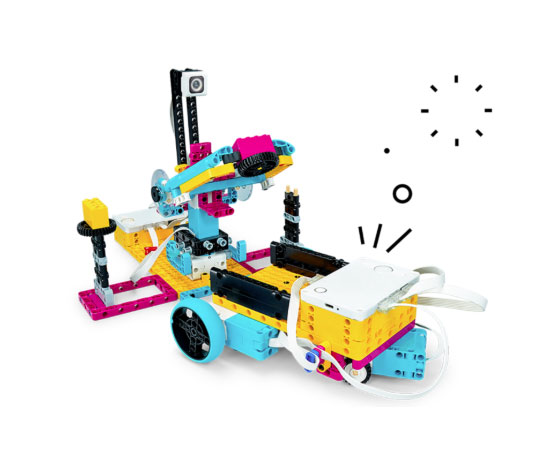
With every unboxing, students discover a whole array of possibilities with the multipurpose LEGO® bricks, easy programmable features, multi-port hub, and simple drag-drop coding language based on Scratch.

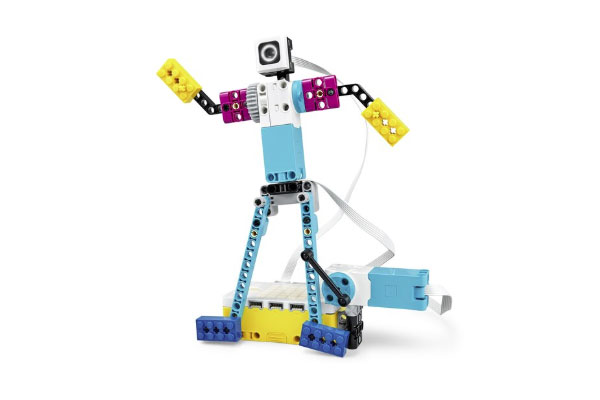
Put on your dancing shoes and get ready for a dance-off. Something as cool as a dancing robot can be built from basics in merely a 45-minute session by the students from the SPIKE™ Prime Set.
aa

If you think being a parent you have the right to mess with your teen’s belongings, you might want to think again. These mighty geniuses are busy constructing their own ‘safety vault’ and it’s almost impossible to crack-open the treasure by figuring-out the correct ‘secret code’.

By getting an opportunity to design, code, and market products, teens learn to think critically, analyze data, and solve complex problems with real world relevance.

The All In One Box

Highlights

The SPIKE™ Prime Set comes in an attractive box which comprises the following hardware and software:

Programmable Smart Hub

At the heart of the SPIKE™ Prime system comes a brick shaped programmable smart hub with rechargeable battery life. It is powered with 6 input/output ports, 5×5 light matrix, Bluetooth connectivity, a speaker, and 6-axis gyro.

Highly accurate Motors and Sensors

Children get together and brainstorm on what model of robot, or which dynamic device, do they wish to curate with the help of high-quality motors and sensors accompanied by the colorful LEGO building elements.

New Elements Added

The new and improved set includes 500 vividly colorful LEGO Technic elements. The 3×3 frame is an excellent spacing element and permits a smooth change in the direction of the build, such that students spend less time constructing and more time learning.

Storage Box and Sorting Trays

Wise men say, there is a place for everything and everything must be in its place. To keep each component of the SPIKE™ Prime Set safe in its allocated place, the kit comes with a sturdy storage box and sorting trays, so that one doesn’t have to play a game of hide-and-seek just before starting with the project.

Making the right start

  • Students learn to code with an easy drag-and-drop coding feature based on the Scratch programming language, used by millions of children around the world.
  • Effective STEAM learning is incorporated in a 45-minute session, with focus on Engineering and Computer Science.
  • The essentials debugging is important for the success of any project. Students learn to fix the bug and move ahead with the planned strategy without hesitation.

The well-structured online lesson plans and interactive support materials, aid educators to deliver planned lessons to students. Learn more about SPIKE™ Prime Set and order your first set delivered to your doorstep in Dubai and all over the Middle East.
Contact us

Geography and Cultural Learning in Early Childhood: Children’s Literature

Geography and Cultural Learning in Early Childhood: Children’s Literature

Geography and Cultural Learning in Early Childhood: Children’s Literature

What do you think Geography is? Is it the study of maps? Or is it where you’re taught which water body is called what? While it is both those things, Geography is much more. It is the study and understanding of lands, seas, features, and even people and their interlinking cultures and relationships. Simplified, it is the study of a planet, with all its layers and aspects included.

Why teach Geography?

In various grades the student would be taught various things about the planet we live on and the planets around us. At a younger age the student would be introduced to the concept of the Globe, a place common to us all and the ways it exists. With increasing grades, students move up to exciting phenomena like weather, topography and culture. Here’s where Geography takes a turn into the social science that it is known as. And the understanding of the subject is important because it gives you a perspective! History gives us lessons to learn from, Physics gives us an understanding of why things happen, and Geography is what quantifies all of it. How big is the world, how does the weather change, how do the sea waves work, how are cultures different, what kind of food do people eat, all of these questions are answered by Geography.

Teaching Geography in early childhood

Clearly with such vast and varied concepts, Geography should be an advanced subject, right? Wrong! Geography gives us the understanding of the world we live in and who needs that the most? You guessed it! Young children. Learning about the world they live in, animals and environments and very importantly cultures.

Culture and its understanding in Geography

Like the way art is a form of expression for individuals, culture is the way a society expresses itself. Culture defines how the people live, what the people eat, and why they engage in the activities that they do. Since culture changes with regions it is often attributed to a region like topography or climate. Building this link and understanding in early childhood, ensures that the student builds on a fuller understanding of the world they live in.

Picture Books for Geography

Highlights

How do you teach a child anything? By making it fun! And looking at beautiful pictures and drawings is definitely fun for the children, as is stimulating for their minds. Books although seem like a tool of the past, picture books are still as relevant in this time of technology. And here’s why:

Great to look at

Getting the obvious out of the way, picture books are great to look at! Majestic landscapes, interesting diagrams, visual cues to all ideas. They just add an entire dimension to the information in the book.

Easy to follow

The books with pictures tend to have a higher completion rate. You know why? Because they’re not intimidating. The illustrations and images can make the most complex ideas look like simple facts. This also helps the reader retain most of what they’ve read.

Interesting

Picture books are built to add interesting visual representations of ideas presented so they can clearly communicate the concept or the information. For example; it’s great to hear that Mount Everest is the tallest mountain in the world but a diagram comparing it with the world’s tallest buildings seems far more interesting, right?

Highlights

KutuBee is an interactive platform built to achieve this for the young readers of the new generation. Containing more than 1,500 books KutuBee is set out to use the wonder of picture books with Technology. The books in languages such as English, Arabic and French enjoy a great young audience in the Middle East, especially so in urban regions of Dubai, Abu Dhabi and so on. The books are online renditions of the best of Arabic and International publishing. Bringing the delight of reading with imagination to the young generation.


Contact us

Teaching Math Through Gamification

Teaching Math Through Gamification

Teaching Math Through Gamification

Mathematics is not engaging for a lot of learners and this is specifically the case for young students. Learning with theory and books proves mundane for young students and games are the solution! How? The Gamification of Mathematics. Games have become a very common part of culture in the young and for due reason. Games are stimulants. It is a way for a person to experience something without having had even left a room. Entire story lines and narratives are created through games. Here is how bringing them to Mathematics helps.

The primary purpose of any game is to let the player enjoy and engage in an activity that leads to winning. Math curriculums tend to be heavily leaning towards traditional academic ways of instruction. Therefore, teaching mathematics with games has taken such precedence in recent times, where teaching students with application is the gold standard of education. Games provide the perfect platform to the students to be able to apply their concepts and learnings.

Due to the nature of the subject, learning Mathematics is commonly an intense activity that involves a lot of time and patience. Through games, since students learn to apply their concepts and use them, the learning experience becomes far more meaningful.

Making Math Studies a Rewarding Experience

Motivation is another positive attribute that comes from teaching with games. Games are inherently designed to bring about a certain degree of competitive spirit, while also providing the player with a tangible goal to meet. Translating this mindset into teaching Mathematics brings about such attributes of gaming to the student’s learning experience.

The nature of gaming itself helps students with taking the stress away from learning Math. As opposed to traditional ways of teaching Math, games allow the students to step away from the formal way of learning. This enables them to learn with application and understanding.

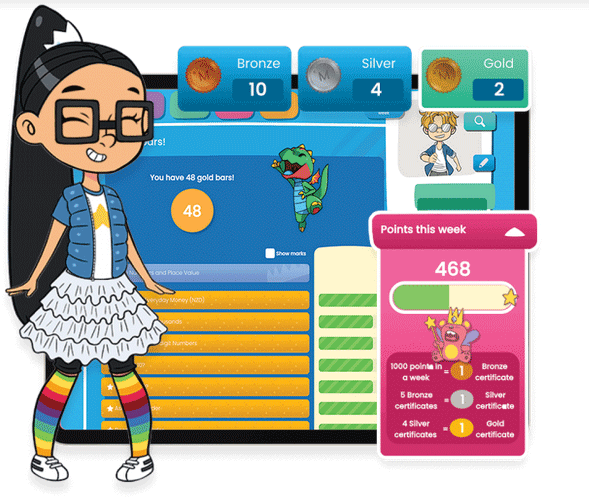
Mathletics emerging curriculum blends the intrinsic and extrinsic motivation factors to provide gamified learning experience to keep the students engaged in the subject.

Highlights

Health Competition without any Complication

Games also make it easier for the student to build up on their skills steadily, while choosing their levels of understanding and applications. This also allows for students to work with their own personal levels of understanding while also learning from other students in the activities. This tackles on a common complaint from students about Math, that it’s too complicated. There are no complications in games, right? It is only a challenge!

Re-attempting to Level-up the Game

The repetitive nature of Mathematics also benefits from games since it gears the learners to try again even after they have been unsuccessful on a ‘level’. This results in students making multiple tries, whereas they could have simply forfeited in case of a regular mathematical problem. Building a resistance to trial fatigue is also something games do very well. Flappy bird a game from 2013, is a great example of this. Players will repeatedly try to win a game that was unwinnable! That is the kind of spirit gaming brings to Mathematics!

While being a great tool to teach, games also allow students to bring about independence in their learning. Independent thought and understanding of concepts go a long way for students which is applicable not just for Mathematics. It is a skill that is useful for the students in all kinds of learning and in life. It allows them to think for themselves and find a solution to their problems.

Highlights

Skills Development at its Best

Other benefits of gamification of mathematics include helping the student develop skills such as strategic thinking, problem solving & application. Theory learning is not able to facilitate such an effective way to learn, because of how the human brain works. Students learn with experience and trial, which is exactly what games can create.

Mathematics is generally associated with other ‘boring’ activities by students and gamification has a serious potential to change that. Bringing in games to Math not only makes it less of an intimidating activity, but also makes it a fun process for the student. Helping them build a foundation of concepts with the help of real-world, tangible applications. Teaching Math with games also helps eliminate a phenomenon in students referred to as ‘Math anxiety’. With its truly engaging and accessible nature Math games enable students to not be intimidated by concepts of Mathematics, since it is a game anyway, right?

Contact us

Having Fun with Phonics while Cultivating a Love for Reading

Having Fun with Phonics while Cultivating a Love for Reading

Having Fun with Phonics while Cultivating a Love for Reading

Most schools and play centers stress on teaching children the ‘phonemic sounds’ of the letters before introducing them to the letter names. Well, are you confused? Did you know English language has 44 unique sounds, despite there being only 26 letters in the alphabet (A-Z). Each of the 26 letters have a dedicated sound and some sounds are produced by the combination of two letters.

What is phonics?

fast-phonics-animated-teaching-videos

Phonics is the most effective way of teaching preschool children to read and then learn to write. It helps children comprehend words and distinguish one word from the other. The goal of teaching phonics is to help children correlate the sound to the spelling so that the word can be decoded easily. Knowledge about phonics will also help children identify which letters to use while forming the written words.

Being able to read the words correctly, increases the child’s reading fluency. He is more confident and no more struggles with the printed words he sees in a book or on screen. Even if an unfamiliar word which the child has never read before is presented to him, he is able to apply the rules of phonics and read it correctly.

How early can a child start learning phonics?

Usually children begin learning phonics as soon as they say goodbye to their toddlerhood age. A three to four-year-old is quite equipped to start his journey into phonetic expressions and rhymes.

To begin with, a lot of action songs are introduced to the child.

For example: See me play on the drum. Playing drums is lots of fun, with a /d/-/d/-/d/-/d/-/d/-/d/-/d/-/d/-/d/. See me play upon the drum!

In this song, the child pretends to hold ‘drum sticks’ and bang the imaginary drum to make the /d/-/d/-/d/ sound.

Fun activities for children to learn Phonics

You know what the best part about teaching phonics is? There is no rule book or a paper and pencil way of learning letter sounds. Educators and parents can be as creative as they want. Children can sing, interact, dance, and read to learn by play-way method while having lots of fun with their fellow learners. Here are a few interesting ideas to teach phonics to young children:

Online Phonics Game

FastPhonics Banner

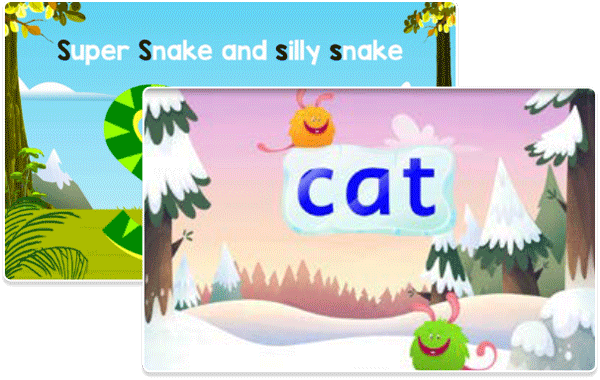
ReadingEggs presents unique online games to develop a strong foundation of phonetic awareness amongst your little champs. ‘Fast Phonics’ gives them access to over a hundred highly interactive phonics games to boost letter-sound recognition skills from /a/ to /z/ and beyond.

This programme has 20-fun-filled levels and each level is represented as a ‘mountain peak’. Children gradually climb each mountain with every passing challenge in a systematic manner and get rewarded for it. There are a dozen of animated videos, printable worksheets, and fun-activities to enhance the child’s reading skills.

I-Spy Game

This is a very common game played to memorize association between the sounds and the words. From the magic box objects are made to appear one-by-one and the children have to guess the sound by which the object begins with. For example: show a ‘ring’ and children relate the /r/ sound to the object.

Dr. Seuss Books/Poems

Children love Dr. Seuss books for their very attractive illustrations and simple short stories. Some of the books you might already be familiar with are; ‘The Cat in The Hat’, ‘Fox in Socks’ and ‘Hop on Pop’. Do you notice a pattern in all the titles? Yes, they all rhyme. Read these to your children at bedtime or during the day to familiarize them with rhyming words and ask them to think of other words that rhyme to test their vocab.

peak5-book-quiz

Design a Phonics Wall

Set aside a corner in the classroom or your home to display a set of CVC (consonant – vowel- consonant) words and leave a blank for any one letter. Let children decide for themselves as to which ‘letter sound’ is missing and encourage them to fill in the blank. Once you think the child has mastered these set of words, change them and introduce another batch. This is simple, fun, and as children see it around them over and over again, they become better readers.

Contact us

E-Learning with Smithsonian Science (SS) at Home Kits from Carolina

E-Learning with Smithsonian Science (SS) at Home Kits from Carolina

E-Learning with Smithsonian Science (SS) at Home Kits from Carolina

E learning has been on the rise since the past decade, but never before has it been this effective and important at the same time! Online schools and other online ways of learning have taken popularity in UAE and specifically so in urban populations of Dubai, Abu Dhabi and so on. With the current global situations, the world needs an E-Learning solution that is practical and effective, right? The added challenge of online-school and keeping up with the curriculums has created the need for a solution that enables students to keep the right pace in their learning, while also bringing them to a level playing field. Smithsonian Science At-Home Kits are on their way to doing just that.

Smithsionian-at-home

Effective home learning achieved

The curriculum designed in the Home-Kits by Smithsonian Science is crafted keeping the needs of the learners in mind. Courses are divided into consumable Modules with each having their independent goals. A storyline that allows the student to form logical progressions from their perspective is created for every module. Layers questions, situations and set-ups help keep the learner engaged and enables them to develop problem solving skills.

Mathseeds_banner

How does the learning happen?

The Home-Kit is designed to move the learning process to the home while not compromising on the quality of education the learner receives. The mediums include instructional videos, digital card sets and other digital resources. The video and resources guide the student through the topics in the module and enable them to learn and understand independently.

How are the lessons designed?

Creating an effective learning method is half the job done in learning, right? The Home-kit is designed in a 5-part format that allows the learner to follow a designed path.

Part 1: Getting started

The ‘Getting Started’ section includes questions and discussions that build a base for the topic of the module.

Part 2: Activities and Assignments

This section includes a list of the activities that are important for the lesson. The instructions to follow them are also listed here.

Part 3: Bringing it all together

Concluding the class activity and coming to a final understanding requires the students to share ideas and thoughts. This section does that with a run-down of all important points.

Part 4: Assessment

This section of the module includes and states which part of the lesson can be used to measure the level of understanding of the learner

Part 4: Additional Optional Assignments

This section of the module is for that extra level of challenge to the student. Since this is optional, it is an added experience. These assignments can be assigned to students if time allows.

Teaching methods are great but what about tests and results?

The assessment in the @Home-Kit is done with a multi-level system, through which a complete understanding of the students’ learning can be made. The system includes Pre-Assessment, Self Assessment and more.

Pre-Assessment:

This part of the assessment of the student is a preparatory stage, where they get to engage in tasks and activities that help measure their level of knowledge and their understanding

Formative Assessment:

Specific assessment strategies are used based on what part of the curriculum form the gist of the learning for the student. The section also instructs what to look for, in measuring the understanding levels of the student.

Self Assessment :

The learning of the module is not complete unless the student has had a genuine opportunity to learn. Self assessments help with that. They also allow the student to learn with greater independence and understanding of their own learning methods.

With their over 90 years of experience in education Carolina has built the perfect way for students to learn with high results inside their own homes. The flexible and valuable online resources enable the students from countries such as the USA, UK, UAE and so on. The online resources are created with clear goals in mind for the student, which is why the @Home-Kit by Carolina, builds around the experience of learning at home by bringing in all the benefits of a classroom.


Contact us