

The Importance of Nursery Rhymes In Early Childhood Learning

The Importance of Nursery Rhymes In Early Childhood Learning

The Importance of Nursery Rhymes In Early Childhood Learning

Join the bandwagon if you still remember the verses of famous nursery rhymes you learnt when you were probably 3 years old. How is it that you can still recite ‘Twinkle – Twinkle’ and ‘Humpty – Dumpty’ without event referring to the lyrics? Can nursery rhymes have such a great impact, that it gets etched in our permeant memories, even decades after schooling? Well, if you are of the belief what good can simple songs and rhymes do to your toddler & preschoolers, it’s time to read the full Blog and find out for yourself.

Nursery rhymes are referred to as short songs or verses, sung by the children or for the children. Nursery rhymes focus on a theme and have a particular tone or rhythm which makes it easy to remember. They are available in languages other than English. Regional nursery rhymes are equally famous and some of the popular Middle East/UAE Arabic children’s rhymes are Ada Deenoo and Ai’s Horse.

Some of these songs are intended to amuse children & entertain them, while others are devoted to provide educational value. Let us see what are the main benefits of including nursery rhymes in the preschool curriculum.

An Induction Before One Starts Reading Books

Children are pretty impatient and have less attention span. Imagine asking them to sit in one place while you read a story book out. Though you try ways and means of pestering them to listen patiently, your time & efforts might go vain. So, before you unravel a book, start by requesting Alexa on voice command to play any trending or classic nursery rhyme. When children hear songs though they may not be paying undivided attention, the tunes & lyrics echoes in the child’s mind and listening to the same rhymes over & over again, may stick in the child’s memory. When an adult now reads a book to the child, he will be able to associate words heard in the song to the words of the book and thus form connections or understanding. Hence, rhymes induct children into developing a love for reading.

Participating in Action Rhymes can Build Social Skills

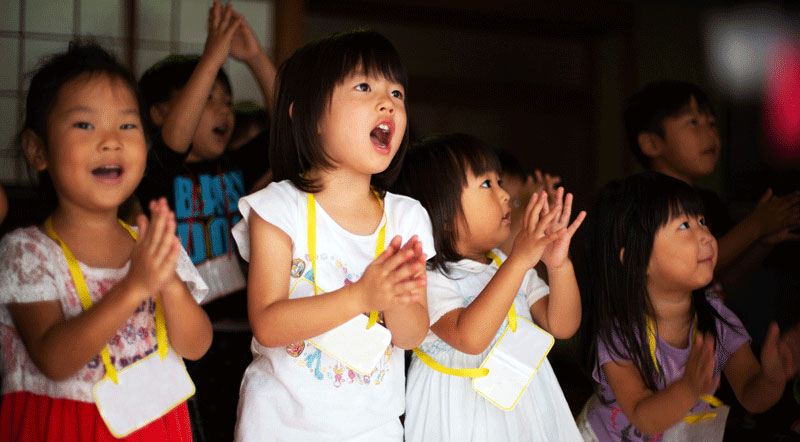
Action rhymes are those where the teacher does some action and children mimic the same action. It includes body movement such as tapping shoulder, jumping, making facial expressions, and counting on fingers. While children are copying the actions they interact with their peers and may hold hands, give high5 to each other, and even shake a leg together. This helps break the ice, as preschoolers are yet getting to know each other. Forming meaningful social connections boosts bonds between classmates. Some examples of action rhymes are; Five Little Speckled Frogs, Here We Go Round The Mulberry Bush, and Wheels of The Bus.
Develop Vocabulary and Literacy Skills

We must be cautious while choosing the rhyme, because essentially you are introducing the toddler to a vast bank of words and vocabulary which they might soon use while talking & interacting with others. Reading Eggs presents some of the choicest collection of sing along rhymes through its Eggy Nursery Rhyme feature. Available in audio-video format, these 10 classic rhymes consists of colorful animations and catchy tunes, for an interactive learning experience. Children can even sing along with the karaoke feature and sync with the lyrics, to have some fun. The Reading Eggs App is quite popular amongst parents all over the world, especially when schools in Dubai and GCC Countries recommend it to them.

Introduction to Math Skills

Five Little Ducks, Here is a Beehive, The Ants to Marching, are all nursery rhymes that compel kids to count and announce the numbers out loud. In a sing – song way children learn to count and recognize numbers. This is a great activity to introduce pre-math counting and number identification skills. By repeating the lyrics over & over again, kids learn the sequence of number counting and ultimately become champs at it.

Better Self Expression

Children are like buds ready to be bloomed and only with the right nourishment & support do they flourish. Rhymes help children be more expressive, as they learn to speak, move, sing, dance, and have a good time while learning. Sometimes, the teacher encourages children to be creative come up with their own interpretation to the songs, thus giving them a chance to have their own creative expression.

Now that you agree with us on the positive benefits that nursery rhymes have on children, it is time to make it a bit more fun, by adding an element of excitement to the rhymes. We promise your children will be in for a treat and love you for making them sing along.   

Contact us

Introducing Outdoor Play To Enhance Math Learning Activities for Children

Introducing Outdoor Play To Enhance Math Learning Activities for Children

Introducing Outdoor Play To Enhance Math Learning Activities for Children

Children love to be outdoors and run around, for as long as they can. Even today we reminisce the fond memories of playing on swings, slides, and designing fancy sand castles at the nearby parks. Spending time in the playgrounds is not only liberating, but also good exercise for children. In the midst of playing games like; climbing, hopping, running, and skipping, children are gaining muscle strength and developing their gross & fine motor skills. Being around nature, refreshes the minds and stimulates happy hormones such as dopamine and serotonin, thus proving great benefits to the child’s mental health.

Summer months are excellent periods to get outdoors and appreciate nature. What if we told you that one can make kids learn numeracy skills while cherishing the greenery? Yes, you read that correctly! Through this blog we will demonstrate some important math skills that early learners can grasp in a play-way method, without feeling the pressure of having to deal with complicated numbers. So, let’s loosen up, get innovative and read about some progressive technique of teaching addition-subtraction & other math skills to kids, versus depending upon the traditional textbook approach.

Multiplication With Pebbles

Learning your 2 times table by rote method is such an archaic method. Gather children in a park and ask them to collect a handful of pebbles. Now ask children to arrange pebbles in a row one below the other. For example, 2 pebbles x 1 pebble = 2 pebbles, 2 pebbles x 2 pebbles = 4 pebbles, 2 pebbles x 3 pebbles = 6 pebbles, and so on. The teacher can denote the ‘multiplication’ and ‘equals to’ sign by using a chalk, or use a stick to embed the signs in sand. Children can even take turns, to solve the 2 times table equation. The same can be practiced for tables of higher denomination, as far as there are sufficient pebbles readily available in the garden.

Tick-Tock: Tell The Time on the Clock

Asking children to read time, can get tricky. There are so many details that children need to understand, before they can tell time correctly. When is it a.m. and when to show the p.m.? Does 12 in the afternoon denote a.m. or p.m.? All these questions are pretty confusing and tricky for the child to grasp. And what a bore would it be to just read time out of a watch in class! However, now you can make this activity more exciting. Simply draw a circle to indicate the clock, and write the numbers, as one would see in clock-wise direction. Ask children to collect sticks from the garden, some short and some longer in size. The teacher or parent announces the time aloud, and the child places the sticks on the clock to represent it. The long stick is for the minutes hand and the short stick indicates the hour. So, if one is asked to represent 7.15 p.m., the student places the long stick pointing towards number 3 on the clock, and the short stick pointing towards number 7. Sounds like fun, doesn’t it!

Number Treasure Hunt

This is a pretty interesting activity! The educator divides the class into groups and the group has to choose a leader. Each leader from the group has to understand the rules of the game and communicate it to the team. The activity starts with the teacher assigning clues to the group leaders. The clues are in the form of a Math puzzle. For example: ‘A school library purchases 570 new books this year, out of which 172 are fiction. So how many new non-fiction books did the library purchase.’ Such word problems are pretty intriguing and solving them within the limited time span of the game, is super fun. Now that children have solved the sum and arrived at an answer i.e 398, they need to find this number on a ‘car number plate’ or on a ‘sign board’, to locate their next clue and go on to solving a more challenging math problem. The team that finishes first and successfully solves all the math problems, emerges as a winner.

Making Shapes with Sticks

Learning the ‘agon’ shapes can be quite troublesome at times. Do you remember at the spur of the moment, how many sides does a Heptagon have? Well, if you don’t then probably the concept was taught in a boring way, because your memory retains things that are exciting & unique. So, let us move with the modern-education system trend and make learning shapes a little more amusing. Ask children to pick up sticks on their way to the garden and then lay them on the ground. Now the teacher claps 10 times, and the student has to recollect which ‘agon’ shape has 10 sides. Drumroll please, the answer is ‘decagon’ and the kiddo uses the sticks to form the ‘decagon’ shape. Similarly clapping 6 times, means the child has to construct a ‘hexagon’ and 8 claps means, constructing the 8 sided ‘octagon’.

Whether it is outdoors or indoors, the main idea is to deliver fascinating Math lessons for children to remember the concepts and apply whenever apt. If your child is more comfortable indoors, you might want to find some indoor games to entertain him. Mathletics is an excellent platform that supports Math learning for students in classrooms and at home, pretty popular in the Middle East, including GCC countries. The Mathletics App features many attention-grabbing activities which compliments the school’s Math curriculum. IB Schools in Dubai and all over UAE, hence suggest the Mathletics platform to students for practicing numeric lessons.

Contact us

Go Paperless: Digitalizing the Admission Application Process

Go Paperless: Digitalizing the Admission Application Process

Go Paperless: Digitalizing the Admission Application Process

This pandemic has changed the entire way we used to function earlier. Especially, in the case of schools and colleges, everything is now being operated online. Even the admission processes have become digital!

Well, you are likely to be worried when it comes to following the admission procedure online because there can be hackers or fraudulent issues that can occur but you don’t have to worry if you conduct the admission process through a verified ERP software that will make your digital admission process like a cakewalk.

There are various benefits of having the admission process digit. All you need is a good internet connection, your data and ERP software to digitalize the admission process. Schools in the Middle East, including Dubai and GCC countries, have adopted the digital way of driving the admission process.

Well, here’s how digitalizing the admission process with the help of software will make your admission process better!

Faster Process

Those days when you had to stand in long queues just to wait for your turn to come to submit your admission form, exist no more! Yes, online admissions tend to be quicker than the traditional method of submitting hard copies. Your ID proof, address proof, etc. will all be checked online. The software is verified and can track if the information is correct or not.

Step-by-Step Guide

You don’t have to think that if the admission process is online, it might be complicated because that is certainly not the case. We are here to provide you with a step-by-step guide. For example, in case you get stuck somewhere while filling the admission form then you can go to the FAQ section. FAQs are the frequently asked questions and most people who ask some common questions there will be guided with the correct answer.

Storing Information effectively

The ERP software makes it better for you to store the information in the “draft” section. So, that way you won’t have to sit and type your personal information, academic information, work experience, etc. again and again. It will be stored and you can access it whenever you log in. There are also dropdown menus, responsive form fields and checkboxes in your digital application form.

Customizing your Application Design

You can customize your application just according to the way you want it to be. Don’t make it too experimental or fancy, but try to keep it simple. With the help of this ERP software, you can simply design and customize your application design according to the school’s requirements. This way, the administration team will notice your applications and you can design them according to the class you wish to opt for.

Submitting Documents Online

The hassle of carrying your documents or finding them from a mess of books, won’t be there anymore because with the ERP software you can attach them digitally. The software saves your documents and stores them. You just have to upload the documents according to your course requirements and other basic documents like your passports, transcripts, letter of recommendation, visa documents, etc.

Making the Payments Online

We can simply say, that you’re in safe hands with this one. Making payments online can seem a bit doubtful because sometimes hackers can track your account number and indulge in fraudulent practices with the money. However, the ERP software keeps your payment information secure. There are many options for students to process their payments through PayPal, credit cards and others. You can make the payment from any part of the country, whether you’re in UAE or India and it doesn’t make a huge difference.

Communication with Parents for the status of Application

Lastly, parents will get a response and an update regarding their child’s application. Parents can also get other school updates through e-mails, SMS or other social media apps. They can reach out to the school through SMS or e-mail, in case they face any issues during the digital admission process or any other questions.

Next Learning Platform can be your next go-to learning platform. They believe in redefining the admission process, anytime, anywhere by giving parents an eased experience, without any hassle.

Contact us

Little Weather Watchers Understand How Climate Affects Our Lives

Little Weather Watchers Understand How Climate Affects Our Lives

Little Weather Watchers Understand How Climate Affects Our Lives

What’s the weather forecast for today? Are the skies clear or does it look cloudy? Why do we have to check the weather before stepping out of our houses? Well, that’s because the weather conditions determine the choices we make. The choice of clothes we wear, to the type of food we should eat, the transport that we want to use, and even the kind of activities we are planning to do, all depends on whether the skies are rainy, stormy, clear or warm.

Let’s take an example of a few scenarios:

Hot sunny Day

When the sun is shining mercilessly over the city skyline, it’s time to pick-up a pair of shorts, wear your caps & sunglasses before stepping outdoors. A bicycle guarantees a pollution free ride to the garden where you can lay the basket & enjoy a sandwich followed by a cool lemonade cooler.

Rainy Day

When the rain God’s decide to pour abundance of shower, gear-up with gumboots, a raincoat and an umbrella for extra precaution. A two-wheeler ride is not the best option on a rainy day. Savor a healthy snack of freshly roasted corn on cob with your evening cuppa hot chocolate milk. If you were planning to workout, hit the gym, instead of strolling on the streets.

In the above two scenarios, did you notice how our choices are affected by the patterns of weather and climatic conditions.

Apart of human acclimatization, plants and animals too learn to adjust as too much or too little of any extreme climatic patterns harm them.

To teach students the effects of weather and get a chance to practice hands-on experiments, Carolina Smithsonian Science presents a dedicated lesson plan for the same.

Carolina Science

Carolina is a famous Science material supplier and has been providing ready-to-use science kits to schools across the Middle East, including Dubai and other parts of the world. The latest Smithsonian Science Classroom and Digital module is available for purchase in the UAE and GCC countries which comprises of integrated 3D learning kits, printed materials, and digital resources, in one comprehensive package.

Carolina’s Module on: How Do Weather and Climate Affect Our Lives?

This is a part of the Smithsonian Science for the Classroom series featured by the Smithsonian Science Education Center. The subject is covered for students of grade 3. The main overarching topics of Earth and Space science are covered with focus also on some aspects of Engineering.

Students will practice the following:

  • Investigate to conclude if weather can vary over short distances.
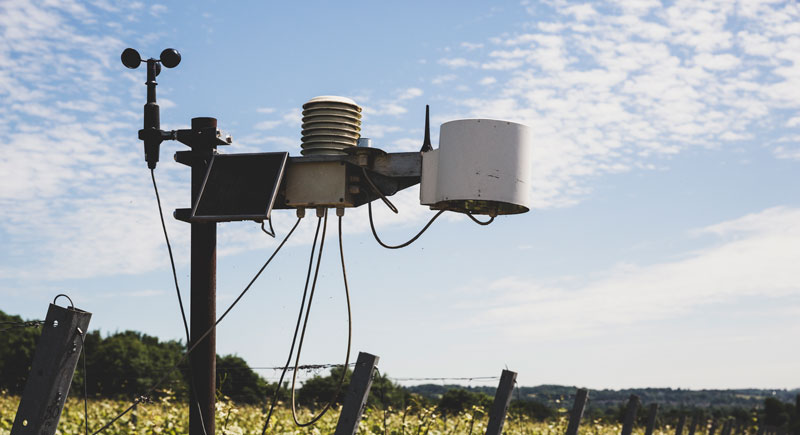
  • Discover the workings of the Anemometer, a device that helps measure the speed of airflow in the atmosphere. The same technology is used to test the harsh environment inside confined railway or mining tunnels, to determine the airflow.
  • Children will learn to collect information on weather and track the data over a period of time. A catalogue with day’s high and low temperature is maintained in the journal over a period of days, or even months. Then children are made to analyze the graphs of ‘hot’ and ‘cold’ temperatures and draw conclusions or predict similar climatic changes. This prediction helps us in being more prepared and aware of how to dress, when to travel, and things to carry.
  • On the basis of interpretation of data and studying the weather graphs, children come together to plan & organize an event, like a football tournament, by choosing a month and day, that predicts a conducive climatic pattern for the game.

Some resources provided by Carolina that are included in this module:

  • Comprehensive educational videos on hurricane, sunny skies, clouds, thunder, lighting, etc. for children to observe and learn important lessons in a fun and creative way.
  • Instruments such as a thermometer, anemometer, wind vane, and rain gauge, are available with the kit, to help children understand & practice ways to read the temperature.
  • Live satellite map reading enables children to watch satellite images over the past 12 hours.
  • Cloud identification chart helps kids identify the types of clouds and cloud coverage by participating in the GLOBE observer program.

Contact us

Tips To Help Children Read The Clock and Tell The Time Accurately

Tips To Help Children Read The Clock and Tell The Time Accurately

Tips To Help Children Read The Clock and Tell The Time Accurately

As Sahib once said, “There’s a meaning in every tick-tock of a clock” and quoting the words of Miles Davis, “Time isn’t the main thing. It’s the only thing.” It is such a wonderful blessing to have received the gift of time but to be on-schedule, use it wisely and keep going is to have truly justified time as it is indeed precious. So, before we even begin to introduce our children to the working of a clock or a watch, they must know the importance of time, to value it and then be aware of the devices, read them, and tell the time accurately.

There are many factors related to the understanding of the clock and reading of the time. Let us look at some of the concepts below. Once children build a foundation, it will not be difficult for them to tell the time correctly.

Basic Identifications

The first identification step would be to introduce children to the kinds of gadgets. As per their age and as they start grasping things, they will learn that a clock is the one hung up on a wall or kept as a table clock and the one that is worn on the wrist is a watch. The second step is to let them realize the difference between an analog clock and a digital clock. After they have understood the basics, we can move ahead to help children recognize time.

Comfort with Numbers and Counting

Getting a grip and identifying the devices is great but the most crucial part is for the children to have a strong sense of numbers. Recognising the right digits and to declare them aptly is a must. Not only should they be familiar with the universal English digits but with Roman numerals too that are also commonly present on most clocks. Another thing is that clocks may display the time having all numbers present from English 1 to 12 or from Roman I to XII but often fancy creatively designed clocks will not have all the digits present. They may just have the English 3, 6, 9, 12 or the Roman III, VI, IX, XII. The children must not get confused with the missing digits and still be confident and announce the time. They should be taught to count 5 minutes to half hour markers to quarter past concepts. They should be capable of ascertaining the number of seconds in a minute, the number of minutes in an hour and the number of hours in a day. These are the primary number related aspects they have to conquer to tell the time precisely.

girl with a clock

Hands of a Clock

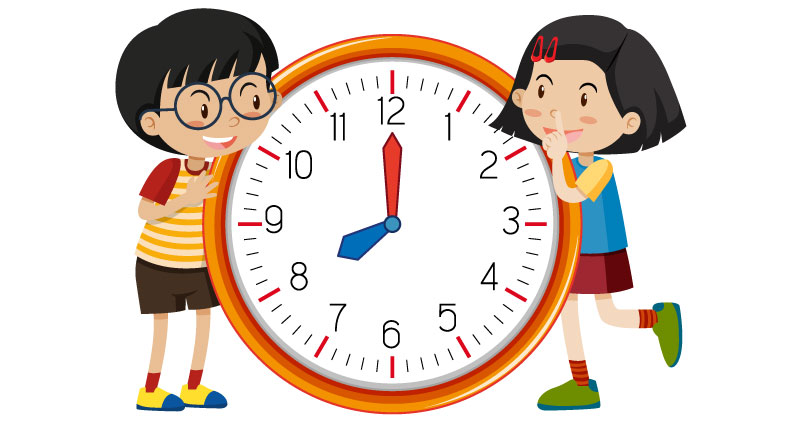
Teach your children the difference between the small hand and the big hand of the clock which is the hour and the minutes hand respectively and the tiny hand that keeps moving continuously which is for the seconds. After they have recognized each hand and know what it denotes, then one glance at the clock and at the position of the hands, should be sufficient for children to read the time effortlessly.

Ante Meridiem and Post Meridiem

These two phenomena are vital in the world of time. Children could see the hands position on the clock and announce the time but without knowing whether it is a.m. or p.m., interpreting time and declaring it, is incomplete. An a.m. (ante meridiem) and p.m. (post meridiem) are the Latin abbreviations used to denote time. The time before midday would be a.m. and the time post midday would be p.m. In simpler terms, the hours of the night going into morning till midday would be a.m. and the hours of the day post midday going into afternoon, evening, night and then till midnight would be p.m. However, there is a general confusion when the clock strikes 12. We know as adults that 12 p.m. is afternoon time and 12 a.m. is night-time, but it takes some time for children to grasp this concept. The only way to do this is by practice. Encourage children to read the time and correct their mistakes whenever they falter. These are significant pointers that have to be ingrained in children for them to be perfect with getting to learn the clock and reading the time correctly minus any ambiguity.

The 12-hour clock and the 24-hour clock

Another key aspect of time is to teach the children the difference between the 12-hour and the 24-hour clock. The 24-hour clock is popularly referred to as military time. In the olden days, clocks showed all 24 hours, but with modern times, clockmakers invented the 12-hour clock system. If conceived properly both are simple but in general people find the 12-hour clock much easier. The 12-hour clock is from 1 a.m. to 12 noon (p.m.) and then from 1 p.m. to 12 midnight (a.m.). The 24-hour clock is from 00:00 hours (midnight) to 23:59 hours (a second to strike midnight). In a 24-hour clock there will be no a.m. or p.m. These concepts may seem complex but with practice your children will master the understanding of the clock and will cleverly and flawlessly tell the time.

The ‘Mathseeds’ programme is full of enjoyable child-focused activities that makes learning a rewarding and meaningful experience. Most school assign fun activities to children via the Mathseeds App, as an alternative to giving them boring pen-paper homework. Thus, Mathseeds has become pretty popular in India, and the Middle East, including Dubai. It is a comprehensive online mathematics programme for children aged 3-9. They offer a huge range of carefully structured lessons and activities that build mathematical skills over a broad range of number, shape, and measurement topics, irrespective of the child studying in GCC, UAE or any other part of the world. Fundamental ideas are taught in a fun, motivating and engaging way, whilst rewarding children for their efforts.

Contact us