
Participating In School Debating Competitions Is Beneficial To Students

Participating In School Debating Competitions Is Beneficial To Students

Participating In School Debating Competitions Is Beneficial To Students

Debating is an annual affair in most schools across the world. Special debate competitions are hosted to encourage children to come forth and argue on a topic that has been picked by the institutes judging panel. The topic of debate can be generic or specific, as per the student’s level of understanding and their ages. Some interesting debate topics are as follows; Who is responsible for keeping our planet safe, the Government or its people?, Is remote learning effective or is physical schooling more apt?, Is it okay to serve junk food in school canteens?. Basically, the topic of debate can be anything under the sun, from current affairs, to socio-cultural, politics or even controversial.

What is Debating?

Debate is nothing but a discussion about an issue or a topic, that needs to arrive at a resolution based on the concrete points shared by the teams. For debating to materialize, there needs to be two sets of teams each picking an opposite side. One team is ‘for’ and the other is ‘against’. That means, if the topic is – Should marks for extra-curricular activities be considered while calculating the grades of high school students? The team which is in favor of the marks being added to exams, will find evidences to support statement, and the other team will try to prove why it is Not beneficial to add extra-curricular marks in report cards, and why schools should only consider the written exam marks.

Benefits of Taking Part in Debates for Students

There are numerous skills that students need to learn through their years of schooling. Debating gives children the opportunity to develop these skills further and boosts their confidence.

Enhances Critical Thinking Skills

A debater needs to not only think fast, but also present innovative ideas across the table. To be able to do this successfully, one is constantly processing information and thereby developing their critical thinking skills further. Debate participation increases problem solving skills as students have to rationalize complex information and arrive at a counter argument to defeat the opposite team. Learning to think clearly and decoding the facts, goes a long way in making the student more capable.

Improves Research & Reading Skills

In order to be well versed and confident about the topic you are in favor of, one needs to spend time researching and read thoroughly. Trying to bring forth points that the judges may also not be aware about, creates an impression and adds to the team’s brownie points. This is only possible when one has complete knowledge of the subject and has prepared a well revised draft to present at the competition. Highlights is one such platform that supports the student’s journey of reading. The Highlights virtual Library has more than 2,600 books and students can site examples and use idioms from the books that they have read, to support their win at the debate competition. Schools in the Middle East, including Dubai, encourage students to utilize the Highlights App to their advantage.

Boosts Presentation & Speaking Skills

In order to go up on stage and speak in front of an audience requires courage. Children need to take the first step to fight their fear of the stage. Taking part in a debate competition is an excellent platform for students to practice, before they advance to inter-school competitions and other state level opportunities. Practicing in front of a mirror, rehearsing and with adults, helps students find a comfortable body language, posture, voice modulation, and take care of other aspects, before they actually start speaking on the mike, before an audience. In the future, when they graduate from school and enter college, the learners will already be attuned to appearing for presentations, and won’t find it as challenging as others naïve students.

Better Academic Performance

The student develops a good habit of reading, researching, practicing, etc. which ultimately helps him perform better in school. Just like the debater is well prepared to speak, the examinee is confident to appear for an exam. Hence, IB Schools in UAE, including GCC Countries, now arrange for frequent debating competitions and encourage students as young as 2nd graders to grace the stage and speak. Moreover, the skills learnt at an early age will stay with the child for life and go a long way in helping them reach the pinnacles of success.
Contact us

Introducing Children to Phonetic Word Blends in a Phased & Systematic Manner

Introducing Children to Phonetic Word Blends in a Phased & Systematic Manner

Introducing Children to Phonetic Word Blends in a Phased & Systematic Manner

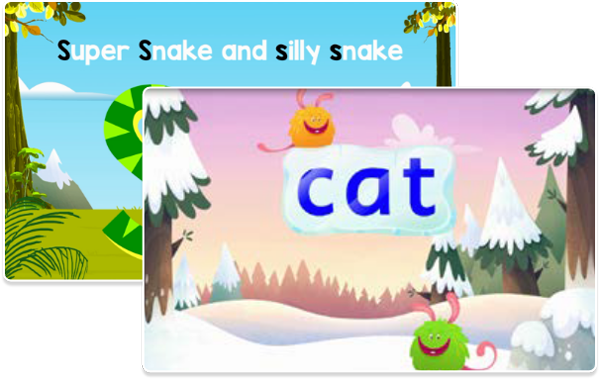
Phonics blending is a way for children to decode words. With phonics blending, students fluently join together the individual sound-spellings in a word. With a simple 2 or 3 letter word, children can start by sounding out each individual letter and eventually try to sound out the whole word by blending them all together. Students can start with one syllable words and from there, once they reach some comfort with spellings, they can start with two syllable words and so on.

Sometimes, few students – both beginners and struggling readers – do not rapidly pick up this blending skill. Yet, blending sounds to read words is the most important strategy for learning how to recognize words. The good news is that this solution is very simple even though it is not widely known.

It gets trickier as longer words start to appear, when sounds are ‘spelt’ with more confusing spelling patterns, and when there are ‘cluster’ sounds within a word which become harder to segment and blend.

This method of reading is best taught within small groups or to an individual on one-on-one basis, But here are some ways you can go about teaching blending with phonics: 

  1. Carefully choose which words to start with: Words that are small and usable in a sentence are the best choices to make. Things to which you can point out to or that children know about are ideal. Simple 3 letter words like ‘cat’, ‘sit’, ‘jam’ or ‘mat’ can be used and later, when the children are used to this, 4 letter words such as ‘duck’, ’leaf’, or ’frog’ can be used. You can start with each individual letter spelt out and finally the whole word spoken by emphasizing on the syllables. Start with words that the children may know to relate to objects.
  2. Set examples: Tell students that you’ll model how to say each sound, blend the sounds together and read the word. Doing this will promote confidence and reassure your students that it is safe to make mistakes in this sort of a teaching environment and by having that confidence they will start to make progress much quicker. Make learning a game by using words that children are aware of and this will build rapport which will also help your teaching process.
  3. Blending: This is the part where you show the students to use this method. Drag out a word like ‘sit’ into ‘s-i-t’ while also doing the action so it is easier for the children to relate the action to the word.
  4. Ask the students to try reading the word from the board.
  5. Practice: Have students practice words on their own after modelling several examples. Some students might work on their own with flashcards and some might work with a partner. Use steps (‘First sound, next sound, last sound, blend the sounds and read the word’) to build independence with strategy. You can also display those steps using stickers and recite the steps. Provide help whenever needed when they practice independently.

Words that are from the same families such as mat, rat or cat, may not be helpful in the learning process as children have been known to base their learning on ‘auditory rhyming’, which doesn’t help when reading words in context.

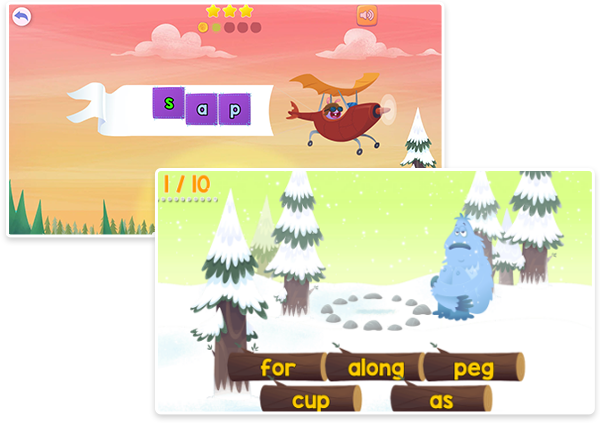
The Reading Eggs Fast Phonics Program includes hundreds of interactive phonics games to help children progress gradually and become fluent readers & writers. The entire syllabus is divided into 20 interesting levels where students grasp key phonics skills such as; letter recognition, blending and spellings. Many revered schools in Middle East, including GCC countries encourage parents to speed up the child’s learning process by choosing to work with Reading Eggs.

Contact us

What is Dyscalculia, How to Identify it and Help your Child Deal With it?

What is Dyscalculia, How to Identify it and Help your Child Deal With it?

What is Dyscalculia, How to Identify it and Help your Child Deal With it

For parents whose children struggle with math or dislike the subject, may not pay much heed as they assume it is normal for young students to not be fond of the subject as arduous as math. However, sometimes it is not only about disliking a subject, there might be an underline condition. Your child may be undergoing a learning disability called Dyscalculia and parents must immediately bring it to the notice of the educator and seek help of a doctor.

What is Dyscalculia

If you are hearing this term for the first time then let us break it down for you. Dyscalculia is a condition where your child deals with specific learning disabilities. These disabilities affect the child in such a manner that he isn’t able to learn or understand math and number-related operations, in particular. Dyscalculia is a challenge that persists all through the individual’s life. Even basic math operations like addition and subtraction are difficult to learn and can pose as a great challenge to the learners. So, if your child is struggling to cope up with math, don’t just neglect it by thinking he could be an average child or a lazy learner.

How to Identify Dyscalculia

You can identify this by noticing how your child reacts to numbers, if they face difficulty in solving problems then it can be Dyscalculia. Here are some of the signs and symptoms of this learning disorder:

  1. Have difficulty in recognizing numbers
  2. Lose track while counting
  3. Finding it tedious to place numbers or objects in order
  4. Not being able to correspond digits to words (ex: 5 and Five)
  5. Struggling with math tests and homework assignments
  6. Unable to read graphs and charts 7) Having trouble in estimating length, distance, and time

Though Dyscalculia is extremely common between 5 to 7% of elementary school-aged children, it has been known to occur equally in both genders. Having Dyscalculia doesn’t affect the child’s performance in other subjects. The child could be good at English, Geography, and Sciences, but have weak performance only in Math.

Sometimes, it may be so that the child may not be suffering from the Dyscalculia learning disability but may be facing some other condition. Your child may be dealing with other learning problems like:

  • Dyslexia: A disability that affects reading and language skills of the person
  • Dysgraphia: Having problems with writing, associated with poor motor skills
  • ADHD: Excessive Hyperactivity and unable to pay attention or control behavior
  • Dyspraxia: Unclear speech, disturbed movement & poor coordination

Helping Kids with Dyscalculia

Once the child knows that he/she is not able to cope with the subject math and is performing poorly as compared to other peers in class, the child may develop insecurities. He may get frustrated if proper guidance and help is not received in time. Alternatively, parents may put pressure on the children, which could affect their mental health further.

If you notice that your child is facing such problems then the first thing is, to take them to a doctor. The doctor will do certain tests and address medical issues if there are any. However, there are no medicines to cure Dyscalculia. You need to also check with the teachers and understand your child’s behavior in math classes.

The most important part is to support your child throughout his journey. Tell them that they shouldn’t compare themselves with others in their class. Try to understand your child’s condition by evaluating their performances in other subjects too. Are they able to learn easily? Can they grasp the study material properly?

Some tips to support your child if he is facing Dyscalculia are:


  1. Inform the School and ask them to arrange for a special educator. A special educator will work with the child individually after school hours and guide him, give extra practice and channelize the child’s abilities to be better at math. Many IB Schools in Middle East, including GCC Countries, have made provisions to hire a full-time Special Educator on boards, to create an inclusive environment in school and give equal opportunities to children suffering from any of the learning disabilities such as Dyscalculia, or ADHD etc.
  2. Present right tools to the child, to help ease the fear of math. For example: set a timer or alarm through the day so that the child isn’t lost and knows its time for next the task at hand. Give the child extra blank sheets and draw columns for doing rough work to arrive at the answer.
  3. Extra tutoring always helps. Find a loving, patient, and warm tutor who bonds with the child and increases his confidence for numbers.
  4. Introduce the learners to Math Apps which aim at teaching the subject in a fun and interesting manner. This will ease out the stress of studies, and instead children will start enjoying solving number problems and undertaking math calculations.

Mathseeds is one such popular Math App that believes in making learning a fun experience for all the students. Mathseeds teaches kids aged 3-9 the core math problems and problem-solving skills that are needed to perform well at school. It also gives rewards to the students who do well. It brings highly structured lessons and motivational elements together; this goes a long way in helping children perform better, and create a positive feel-good factor for children with Dyscalculia. This App is available for download across the world, including Dubai and all over UAE.

And finally, don’t be too hard on your kids. We are aware about the story of the famous – Albert Einstein and how he suffered in early childhood years for being a slow learner and unable to speak. But that did not deter his spirits and he went on to achieving great feats in life.

Contact us

Best Math Self-Learning Apps for Students of the 21st Century

Best Math Self-Learning Apps for Students of the 21st Century

Best Math Self-Learning Apps for Students of the 21st Century

In this highly digitally savvy age, we can’t help but depend on technology for reasons more than one. Even though schools are physically shut due to the pandemic, the teaching-learning process goes on as usual thanks to the internet and video conferencing Apps. It is evitable that children are constantly glued to laptops and iPads through the day. The question now arises is, how to make screen-time for children more productive? Can a subject as arduous as Math be taught by a handheld device?

As we know Google App Store and Apple Store open up a world of possibilities for us. There are Apps for every need of yours. Apps make our lives so much easier! There’s an App that tells you the number of steps you walked & calories you burnt. There are banking Apps and others allowing you to trade & invest at the click of a button. There are infinity number of shopping and gaming Apps to fulfill all your purchase & entertainment needs.

Educational Apps

Amongst the different categories of Apps available, there are ones that focus on self-education. These Apps intend to make learning fun by introducing the same concept taught in school, in a more interesting manner. Children will learn while playing, solving puzzles, and watching interesting graphic videos through these Apps. There are magazines, books, documentaries, and virtual classrooms, all for educational purposes. The Apple App Store alone has 75,000 educational apps covering a plethora of topics across subjects like Science, Math, Geography, English, and others. While there are over 5,00,000 educative Apps on Google Play Store for Android users.

Top Mathematics Apps for Self-Learning

Now when there is over exposure of information, it boils down to choosing the best. So, let’s have a look at some of the most preferred Math Apps available as of today, and understand what makes them special.

DoodleMath

DoodleMath is an interesting Math App which personalizes lessons as per the child’s capabilities. Respecting every child’s individual pace of learning and taking into account their ages, DoodleMath focuses on reinforcing existing knowledge while gradually introducing new topics to the learners. This compliments the school’s Math syllabus and provides a perfect platform to practice & revise topics in a fun manner. What makes it even more power-packed is its comprehensive 20,000 + curriculum-aligned questions and teaching sessions to aid every type of learner. The cherry on the cake is that children are rewarded for every right answer, which encourages them to continue their efforts. The App is available for Android and iOS devices featuring 4 stars and 4.4 stars respectively.

Khan Academy

Have an exam coming up? The Khan Academy App is your go-to learning platform to brush up on stats, algebra and geometry skills. It presents a personalized learning library not only for students, but also for educators, private tutors, and homeschoolers. One can access over thousands of interactive exercises, quizzes, and tests through the App. In case you are finding it difficult or are stuck at a particular Math problem, the App prompts hints and provides a step-by-step guide to solve your queries. All video sessions are created by subject experts and the App is available for free download all over the world, include the Middle East. Indeed, an impressive 4.3 rating is a testament to young Math Champs who conquered their fear of the subject, and evolved as winners.

Rocket Math

How can you aim for the stars, if you haven’t taken time to build a rocket? Well, Rocket Math App focuses on building a strong foundation for Math skills amongst preschoolers and early elementary graders. The program focuses on brushing up basic Math skills like; addition, subtraction, multiplication, division, and fractions. Staying true to its theme, children get to work through 26 levels- A to Z and reach space by meeting the challenges at different stages – take-off, orbit and finally conquer the universe. Teachers can create an EduAccount and buy seats equivalent to the number or students in class. This enables them to track and monitor the progress of each child. This App is freely available for all across continents, including the UAE.

Splash Math

There is a reason why 40 million kids from across the globe, including the GCC countries, love the Splash Math App. Driven by their agenda, the App aims to teach students Math, while also focusing on the child’s reading skills. This fun and educative platform is a huge favorite amongst preschoolers and Grade 1-5 learners. There are over 350 Math skills to be mastered, but not all in a day’s time! Students are encouraged to adopt skills through self-paced learning. The App extensively covers topics like; place value, telling time, counting, and comparing, through fun-filled games. While one also gets to learn about Phonics through exercises on sight word reding, comprehensions, tracing, and spellings.

Mathletics Students

Mathletics is the world’s leading Math educative program designed by educational experts and revered by millions of users. This handy App allows students to login at their preferred time, from their preferred devices, from remote locations even if they don’t have access to the net. Going for a holiday and not sure if the hotel’s WiFi is good enough? You can still manage to squeeze a 10-minute Word Solving practice session effortlessly in the App’s offline mode. Its latest update has added over 10,000 dynamic practice and fluency questions and 700+ problem solving and reasoning activities to build deep math understanding. Well known IB Schools in Dubai, encourage parents to track their child’s progress through the Mathletics App.

Contact us

How To Have Fun With Microsoft Word Art

How To Have Fun With Microsoft Word Art

How To Have Fun With Microsoft Word Art

The digital tools teach you something new every day. One such incredible tool on Word is Word Art.

Do you know what’s Word Art?

It’s a fancy way of typing words by using unique styles. Technically, it means word art is a modifying feature on word for using text in a different or quirky manner.

You just have to select some words from your document that you wish to highlight or you can use it to teach your kids some creative styles of typing words on the computer. After you’ve selected some words on which you want a different style, you need to select the insert button and simply click on the word art. Next, you’ll see the different styles of fonts in different colors.

You can let your child pick their favorite colors and select the font. This will broaden their creative perspective and help them learn about various font styles. You can also teach your children to make quotes on their own with the help of word art. Tell them to select an image which they would like to have as a background, you can either add this image from your files or find it online. Later, you can help them in resizing the image according to the quote.

For example – If they wish to write the quote “Good Vibes Only,” then you can select an image of beautiful scenery or an image of balloons after that, you can ask your child to type the quote and add some intriguing styles to it. This will enhance the look of the quote and your child will learn new techniques as to how they can be creative on Microsoft word by using different styles of typing. Similarly, you can make different quotes by getting some inspiration online or creating them by yourself with your ideas.

From text fill to text outline, there are numerous styles designed on word art with exciting effects such as shadow, glow, reflection, 3D rotation, etc. These effects will not only help you to make your text stand out but also can be customized according to your preference and style.

You can also use the text fill feature to add solid colour or gradient to your text from the inside. This can help you produce a design of your type. Applying different styles like fills, outlines, shadows can make the document look different

The word art styles can be created as per your liking by paying attention to the details. Many teachers in GCC, Dubai and other parts of the world recommend using word art to enhance creativity and highlight the title or certain keywords in a document. If your child likes creativity then he/she is likely to be addicted to word art as it has various styles and types of fonts to explore.

TechnoKids offer great learning for children across the world including the Middle East countries. They document a step-by-step guide for the students and provide lesson plans for the educator to make computer lessons more interesting and easier. This can help the students to learn basics of computers without much trouble and at their own pace. TechnoKids also includes different types of fun activities for children and this tests the student’s ability as to how much and how well are they able to grasp the knowledge. They have designed programs for different age groups according to their capability of learning, and the level of difficulty increases with each successive lesson. They also post YouTube videos quite frequently to make learning a fun and interactive session. Schools all over the world, including Dubai in UAE and other GCC Countries, partner with TechnoKids to introduce MS Office to children in a rather amusing format.

Contact us