

How To Check What Reading Readiness Your Child Is At

How To Check What Reading Readiness Your Child Is At

How To Check What Reading Readiness Your Child Is At

Language is a structured system of communication used by humans, based on speech and gesture, sign or often writing. The structure of language is its grammar and the free components are its vocabulary. While a child takes a while to converse properly in a given language, they take even longer to fully read the text of that language.

Reading stimulates part of a child’s brain to grow and be more active. Reading can widen a child’s vocabulary and comprehension ability. Through reading, children develop their empathy, build confidence, and expand their imagination.

No one is born already having the ability to read though. It is important to know, therefore, the stage at which your child is currently reading.

Encourage language development

By the time children reach the age of 1 year, they are able to understand the fundamentals of language. This is the ideal age at which parents should start developing their understanding further. Some ways that children do this is by imitating the sounds they hear, respond when spoken to or focus on pictures. While they pick up words by the shapes they produce, they can confuse words that are similar in shape such as ‘ball’ with ‘doll’. At such times, parents should eagerly encourage and further their child’s attempts at these words.

Partial Alphabets

After figuring out the shapes of words, children soon start to pick up words that start with the same alphabet and which make the same sound. Words like ‘cart’ and ‘can’t’ can be understood by the starting alphabet but understanding the whole word is challenging as they may pronounce the same word twice since they also end with the same letter. At such times, despite this confusion that a toddler has, parents should continue to further teach them basic words that are easy to work with. With time, these small confusions will leave the child’s mind.

Full Alphabets

By the time children reach this stage, they have already entered kindergarten. At this stage, children have the letters of the alphabets memorised as well as their corresponding sounds. They can also sound out the alphabets and visualise their shape which points to developing phonemic awareness. While all this is definitely an indication of massive improvement in the child, the school’s writing exercises take care of the alphabetic awareness of the children.

myON is a digital reading application that enables students to read anytime, anywhere including holidays, weekends, school breaks and vacations. Students receive login instructions from their school, district or community. Once they log in, they can read books within the myON Digital Library and Daily News Articles from myON News.


myON’s Digital Library offers students a way to,

  • Read books on any web-enabled device with an internet connection
  • Read books online with free mobile apps
  • Read the same books as many times as they wish to read it
  • Use optional reading support including audio, text highlighting and an embedded dictionary.

myON has a developing market in countries that are members of the GCC in the Middle East like Qatar, Saudi Arabia and UAE. Cities like Dubai, which is such a technologically developed city, has brought myON to numerous schools and homes, for children to better their understanding of a language and surely create a better future for themselves.
Contact us

Take A Brain Break: Interesting Math Trivia To Brighten Your Day

Take A Brain Break: Interesting Math Trivia To Brighten Your Day

Take A Brain Break: Interesting Math Trivia To Brighten Your Day

In our day to day lives, we come across math functionalities and apply it without even realizing its significance. At the grocery store weighing veggies, paying bills, speculating what stock to invest in, checking how many steps you need to walk more to achieve your fitness goals, or even calculating the time that you would take to drive down to a certain destination, all of this requires the use of math. Love or hate math, students can’t escape learning math, even though it might seem scary sometimes. In recent times, there are many math apps and learning tools used in countries like GCC, UAE, the West, and even India, to make a boring subject like math, more engaging. Want to make numbers your best friend? Read through this Blog and see how interesting Math Trivia could be. Here are few samples:

  • In North Germanic ancient times in Medieval Norway, the word ‘hundrath’ was used, which later came to be called as ‘hundred’. And ‘hundrath’ actually meant 120 and not 100. We still wonder what the logic could be behind naming 100 as ‘hundrath’ back then?
  • The term ‘Google’, world’s most popular search engine in today’s time, was derived from the word ‘googol’. It basically means 1 followed by 100 zeros (or 10100 ). The idea was proposed by mathematician Edward Kasner’s young nephew back in 1937, and Google wanted to communicate the message that its ‘search engine’ is capable of processing a huge amount of data, such as that infinite number.
  • Ever wondered who discovered math? Well, while the formal introduction might have been done in 3,000 BC by ancient Sumerians who built civilizations in Mesopotamia, but the marking on animal bones indicate that humans were practicing math since 30,000BC.
  • When you re-arrange ‘11+2’ to ‘12+1’ the answer to both these sums is 13. This is an example of an anagram, where the digits are re-arranged to form a new equation, but having the same answer.
  • Next time you casually say ‘i’ll be back in a jiffy’, here’s what it actually means. A ‘jiffy’ is defined as a unit of time which actually means 1/100th of a second.
  • ‘Four’ is the only number in English language that is spelt with the same number of letters as the number itself. No other number has the same number of letters that matches the digits. Try it for yourself!
  • The number ‘zero’ is taken from the Arabic word ‘sifr’ and is also indicated as zip, nil, zilch, or naught. Unlike Roman numerical such as I – for 1, V – for 5, and X – for 10, the number ‘0’ does not have any Roman equivalent indication.
  • If all the numbers where arranged in alphabetic order, ‘eight’ would come first. Now why don’t you try finding out the last number in the alphabetic sequence.
  • Take a dice and roll it. Now try totalling up the numbers on the opposite side of the dice. They will always add up to seven. We urge you to try it now!
  • Can you think of all the prime numbers between 1 to 100? Yes, they would be (2, 3, 5, 7, 11, 13, 17, 19, and so on). Now can you spell each of them? You would be amazed to know that, number 2 – ‘two’ is the only prime number that doesn’t have the letter ‘e’ in its name.
  • Did you know this social media friendly # or hashtag sign has a special term name called as ‘octothorpe.’ Pretty cool fact for you to share with your social media buddies!

It’s time for you to share these Math Trivia with your classmates and show-off your knowledge. Mathletics is a cool platform that supports 2,00,000 math teachers across the globe to give students the dual advantage of mastering the subject, while having fun. Schools across the world, including Dubai in the Middle East, collaborate with Mathletics platform, to go beyond conventional textbooks and make mathematics more interesting. Students are even rewarded with a certificate of achievement to motivate them to flaunt their achievements.

Contact us

Few Tips To Teach Students Responsible Use of Technology

Few Tips To Teach Students Responsible Use of Technology

Few Tips To Teach Students Responsible Use of Technology

Nowadays it is a very common practice to be glued to your phones, laptops and iPads, all through the day. Staring at the screen watching videos on YouTube, browsing through social media, and checking out shopping websites, has become a habit, distracting students from studies and robbing their time to be spent on quality bonding with family.

There are arguments on the pros and cons of the usage of technology for youngsters and the debate continues as to how much exposure is required, and where draw the line. Millennials and Generation Z are more familiar with the social media lingo, rather than being familiar with Shakespeare’s famous odes.

Though technology can sometimes go out of hand, it is also a great boon when it comes to distance learning scenario and app-based studies. Children can continue to be educated from the comfort of their homes and also playfully learn important concepts, thanks to the invention of various EdTech Apps conveniently downloadable on mobile devices.

Even in schools across Dubai and other Middle East regions such as GCC, children are introduced to technology right from preschool grade. Youngsters learn about colors, number counting, shapes, and geography, through interesting play-way methodology. TechnoKids is one such popular computer-based curriculum that provides technology-based projects to assist teachers in classrooms. TechnoKids resources are highly customizable and the innovative activities keep children engaged. So, when technology is integrated into the education system, how can one explain the perils of it to students!

What is the right age to introduce children to technology? How do you as a parent set limits? What conversation should you have with them to inform children on how to use technology responsibly? Read through the blog and get answers to these pressing questions.

When To Buy A Smartphone For Your Child

So far as the child wants to use your smartphone, tab or laptop for education purpose it is fine. However, the right age to buy your child his or her own device should not be before 10 years of age. The simple reason being, when the child uses your phone you can exercise greater vigilance by staying around and keeping a watch on whether the device is being used for educational purpose, or any other unproductive activity. Also, since it is your device, parents can set a time-limit, and ask the child to finish whatever homework, reading, or educational videos they wish to watch within an hours’ time. When your child turns 10 years of age, set some ground rules before gifting the much-awaited device. Advise them to always use it prudently, not to mishandle their phones, and restrict them from making social media accounts before they officially turn into adults at 18 years. If you reside in countries like Iran, UAE, and Qatar, WhatsApp and other social media platforms are banned by default, so there are only local social apps that you need to take care of.

Discuss The Dangers of Misuse

It is important to make children aware of the impacts of misusing technology. Here’s what you can share:

  • Excessive usage causes eyestrain and puts extra stress on the muscles, causing eye dryness and early age-related macular degeneration.
  • Make a rule that no phones or tabs are allowed at bedtime. Some have a habit of holding their phones in their hands and browsing until wee hours of night lying on bed. This disrupts the 8-hour sleep schedule and children wake up the next day feeling tired.
  • Explain that downloading images, videos, and pdfs is only allowed for educational purpose and no other unsolicited reason.
  • Browsing the web should be monitored and children mustn’t be allowed to Google content which is not age-appropriate. Make a list of what the child can browse though and what he should not.

Make use of Parental Lock and Control

There are apps that allow parents to set a bracket for screen time, after which the phone will be locked and the child will not be able to use it. Also block certain downloadable apps and websites, by using the parental control feature such that children don’t go astray and check out dating apps or any social media platform, before they become adults.

Practice Before You Preach

If you want your kids to spend less time on the phone, you do it first. Even as adults, we need to restrict ourselves from over indulgence and set time limits. The child only observes and follows their parent’s footsteps, so don’t set separate rules for them, until you learn to practice it yourself.

Contact us

Ways To Keep Math Learners Motivated

Ways To Keep Math Learners Motivated

Ways To Keep Math Learners Motivated

Every classroom has some students who have a negative preview of math. They must have had some unpleasant experience in math class or found it extremely difficult and boring, to crack the math sums. When math as a subject has such as fearful projection, it doesn’t help if the math subject teacher is herself strict or expects students to ace the subject in one session.

On the contrary, if math is made meaningful, playful, and creative, students will be drawn towards the subject, and will look forward to attending class. Through this blog we aim to share some ideas, as to how educators or even parents, can make math fun, and keep the learners motivated.

Device Attractive Math Learning Aid

Learning or teaching aids are nothing but tangible elements that make the subject more interesting. Especially for a boring subject like math, teaching aids are extremely useful, thereby adding some excitement to the topics.

Worksheets are the easiest to prepare and a range of questions can be covered, to test the child’s knowledge. Worksheets can be made colorful and interesting characters can be printed to make it fun.

Young children love to play with blocks, and when they are presented with 2D and 3D shapes, it allows them to use their sensory-motor skills to touch and feel the objects, thereby helping them to retain what was learnt.

Sometimes educators think out-of-the-box and prepare attractive art and craft projects, like making a paper pizza to teach children fractions or making two ice cream cones with pom-pom balls as scoops to teach the concept of greater than and less than.

Create Challenging Puzzles

When children are presented with a challenge, they get enthused and give their 100%. Challenging math puzzles can be formulated, where the student needs to select ‘one correct answer’ from the four options, thereby putting his skills to test.

Mathseeds is a comprehensive online math platform that offers math puzzles and activities for children between 3-9 years of age and rewards them for their achievements. Mathseeds popularity has growth in regions like Middle East, UK, US, and Australia, thereby assisting teachers to incorporate it as a part of their lesson plan. Even parents love Mathseeds, for its unique concept of presenting an interesting e-book at the end of every lesson, to reinforce concepts in a story-like manner. In Dubai, UAE and GCC Countries K-12 schools encourage young learners to practice math concepts conveniently on iPads & phones by downloading the Mathseeds app.

Organize a play day every fortnight for children in class, where they are exempt from using textbooks. Instead, divide them into teams and let them compete with their classmates to crack the math problems in the least time possible. This play-way method is extremely powerful and gives students the opportunity to interact and learn from others.

Math Songs and Stories

Thanks to e-learning platforms and EdTech apps, the internet is flooded with all kinds of creative stories and songs that include concepts of math, especially for the preschool age-group. With help of audio-visual teaching aids, simply ‘dim the lights’ of the classroom and allow children to escape into the world of fantasy, where the ‘fairy God mother’ teaches children counting by moving her wand over 10 frogs. You are also allowed to throw a party and dance around the classroom while Mr. Math sings the 12 times table song.

Math Trivia

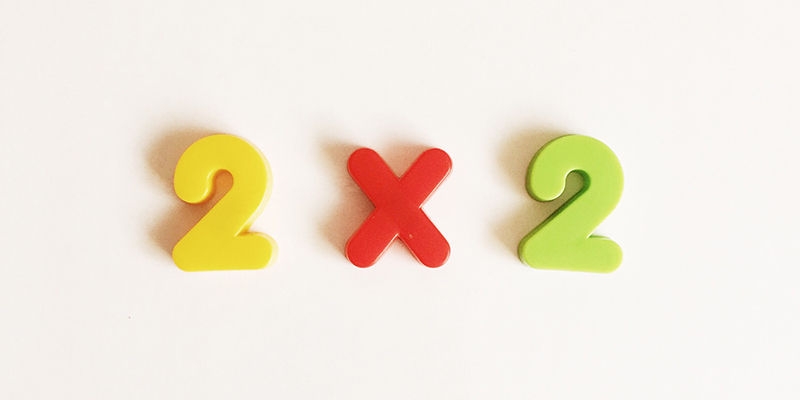
Did you know ‘2’ is the only even prime number? Did you know the letter ‘e’ is present in every odd number when it is written in words? Or Number ‘0’ doesn’t have a Roman numeral. As interesting as it may seem to you, children find it intriguing to learn about such Math trivia. This changes their perspective about the subject, and adds more depth while learning. If you are a math teacher, we advise you to first fall in love with math yourself, if you haven’t already, and then pass on the same enthusiasm to children.

Don’t Give Readymade Answers

Math is all about discovery, and once the concept is understood, it can be applied to any math equation or problem, to derive the answer. Let children correct themselves when stuck while calculating the steps of a sum, instead of prompting them the answer directly. Efforts and practice go a long way, in sharpening math skills. Give sums which are not in the textbook, so that students don’t turn pages and find the answer, even before trying. Self-help is the best help! So, guide them, and leave the rest to be figured out.

Contact us

Numerous Advantages of Adopting The Leave Management System In Your Educational Institution

Numerous Advantages of Adopting The Leave Management System In Your Educational Institution

Numerous Advantages of Adopting The Leave Management System In Your Educational Institution

Accounting for leaves and attendance is an important function of the administrative team in any educational set-up. Unlike earlier times, where the records needed to be maintained in a physical register, today ‘leave management’ is a part of the school’s ERP system. Any medium sized institute would have anywhere between 70 to 100 or even more staff comprising of teachers, principal, helpers, administrative team, and other visiting faculty to conduct sessions for children. Moreover, the number of students might be around 200 to 300, and to keep a proper track record of their attendance is a big task.

Over the last 10-12 years a number of schools across the globe including Dubai in the Middle East, have adopted one or the other, ERP Leave Management software for all the right reasons. With the boom in the EdTech space in many nations, such as UAE, GCC, Americas, Europe, and even India, the automated processes is transforming the administrator’s job role and making it easy for them to manage the hardcore work, especially that of leave management.

The Next Learning Platform (NLP) is a popular SaaS-based mixed learning platform, which is also the world’s first-of-its kind and provides its solutions to over 1,200+ schools, across 300+ cities. The tool is highly customizable and acts as a catalyst in improving the efficiency across academic and operative functions. One of its offerings also includes a sophisticated ‘Leave Management system’ that reduces paperwork and makes downloading attendance reports easy, which comes handy while calculating ‘payable salary’ at the end of the month.

Here are some advantages of an efficient Leave Management System:

Track and record staff’s leaves

The leave management program basically gives an overview to the admin about the efficiency of the staff based on their commitment to be on time, to regularly fulfill their duties, and not take too many leaves without there being any urgency. One can apply a filter and also get a function-wise understanding, as to whether the teaching staff has many ‘red marks’ or the helping staff needs a more prudent approach, by changing & re-evaluating the leave policies.

Keeping All Stakeholders Involved Notified

Every institute has a different structure of how many leaves they allocate under each of bracket; personal leave, sick leave, casual leave, maternity leave, and so on. Once these are fed into the system a reminder is sent to the recipient of any upcoming holidays and the residual leaves that he or she is eligible to receive. At the same time, a timely update is notified to the accounts team, so that they can process the pay-roll based on the actuals.

Offers affordability

Being fully automated, there is little or no human intervention required to run the Leave Management system. It works seamlessly with the existing ERP software adopted by the school. This reduces the cost of resources and cuts down on hefty expenses spent on hiring manpower. Along with costs, even a great deal of time is saved.

Safe to Use

Any school IT solution has sensitive data such as; contact details of parents, their annual income, medical history of the child, academic track records of children, personal employee information etc. Data security is of utmost importance, and most EdTech ERP systems come with advanced data encryption features that prevent unauthorized people from accessing any personal data. Also, since it is a cloud-based network, data can be accessed from any location with the aid of an Internet connection and the chances of data getting lost is minimal.

Contact us