

Combining Physical Textbooks With Digital Resources is The Mathspace Way Forward!

Combining Physical Textbooks With Digital Resources is The Mathspace Way Forward!

Combining Physical Textbooks With Digital Resources is The Mathspace Way Forward

We are a part of the digital revolution where everything is getting digitized. Be it payment to vendors, reading e-books, or even watching movies on platforms like Netflix and Amazon Prime. All your source of entertainment and learning has been concised in downloadable apps available via subscriptions. Innovation especially during the lockdown period is at its peak and many new start-ups have introduced EdTech solutions that can be made conveniently available to students at home. Mathspace is a forerunner in this space and is providing a competitive edge by offering interactive Math lessons digitally, without completely eliminating the comfort of the paper & pen format.

Learning from Physical Textbooks

The good old Math textbooks looked colorful with graphs and pie-charts and students could actually use a pen to scribble, make notes, underline, and solve sums on paper. Preserving the textbooks in good condition until end of last semester exams is a thrilling experience, which today’s generation may not understand. Let us highlight some Pros and Cons to debate on this topic.

 

Advantages:

  • Research suggests that students who learn Math or any other subject from a physical paper-back textbook are able to recall the matter more effectively.
  • Students showcase greater confidence in exams after studying from textbooks
  • Physically tuning pages, highlighting important points, and running fingers over the lines, helps enhance a photographic memory, which is possible only in physical format books.
  • Students are away from access to digital devices, and therefore there is full focus
  • One can read the textbook without connectivity and WiFi connection

Disadvantages:

  • The cost of printing a physical textbook is expensive
  • One needs to handle the paperback book carefully and keep it in good condition all through the year
  • Used books are discarded and it ends up in the dustbin, leading to wastage of resources
  • Trees are cut in order to make paper and hence unfit for the environment
  • Can’t provide an interactive learning experience

Learning from E-Books & Apps

The e-books and apps provide a fun-filled learning experience with colorful graphics that make the learning process even more seamless. Children love to interact with characters and undertake quizzes, that subtly tests their understanding of concepts. Let’s go through some points that favor this digital learning method, versus its drawbacks.

Advantages

  • Very cost effective, as parents don’t need to invest in buying books
  • Testing students through in-app games, quizzes, and challenges
  • Positively reinforce the efforts of students by incentivizing the question & answers
  • The learning can be personalized to match the individual pace of students
  • Parents and educators are kept in loop and get to track the progress of kids

Disadvantages

  • Too much time spend on devices may lead to fatigue eyes and spoil health
  • Child may get distracted and open other tabs on the internet instead of studying
  • Seriousness associated with studying might be diluted • Real retention & learning may not happen

Mathspace is an all-in-one learning app which integrates video lessons and textbooks, to make children independent learners. This platform has gained much popularity in Dubai and UAE regions, and their standardized curriculum lessons support hands-on GeoGebra applets. Giving learners dual advantage, parents have an option to print matter or choose to study on a device. Due to its personalization, schools in GCC countries and the UAE, recommends this approach to students.
Contact us

Fill in your details below or send us an email on info@knowledge-hub.com

Learning Never Stops with LEGO® Education’s Hybrid Model

Learning Never Stops with LEGO® Education’s Hybrid Model

Learning Never Stops with LEGO® Education’s Hybrid Model

eee

What is LEGO® Education SPIKE™ Prime?

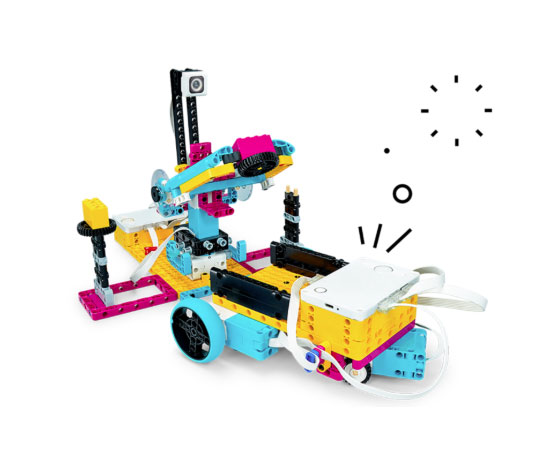
A robot or kit designed for middle school students to help in education and assignments. It was launched recently and is a kit that links LEGO® bricks to sensors, motors, and coding and wraps all these into lesson plans. The primary purpose of Lego® SPIKE™ Prime is to keep students engaged in playful activities that allow them to think and come up with solutions to complex problems.

It is also beneficial to enhance the learning level. The main components of Lego® SPIKE™ Prime are to combine the colorful Lego® elements, coding language, and easy-to-use hardware. This new education system is designed for students of age ten and up, from sixth to eighth grade. This solution was introduced in April 2020 by Lego® Education, an education-focused toys building manufacturer.

Covid-19 instigated the makers to introduce this idea for a smooth educational process, especially in GCC, Dubai, UAE, and the Middle East.

Why Education is Challenging in the Covid Pandemic?

During Covid, GCC, Dubai, UAE, and the Middle East adopted a
stay-at-home policy. Continuing education with the same spirit and keeping the creative phenomenon on. As a result, online classes were introduced. These online classes posed a challenge to teachers and as well for parents. In those difficult times, an educational toy manufacturer company introduced Lego® Education SPIKE™  Prime to continue education without any hassle and disturbance.

It is crucial to provide engaging and relevant learning experiences that help students develop resilience. Educators worldwide try to cope with the disruption in their pupils’ education due to the pandemic.

ss

What is the Hybrid Model?

Managing class and making lesson plans is always an important and challenging task. Still, during Covid, it became more challenging due to online classes in GCC, Dubai, UAE, and the Middle East. So at Lego® Education, hybrid learning methods were adopted to support education from home by delivering kits to the student’s house and conducting classes online, until it is safe to get back to school in full swing. The hybrid model has different lesson plans that give students an authentic learning experience.

How Lego® Education SPIKE™  Prime Provides a Solution?

When schools were closed in GCC, Dubai, UAE, and the Middle East for students and teachers, then Lego education came up with the solution of Lego® Education SPIKE™  Prime to build confidence and prepare students for life beyond school. Lego education provides the ultimate solution while adopting a classroom set or buying a personal kit for home use. If the school doesn’t have a playful learning STEAM experience, students can buy that system for home use.

Lego® Education SPIKE™  Prime gives the robotic system to teachers and students to continue education in Covid times in GCC, Dubai, UAE, and the Middle East.

What is Included in Lego® Education SPIKE™ Prime?

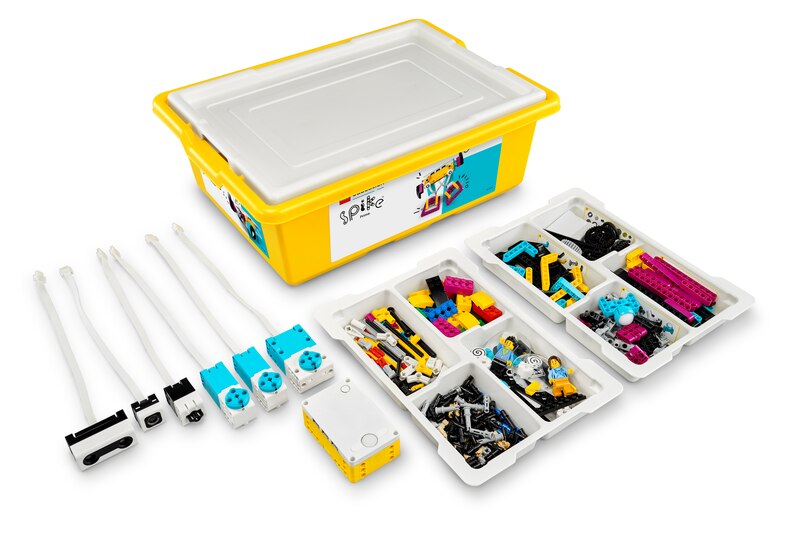
Lego® Education SPIKE™ Prime has all the elements that make the education process easy and smooth as Lego® Education SPIKE™ Prime comes with over 600 LEGO elements, including large wheels, gear racks, a color sensor, and a large motor, plus a unique maker plate for accessible building with your choice of single-board computing devices such as (SBC).

The set also has a Lego® Education SPIKE™ Prime Set (45678) and the free SPIKE™ App that helps launch students and teachers into the exciting world of robotics competitions, with over 10 hours of curriculum-based competition-ready learning. This Lego® Education SPIKE™ Prime solution brings ease and creativity to the educational system.

Contact us

Imagine the Unimaginable with MiRo Robotics & Technology

Imagine the Unimaginable with MiRo Robotics & Technology

Imagine the Unimaginable with MiRo Robotics & Technology

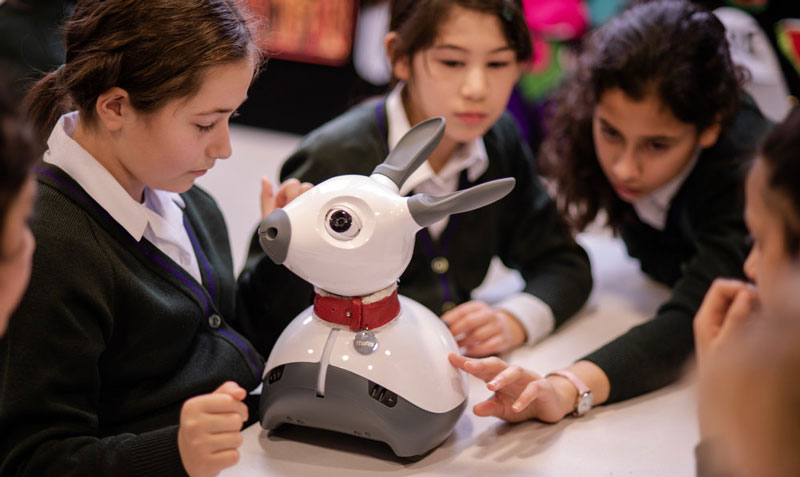
MiRo is an autonomous and advanced robotic platform for research purposes and educational advantages. MiRo Robotics & Technology enables you to imagine the unimaginable and create socially engaging classroom experiences making learning a fun activity for every student. It is conceived to mimic friendly domestic animal-like behavior while serving as a highly specified, low-cost, flexible, easily programmable AI robotic platform for both researchers and students. If you want to create a collaborative and diverse classroom experience for everyone and anyone to get involved and learn, MiRo-E is the answer.

After enormous research and the incredible success of the developer version, MiRo-E is now available to schools all across the Middle East, especially Dubai, UAE.

MiRo is the first robot in a development program that intends to accelerate companion and social robotics research progress. It also aims to promote public engagement with robots, especially students, from the bottom up.

image004 1

Why Is MiRo-E Suitable for Classrooms?

MiRo-E has powerful hardware optimized with 8-10 degrees of freedom, Bluetooth/Wi-Fi connectivity, and a wide sensor array. It renders unparalleled interaction with students within the classroom environment.

MiRo-E has a unique user-friendly interface that allows students to test their code on a simulated MiRo. Unlike other educational robots, MiRo-E’s engaging pet-like appearance immediately stimulates students’ imaginations. Colleges and universities across GCC have started using MiRo as a platform to teach STEM subjects, particularly digital technology and computing. It helps students code and implements creative ideas through a well-balanced multi-level learning experience.

What Does MiRo-E Do?

With six senses, an ingenious brain-inspired OS, and a simulation software package, MiRo-E is programmed to interact with humans using sound, light, and behavior. MiRo-E likes to be stroked and responds to sounds. It can also see everything around and likes movement. Above all, MiRo-E can be easily programmed to do much more.

What Else Is MiRo-E Useful for?

Multiple colleges and universities across UAE are using MiRo-E for assisting with:

  • Special Educational Needs (SEN) in adults and children
  • Sophisticated research into hacking robots or performing custom programming

Recommended Age Group to Use MiRo-E

  • MiRo-E can be used as a classroom pet in early school learning in the pastoral care model, enabling a journey of healing and wholeness among students. It can help support students younger than 7 years, in their natural progression and facilitates the development of their social skills, self-esteem, and ability to cope with stress.
  • The simple-to-grasp MiRoSim interface can be used for teaching primary school students ranging from 7 years to 11 years of age.
  • In secondary schools, MiRo-E is used to learn to write and implement programs using C++, Blockly, and Python programming languages by kids older than 11 years of age.

Schools and colleges across UAE encourage students below age 7 to interact primarily with the physical MiRo-E while older students utilize the MiRo educational interface for an incredible learning experience by practicing robotic coding and exploring complex research and behaviors. 

MiRo-E’s Key Highlights

  • Exhibits pet-like behavior and is ready to work straight out of the box in demonstration mode.
  • Flexible enough to be used in primary school and high-level research labs.
  • MiRo-E is engineered for educational purposes, especially learning robotic coding from basics to a high level.
  • Browser-based Gazebo App allows simulating MiRo’s behavior on screen, reducing the need of having more than one MiRo per classroom since the whole class can work on programming.
  • Friendly and emotionally engaging personality
  • Imitates a small pet’s behavior using state-of-the-art Biomimetic AI technology by responding to sounds, wagging its tail and moving its ears when stroked.
  • Possess a powerful Raspberry Pi B 3+ processor
  • Fully programmable, upgradeable, and serviceable
  • Communicates using Bluetooth/Wi-Fi/USB

MiRo-E’s is an engaging, pet-like educational robot that stands out from the crowd and stimulates students’ imaginations, helping them learn how to code, transform their imaginative ideas through the highly featured platform into reality.

Educational institutions across the Middle East, especially in Dubai, UAE are using MiRo-E as an excellent robotic device for any level of education, starting from early school learning to University.

Contact us

School Radio Platform Promotes Confidence, Communication, and Creativity Amongst Students

School Radio Platform Promotes Confidence, Communication, and Creativity Amongst Students

School Radio Platform Promotes Confidence, Communication, and Creativity Amongst Students

School is one of the first public places that a kid visits regularly. Communication is the key anywhere and at any place.
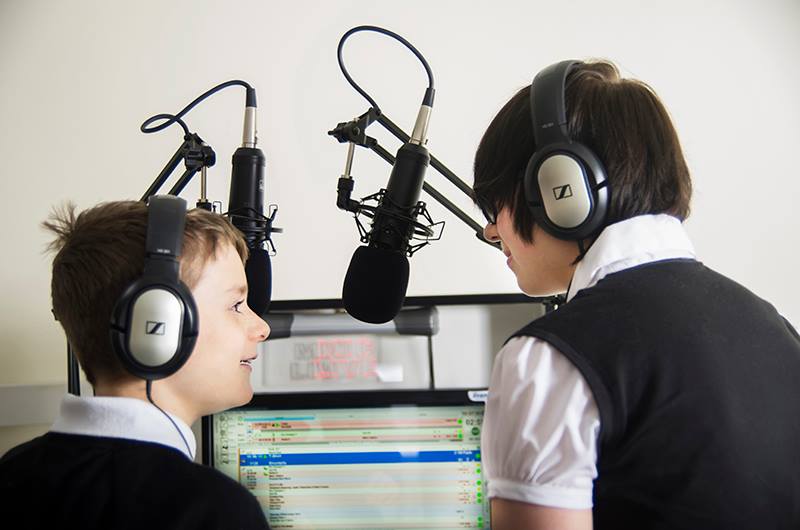
To improve, enhance and encourage communication skills, schools have School Radio. School Radio is a medium to ease communication among students of different age groups and levels.

image004 1

School Radio:

Most schools in GCC, Dubai, UAE, and the Middle East introduce innovative ways to impart learning and communication skills to their students. Students are also eager to adopt technology-based ways rather than old ways.
International schools in GCC, Dubai, UAE, and the Middle East boost confidence in their students by employing different techniques. One such way is through School Radio. It makes it hassle-free for the teachers, students, and parents/guardians to stay on the same page regarding school activities and performance.

If you want to help students build confidence and improve their communication skills, you need to up your game and introduce School Radio.

Opportunity:

It is a great initiative by the school for the students. It will help raise confident and well-spoken individuals. With the world’s pace, the kids need to be multi-talented. It is just one step closer to giving them more character, expertise, and a new skill.

This talent-based activity is by the students, and for the students. 

The UAE is one of the growing hubs for multiple arenas globally, and schools here have a greater responsibility to enable the wards with talent and education.

Possibilities:

When you employ School Radio in your school, you will be empowering your students and even teachers to evolve in a new direction. They would be able to explore new opportunities and areas of interest.

The students, teachers, and even parents in GCC, Dubai, UAE, and the Middle East can benefit. There is a list of activities that can get done on School Radio. The list includes:

  • News
  • Promotional activities
  • Talk Shows
  • Drama
  • Discussions on issues
  • Announcements of competitions
  • Announcements of school or student’s achievements
  • Music
image007

Benefits:

School Radio has proved to be favorable for all the parties involved to make the school a better learning environment in many different nations.
School Radio has benefits for students as individuals and the school as a community. In the Middle East, a lot of its population is not native. Most of the population in the GCC speaks a different language from the official language.
The benefits to all the parties include:

  • Developing skills for speaking as well as listening
  • Learning new words
  • Gaining knowledge by listening
  • Builds confidence
  • Teamwork
  • Helping kids with learning and writing better
  • Empowerment to the students to voice their opinions and even concerns
  • Inclusion for kids and students of all levels
  • Sense of authority and responsibility to the students
  • Gaining extra knowledge apart from the curriculum
  • Including topics from the curriculum to reinforce major topics of the syllabi
  • Ease of use
  • Wider scope of use
  • Free resources

School Radio Packages and Products:

There are many packages offered by School Radio to cater to schools of all budgets. There are even starter packages to entertain schools with a tight budget.

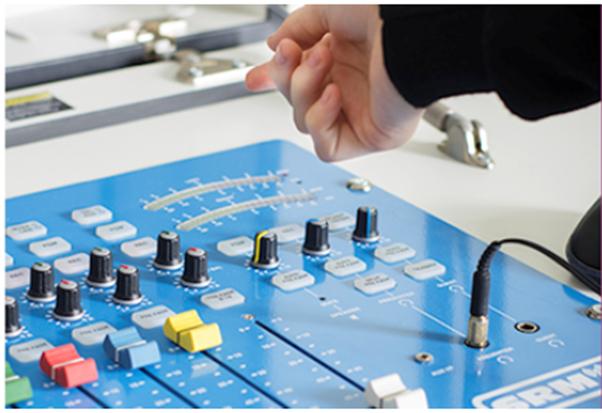
The products or devices that would come with the School Radio are:
• 2 microphones
• 19inch screen
• Built-in USB myriad channels
• 1 VoIP live channel (Skype)
• Mic Live
• Mini-tower with 4GB Ram, Intel G3 Processor, 1TB hard drive
• Wireless keyboard and mouse
• Windows 10 Pro OS

School Radio is a great opportunity for students and will prove a great investment with multiple benefits.

Contact us

Understanding Ordering of Numbers and Applying the Rules of Ascending & Descending Order Value

Understanding Ordering of Numbers and Applying the Rules of Ascending & Descending Order Value

Understanding Ordering of Numbers and Applying the Rules of Ascending & Descending Order Value

One of the most important topics for early Math learners is to identify the order of numbers and correctly arrange them from small to big and big to small. Ordering is basically arranging numbers in a sequence where the successive number either gets larger or smaller, depending upon the equation.

Ascending Order

When a set of numbers are arranged from smallest to largest, those numbers are said to be in ascending order.
Explain to children that ascending means ‘moving up’. When you climb a mountain or stairs, you move in upward direction, this is termed as an ascend. Thus, ascending order is denoted by an upward arrow sign.

Descending Order

When numbers are arranged from largest to smallest, it is said to be in descending order.
When you move from top to bottom or when you walk down the mountain, you are essentially descending. Thus, descending order is denoted by a downward arrow sign.

Examples of Equations for Ascending Order

#1 Arrange the numbers in ascending order – when the numbers follow a particular sequence.
3, 4, 2, 1, 5
Answer: 1, 2, 3, 4, 5,

#2 Arrange numbers in ascending order where the starting digit is not 1.
7,9,10,8
Answer: 7, 8, 9,10

#3 Arrange the following random numbers in ascending order from 7 to 13 – when the numbers do not follow a continuous sequence. Numbers that are not next to each other on a number line.
10, 13, 9, 7
Answer: 7, 9, 10, 13

#4 Arrange the following 5 times table in ascending order.
15, 10, 30, 45
Answer: 10, 15, 30, 45

Examples of Equations for Descending Order

#1 Arrange the numbers in descending order – when the numbers follow a particular sequence.
2, 3, 5, 4, 1
Answer: 1, 2, 3, 4, 5

#2 Arrange numbers in descending order where the starting digit is not 1.
3, 2, 5, 4
Answer: 2, 3, 4, 5

#3 Arrange the following random numbers in descending order from 25 to 10 – when the numbers do not follow a continuous sequence. Numbers that are not next to each other on a number line.
23, 17, 10, 25
Answer: 25, 23, 17, 10

#4 Arrange the following 8 times table in descending order.
16, 32, 64, 40
Answer: 64, 40, 32, 16

Pre-learning strategies before Introducing the Concept of Ascending & Descending

Directly exposing children to Mathematical terms such as ‘ascending’ and ‘descending’ can get a little intimidating. So, to warm them up and informally share the idea with your kids, here are some activities you can practice;

  • Keep 4 to 5 balls of different sizes and ask your child to arrange them in order i.e.; from smallest to largest and then largest to smallest.
  • Take 4 to 5 bottles of different heights and then encourage the learner to place the bottles in height-wise order starting with the shortest and proceeding to the tallest, and vice versa.
  • Introduce objects of different weights. Then let your child pick up the object and estimate which one is the heaviest and which is lighter, and the lightest.
  • Assign each child with a number from 1 to 5 or 15 to 20, and let them figure how to stand orderly in a row from lowest to the highest number and highest to lowest.
  • Play a relay race, where children have to pass on the baton to the person wearing the jersey of the next number. Example, number 1 jersey passes on the baton to the participant with number 2 jersey.

Mathseeds is an excellent Math based platform available in the UAE, across Dubai and other Middle East countries. Mathseeds targets children between ages 3 years to 9 years and contributes in establishing a sound fundamental base for kids to learn important math concepts. The lessons are structured systematically and the level of difficulty advances gradually, depending on the learning capabilities of the school goers.
If you stay in GCC or other Middle Eastern country, and wish to introduce ascending and descending order concepts to your learners in a fun and simplistic manner, you can subscribe to the Mathseeds app, by learning more about it here: https://knowledge-hub.com/mathseeds/

Contact us