
PowerPoint Presentation Tips To Enhance Presenter Skills

PowerPoint Presentation Tips To Enhance Presenter Skills

PowerPoint Presentation Tips To Enhance Presenter Skills

We must have all at some point sat through lengthy PowerPoint presentations, and lost the plot of what’s happening half-way through the speech. What makes presentations so boring?

Well, most slides are filled with content in the form of long sentences and paragraphs, instead of projecting interesting visuals that capture the interest of school students, and executives in the case of an office environment. Imagine having to read 40 slides of content, one after the other. Exhausting, isn’t it!

The true deal is that each slide on the presentation must carry short and crisp bullet points that don’t exceed 5-8 words. The presenter must take the onus of being able to speak by taking cues from the bullet points, rather than reading word-to-word from the screen.

Here are some tips that will help you become better at making presentations and subsequently evolve as confident presenters.
#1 Keep it short & sweet

We cannot reiterate the fact that keeping simple bullet points and important words that facilitate the presenter only need to be included on the slide. The class should be paying more attention to the speaker and not the slide. The audience should be able to establish a connection between the topic that is being covered and the pointers on the screen.

#2 Maintain proper legibility

Trying out fancy cursive fonts is fun, but there’s no point using it if the audience is not able to read what is written. Pay special attention to font style and its size. Most popular fonts that ease the reader are; Arial, Calibri, Verdana, amongst others. There are as many as 700 font styles to choose from, however, a good presentation only makes use of legible fonts that suit the title and the body copy, so that one can quickly read the slide and then turn their attention to the speaker.

#3 Add Visuals

People remember facts easily when it is presented in a visual format. So focus on including attractive visuals on the slide to convey the message through well-made infographics. Even as a presenter, you would get more confidence while speaking if the slide is made well and looks presently pleasing. You may insert a picture saved on your local drive or add an ‘online picture’ by choosing that option from the drop down menu.

#4 Animate The Slide

Special animation effects add a bit of bling to the presentation and give it character. Also it draws attention to the points on the slide which are being spoken about vs. the points that have been covered or are not being currently discussed. There are many animation features available such as; fly in, fade, fly out, emphasis, zoom, and it is even possible to dramatize the visual or text by adding special sound features on its arrival. We suggest making use of these animations in moderation and not to overdo it, so that one doesn’t get distracted.

#6 Pay Attention To Image Layout

We have already discussed the importance of having visual images on the slide. However, how many are good enough, is the question? Usually, you can accompany 1 or 2 images on the slide, with the text beside it. Don’t try to cramp too many pictures, as it will only make the audience cringe and the emphasis will be lost. Your presentation is not a photo album!

In today’s digitally connected world, PowerPoint presentations have become a day-to-day affair in classrooms. Students are encouraged to submit their project work by making PPTs and presenting it in front of the class, such as to inculcate office etiquette at school level. Especially in IB schools across Dubai and other Middle East regions, smart boards and projectors are a must-have.

TechnoKids has devised a technology-based curriculum for K-12 schools to enthuse students about computers through a project-based approach. Here students learn for the very first time how MS Office works and make use of apps such as Word, PowerPoint, Excel, etc. TechnoKids is quite popular in the UAE, as across the GCC regions. Total Words

Contact us

Fill in your details below or send us an email on info@knowledge-hub.com

Introducing Calculators To Strengthen Child’s Understanding Of Math

Introducing Calculators To Strengthen Child’s Understanding Of Math

Introducing Calculators To Strengthen Child’s Understanding Of Math

The standards of education all across the globe are rapidly transforming and it is our duty to keep up with it. While children using calculators to solve math problems was a foreign concept in the past, it is now considered normal, even encouraged in multiple schools and universities across Dubai, UAE, GCC and the Middle East. Now, we know you must be wondering, if a child is using a calculator to solve a math problem, then how are they learning anything on their own? While your concern may seem valid, we are here to bust that myth. Even to use a calculator, you still have to think! The math problems handed out in tests are extremely lengthy and the use of calculators will not only excite them but also help them with critical and analytical thinking in a much faster way. One of the other ways to keep your child hooked to math is by using the online programs by Mathletics. They offer interactive yet flexible programs for students and keep them intrigued through attention-grabbing activities and rewards. A flexible math program also helps them understand concepts and problems at their own pace and style. Multiple teachers who introduced calculators to their students have observed a peak in interest and a boost in motivation as well as mathematical skills. Here are a few more reasons why you should hand your child a calculator as well.

#1 Calculators encourage the use of varied strategies

Math problems at higher elementary levels are famous for being lengthy and complex in nature. Using a calculator helps children save time and therefore allows them more time to solve the problem in more ways than one. For example, they can use one strategy to solve the problem and another on the calculator to re-check the answer.

#2 It promotes persistence and patience among children

Students will experience success with some problem-solving strategies and failure with others as they begin to think more creatively and attempt new methods. Many teachers noticed that when students couldn’t answer problems fast while using a calculator, they were less discouraged; they attempted to figure out why their ways didn’t work. They then changed their minds and tried a new method. And when you try newer methods to solve the problem, you learn way more than you will in a conventional non-calculator setup

3. Calculators help overcome computational limitations

Children frequently have the conceptual understanding to tackle problems that are far more challenging than their computing competence. Overcoming computational limits is especially beneficial for individuals with special needs and removes hurdles to more advanced levels of math training. It also encourages a more inclusive learning environment as all the students will have access to the same calculators during the test.

#4 Students can solve more problems in less time

Since a calculator is essentially a machine, it derives answers to complex mathematical problems in much lesser time. It allows children to work more quickly and hence gives them time to solve more problems in the same time frame. The use of calculators strengthens their understanding of concepts while helping them apply complex strategies much quicker.

Learning math with calculators has had a tremendously positive impact on children and re-ignited their willingness to solve complex problems. So many students are scared of this subject because applying the strategies seem time-consuming, frustrating and overwhelming; this is the core problem usage of calculators tackles and in turn, boosts their understanding of the subject. Teaching them effective calculator skills will prepare them for the future of education!

Contact us

Fill in your details below or send us an email on info@knowledge-hub.com

Importance of Robotics In Education

Importance of Robotics In Education

Importance of Robotics In Education

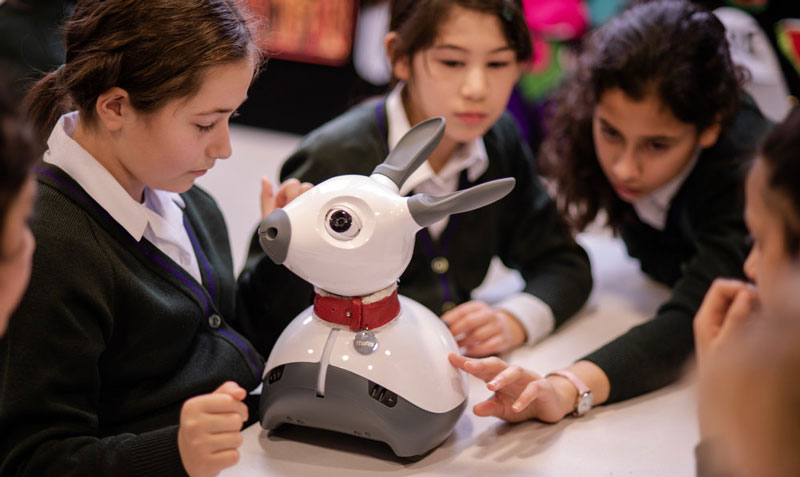
Robotics is not just a theory of the future anymore, it is a part of our present reality now. Apart from its multiple uses in various industries, robotics is also an exciting and innovative teaching tool that is becoming increasingly significant as kids learn a variety of new concepts and abilities that will be highly helpful in the future through recreational activities. It is the branch of engineering that specializes in the complete process of designing, building, and deploying robots. Thus, knowing the fundamentals or introducing robotics to the children in school can prove to be extremely beneficial. There are numerous robotics toys in the market, each with its own key to encouraging robotics learning in the classroom. One such is the MiRo-E robot, which is highly popular in Dubai, UAE, GCC and the Middle East. It is a character built with a huge range of software, sensors, and motors and possesses excellent communication abilities, making it an ideal companion for new-age education for children.

How to incorporate Robotics into education?

It is well established that robotics can transform education as well as build a conducive environment for students that facilitates effective STEM learning. Through communicative robots like MiRo-E, students can customize their own programs and learn coding in the most interactive way possible. As a result, robotics for kids can become a tool that aids in the understanding of abstract and complex concepts in science and technology courses as well as facilitate creative thinking. However, this is not where the advantages of robotics in education end, it can also serve as a great tool for building teamwork among children. The teacher or educator can come up with interesting programming and coding activities and conduct interactive team challenges with the help of customizable robots such as MiRo-E.

The importance of robotics for school-going children

Technical knowledge can always be a task to teach young children. However, the advent of robotics can change that. Here are a few advantages of making it a part of your curriculum.

  1. Robotics can not only encourage language development but also improve innovation and critical thinking skills among students
  2. It makes STEM concepts interactive and engaging for young adults who often have a reduced attention span.
  3. Since robotics has a futuristic essence, it builds curiosity among kids, therefore encouraging more concentration, logical thinking, and problem-solving attitude.
  4. With the help of programmable robotics software, educators can conduct collaborative activities that can facilitate leadership skills, socialization and a teamwork mindset in students.

Robotics is not only for students who have a keen interest in programming and coding. The team-building activities can be divided into three phases: designing, construction and coding. Each child with a different aptitude can be allotted a phase to work on the basis of their interest. This will help them enhance their skills while getting a comprehensive understanding of robotics through proactive communication and teamwork among their peers.

The use of educational robots in the teaching-learning process for children will allow for better knowledge and interpretation of their surroundings (the world we currently live in). Moreover, this will help young leaders of tomorrow gain a competitive edge over other students and come at par with the best practices of education worldwide. While robotics doesn’t necessarily require a subject of its own in the school curriculum, it can be optimally incorporated into science and innovation-led activities that not only allow students to face new challenges but also create an entirely immersive learning environment, which is the new face of education around the globe.

Contact us

Fill in your details below or send us an email on info@knowledge-hub.com

Important Safety Rules That Every School Should Implement

Important Safety Rules That Every School Should Implement

Important Safety Rules That Every School Should Implement

A school is like a second home and educators have the dual responsibility of not only imparting knowledge, but also nurturing students so that their emotional needs are taken care of. The school environment plays an important role in creating a positive and safe haven for students to thrive and develop into well groomed individuals.

On the other hand, an unsafe school premise creates fear and uncertainty for children and they might feel threatened to come to school, making it an unpleasant affair. Imagine spending 6 hours of the day feeling uncomfortable about one’s basic safety, and ultimately losing trust in being able to receive a rightful education.

So how do schools create a pleasant environment for students? Before we answer that question, let us look at what comes under this overarching umbrella that defines safety in school.

Happy kids at elementary school

Physical Safety

Just as a workspace has regular safety drills and emergency equipment in place, a school premise too should take every measure to maintain safety. The building, its playground, science labs, classrooms, and libraries, must be fire & hazard compliant. The school staff & admin department must be trained to respond efficiently in times of crisis.

Monitored Safety

The school needs to be under 24*7 CCTV surveillance. Every nook & corner should be installed with a camera and the staff needs to be vigilant about monitoring the premise. This provides great relief to parents, as the school takes responsibility of ensuring that no child is being harrased, no intruder enters the premises, and there are no chances for accidents, while the school is functioning.

Safety Protocols In School Can Be Maintained With the Following:

Below are some safety protocols in school can be maintained with the following:

#1 Visitor Management System

Every time a visitor wants to enter the premises, the security prepares a gate pass, checks ID proof of the visitor, and takes a face picture of the attendee. Only when all details are authentic, and a confirmation is sought from the admin department, should the visitor be allowed into the school premise. There are many visitor management software available which make the process seamless by auto generating passes and sending notifications & approvals via the system.

#2 Metal Detectors

If you were to pass through security checking at an airport you would have to walk though metal detectors. Similarly the school security may need a hand held body scanner to examine the visitor and even the staff, every time they set foot on the premises. This will prevent any hazards from harming students with dangerous objects and further improve safety of the school.

#3 Alarm & Panic Buttons

Students & staff must be made aware of the alarm noise, which indicates some unforeseen event on the site. The idea is to safely gather everyone present in school at a spot which is out of danger, before things get heated up. An announcement usually follows the alarm with instructions of safe evacuation through the emergency staircases.

#4 Bus Surveillance

Real-time bus tracking system is another efficient safety mechanism to ensure utmost precautions while traveling from home to school and vice-versa. Parents get real-time tracking of their child’s bus journey and can even monitor the child’s activities via live CCTV footage. If there is a breakdown, an immediate notification is sent to parents or if the bus detours from the normal route, parents are made aware of the same. Next Learning Platform is a popular ERP software that integrates every aspect of safety on school buses, via its efficient transport tracking module.

Over 1200 schools trust NLP and believe in its SaaS-based mixed learning agenda. The digital revolution is taking over and the more adaptive an institute is to these digital tools, the higher it will rank on credit worthiness. NLP is availed in more than 30 cities including, Dubai and other Middle East regions for its multifaceted offerings. From content management, to student data analysis, and administrative automation, to school bus safety, this platform is customized to suit all your school’s requirements. So are you ready to take the next step? If you need more information about NLP and its availability in UAE or other GCC regions, simply contact us via our website : https://knowledge-hub.com/

Contact us

Fill in your details below or send us an email on info@knowledge-hub.com

Being a Good Coder is Not Just About Knowing Programming: There Is So Much More To It

Being a Good Coder is Not Just About Knowing Programming: There Is So Much More To It

Being a Good Coder is Not Just About Knowing Programming: There Is So Much More To It

You must be very proud of getting a software engineering degree from perhaps the most elite institutes in your region, but let us tell you the battle is only half won. Learning to code can get you a job at a multinational, but proving yourself requires more than just subject knowledge. Through this Blog, we aim to highlight those qualities that are essential for thriving within the work environment and be recognized as a productive team member of the organization.

Matatalab_ for schools

Effective Communicator

No matter how brilliant a code geek you are, that doesn’t make you efficient at being able shoulder the responsibilities of a project and derive amazing results from it. The most important skill that coders need to possess is being able to communicate effectively and in a timely manner. Of course the first step is listening. While having a discussion about the project requirement, take time to listen to what the ultimate ‘goal’ or ‘solution” your client or boss is looking to achieve. For example; as a coder you might be expected to develop an ‘app’ that is able to monitor the fitness levels of the user or be asked to devise a Robot that helps senior citizens with household chores. A good coder is able to explain the status of his work, whether or not it will be ready by the timeline, showcase the functioning of a prototype, and have an open discussion about modifying & making changes to the mechanism, to suit the requirements.

Have well-rounded knowledge

As a coder one needs to be brilliant at programming, but not only stick to having knowledge about a single technology, instead have a whole spectrum of information at his finger-tips. He must be aware of the latest developments in the tech space, be open to trying out new and improved techniques of coding, and use alternate methods to problem solving. As a specialist in the field, you need to know how technology interacts with different software, hardware, and networks, that sum-up the entire gamut of the project requirements.

Puzzle Solver

There is no doubt about the fact that an efficient coder is one who is good at solving puzzles. There would be so many bugs to fix and system-crashes to bear, until the final flawless solution is manifested. A coder’s resilience is tested every now & then and it is hazardous to have a breakdown in the middle of an assignment, both emotionally & work-wise. Having a cool mind, learning to work through problems, and gathering a team who can brainstorm & find solutions, is vital for overall success.

Adhering to Timelines

No one likes a subordinate who always skips deadlines and is to be reminded time & again for submitting his work tasks. As a developer, you have the responsibility to discuss realistic timelines with the project manager and in-turn keep your promise, such that there is no disappointment and delay, which affects the team’s deliverables. One needs to factor adversities and ask for some buffer to be included, so that there is sufficient time to fix unwanted bugs or accommodate additional requests later communicated by the manager. Timeliness is a sign of professionalism, and it showcases how committed you are to your work responsibilities.

Team player

Most job profiles require collaboration and teamwork and being a programmer pays even more emphasis on the ability to work with others. Imagine sitting in a room alone and writing algorithms single-handedly until it gets too overwhelming to handle. A competent coder always invites others to join-in, is open to brainstorming, shares problems & glitches with others, and together works on the best possible action which is agreeable by all.

While it’s too far fetched for you to imagine your 5 year old kindergarten child to be the best coder at his job a few decades down the line, as a parent you can atleast introduce the subject to him and take a step to inculcate a liking towards the same.

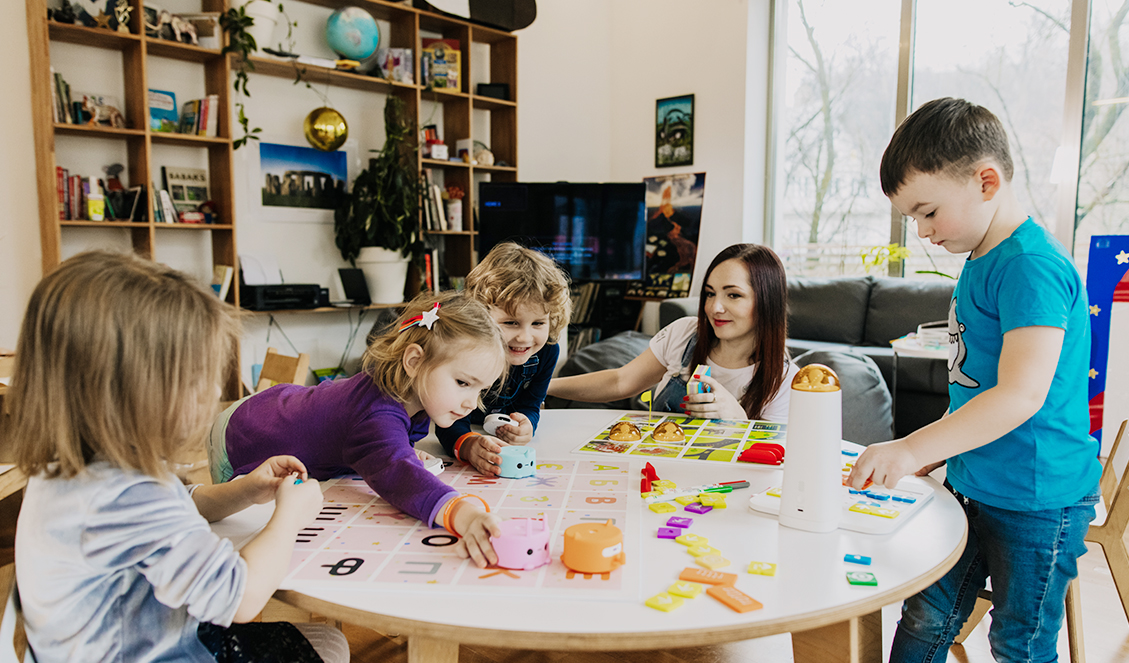
The Matatalab Coding Set has become popular amongst educationists in Dubai, GCC and other Middle East regions for good reasons. This platform has been designed for students of ages 4 to 9 and offers a block-based, tangible programming tool that allows students to move a robot through an environment by way of a Bluetooth-enabled command tower and board. Matatalab’s “Coding Like ABC” tangible blocks allow students to perform and demonstrate 21st Century Skills by learning through play. With this educational tool, students in UAE learn and play in tactile ways without the need of a tablet screen or an app.

Contact us

Fill in your details below or send us an email on info@knowledge-hub.com