
The Future Is Here With Drone Technology. Students Learn to Code One In Their Classrooms.

The Future Is Here With Drone Technology. Students Learn to Code One In Their Classrooms.

The Future Is Here With Drone Technology.

Students Learn to Code One In Their Classrooms.

Is it a bird? Is it a plane? Oh, it’s a drone! Drones are the coolest delivery technology that’s more like a vehicle that moves from place A to place B, carrying objects around. Jeff Bezos, ex-CEO of Amazon took everyone by surprise when he used drones to carry products bought on his e-commerce website to customers, way back in 2013. Logistically, it makes perfect sense to get your parcel delivered to your homes in under 30 minutes, by avoiding all traffic that could possibly delay the process. An excellent last-mile delivery option indeed! But is this a sustainable option? Read the Blog to find out more. 

Robotify_banner

Reaching Remote Areas 

In rural parts of small towns & villages, where road access is a problem, drones are an absolute necessity. They can deliver products of up to 5 lb (2.27 kg) of weight to farmers and workers who are far from cities.

Hovering Cellphone Towers  

Drones can reach places where it isn’t feasible to install a cellphone tower. Essentially, you can call these ‘flying cellphone towers’ where a 4G router is attached to the body of the drone and provides connectivity to hundreds of internet users over 20-30 miles.

Environmentally Friendly 

According to statistics, a single vehicle emits about 4.6 metric tons of carbon dioxide per year. We definitely need to find a way to reduce road traffic to be able to save the environment for good. Logistics firms are looking for solutions to reduce their carbon footprint, so what better method than switching to drones? In reference to an article published on www.nature.com, drones consumed up to 94% less energy per parcel than jumbo diesel trucks did. The ultimate conclusion is reduced energy consumption per delivery in lesser time.

Capturing Aerial Images 

Impressive pictures get more social media views and get users excited about the display. The Real Estate sector has been using drones in a big manner to show off their property from different angles. Prospective buyers get a better view of the property and the chances of a sale are higher. Also, since drones can fly over areas where a photographer can’t reach, great landscape images & videos can be captured in 360-degree view in full HD quality. From the sand dunes in the Middle East to the remote Islands of Iceland, a drone can capture it all. 
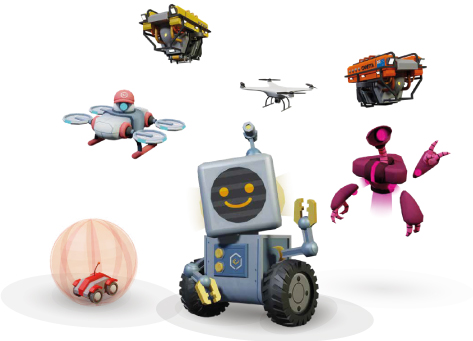
Robotify’s Module on Delivery Drones 

Robotify is a platform widely used by education institutes in Dubai & other GCC regions, and other developed regions of the world, to promote coding and encourage STEAM learning in classrooms. This virtual platform currently offers 100 hours of robotics and programming courses to budding tech enthusiasts in a game-like manner. 

Take-away learning points for students, apart from trying their hands-on coding a delivery drone virtually: 

What is UAS? 

The abbreviation UAS stands for an Unnamed Aircraft System that can be maneuvered or controlled remotely from the ground. Such drones have also been used for tricky rescue operations to locate missing persons or objects and provide aid during disaster relief work. In fact, regions like the UAE are investing heavily in drones and smart weapons to stay ahead of other nations. 

What are Drone Sensors?  

Drones also have autonomous functionality, where it doesn’t require a person to navigate them from the ground. Drones make use of air pressure sensors to stabilize their flight and hover safely without any chance of accidents. 

What is UAV? 

UAV means an Unmanned Aerial Vehicle, and it operates using AI (Artificial Intelligence). These drones fly autonomously via an onboard autopilot computer powered by pre-programmed sensors. The drone is able to independently take off, land, and do its job with precision. 

Explain a UTM Project. 

NASA (National Aeronautics and Space Administration) initiated & manages the UTM (Unmanned Aircraft System Traffic Management) project to manage air traffic to make drone journeys safer and prevent any mishaps. 

Contact us

Fill in your details below or send us an email on info@knowledge-hub.com

New Year Books for Children: A Must Read to Start 2023 With Optimism

New Year Books for Children: A Must Read to Start 2023 With Optimism

New Year Books for Children:

A Must Read to Start 2023 With Optimism

Squirrel’s New Year’s Resolution Pat Miller (Author) Kathi Ember (illustrator)

A New Year is like a new chance, a perfect opportunity to assess what’s gone by and how you can improve or get things right. Resolutions bring hope that the next year 2023 is going to be better than the previous one if the right efforts are made. Encourage your young ones to make a to-do list by setting some goals for themselves (for example: reduce TV time, involve them in charity work, be more hardworking, help mom in the kitchen, make new friends & be kind). If you think this is a good reason to start journaling goals, try reading ‘Squirrel’s New Year’s Resolution’ to your kids. This book starts by explaining to kids why resolutions are made in the first place. And what it signifies? The cute mascot squirrel visits the forest and encourages her friends to pen down their New Year Resolutions, while she does the same for herself.

New Year’s Day (Celebrations in My World) Lynn Peppas (Author)

Ever wondered how New Year’s Eve is celebrated across different cultures around the world? Apart from the English calendar New Year, different religions have their own auspicious New Year days following the customs and traditions of their ancestors. For example; Chinese people celebrate Lunar New Year which is an annual 15-day festival and is conducted anytime between January 21 – February 20. This year the Chinese New Year falls on 22nd January 2023 and according to the zodiac sign, 2023 will be the year of the Rabbit. That’s indeed very interesting to know! It is through this book that children will be exposed to global celebrations that signify New Year’s Day and have a good time imagining fireworks atop the Burj Khalifa in Dubai (as it is an annual trend) and the grand ‘New Year’ parade in London which takes place on 1st January every year. The Reading Eggs Library (which is available in GCC and other regions of the Middle East) has an array of interesting books for kids. The platform is designed in a manner that motivates students to read and expand their knowledge on various topics.

The Night Before New Year’s Natasha Wing (Author), Amy Wummer (Illustrator)

All good children go to bed by 9 pm, but an exception is made on New Year’s Eve. Of course, it’s great fun to wish each other as the clock strikes 12 am before dozing off into 2023. The evening must be planned well to keep the family awake and throbbing with games, food, festoons, songs, and dance. But will our sleepy children make it until 12 am? Why don’t you read the book to find out for yourself?

Shanté Keys and the New Year’s Peas Gail Piernas-Davenport (Author), Marion Eldridge (Illustrator)

Bright and vibrant are adjectives that describe this book the best. We are sure the verses of the story will get your mouth watering as Shanté keys and her dear granny set out to prepare New Year’s dinner. The table is ready to be laid with warm and soul-touching foods such as baked ham, cornbread, and chitlins, but wait, something seems incomplete! What about the black-eyed peas? A New Year meal seems incomplete without a pot of black-eyed peas and it is considered to be bad luck! Shanté knocks from door to door to borrow some peas from her neighbors, and while she is on her sojourn, she also receives some traditional food items from them. Will Shanté’s good luck dinner be successful? Read through to find out. What’s your favorite traditional go-to New Year’s dinner if you are a resident of the UAE?

Happy New Year: A New Year’s Day Picture Book for Kids celebrating the importance of a brand New Year Dee Smith (Author)

The New Year is about joy and celebration! It reminds us of all the things that we’ve been grateful for in the past year and lights a burning spark to what we can look forward to! From a child’s perspective, all they wish for is ‘new opportunities to learn and grow’, ‘new friends’, ‘new memories’ and the list goes on. Take a moment to ask your little one what he or she expects from the New Year! Cozy up with your pre-schooler and read aloud to enjoy some precious time with your kiddo by reading this book as a bedtime story. Bonus points for guessing the places around New York captured through the book.

Contact us

Fill in your details below or send us an email on info@knowledge-hub.com

Next-Gen Creative Paper Windmill Making Art: Easy Coding Lessons for Kids

Next-Gen Creative Paper Windmill Making Art: Easy Coding Lessons for Kids

Next-Gen Creative Paper Windmill Making Art:

Easy Coding Lessons for Kids

How do we teach kids to harness the power of wind energy and explain the concept of renewable sources of energy? Of course, by designing a windmill during art class. 

A windmill has blades that spin with the force of wind and the energy collected is stored and used to generate power that enables the generators to function. Generating electricity in this manner does not pollute the air and is totally safe for the environment. 

Usually, origami paper is used, and step-by-step it has to be folded to make an amazing artistic windmill for kids. It’s an easy craft exercise and also helps in developing one’s motor skills. And once the model is complete, oh, what joy it is to run around with a windmill in your hand, and see the blades turn swiftly. 

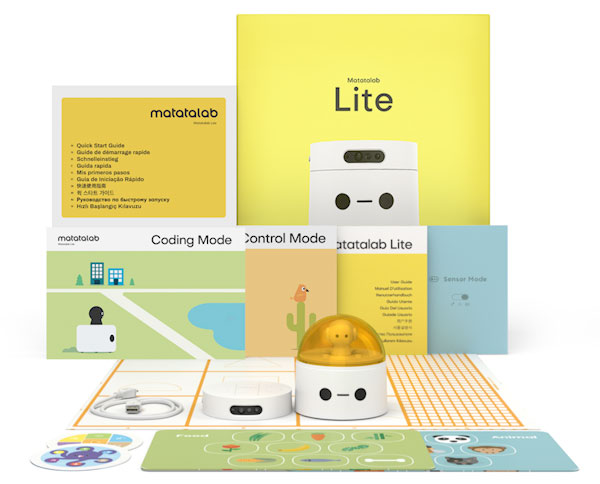
We’ve known Matatalab as a coding set for kids and its versatility has developed a keen fonding amongst the users. Matatalab is readily used in schools across the Middle East and GCC regions. 

Let us learn a brief history of this gamified-coding platform. Matatalab was founded in 2017 by robot-developing enthusiasts who wanted to pass on a part of their coding knowledge to their children who were of kindergarten age. Thus, proved, that the Matatalab kit is wholesomely developed keeping an easy user interface in mind, and is completely suitable for kids. 

Paper Windmill Making with Matatalab Lite’s MatataBot 

Steps to play: 

Keep the following materials ready:

  • MatataBot
  • Controller
  • Oil pastels
  • Colored Paper
  • Pens
  • Child-friendly Scissors
  • Double-sided tape
  • Thin & thick straws
  1. Use the controller mode at the back of the Robot and make the robot ready for movement according to the symbols indicated on the buttons.
  2. Simple coding steps involve, giving the MatataBot command to move forward on paper, then turn right, move forward again, turn right again, and continue this until a square is formed.
  3.  Get a pair of child-friendly scissors and cut out the square shape carefully (monitored by an adult)
  4. Fold the cut-out square into half but do this process diagonally
  5. Use oil pastels and decorate the cut-out paper with embellishments to make it as attractive as possible
  6. Now hold the paper firmly and cut the diagonal lines 1/3rd way up
  7. Stick the diagonal cross with double-sided tape to secure a firm grip
  8. Flip the windmill over and stick the straws at the back of the windmill
  9. Flaunt your self-made paper windmill to your friends & family and have fun!

Matatalab Lite is most famous in Dubai and is priced at an affordable selling price, so as to encourage maximum number of children to learn coding, especially in the UAE where the Government’s plan is to optimally utilize digital resources to enhance efficiency & creativity and make the region the world’s leading Smart City of the world. 

Reasons that indicate why Matatalab is a suitable coding set for kids: 

  • It helps enhance cognitive skills by enhancing attention and memory power. 
  • The set is screenless, so it is beneficial to do away with the side effects of excessive screen usage. 
  • The instructions are easy to understand and the basic symbols are represented by arrow keys that can be decoded easily.
  • Since the MatataBot facilitates play, it stimulates the child’s imagination, creativity, and builds excitement. 
  • Coding is further combined with Art & Craft lessons, and the cheerful music that plays in the background is worth exploring. 
  • No prior knowledge is required to work with a MatataBot. Even a complete beginner can learn coding from scratch, just by experimenting with some help from an adult. 
  • The kit is endorsed as safe for usage and is child-friendly. 

Contact us

Fill in your details below or send us an email on info@knowledge-hub.com

Types of Numbers In Maths With Examples

Types of Numbers In Maths With Examples

Types of Numbers in Maths With Examples

Numbers play a very important part in our lives. We use numbers to tell the time, for the sake of measurement, to weigh objects, and even to count money. We introduce number digits to kids gradually, firstly single digits, and then tens, hundreds, thousands, and so on. 

Numbers are identified in different types such as decimal numbers, fractions, and other such categories, for the sake of simplifying the concept and offering clarity to kids. Through this article, let us elaborate on the different kinds of numbers and what each of them signifies. 

Natural Numbers 

As the word suggests, natural numbers are any counting number that consists of all positive numbers from 1 to infinity. This set does not include zero or negative numbers such as (Example: -1, -19, -13).  Another condition that it abides by, is that the numbers have to be integers, and not fractions or decimal numbers. Basically, an integer is defined as a whole number (Example: 12, 99, 1000) are all integers, but (Example: ½, ¾, ¼) are not considered integers, because they are fractions, hence not a natural number.

Struggling to teach your little one natural numbers? Try out the Mathseeds e-learning platform, where children get to interact with their favorite mascot ‘Eggy’, and learn Eggy Numbers from the comfort of their homes. Mathseeds is available for subscription in the UAE, including the GCC counterparts.

Whole Numbers 

Whole numbers are a set of natural numbers including zero. They exclude all fractions, decimals, or negative numbers. The only differentiating factor between natural numbers and whole numbers is that whole numbers include zero ‘0’, while natural numbers don’t. 

Integers 

An integer is basically any number that is not a fraction, a decimal, or a percentage. Other than these three exceptions, all numbers are integers. All positive numbers are integers (Example: 10, 74, 1001, 678), all negative numbers are also integers (-133, -792, -2), and zero (0) is also an integer. So, zero to infinity and all negative numbers are integers.

Rational Numbers

The word rational was borrowed from the term ‘ratio’. Mainly rational numbers are in the form of p/q, which means p is the integer and q ≠ 0. These numbers are in the form of a fraction to be included in the rational number category.

Let us see some examples of rational numbers;

  • 30/1 (here both numbers are integers, hence it is a rational number).
  • 0/1 (here where p is 0 and q is 1, so the fraction can be considered as a rational number).
  • -3/-6 (both p and q are negative integers, they are therefore considered rational numbers. This is also called a positive rational number, as the negatives in the numerator and denominator get cancelled out and give a positive answer).
  • -12/7 (the numerator is a negative integer and the denominator is a positive integer, but since both qualify as integers, this example is also a rational number. The scenario is called a negative rational number, since the numerator denotes a negative sign, hence the answer will also be negative).

Even Numbers

A number that can be exactly divided by 2 is called an even number. This is the simplest to remember and children enjoy segregating even numbers as a Math exercise. Some even numbers are; 2, 4, 10, 24, 32, 68, 90, etc. Even 0 qualifies as an even number, because, if zero is divided by any number the answer is zero itself and thus, it is an even number. Let us remember, any number which is divisible by 2 and generates a remainder of 0 is called an even number.  

Odd Numbers 

On the contrary, an odd number is any number that is not divisible by 2 wholly, where the remainder comes out as zero. In fact, when you try to divide the odd number by 2, the remainder is always 1. Try it out if you have to! Some examples of odd numbers are; 13, 7, 29, 55, 97, and so on. Children can start learning about odd numbers via gamified experiences on the Mathseeds App. This platform is trusted by over 20 million users and is a favorite amongst Math enthusiasts in the Middle East, including Dubai, and other regions of the world.

Even Numbers

A number that can be exactly divided by 2 is called an even number. This is the simplest to remember and children enjoy segregating even numbers as a Math exercise. Some even numbers are; 2, 4, 10, 24, 32, 68, 90, etc. Even 0 qualifies as an even number, because, if zero is divided by any number the answer is zero itself and thus, it is an even number. Let us remember, any number which is divisible by 2 and generates a remainder of 0 is called an even number.  

Odd Numbers 

On the contrary, an odd number is any number that is not divisible by 2 wholly, where the remainder comes out as zero. In fact, when you try to divide the odd number by 2, the remainder is always 1. Try it out if you have to! Some examples of odd numbers are; 13, 7, 29, 55, 97, and so on. Children can start learning about odd numbers via gamified experiences on the Mathseeds App. This platform is trusted by over 20 million users and is a favorite amongst Math enthusiasts in the Middle East, including Dubai, and other regions of the world.

Prime Numbers

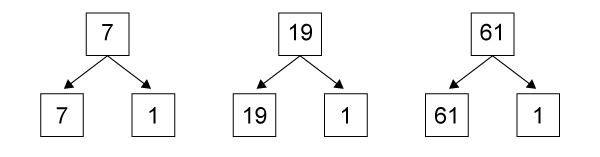
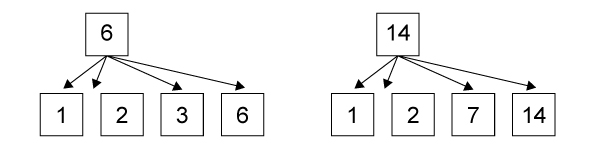
A prime number is a number that has two factors, out of which, ‘1’ must be a factor and the other is the number itself. Let us see some examples below:

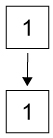
Wondering if 1 is a prime number itself?  

1 is not a prime number, since it has only ‘one’ factor, therefore, not fulfilling the above criteria. 

Composite Numbers

A composite number has more than two factors and is just the opposite of prime numbers. Let us see some examples of composite numbers.

As we can we in the above examples, the composite numbers have multiple factors.

Conclusion: Children may find learning all these different classifications of numbers a little overwhelming. However, we suggest you introduce them in stages so that each concept is understood with clarity. Follow the lesson with lots of practice and problem-solving questions, so that there is no chance for confusion.


Contact us

Fill in your details below or send us an email on info@knowledge-hub.com

The Importance of Focus & Concentration in Early Childhood Years

The Importance of Focus & Concentration in Early Childhood Years

The Importance of Focus & Concentration in Early Childhood Years

Concentration and focus are beneficial to kids because it helps in memorizing studies at school and also facilitates learning a great deal about the environment around us. We are not innately born with great concentration power, but it needs to develop over time. Our brain muscles need regular exercise to gradually build the habit of focusing; first for a shorter duration, and later for a longer span (30 minutes & above).

Experts suggest that a child in his early years has an attention span that lasts for about 2 to 3 minutes. Let us find out age-wise what the average attention period of a child must be at different growing stages.

  • 2 – 3 years: about 4 to 6 minutes 
  • 3 – 4 years: about 8 to 12 minutes
  • 4 – 6 years: 12 to 18 minutes
  • 6 – 8 years: 16 to 24 minutes 
  • 8 – 10 years: 20 to 30 minutes
  • 10 – 12 years: 24 to 36 minutes 
  • 12- 14 years: 28 to 42 minutes 
  • 14 to 16 years: 32 to 48 minutes 

These are just ballpark figures, and they may vary as per each individual child’s upbringing and practice at school & at home. 

Why do children need to build healthy concentration skills?

  • To boost memory & retention power
  • To develop patience while solving difficult problems related to Math subject
  • Perform better academically and in extra-curricular activities
  • Improved mood and less irritability
  • Discover oneself by knowing one’s likes & dislikes
  • Building a great personality and admirable character traits
  • Spending time pursuing productive hobbies

Few tips to help your child find greater focus

  • Set reading time each day by assigning a novel and fix a goal on the number of pages to be read daily. Initially, children will struggle even to finish reading 2 pages of the book at a stretch. But don’t get disappointed. All good habits take time & persistence! By the age of 6 years, one should be able to read 20 pages per day in one go, which should take around 20-25 minutes. Sign-up for library membership, anywhere around your locality in the GCC region and let the reader pick new books of his choice every week.
  • Mindfulness is a state of being aware such that you are completely involved in the activity at hand. Multitasking on the contrary is the opposite of mindfulness. Kids have a hard time sticking to one task. You would see them coloring one minute before they shift their focus to a ball lying in the corner of the room, and then they want to bounce it around. It’s hard to explain why one task needs to be completed, before moving to the next one! If your 3rd grader is learning multiplication tables, make sure he completes the set of 1 to 30 tables and only then proceeds to read the map of geography or maybe practice some grammar sentences. Mathletics is an excellent online Math platform chosen by parents & educators not only in the UAE but other parts of the world. It’s ideal for Math learners who want to develop a strong foundation through easy game-like activities.
  • Keep all types of digital devices that cause distractions, away. We understand how hard it is to not get influenced by peer pressure and spend hours on tabs, mobile phones, & laptops pointlessly browsing through sites and playing games. If technology is used in proportion and for the right reasons, then it can be advantageous and facilitate the child’s learning process. Parents must encourage having a set schedule for kids to use their tabs (say 30 minutes per day), after which the device should be taken away and kept away from the sight of children. Similarly set a scheduled time for watching TV, playing with toys, and interacting with friends, so that overindulgence can be kept at bay and discipline is promoted in turn leading to greater focus.
  • The importance of yoga and meditation is being spoken about worldwide, not just for adults, but also for school-going children. According to a survey, it has shown to have a positive impact on the child’s mental and physical well-being. Schools in Dubai and other Middle East regions, therefore have a dedicated period for practicing yoga and meditation. If practiced daily, it calms the mind, improves concentration, and keeps negative thoughts & emotions away.

Contact us

Fill in your details below or send us an email on info@knowledge-hub.com