
Math Alive Zoo Keeper 8.0: Empowering Special Education Students

Math Alive Zoo Keeper 8.0: Empowering Special Education Students

Math Alive Zoo Keeper 8.0 is a unique educational tool designed to make math fun and accessible, especially for children with special needs. Aligned with Kindergarten State Standards and featuring lesson plans that support Pre-K learning, this program presents an innovative methodology for learning math. Numbers, shapes, and animals come to life through its innovative Number Playground module. Through this blog, let us explore how Alive Zoo Keeper 8.0 revolutionizes learning.

What Makes Math Alive Zoo Keeper 8.0 Unique?

Augmented Reality (AR)

One of the standout features of Math Alive is its use of Augmented Reality (AR). This technology brings 3D animals, shapes, and numbers into the classroom. Students can see them projected onto desks or tables. Imagine watching a tiger leap while solving a math problem or numbers moving as you work on equations. This immersive experience grabs attention and makes abstract concepts easier to understand.

The “Count to 100” number board activity adds another layer of engagement. Cards pop out, allowing children to touch and interact with each number using their fingers. They can even practice skip counting with zoo animals, making the activity fun and educational.

Hands-On Learning

Math Alive offers tactile materials like a card deck featuring numbers, different wild animals, and colorful shapes. Students can combine number cards and symbol cards to compare values and decide if 3 giraffes are greater than 2 zebras. Additionally, students can solve simple equations like “3 giraffes + 2 zebras equals 5 animals,” which helps them understand addition in a fun way. The same concept can be applied to double-digit number cards, offering advanced challenges as students’ progress.

Customizable Learning

Math Alive allows teachers to adjust activities to fit the needs of individual students. For example, a teacher can simplify counting games for beginners who are just starting to learn numbers. For advanced learners, feel free to introduce complex puzzles to challenge their problem-solving skills and keep them engaged. This flexibility ensures every child is learning at the right level and pace – so that they can comfortably build their confidence.

Feedback & Positive Reinforcement

Special education students benefit greatly from immediate feedback and encouragement. The Math Alive software offers instant verbal affirmations and corrections. It celebrates successes and helps students when they make mistakes. For example, if a student solves a puzzle correctly, the software might say, “Great job!”

Why is Math Alive Ideal for Special Education Students?

There are various learning styles that Math Alive Zoo Keeper 8.0 accommodates. It fosters an environment where all students feel safe and inclusive.

For Visual Learners

The 3D AR technology makes math concepts easier to see and understand. For students with ADHD, this interactive approach captures their attention and turns abstract problems into dynamic and easy-to-follow visuals. Visual storytelling keeps them focused and prevents distractions.

For Kinesthetic Learners

A student with dyslexia might struggle with reading math problems as they can often confuse similar-looking numbers and symbols, which can lead to errors in calculation & problem-solving. The hands-on flashcards & blocks in the Zoo Keeper 8.0 kit allow students with dyslexia to touch/feel material and solve equations easily.

For Auditory Learners

A slow learner might struggle to understand written instructions. However, with Math Alive, they can listen to step-by-step instructions and explanations. This auditory approach can help them grasp concepts more easily and independently. Videos and spoken feedback reinforce lessons, making it easier for auditory learners to understand concepts.

Benefits of Math Alive Zoo Keeper 8.0

  • Boosts Confidence: Fun activities, instant feedback, and positive reinforcement help students feel happy as they learn.
  • Enhances Motivation: The engaging games and activities make math exciting. Students enjoy participating, which keeps them motivated to learn.
  • Develops Critical Skills: Math Alive builds more than just math skills. Students’ critical thinking, problem-solving, and collaborative skills are also enhanced. These are essential life skills.

Math Alive Zoo Keeper 8.0 is more than just a math tool. It is a transformative learning experience. The use of AR, hands-on materials, and customizable activities makes it perfect for special education students. Whether students are visual, auditory, or kinesthetic learners, Math Alive helps them succeed.

Contact us

Fill in your details below or send us an email on info@knowledge-hub.com

How to Enhance Fine Motor Skills with the MatataBot Kit?

How to Enhance Fine Motor Skills with the MatataBot Kit?

Fine motor skills play an integral role in a child’s growth, shaping their ability to perform everyday tasks, excel academically, and develop essential cognitive abilities. Through a playful yet effective approach, MatataStudio and its interactive MatataBot robot are helping children hone these skills in a way that’s both engaging and educational. Let’s delve into what fine motor skills are, why they matter, and how MatataStudio can empower young learners.

What Are Fine Motor Skills?

Fine motor skills refer to the coordination of small muscle movements, particularly those in the hands and fingers. These skills are responsible for precise tasks such as holding a pencil, tying shoelaces, zipping jackets, or even turning the pages of a book.

For young children, these tasks can often seem monumental. Imagine a toddler grasping a spoon and attempting to feed themselves for the first time. It’s a defining moment of independence. “Why bother Mumma when you can confidently hold the spoon yourself?”

From brushing teeth and buttoning shirts to stacking blocks and packing school bags, well-developed fine motor skills enable children to take charge of their daily routines. This newfound independence not only boosts their confidence but also lightens the load for caregivers.

Why Are Fine Motor Skills Important?

During early childhood, fine motor skills serve as a foundation for future success, promoting independence, learning, and self-assurance. Here’s why these skills are indispensable:

  • Support Pre-Writing Skills: Strong fine motor skills lay the groundwork for writing by improving pencil grip, control, and the ability to form letters.
  • Enhance Academic Success: These skills help children excel in activities like drawing, cutting paper, and using classroom tools like glue sticks and rulers.
  • Boost Confidence: Accomplishing tasks independently instills a sense of pride and self-reliance.
  • Develop Cognitive Skills: Activities that strengthen fine motor skills, such as solving puzzles, also enhance problem-solving, memory, and attention span.
  • Improve Hand-Eye Coordination: Skills like coloring, pouring liquids, or building block towers rely on aligning hand movements with visual input.
  • Facilitate Social Interaction: Participating in crafts or group games that involve handling materials fosters teamwork and interaction.
  • Encourage Creative Expression: Fine motor skills enable children to express their imagination through drawing, painting, and building.

Fun Facts About Fine Motor Skills

  1. Development Begins Early: Even babies as young as 4-6 months begin honing fine motor skills as they grasp objects, shake rattles, or explore textures.
  2. Play is Key: Simple activities like playing with modeling clay, cutting with scissors, or threading beads are excellent for strengthening fine motor muscles.
  3. Brain-Body Connection: Every small hand movement activates specific neural pathways, making fine motor skills a brain-building exercise.

How MatataStudio Enhances Fine Motor Skills

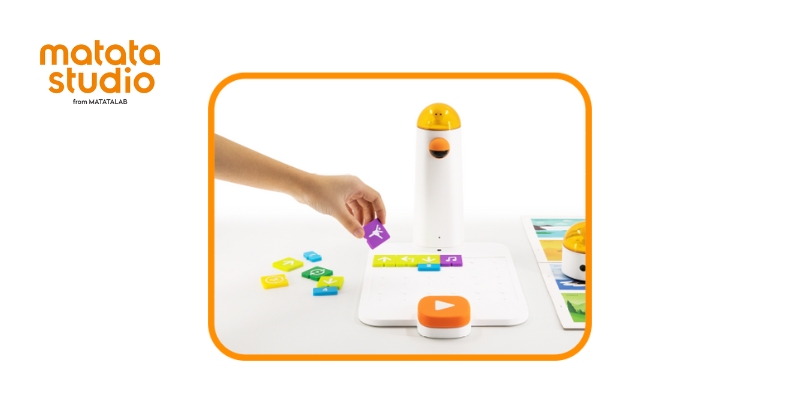
MatataStudio and its robotic companion, MatataBot, offer an innovative solution for developing fine motor skills through fun, interactive activities. Here’s how:

  • Building and Manipulating Blocks: Children use their fingers to construct and dismantle robots and structures. These activities enhance finger strength and spatial awareness.
  • Programming with Precision: By using coding blocks or navigating through MatataStudio’s platform, children practice controlled movements that improve hand-eye coordination and precision.
  • Problem-Solving Through Play: While experimenting with different building techniques or solving coding puzzles, children naturally develop problem-solving abilities. This blend of logic and creativity helps boost cognitive and fine motor skills simultaneously.
  • Interactive Features: MatataStudio introduces children to robotics and programming in a tactile, hands-on way. Whether it’s assembling parts, connecting components, or dragging coding blocks, every action sharpens their motor skills.
  • Encouraging STEM Exploration: By integrating STEM concepts into everyday play, MatataStudio equips children with the tools to learn science and technology while enhancing motor coordination.

Why Choose MatataStudio for Fine Motor Skill Development?

MatataStudio’s unique combination of education and entertainment makes learning an adventure for children. With features that blend coding, robotics, and problem-solving, it offers:

  • Engaging Play-Based Learning: Activities feel like play but deliver real educational value.
  • Skill-Building for the Future: Beyond motor skills, MatataStudio introduces children to STEM, preparing them for a tech-driven world.
  • A Creative Outlet: The platform fosters creativity and critical thinking, allowing children to design and build unique creations.

The Road Ahead

Fine motor skills are the foundation for a child’s overall development, impacting their confidence and abilities in countless ways. Tools like MatataStudio and MatataBot provide an engaging, screen-free approach to mastering these skills in schools across Dubai and the Middle East. The platform also introduces children to the exciting world of robotics and coding. With block-based coding, children can learn to program robots with the Tale-Bot Pro kit (3+ years) and Matatalab Coding Set (5+ years) through game-like storytelling. This hands-on approach not only enhances fine motor skills but also fosters creativity, problem-solving, and logical thinking.

As parents and educators, it’s our role to guide children toward independence and learning.


Contact us

Fill in your details below or send us an email on info@knowledge-hub.com

Force Sensors: A New Era of Robotics in School

Force Sensors: A New Era of Robotics in School

Do you know what a force sensor is? Why is it so important in robotics? Well, a force sensor is a device that measures physical pressure or force applied to it, allowing machines to detect and respond to touch just like humans do. This innovative technology is transforming the field of robotics by enabling robots to interact with their surroundings intelligently and adaptively. It’s also becoming a key component in robotics in school, helping students explore real-world applications of engineering and coding.

Key Benefits of Force Sensors

  1. Human-Robot Interaction (HRI): Force sensors enable robots to collaborate seamlessly with humans. By detecting and adjusting the force they exert, robots can ensure safety, prevent injuries, and work efficiently in shared spaces. For example, a robot arm can reduce its grip force when holding delicate objects or halt operations if it senses resistance, preventing accidents.
  2. Object Manipulation: Robots with force sensors can manipulate objects of different sizes, weights, and fragilities. This precision minimizes the risk of damage or error in tasks like electronics assembly, goods packaging, and surgery.
  3. Environmental Awareness: Force sensors help robots detect and measure ground pressure, sense obstacles, or monitor physical interactions in real time. For example, a robot in disaster recovery can gauge the stability of debris it interacts with to avoid further collapse.

Advanced Applications with Force Sensors

Force sensors aren’t limited to standalone tasks—they can be combined with other sensors for multi-functional robots. For example:

  • A robot can use a force sensor to securely grip an object, while a color sensor can be used to recognize the color of the item, and when paired with the ultrasonic sensor, the Robot can move accurately toward its target.
  • In industrial settings, robots equipped with force sensors can intelligently assemble parts.
  • In healthcare, robots can assist in physiotherapy, applying precise forces for rehabilitation exercises.

These integrations showcase the endless possibilities of using force sensors in robotics.

Exploring the SPIKE™ Prime Force Sensor

The LEGO® Education SPIKE™ Prime Force Sensor takes robotics in school to the next level, revolutionizing education and sparking innovation. Its features make it a versatile choice for robotics enthusiasts and students alike.

Key Features of the SPIKE™ Prime Force Sensor:

  1. High Sampling Rate: The sensor can process up to 100 measurements per second, ensuring real-time feedback and precise data collection.
  2. Touch and Force Sensitivity: It can distinguish between light touch and heavy force, allowing it to perform tasks ranging from delicate object handling to impact detection.
  3. Accuracy and Resolution: With a resolution of 0.1 Newtons and an accuracy of +/- 0.65 Newtons, this sensor guarantees reliable and consistent measurements for complex applications.
  4. Durable and Versatile: Designed for robustness, the sensor integrates seamlessly with SPIKE™ Prime kits, making it suitable for classroom projects and advanced robotics challenges.

Why Choose the SPIKE™ Prime Force Sensor?

The SPIKE™ Prime Force Sensor is designed for ease of use, making it ideal for learners and professionals alike.

Benefits of Robotics in School:

Students can explore:

  • Physics concepts such as force, pressure, and motion.
  • Coding logic to interpret sensor data.
  • Practical engineering skills to build functional robots.

Fun and Educational Project Ideas

Force sensors make learning fun by combining creativity with engineering. Try these exciting projects:

  • Cookie Clicker Robot: Create a robot that counts button presses, teaching basic coding and mechanics.
  • Sensitive Venus Flytrap: Build a robotic flytrap that snaps shut when lightly touched, mimicking real plants.
  • Force-Controlled Car: Design a car that speeds up or slows down based on how hard the sensor is pressed.
  • Gesture-Controlled Robot: Make a robot that responds to hand gestures using force sensor inputs.
  • Interactive Game Controller: Build a controller where players use pressure to control a game, adding a unique twist to gaming.

Force sensors are indeed revolutionizing robotics in school, offering students hands-on experience with advanced technology, and inspiring a new generation of engineers and innovators.

Contact us

Fill in your details below or send us an email on info@knowledge-hub.com

What Are Some Fascinating Facts About the Human Body?

What Are Some Fascinating Facts About the Human Body?

The human body is a marvel of nature, and this complex system continuously performs a myriad of functions. From the intricate mechanism of the brain to the rapid transmission of signals through the nervous system, the human body never ceases to amaze. In this blog, we’ll uncover some incredible facts about the human body.

Fascinating Facts About the Human Body

Q1: How much information can the human brain store?

A: While some claim the brain can store up to 2.5 petabytes of information (equal to 3 million hours of video), this is more of an estimate than a proven fact. Memories are stored through complex neural connections that evolve over time. Though we don’t have an exact number, the brain’s capacity is undeniably vast and extraordinary!

Q2: Are your eye muscles the most active in your body?

A: Yes! The extraocular muscles, which control eye movement, are believed to make over 100,000 movements daily. Whether you are reading, watching videos, or just glancing around, these hardworking muscles are always at work!

Q3: Is the aorta thicker than a garden hose?

A: True! With a diameter of roughly 1.2 inches (2–3 cm), the aorta is the biggest artery in the body. It’s thicker than most garden hoses and plays the important role of pumping blood from the heart to the rest of the body.

Q4: When you crack your knuckles, why do you hear a crackling sound?

A: It’s not gas bubbles popping, as many believe! The sound comes from a sudden pressure change in the synovial fluid (a lubricant in your joints). When the joint stretches, tiny bubbles form and collapse, creating that familiar popping noise. This is one of the many fascinating facts about the human body that showcase how our intricate systems work in surprising ways.

Q5: In a day, how much saliva does an individual produce?

A: Your salivary glands produce about 1.5 liters (0.4 gallons) of saliva daily. Over a lifetime, that’s enough to fill nearly three swimming pools! Saliva maintains your mouth sanitary, aids in food digestion, and guards against bacteria.

Q6: How fast do nerve signals travel?

A: Electrical signals in the nervous system can travel up to 268 miles per hour (431 km/h). That’s faster than most sports cars! This rapid communication is essential for quick reflexes and bodily coordination.

Q7: Could all your blood vessels wrap around the Earth?

A: Yes! If you stretched out all the blood vessels in your body, they would measure about 60,000 miles, enough to circle the Earth twice. This incredible network ensures oxygen and nutrients reach every part of your body.

Visible Body: A Revolutionary Tool for Learning Anatomy

When it comes to understanding the complexities of the human body, tools like Visible Body are game changers. Visible Body is a digital platform offering detailed, interactive 3D models of human anatomy. Its resources are widely used by educators, students, and medical professionals to enhance learning. Even schools in Dubai, are incorporating Visible Body into their tech classes to enhance web lab experiences and even facilitate fully virtual Biology labs.

Key Features of Visible Body

  • 3D Visualizations: Discover the human body in previously unheard-of depth. Examine how systems interact by rotating, zooming in, and dissecting anatomical models.
  • Lesson Plans and Resources: Visible Body provides ready-made lesson plans tailored for educators. These cover topics ranging from basic anatomy to advanced physiological processes.
  • Interactive Learning: Engage with quizzes, animations, and simulations to solidify understanding.
  • Cross-Platform Access: Available on desktops, tablets, and mobile devices, Visible Body ensures learning is accessible anytime, anywhere.

Why it’s Useful in Schools

  • Engagement: Interactive visuals capture students’ attention, making complex topics easier to grasp.
  • Customization: Teachers can tailor lessons to suit their curriculum or individual learning goals.
  • In-Depth Exploration: Students can dive deep into topics like the cardiovascular system, brain function, or muscle movements.
  • STEM Integration: Visible Body aligns with STEM education goals, fostering curiosity and critical thinking.

Tools like Visible Body elevate our understanding, transforming abstract concepts into tangible, visual experiences. Whether you’re marveling at the brain’s capabilities or exploring the heart’s anatomy, Visible Body brings facts about the human body to life, making learning both engaging and accessible—a perfect companion for students and educators alike.

Contact us

Fill in your details below or send us an email on info@knowledge-hub.com

The Outstanding Power of Collaborative Music Creation

The Outstanding Power of Collaborative Music Creation

Have you ever felt stuck while writing a song? Maybe you have a catchy melody and some great lyrics, but something is still missing – the spark that makes your music stand out. This is where collaboration can help. When two (or more) music enthusiasts come together, amazing things happen. It’s not just a trend; working together can take your music to new heights in ways you might not have imagined. This is the power of collaborative music creation, where different ideas and skills come together to create something truly special.
Fresh Perspectives

We all have our own musical influences and perspectives. Whether you’re influenced by classical music, jazz, or pop, your creative process is unique. When you collaborate, you get to bounce ideas off each other, challenging each other’s assumptions and leading to unexpected creative breakthroughs. Your collaborator may hear something in the melody or lyrics you never thought of, offering you a fresh perspective that pushes the song to new heights.

Synergy

Imagine combining your ability to create melodies with your friend’s talent for writing lyrics. Or pairing your bass-playing skills with another musician’s expertise in rhythm. Collaborative music creation allows you to combine your strengths and create something even more powerful than you could imagine. This synergy brings out the best in both musicians and often leads to a sound that neither could have created alone. It’s like building a musical partnership where every new idea fuels the next.

Motivation and Accountability

Sometimes, staying inspired is tough! After hours of writing, it can be easy to feel like you’re not making progress. That’s where collaboration can help. Collaborative music creation with others motivates you to compose better songs. Knowing that others are relying on you to show up with ideas, lyrics, or melodies can help you stay focused and push yourself further.

Collaborative Music Creation – Digitally

Now, let’s talk about how the digital age has made musical collaboration easier than ever. Gone are the days of needing to be in the same room or studio to work together. In today’s interconnected world, you can work with musicians across the globe from the comfort of your own home. The advancement of online tools and platforms has made collaboration accessible to everyone, even those without access to large, expensive studios.

Soundtrap: Your Online Music Studio

Imagine having a collaborative music studio accessible from anywhere, anytime, on any device. That’s the beauty of Soundtrap. With Soundtrap, you can connect with musicians across the globe, creating music together regardless of physical distance. The platform allows you to easily share your work, make adjustments in real time, and brainstorm with your collaborators instantly.

Here’s what makes Soundtrap a conducive platform:

Real-time Collaboration

Soundtrap’s ability to allow real-time collaboration is a game-changer for musicians. With this feature, you can see your co-collaborators add tracks, vocals, and effects while you work together virtually. You can even make adjustments on the spot and hear the results instantly. This real-time interaction ensures a seamless flow in the creative process, making it feel like you’re right there in the studio together.

Seamless Communication

Built-in chat functionality allows you to communicate with your collaborators instantly. Whether you want to discuss the arrangement of the verse, give feedback on a new idea, or fine-tune the lyrics, you can do it all within the platform. This direct communication streamlines the creative process, keeping things flowing smoothly, and making collaborative music creation even more efficient and enjoyable.

Cloud Storage

Gone are the days of worrying about lost files or misplaced projects. Soundtrap automatically saves your work to the cloud, ensuring that all your musical creations are securely stored and accessible at any time. This also means you can access your projects from multiple devices, whether you’re at home or on the go.

Intuitive Interface

Soundtrap is designed with ease of use in mind. Even if you’re new to digital music creation, you’ll find the platform user-friendly and intuitive. The interface is streamlined, making it easy to get started without feeling overwhelmed. It’s the perfect tool for musicians of all experience levels, from hobbyists to professionals. Even school students in Dubai and the Middle East use Soundtrap for their extracurricular activity classes.

By harnessing the power of collaboration, you can elevate your music in ways you never imagined. So gather your musical comrades, head over to Soundtrap, and let the creative sparks evolve! With the tools and connections available, there’s no limit to the music you can create together.

Contact us

Fill in your details below or send us an email on info@knowledge-hub.com