

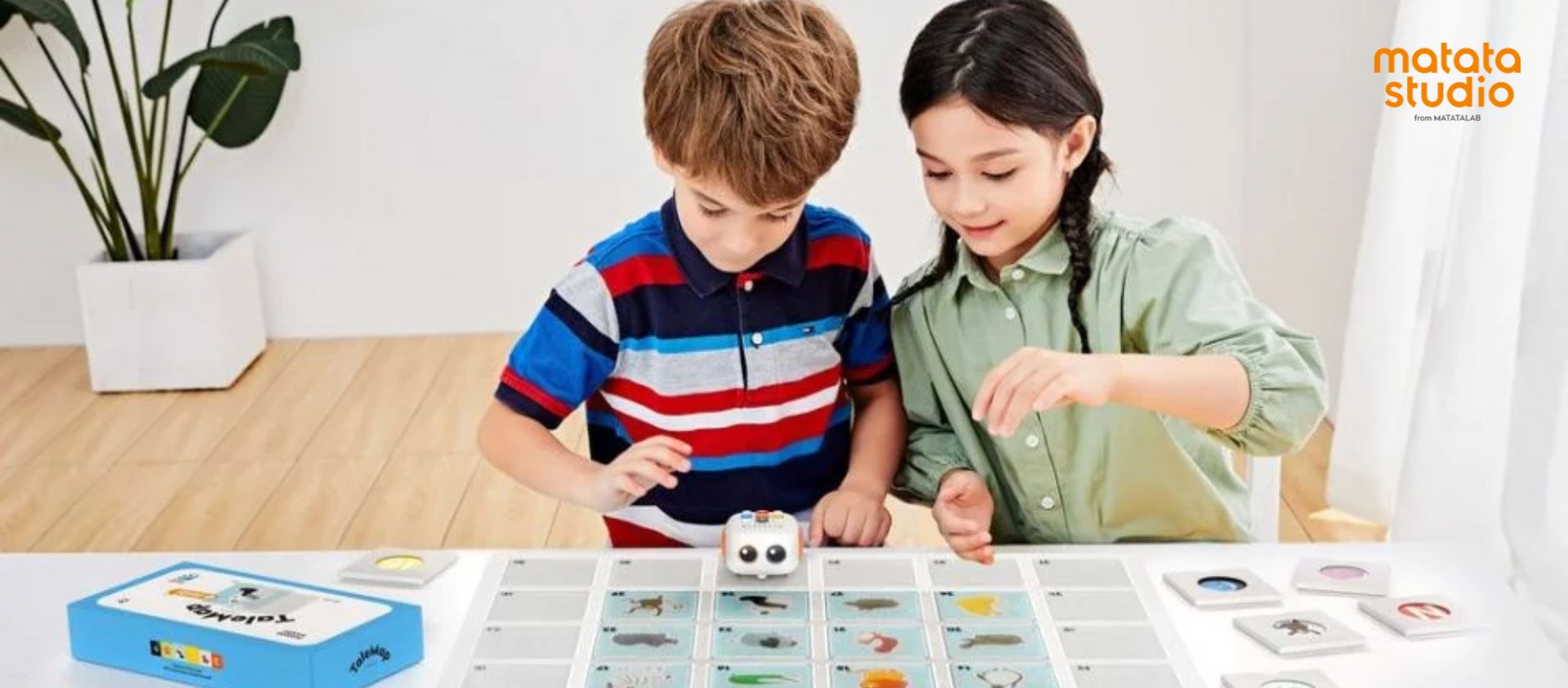
Give students a challenge. Then pause before giving them the solution. That simple change can transform a coding activity into a meaningful learning experience. When students have the opportunity to explore, test ideas and try different approaches, they begin to understand that coding is not simply about following instructions. It is about thinking, experimenting and discovering what is possible.
Coding education should do more than teach students to arrange commands. It should build the confidence to approach unfamiliar problems, make decisions and learn from the process.
Why exploration matters in coding
A coding challenge can often be solved in more than one way. One student may use a short sequence of instructions, while another takes a different route. Comparing these approaches helps students explain their thinking and consider which method is clearer or more efficient.
Students begin to focus not only on the outcome but also on the decisions that helped them get there. A mistake becomes useful feedback for the next attempt.
Building problem-solving and computational thinking
Exploratory coding encourages students to break a challenge into smaller steps, recognise patterns, plan a sequence and adjust instructions when something does not work. These are important elements of computational thinking.
For example, a teacher might ask students to guide a coding robot through a simple route. Rather than demonstrating the exact sequence first, the teacher can invite students to plan their own route, test it and make changes. Some may use more steps than others. The class can then discuss what happened, why different solutions worked and how the instructions could be improved.
Students practise logical reasoning, sequencing, debugging and decision-making while learning to explain their ideas and listen to others.
Creativity grows when there is room for different answers
When every task has one demonstrated solution, students may simply copy the example. Open-ended challenges create space to experiment with sequences, explore alternative routes and adapt ideas.
This does not mean that every solution is equally effective. It means students have opportunities to evaluate their choices. They can ask: Does this work? Is there another way? Can I make it simpler? What happens if I change one instruction? These questions encourage curiosity and creative problem-solving.
The teacher’s role: guide the process, not every move
Teachers play an important role in creating a classroom where exploration feels safe and purposeful. Instead of immediately correcting every mistake or showing the answer, they can ask guiding questions such as:
- What are you trying to make happen?
- Which part of your plan worked?
- What could you change and test next?
- Can you think of another way to reach the same goal?
These prompts help students reflect while keeping ownership of the challenge. Teachers can also ask pairs or groups to compare approaches and learn from one another.
How MatataStudio can support hands-on coding exploration
Hands-on coding tools can make abstract ideas more visible and engaging for young learners. With MatataStudio’s educational coding solutions, teachers can introduce challenges that invite students to plan, program, test and refine their ideas through practical activities.
A useful classroom approach is to begin with a clear goal but leave the route to the solution open. Students might be asked to complete a movement challenge, reach a destination or create a sequence that produces a particular outcome. The teacher can then give learners time to experiment before bringing the class together to compare what they discovered.
The value lies in the questions students ask, the adjustments they make and the explanations they give. Coding becomes an active learning process, not simply an exercise in copying instructions.
Let students discover what is possible
The next time students face a coding challenge, consider holding back the solution for a little longer. Give them time to explore, make mistakes, test alternatives and share what they discover. One student may take one route; another may find a completely different approach. Both experiences can lead to valuable learning.
Coding education is at its most meaningful when students are encouraged to think independently, stay curious and see challenges as opportunities. Because coding is not always about finding one right way. Sometimes, it is about discovering what else is possible.