

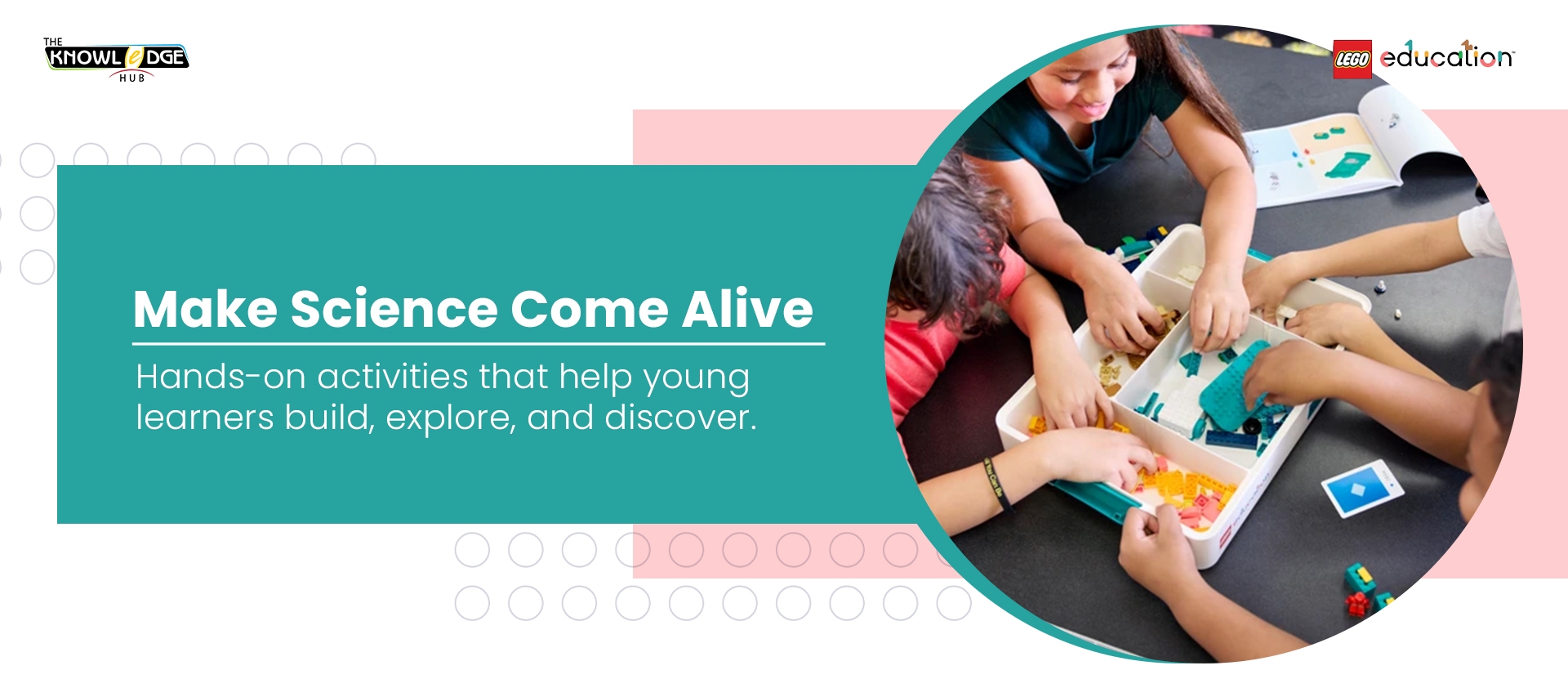
Science is most meaningful when students can do more than listen and remember. For young learners, opportunities to build, investigate, observe, and ask questions can turn everyday science concepts into experiences they can understand.
Well-designed science classroom activities give students the chance to explore ideas through hands-on learning while developing important skills such as problem-solving, collaboration, communication, and critical thinking.
For schools looking to bring more hands-on science into the early years, the LEGO® Education Science Classroom Bundle K-2 provides a structured approach that combines physical learning materials with ready-to-use lessons and teacher resources.
Why Hands-On Science Matters
Young students are naturally curious. They want to know why things happen, how things work, and what happens when they try something differently.
Hands-on science activities give them opportunities to investigate these questions rather than simply receiving answers.
When students build a model, test an idea, observe a result, and discuss what happened, they begin to develop the habits of scientific thinking. They also have opportunities to learn from mistakes and improve their ideas.
This makes science more active, engaging, and memorable.
What Makes Effective Science Classroom Activities?
Not every activity needs to be complicated. Effective activities should give students a clear purpose while leaving enough room for exploration and discussion.
For K-2 classrooms, strong science activities can include:- Building models to represent scientific ideas
- Exploring cause and effect
- Observing changes and patterns
- Making predictions before testing an idea
- Working with classmates to solve a challenge
- Explaining what they discovered
- Revising ideas based on evidence
These approaches help connect classroom learning with the way scientists and engineers explore the world.
Bringing Science Concepts to Life with LEGO® Education
The LEGO® Education Science Classroom Bundle K-2 is designed to support hands-on science learning for young students.
The classroom bundle includes six hands-on science kits along with 40 standards-aligned lessons. The lessons cover areas including life science, physical science, earth and space science, and engineering design.
This gives teachers a structured collection of resources while allowing students to learn through building and investigation.
Instead of treating building as an activity separate from science, teachers can use it as part of the learning process. Students can create models, investigate questions, and use what they observe to develop their understanding.
Science Activities That Encourage Collaboration
Science does not have to be an individual activity.
Many hands-on science classroom activities can be completed in small groups, giving students opportunities to communicate their ideas, listen to different perspectives, and work together toward a solution.
The LEGO Education Science solution supports this collaborative approach by providing materials designed for group learning.
Students can take on different roles, discuss possible solutions, test their ideas, and reflect on what they discovered. These experiences can help develop both science knowledge and broader classroom skills.
Supporting Teachers Along the Way
Hands-on learning is most effective when teachers have the right support behind it.
The LEGO Education Science Classroom Bundle includes teacher resources and facilitation support to help educators plan and deliver lessons. The Teacher Portal provides access to standards-aligned lessons and supporting resources.
Student-facing presentations can also help structure classroom activities by providing prompts and opportunities for students to demonstrate their learning.
Formative assessment resources give teachers additional ways to observe student understanding throughout the lesson rather than relying only on a final assessment.
Building a Strong Foundation for STEM
Early science experiences can influence how students approach STEM learning as they progress through school.
When children are encouraged to ask questions, experiment, collaborate, and solve problems from an early age, they begin developing skills that extend beyond a single science lesson.
For schools, incorporating hands-on science classroom activities can therefore be part of a broader approach to creating engaging, future-ready learning environments.
The combination of physical materials, structured lessons, teacher resources, and assessment support can help educators create science experiences that are both purposeful and engaging.
Making Science an Experience
The best science lessons give students something to think about, something to explore, and something to explain.
With LEGO® Education Science, K-2 students can move beyond simply learning about science concepts and begin experiencing them through building, investigation, collaboration, and discovery.
For schools seeking engaging science classroom activities for young learners, combining hands-on resources with structured curriculum support can make science more accessible, interactive, and meaningful.
Knowledge Hub can support schools in exploring LEGO® Education and other innovative solutions designed to strengthen STEM learning and create more engaging classroom experiences.