

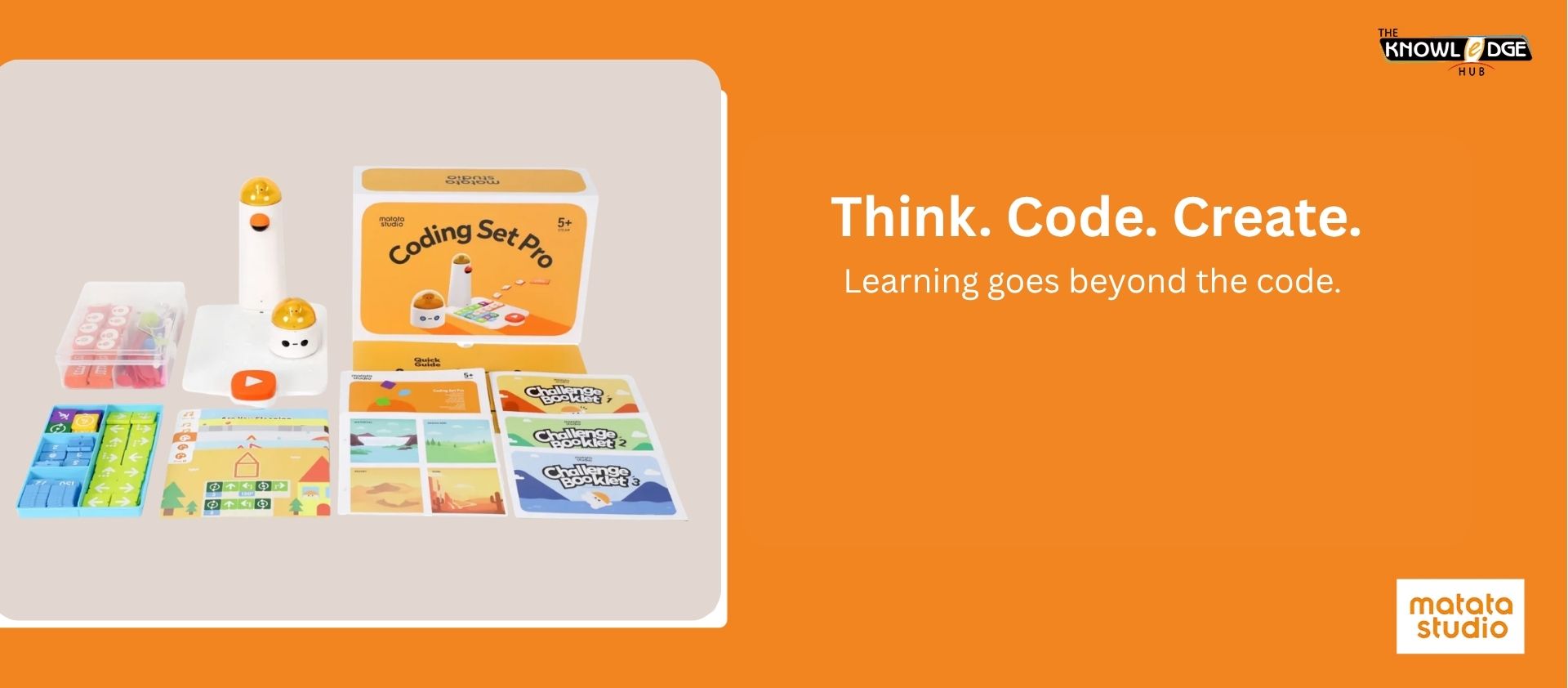
Coding is often introduced to students as a way of telling a computer or robot what to do. But effective coding and robotics education goes much further. It gives students a practical environment where they can think, experiment, solve problems and turn ideas into working solutions.
When students build and program a robot, they are not simply learning how to write code. They are learning how to approach a challenge.
Coding Encourages Students to Think Before They Build
A successful coding project usually begins with a question or a problem.
What should the robot do? What steps are needed? What might happen if something changes?
Students need to break a larger challenge into smaller steps before they begin programming. This process develops computational thinking — the ability to analyse problems, recognise patterns, create logical sequences and develop solutions.
Instead of immediately looking for an answer, students learn to think about why a solution should work.
This makes coding a valuable learning tool across different areas of education.
Robotics Turns Ideas Into Something Students Can See
One of the strengths of robotics is the immediate connection between digital instructions and physical results.
A student can write a program, run it and watch a robot respond. If the robot does not behave as expected, the student has an opportunity to investigate what went wrong.
Perhaps the sequence was incorrect. Maybe a condition was missing. Perhaps the sensor data was interpreted differently than expected.
This creates a natural cycle of build, test, observe and improve.
Through this process, abstract coding concepts become easier to understand because students can see how their instructions affect a real-world object.
Learning Through Trial and Error
Mistakes are an important part of coding and robotics education.
A program that does not work as expected gives students information. Instead of treating an unsuccessful attempt as failure, students can analyse the result, identify the problem and modify their approach.
This develops persistence and encourages students to view problems as opportunities for improvement.
Debugging, for example, is not only a programming skill. It is a structured way of thinking about problems.
Students learn to ask:
- What did I expect to happen?
- What actually happened?
- Where could the problem be?
- What can I change?
- Did the change improve the result?
These habits can support learning far beyond the coding environment.
From Coding Skills to Creative Problem-Solving
Coding and robotics education can also give students space to create.
Instead of following a fixed set of instructions, students can be challenged to design their own solutions. They might create a robot that responds to its environment, completes a specific task or demonstrates a concept they have learned.
This brings together creativity and logical thinking.
Students need both sides: imagination to develop an idea and structured thinking to turn that idea into something that works.
Building Future-Ready Learning Experiences
As technology becomes increasingly connected to education and everyday life, students need more than basic digital familiarity.
They need opportunities to understand how technology works, interact with it and use it to solve problems.
Hands-on robotics and coding activities can support the development of computational thinking, problem-solving, creativity, collaboration and logical reasoning while making learning more active and engaging.
This is where STEAM education becomes particularly valuable. Coding and robotics can connect science, technology, engineering, mathematics and creative thinking within one practical learning experience.
The Goal Is More Than Making a Robot Move
The most meaningful outcome of coding and robotics education is not simply a working robot.
It is the thinking that happens along the way.
When students plan an approach, write code, test an idea, identify a problem and improve their solution, they are developing skills that can be applied far beyond robotics.
The goal isn’t just to make a robot move. It’s to help students understand why it moves — and how they can make it do something better.
Discover Hands-On STEAM Learning
MatataStudio provides hands-on learning experiences that bring coding, robotics and creative problem-solving together, helping students explore technology by building, testing and creating.
Explore MatataStudio with Knowledge Hub Dubai.