

In today’s rapidly changing world, academic knowledge is only one part of student success. The ability to communicate ideas clearly, listen actively, collaborate with others, and express creativity is equally important.
Communication skills for students play a vital role in how young learners participate in the classroom, work in teams, solve problems, and prepare for future careers. These skills are best developed through meaningful opportunities to speak, listen, create, and share ideas.
This is where School Radio can make a difference.
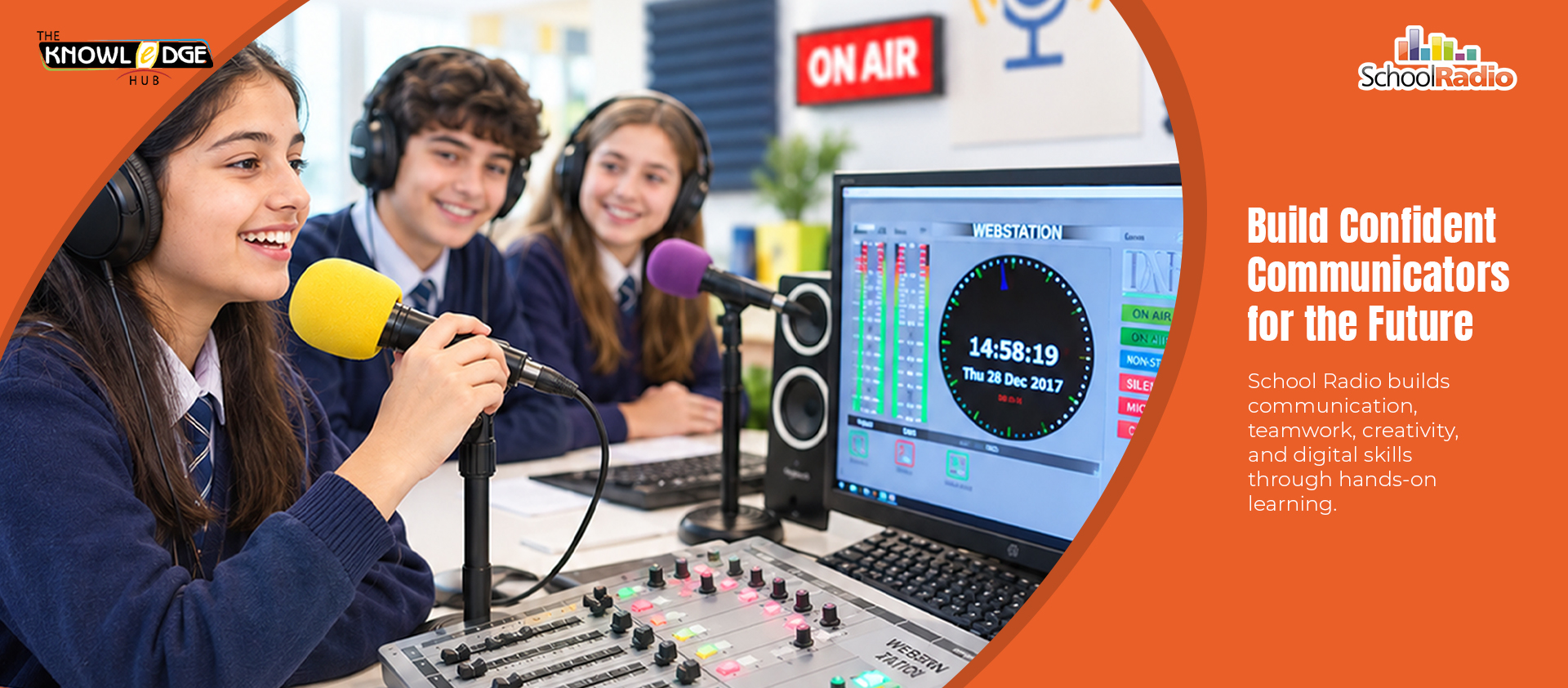
By giving students opportunities to become presenters, writers, researchers, interviewers, and producers, School Radio turns communication into an engaging, practical learning experience. Along the way, students can develop speaking and listening, teamwork, planning, creativity, and digital literacy—essential skills for the future.
Why Are Communication Skills Important for Students?
Communication is part of almost everything students do. From answering questions in class and presenting projects to collaborating with classmates, students need to communicate effectively in different situations.
Strong communication skills can help students:
- Express ideas clearly and confidently
- Listen and respond effectively
- Participate actively in discussions
- Work effectively with others
- Present information to an audience
- Build interpersonal skills
- Share creative ideas
Developing these abilities early gives students a strong foundation for academic, personal, and professional growth.
5 Skills Students Can Develop Through School Radio
1. Speaking and Listening Skills
Effective communication starts with speaking clearly and listening carefully. School Radio gives students opportunities to introduce programmes, conduct interviews, read scripts, participate in discussions, and communicate information to an audience.
These activities can help students improve pronunciation, vocabulary, active listening, questioning, voice modulation, and public speaking confidence.
2. Teamwork and Collaboration
A successful radio programme is rarely the work of one student. Learners may work together to research topics, write scripts, prepare questions, manage recordings, and present programmes.
This creates a natural environment for developing teamwork and collaboration skills. Students learn to share responsibilities, respect different ideas, communicate with teammates, and work towards common goals.
3. Planning and Organisation
Behind every successful radio programme is preparation. Students may need to select topics, research information, create a programme structure, prepare scripts, assign roles, and work within a schedule.
This helps students understand how planning and organisation contribute to effective communication while encouraging responsibility and time management.
4. Creativity and Content Creation
Communication is not only about sharing information—it is also about finding creative ways to engage an audience.
Students can create interviews, discussions, news segments, educational programmes, storytelling sessions, quizzes, and special broadcasts. These activities encourage creativity, storytelling, scriptwriting, and content creation, allowing students to explore different ways of expressing ideas.
5. Digital Literacy
As communication increasingly takes place through digital platforms, digital literacy for students has become an important future-ready skill.
School Radio can introduce learners to digital recording, audio content, basic editing, content production, and responsible technology use. Students begin to understand that technology is not simply something they consume—it can also be a tool they use to create, communicate, and collaborate.
Turning Communication Into a Practical Learning Experience
One of the biggest strengths of School Radio is that students learn communication by actually practising it.
For example, a student preparing to interview a teacher may need to research a topic, prepare questions, communicate with the teacher, listen carefully, ask follow-up questions, organise information, and present it to an audience.
A single activity can therefore develop several skills at once:
Research → Planning → Speaking → Listening → Collaboration → Creativity → Digital Skills
This makes School Radio a valuable cross-curricular learning experience.
Building Confidence Through Real Opportunities
Some students may have great ideas but hesitate to speak in front of others. Regular communication opportunities can gradually help learners become more comfortable expressing themselves.
School Radio provides a supportive platform where students can practise presenting, asking questions, sharing opinions, and speaking to an audience.
With continued practice, learners can become more confident communicators who are willing to participate, contribute ideas, and take responsibility for communication tasks.
Preparing Students for the Future
The future workplace will continue to evolve through technology, automation, and artificial intelligence. However, human skills such as communication, collaboration, creativity, and adaptability will remain important.
School Radio gives students a practical way to develop these capabilities alongside academic knowledge.
When students research a topic, write a script, work with peers, speak into a microphone, or produce a programme, they are doing more than creating radio content. They are learning how to think, communicate, collaborate, create, and take responsibility.
Conclusion
Communication skills for students are essential for success in school, the workplace, and everyday life.
School Radio offers an engaging way for students to develop speaking and listening, teamwork, planning, creativity, and digital literacy through practical experiences.
By bringing School Radio into the learning environment, schools can give students more than a platform to speak. They can give them confidence, skills, and opportunities to find their voice and use it effectively in the future.