

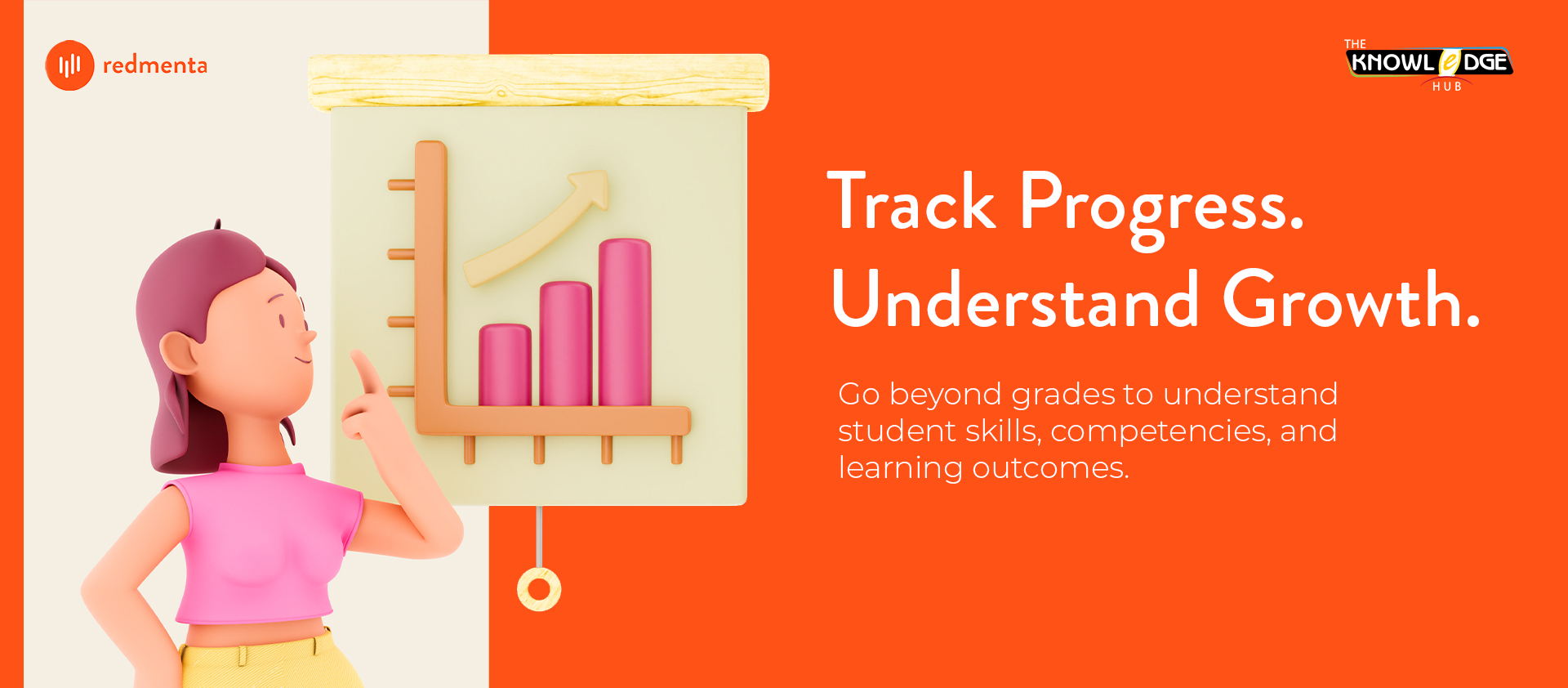
A score can tell us what a student achieved today. But does it tell us how they are developing over time?
Student progress tracking offers a deeper way to understand learning. Instead of focusing only on grades, scores, or test results, educators can track the skills, competencies, and learning outcomes students develop throughout their educational journey.
This shift from measuring performance to understanding progress can help teachers make more informed instructional decisions and provide students with the support they need to succeed.
Why Student Progress Tracking Matters
Traditional grading provides a snapshot of student performance at a specific point in time. While grades are useful, they may not always show the complete picture of learning.
A student may receive a lower score on one assessment but demonstrate significant improvement in problem-solving, collaboration, critical thinking, or subject-specific skills.
This is why student progress tracking is becoming increasingly important. By looking at development over time, educators can identify patterns, recognize improvement, and understand where additional support may be needed.
Instead of asking only, “What grade did the student receive?”, teachers can ask:
- What skills has the student developed?
- Which competencies are improving?
- Where are learning gaps still present?
- How has the student progressed over time?
These questions provide a more meaningful view of learning.
From Scores to Skills and Competencies
Effective learning is about more than completing assignments or achieving high scores. Students need to develop competencies that they can apply across different learning situations.
Competency-based assessment helps educators look beyond individual test results and understand what students can actually demonstrate.
For example, two students may receive the same score on an assessment but demonstrate different strengths. One may excel at applying knowledge, while another may show stronger analytical or communication skills.
Tracking competencies alongside assessment results gives teachers a broader understanding of individual student growth.
How Technology Can Support Student Growth
Digital learning platforms can make student progress tracking more structured and accessible.
Instead of relying on scattered grades, spreadsheets, or individual observations, educators can bring different learning indicators together and monitor development over time.
With the right tools, teachers can track skills, competencies, assessments, and learning outcomes in one place. This can make it easier to identify trends and use learning data to guide instruction. Redmenta supports this approach by helping educators move beyond traditional grading and gain a deeper understanding of student competencies and development.
The goal is not simply to collect more data. It is to make learning data meaningful and actionable.
Turning Progress Data Into Better Support
The real value of student progress tracking comes from what educators do with the information.
When teachers can clearly see where students are progressing and where they may be struggling, they can adapt instruction accordingly. Students who need additional support can receive targeted guidance, while students who are ready for greater challenges can continue developing their strengths.
Progress tracking can also help students become more aware of their own learning. Seeing how their skills develop over time can encourage reflection, ownership, and a growth-oriented mindset.
Measuring What Matters in Learning
Education is ultimately about progress—not just performance.
Grades and scores remain useful indicators, but they should be part of a bigger picture. By tracking competencies, skills, and learning outcomes, educators can gain a richer understanding of how students learn and grow.
Student progress tracking helps shift the conversation from “What did the student score?” to “What is the student learning, developing, and becoming capable of?”
With platforms such as Redmenta, educators can make this approach part of everyday teaching and use meaningful learning data to support every stage of student development.
Because a score shows where a student is today. Competency can reveal how they are growing over time.