

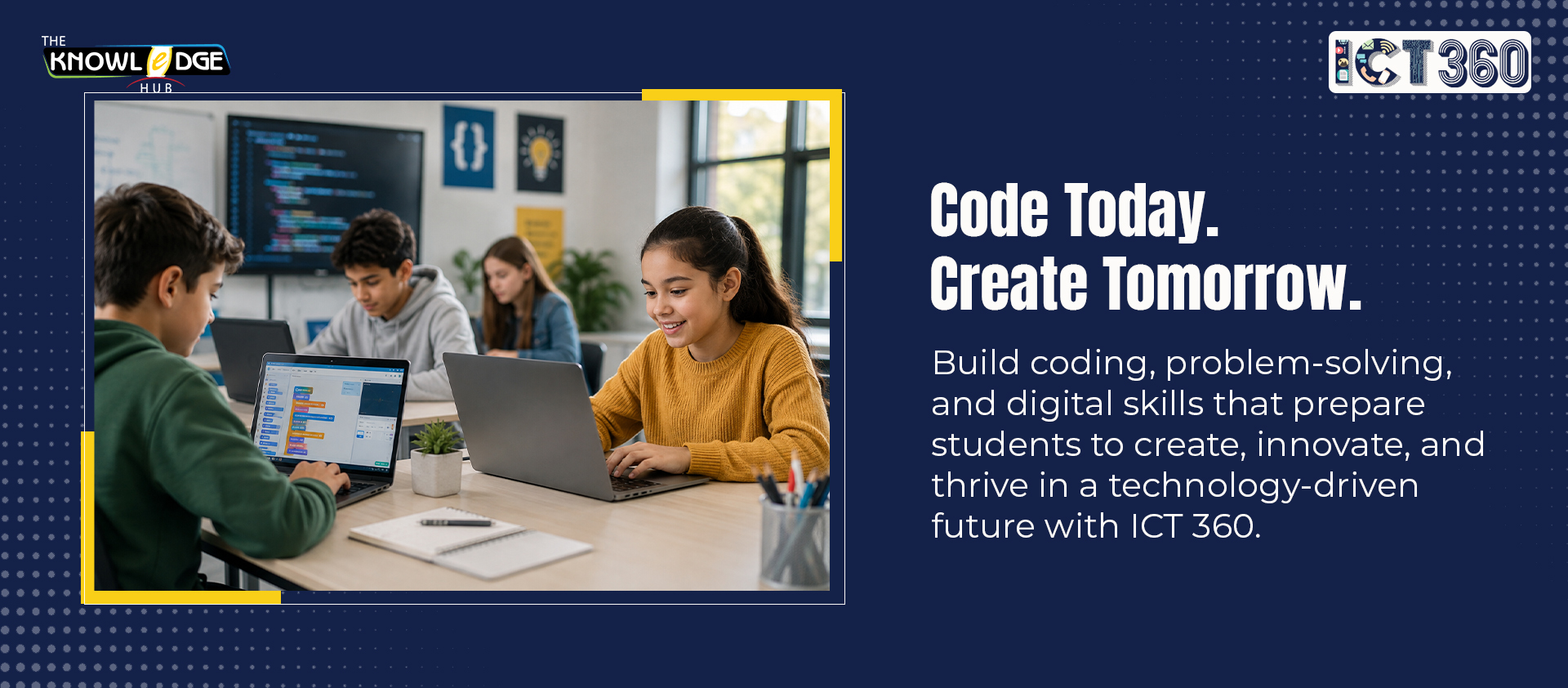
Coding is no longer a skill reserved for future programmers or technology specialists. In today’s digital world, coding education for students can help learners develop the ability to think logically, solve problems, create ideas, and understand how technology works.
When students learn to code, they move beyond simply using digital tools. They begin to understand how technology is created—and how they can use it to turn their own ideas into solutions.
Why Coding Education Matters for Students
Coding teaches students how to approach challenges step by step. When a program does not work as expected, learners need to identify the problem, test possible solutions, and try again.
This process develops valuable skills such as:
- Logical thinking: Breaking complex problems into manageable steps.
- Problem-solving: Finding solutions through experimentation and reasoning.
- Creativity: Turning ideas into interactive digital projects.
- Resilience: Learning from mistakes and improving solutions.
- Computational thinking: Understanding patterns, sequences, and processes.
These skills extend beyond the computer lab. They can support learning across science, mathematics, engineering, and other areas where students need to analyse problems and develop solutions.
From Technology Consumers to Technology Creators
Students interact with technology every day. They use apps, websites, games, digital platforms, and smart devices—but understanding how these technologies work can create an entirely different learning experience.
Through coding, students can progress from asking “How do I use this?” to asking “How could I create this?”
That shift is important.
Coding education for students encourages learners to experiment with ideas and transform them into something tangible. Whether they are developing a simple animation, creating an interactive project, or building a digital solution to a real-world problem, students experience the satisfaction of creating with technology.
Making Coding Meaningful Through Structured Learning
Effective coding education is not simply about teaching programming commands. Students need structured learning experiences that gradually introduce concepts while giving them opportunities to apply what they learn.
This is where ICT 360 can support schools.
Designed as a structured ICT curriculum, ICT 360 helps students build digital skills progressively through engaging learning experiences. Coding becomes part of a broader journey that can connect technology with creativity, problem-solving, digital literacy, and real-world applications.
Instead of treating coding as an isolated technical skill, schools can use it as a pathway for students to develop the mindset and capabilities needed for a technology-driven future.
Preparing Students for a Digital Future
The future will continue to bring new technologies, careers, and ways of working. Students may eventually use technologies that have not even been developed yet.
Teaching coding today is therefore not only about preparing students to become programmers. It is about helping them become confident problem-solvers, creative thinkers, and capable technology users and creators.
With the right curriculum and learning environment, students can build these skills progressively and apply them to meaningful challenges.
Conclusion
Coding education for students provides more than technical knowledge. It gives learners opportunities to think differently, experiment with ideas, solve problems, and create with technology.
With ICT 360, schools can provide structured ICT learning experiences that help students develop coding and digital skills while preparing them for the opportunities of tomorrow.
Because every line of code can be a step toward creating, solving, and innovating.