
The Benefits of Incorporating Artificial Intelligence in K-12 Education

The Benefits of Incorporating Artificial Intelligence in K-12 Education

K-12, a term often used in education, is an abbreviation for the publicly-supported school grades before college or university. The grades here refer to Kindergarten (K) through to the 12th grade. Children taught through such a system are enrolled at the ages of 4-6 and continue in this system up till they are 17-19. The K-12 educational system is widely applied in schools within North America and also in countries including Australia, the Philippines, and Turkey, to name a few. The K-12 system has also been recently incorporated into Arabic regions, including the United Arab Emirates, Qatar, Kuwait, Oman, and even Saudi Arabia, owing to its effectiveness in providing fundamental knowledge to students. At Knowledge Hub, we specialize in rendering Artificial Intelligence courses designed to the needs of students within Dubai and the UAE.
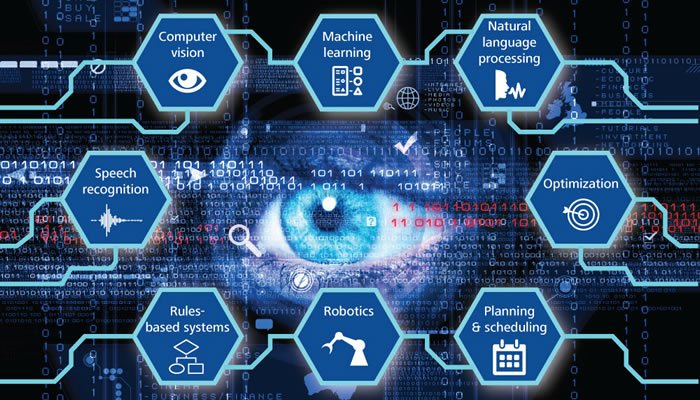
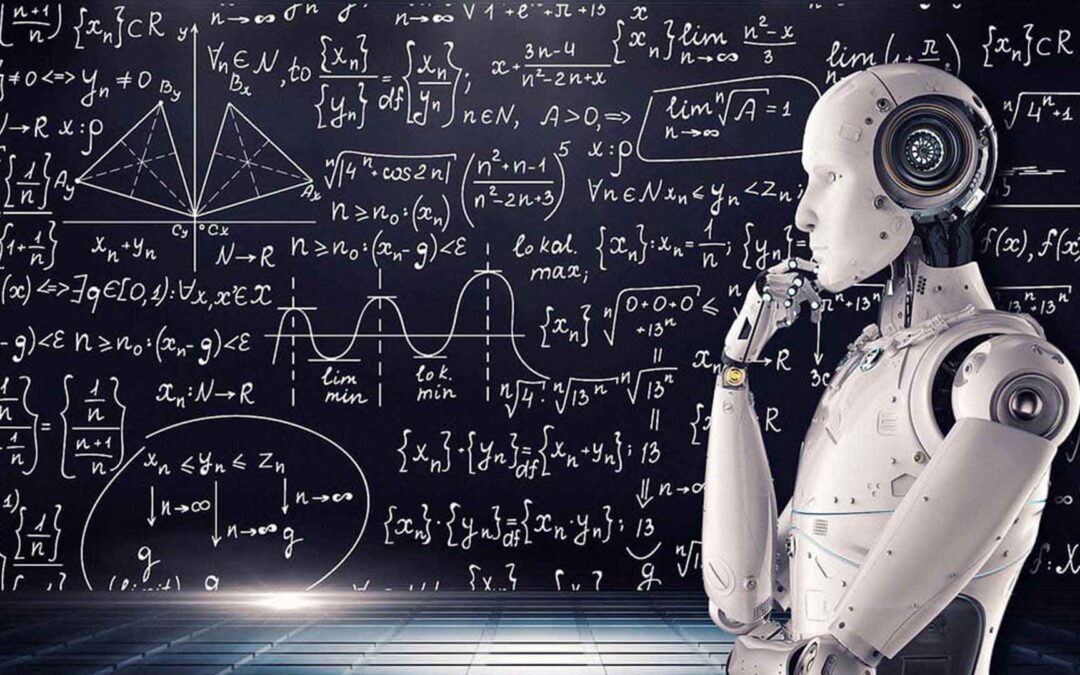
Artificial Intelligence, also known as machine intelligence, is the intelligence demonstrated by machines that are different or in contrast to the ones shown by humans. It can also be termed as the ability of a computer-controlled robot to do various tasks typically associated with human beings. Over the years, there have been debates on the topic of AI, as some people see it as a revolution aimed at eliminating the need of humans in the workspace. However, AI, in actuality, has transformed the face of education by opening new doors that lead to higher productivity, more successful students, and lower cost for the highly populated public-school system.

Benefits of Applying AI into K-12 Education

Can be Adapted to Individual Student Needs

In public school systems, the number of students usually tend to be higher than the available resources. In such an environment, it would be difficult for teachers to cater to the individual needs of all their students. AI facilitates the application of higher levels of individualized learning through interactive and innovative learning programs. An AI-based educational system caters to individual student needs by putting more focus into specific topics and redoing the areas that the students have not quite clearly understood and thereby guiding students to accomplish a lot and at their pace.

Artificial Intelligence solutions are also the answer for assisting students at different educational levels to work together. The teachers here won’t be left behind; they have a significant role to play in this scenario, first by facilitating learning through A.I. and secondly by providing emotional and physical support when needed.

Identify Areas for Improvement

Unlike automated machines, tutors may not be able to spot gaps in their lessons, and it may put students in a confused state of mind on specific concepts. AI technology helps to simplify the process of identifying weak spots in students by shining a light on them and also help them understand these concepts better. For example, when numerous students give an incorrect answer to a specific question, the system would notify the teacher for such an occurrence and also inform them of the particular concept from which the common wrong answer came about. Additionally, it also sends customized messages to students, offering them guidelines towards getting the right solution and thereby ensures that all students are working on similar conceptual foundations.

One of the most tedious activities in any educational curriculum is to prepare exams and grade students, especially when it’s the sole responsibility of the teacher. Such a scenario can also give rise to human error due to either emotional or psychological responses such as exhaustion. Furthermore, the time used for grading is usually substantial, which can otherwise be used to communicate with the students and work towards their development. AI-technology has shown significant process in evaluating tests, and its ability can be seemingly compared to that of humans. Our AI-based solutions enable tutors to effortlessly grade both multiple-choice as well as “fill-in-the-blanks” questions, thereby providing the tutors with spare time that they can focus on in-class activities.
Collect Meaningful and Immediate Feedback

As mentioned, AI helps tutors to craft lessons that are tailored to individual student needs. Additionally, it also offers essential feedback to students and teachers on lessons or subjects where improvement is needed. In short, by incorporating Artificial Intelligence courses, schools can monitor individual students and alert tutors on the various areas of weakness. The AI-system also relays feedback on how to approach the concept in which the weakness has been identified. Such a system can prove to be helpful when applied together with other methods of learning.

Added Support from AI Tutors

Yes, human teachers provide a variety of things that are fundamental to the growth and development of the student, and which the machines are simply incapable of delivering. An example being the emotional and physical support that tutors can only provide during lessons such as P.E. However, Artificial Intelligence courses can play a significant role in helping students learn subjects such as chemistry, physics, mathematics, and more. The course enables students to understand the fundamental concepts behind specific topics better and thereby provide additional support to human-based tutors.

Simplifies the Trial-and-Error Learning Process

“Trial-and-error” is an integral part of learning in any institution. However, most students find the prospect of telling the wrong answer or failing, quite intimidating, and thereby despise the idea of having to face their peers or tutors. AI is designed to lessen the burden and fears associated with such a learning environment by offering students the ability to experiment and learn various concepts in an environment that is free of judgment. It should also be noted that AI systems are also designed to learn from this method and are therefore considered the perfect tutoring support for students facing the same type of difficulties.
Knowledge Hub’s AI-Based Learning Solutions

TECHNO AI
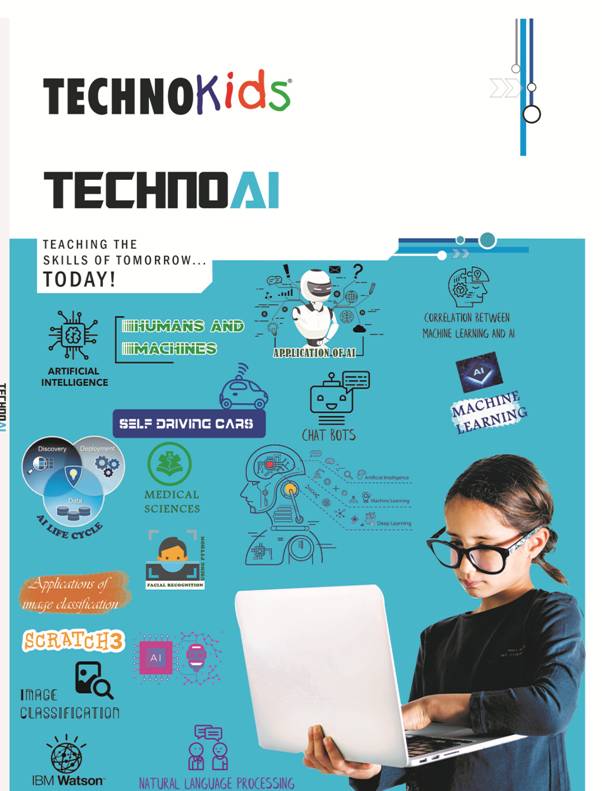
Techno AI (Artificial Intelligence) project will help students to understand the fundamental concepts behind Artificial Intelligence Technology. The course is designed to help students learn the necessary steps involved in developing an AI-based project. This project explores the idea of machine learning through which students will develop a clear understanding of AI-based Facial Recognition, Image Classification, and Object Tagging. Students will be encouraged to use scratch software to develop applications of their own.

Integrated Skills: Machine Learning, Coding, Image Processing.

Learning Objectives:

  • Learn about Artificial Intelligence
  • Understand the concept of Machine Learning
  • Understand Image Analysis
  • Apply Scratch Coding for Facial Recognition
  • Implementing image tagging application using scratch and IBM support

Learning Outcomes:

  • To understand the fundamentals of Artificial Intelligence
  • To understand the need for machine learning in AI
  • To create facial recognition project using scratch
  • To develop a project to classify and tag the objects
  • To apply the AI technology in real life

TECHNO AI Sr
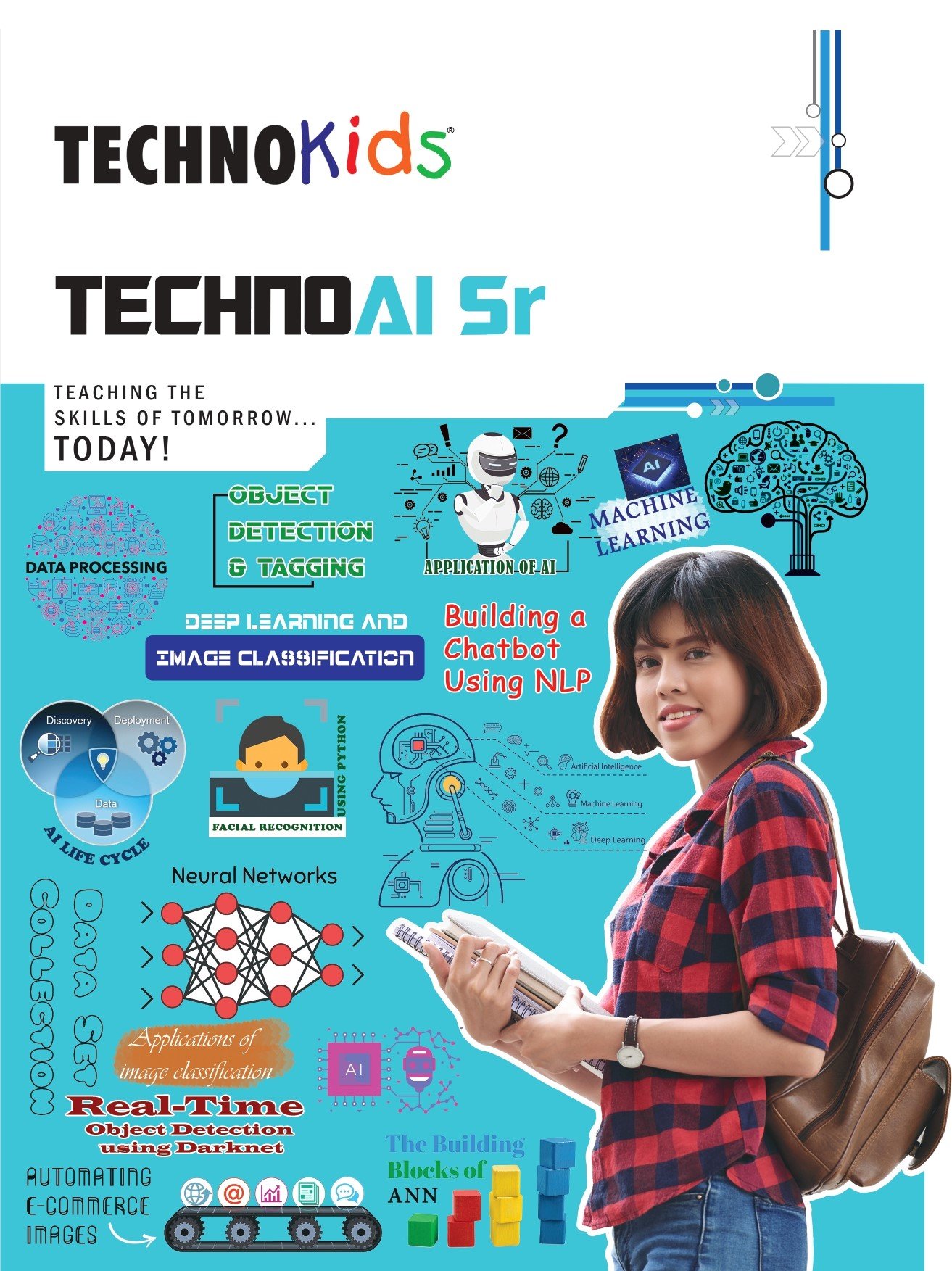
Techno AI Sr (Artificial Intelligence for Senior) project is designed to help learners of all ages to understand the basic concepts behind Artificial Intelligence technology. Students can gain a greater understanding of the basics of neural networks, machine learning, and deep learning. The project makes use of Python and Google Collaborate Tool to develop facial recognition and other AI-based application. The project also explores the application of AI in the medical field and also helps students to learn Natural Language Processing and develop chatbot applications.

Integrated Skills: Machine Learning, Deep Learning, NLP, Python Coding, Image Processing

Learning Objectives:

  • Learn about Artificial Intelligence
  • Understand the concepts of Machine Learning and Deep Learning
  • Implement python coding for Machine Learning
  • Develop projects on Google Collaborate for image recognition, classification, and tagging.
  • Learn to create Chatbots using NLP.

Learning Outcomes:

  • To understand the basics of Artificial Intelligence
  • To understand the need for Machine Learning and Deep Learning in AI
  • To create facial recognition project using python
  • To apply deep learning concept in Image Recognition, Classification, & Tagging
  • Understand the application of AI technology in Medical Field
  • To implement a Chatbot using NLP

Final thoughts

Artificial Intelligence courses have changed the learning process in K-12 institutions within Dubai and the UAE. With the development of more advanced integrated technology, the future holds a different and better experience for students in such educational systems that will significantly help in their growth and development.

AR/VR in the education industry

AR/VR in the education industry

AR/VR in the education industry – How it’s changing the learning process

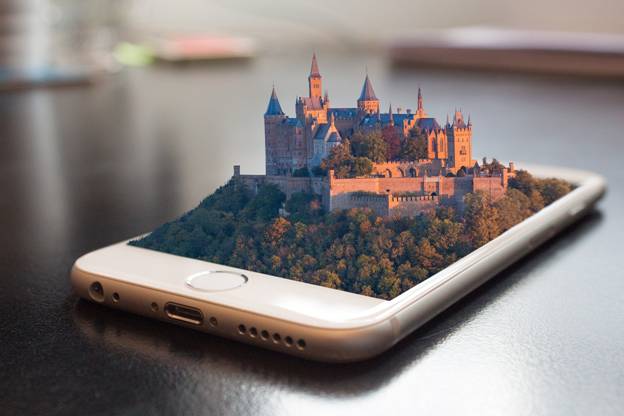
According to modern teaching experts, concepts can’t be provided or facilitated merely with textbooks, as practical lab experiments play a key role in better understanding of the perception, along with the field trips and three dimensional (3D) models etc. For this, AR/VR technologies have introduced in the classrooms with experienced and cooperating methods to provide better understanding and learning to the students.

For learning, students have to enter into the new and immersive world. Just like if the teacher is explaining and giving the concept of solar system, VR will take this learning and teaching to the next level. Students would be boarding the space ship and visiting the planets of the solar systems along with the information of that planet. There would be a fun element involved in this learning and students will grab more attention from this experience. Furthermore, hearing and seeing the thing that has been explained in the class before would help the students to retain the learning.

This type of immersive experience has helped the student to engage more with the lecture and hence resulting in more learning. A study on the VR and memory in Maryland has shown that the student’s recall has been improved by 8.8% with the immersive experience as compared to the simple desktop screens experience. Along with this, 40% of the participant students got an increase in recall with the usage of VR.
So, we have explained below how this AR and VR are changing the classroom atmosphere and how it is benefiting the students and their learning.

What is AR and VR

Basically, Virtual reality (VR) and Augmented reality (AR) are the top trends in technology that are shaping the learning experience. We have been studying about the VR and AR but to define them in simple words, they have the following meaning.

  • AR is the addition of the user’s environment with digital information in real-time.
  • And virtual reality as the name shows its something which looks like real but actually not. The sounds and the sight is been replaced by the computer-generated ones. The surrounding environment seems quite real and natural and this environment is also navigable.

Technology is continually playing a vital role in the education sector as more tools are being curated for the students for more and better opportunities and customized lessons based on the student requirement. AR technology can render hard objects that are even difficult to imagine. This AR can turn those objects into a 3D model which is making it easy for the students to grasp the content easily. This is exceptional for the students who are visual learners as they can easily convert the theoretical concept into practical material.

Like, it is very beneficial for the biology students in their concepts just like anatomy. This difficulty can be solved by virtual anatomy lessons. And the VR will help them to understand the complete interior phases of different body parts like bones, organs, etc. This can make the concept more engaging and interesting for the student

Increase in Range and Accuracy

The AR/VR is increasing the range for students and their connectivity with the teachers as they can connect with each other from any part of the globe. The range of the things that students can achieve is carried out by the diversity in the content. There are a lot of AR/VR applications where you have the option to enter the same atmosphere and any change that one make can be seen by all. This technology has revolutionized the learning process for the students

Interaction with content

The augmented reality has a unique thing that it contains both the physical experience of holding the book and turning pages and the digital magic content that pop-outs from the pages.Like, any student of either English or science can engage themselves with 3D animations, narrations, interactive games and sound for better learning process.

User-controlled interactions

As the same depicts, AR/VR allows the students to control different interactions. The only thing you have to do is download an app on your smartphone and get access to trigger anything that is facilitated by AR/VR. You can also monitor everyone’s performance and evaluate the results. So, you can see how AR/VR is changing the learning process of students.

Next level Technology

The next level technologies in the field of AR VR is Leap Motion technology. You can use your hand gestures to explore the VR environment. You can literally use the hand gestures like push, pull or even twirl objects in the VR setting. This atmosphere is really shaping the learning process of the students.

Conclusion

So, you have seen that how AR and VR have changed the atmosphere of the classroom and how further enhancement in this field will help the students. This technology is converting the most boring and tedious subjects into most engaging and interesting for every student. This industry is definitely redefining the learning and teaching process and converting the experience into more interactive and efficient. So that every student has a thirst to get more knowledge.

The Next Big Thing in K-12 STEM Education-Artificial Intelligence and Machine Learning

The Next Big Thing in K-12 STEM Education-Artificial Intelligence and Machine Learning

The Next Big Thing in K-12 STEM Education-Artificial Intelligence and Machine Learning

In a study carried out by the U.S Department of Commerce, it was discovered that STEM occupations have grown at a faster pace than regular occupations over the years. Now more than ever, skilled and knowledgeable individuals are needed to fill the ever-growing roles in the STEM sphere.

STEM (Science, Technology, Engineering and Mathematics) is more than a bunch of complicated concepts pooled together. It is actually a very big part of our daily lives and the world. Each component of STEM plays a role in sectors such as designing roads and bridges, changing the weather, exploring other occupations and much more. It is this increased globalization and digitalization that has made STEM a vital part of education. Empowering future generations with the knowledge and skills to take on these accelerated growths and innovation is important. STEM education benefits everyone across genders, ethnic groups, locations, fields, and more. The K-12 range has been chosen to receive this education because we can teach STEM at any age. Starting while the kids are much younger helps to normalize the concept and help them transition easily to their learning.

AI (Artificial Intelligence) has its own role to play in this STEM education for K-12. AI and Machine Learning are poised to uplift STEM education in schools. We will explore how below.

AI and Machine Learning (now and in the future of education)


  • AI and Machine Learning – Students

Several techniques have been employed to use AI to give students personalized learning experience and a simple way to adopt STEM skills. From being able to assess the students’ weakness and strengths through diagnostic testing, AI is able or rather employed to create personalized curricula based on the students’ individual needs. In a regular classroom where there are about 30 students, a teacher might find it almost impossible to reach every student at the customized level of learning that is so vital to them. AI is used to foster sophisticated learning to the extent that student’s expression can be read to identify if the student is struggling to gain understanding and further explanatory lessons will be provided in response to that.

AI applications are equally targeted at providing support and tutoring outside the classroom and connecting kids that may be unable to attend regular classes.

Several software use AI to create an adaptive STEM curriculum on all STEM subjects. These curricula are personalized to the student’s understanding and learning challenges. They are used across the K-12 education range. Future studies and applications all focus on a STEM made-easy approach with AI and Machine learning as the drivers.

Further AI applications in view are emotional support and well-being. Students emotions affect how students learn and studies and work are in motion to create an AI system that can provide oral support to students during learning. The cognitive states in question are Distracted, Inactive, and Concentrating. This research and endeavor are based on proof that emotional support positively impacts students’ ability to learn and teacher may be unable to fill the gap as needed.

  • AI and Machine Learning – Teacher collaboration

As AI and Machine learning continue to impact education and provide solutions that evolve, teacher and AI collaboration becomes more vital. AI and Machine learning can drive efficiency, feedback, personalization, and organization to help teachers better meet the needs of their students. The idea of collaboration is that teacher and AI work together to provide the best outcome for fostering learning (STEM education included) for the students. One such touchpoint is grading. Educators spend a lot of time grading tests and homework. Current and future technologies focus on using AI for these activities while at the same time providing recommendations to the educator to help close the learning gap with students. This frees up an educator’s time, leaving him/her with more freedom to invest in understanding students’ needs. Following small successes like this, research is underway to involve AI in the enrollment and admission processes.

STEM education may not be as easy for teachers without a solid background on the concept to teach. Teachers are expected to upgrade their skills and knowledge in this area and be able to impact students with it. AI and Machine learning can assist and teach the teacher as much as they do the same for students.


  • AI and Machine Learning – Connecting everyone in STEM education

With many of the applications of AI and Machine learning for STEM education still in the works, there are other expectations. AI and Machine Learning are expected to assist and enable proper STEM education for both students and teachers alike. At the same time, suggestions have been made towards worldwide or inter-school connections. STEM education is world impacting and with AI almost anything is possible. AI can be connected to different classrooms across the world to foster greater communication, cooperation, and collaboration between schools, nations, and educators.

  • AI and Machine Learning – Future workforce

STEM is now and the future. So are AI and Machine Learning. The World Economic Forum estimates that by 2022, a high number of organizations and companies would have employed Machine Learning. Hence, the forum encourages governments to focus strongly and rapidly on empowering students with education and skills. The primary focus of these skills and education being STEM (Science, Technology, Engineering, and Mathematics). In addition, non-cognitive soft skills. All of these are critical to meet the impending need.

In a recent study carried out by Microsoft, it was discovered that by 2030, students should have mastered the following to be able to survive in the new world:

  • Understanding problem solving and teamwork.
  • Utilizing innovative technology primarily AI


These discoveries make it clear that there is still much to do in K-12 STEM education Artificial Intelligence and Machine Learning. Hopefully, with slight improvements in the current pace and realization of other innovative solutions, students will be ready for the future. The most crucial point is to keep up with the introduction of these techniques to K-12 education.

Game-based Learning(GBL) and Why does it matter in Education?

Game-based Learning(GBL) and Why does it matter in Education?

Game-based Learning(GBL) and Why does it matter in Education?

Video games are designed to be addictive.

The mark of a great game is that it keeps the player hooked on to it for as long as possible. The key elements needed to achieve this is to make the game as interesting as possible. The game needs to be interactive, engaging and must have the right risk to reward ratio for the player to not give up on it. 


Parents with young children fret about the addictiveness of computer games these days. There is ample evidence to suggest that people are spending more time playing games. They are also spending more on them. The video game industry is among the fastest-growing sectors of America’s economy and generated $25 billion in sales in 2011. The subtle art of developing such games may sound easy but even multibillion-dollar studios oftentimes fail to achieve this feat.

With so much time and money put into this industry, it has become a widespread worry that traditional methods of education are simply not interesting enough. The benefits of gaming, however, should not be overlooked. Games have been used to train people to type, to overcome phobias, develop motor skills, teach problem-solving, release tension and even exercise. A brand new study suggests they might help those with dyslexia learn to read. Why would a child choose plane old books over a colorful, interactive and fun experience?

This simple question has gone on to breed an entirely different approach to education. Game-Based Learning (GBL) is a method of fusing education into knowledge-based games. game-based learning applications can draw us into virtual environments that look and feel familiar and relevant. Within an effective game-based learning environment, we work toward a goal, choosing actions and experiencing the consequences of those actions along the way. We make mistakes in a risk-free setting, and through experimentation, we actively learn and practice the right way to do things. This keeps us highly engaged in practicing behaviors and thought processes that we can easily transfer from the simulated environment to real life.

With a renewed sense of purpose, students would earn rewards for their performance that would further encourage them to explore their respective subjects and to fortify their knowledge base. Game-based learning is built to be adaptive from the beginning. During the production process, the game is tested and adjusted to be a more effective learning tool. As new information comes out in the field or educational approaches are adjusted, the game can be changed to suit them. After the game is released, it can be updated with new information, approaches, and more. Games even have student-monitoring analysis tools that allow teachers to monitor the students so the game can be adjusted in future updates.

One such software is Wowzers.

Wowzers is a math-based GBL solution that allows students from kindergarten to grade 8 to take a much more interactive approach towards mathematics. It is developed by a group of professionals who have made sure that is based on the universal standards of mathematics. It is also grounded on brain-based research that makes sure that the approach taken by the game is relevant to the targeted demographic. The assessments are highly adaptive and are also trackable. This means that the teachers can recognize and improve specific areas of the subject where the student may be struggling. Wowzers provides a personalized approach to learning where the curriculum adapts to the performance of individual students. This results in the student revising what they are struggling with along with learning new syllabus in other areas.

On the other hand, Wowzers also helps retain the students’ interest through context-based learning. This helps students easily interact with the subject. Providing a narrative to a problem further helps in delivering the practical aspect of mathematics to the students.

To adopt this new way of teaching, the teachers need to be trained too. This is exactly why wowzers provides the “Wowzers Professional Development Certification Course”. This course allows the teachers to understand this method of education to the fullest and use this software to its full potential.

Game-based learning is about more than giving students educational games like Wowzers. It’s about changing the approach of students towards learning and the approach of learning towards students. The goal is for students to enjoy the process of learning itself.
As a student learns through game-based learning, they gain much more ownership of the material, which improves retention. The combination of different approaches and goal-based learning addresses all of the learning styles at the same time. No matter what a student’s primary, secondary, or tertiary learning style, a game can address them. Games can even combine multiple subjects into a single game, creating a versatile learning tool.

Learning games also provide students a safe environment for failure.

It can be hard for students, especially adolescents, to fail in a public setting like a classroom. Games give them a chance to try out new things. If they fail in the environment of the game, then they can simply try again and learn from their mistakes. Instead of education based on rote memorization, students learn through experimentation and trial and error.

To conclude, it is fairly safe to say that the modern education system has been very slow to adapt to the needs of the new generation of students. This may be due to the effort that it takes to push out revised versions of textbooks that were first published decades ago or the failure to make use of the latest and greatest IoT tools available to us today. At this crucial time, GBL tools like Wowzers offer us a unique perspective on education that is almost guaranteed to improve today’s classrooms in more ways than one. These tools help students reach their full potential without ever being pressured or overwhelmed by the fear of failure; and therefore, solving one of the biggest issues with the current education system. Game-Based Learning is the stepping stone towards the future of education.