

15 Interesting Math Trivia – Questions and Answers

15 Interesting Math Trivia – Questions and Answers

15 Interesting Math Trivia – Questions and Answers

Looking to have some fun with numbers? Math doesn’t always have to be boring. The next time your mate at school tricks you into a Math trivia question, be prepared to answer it with confidence. We have compiled a list of interesting brain-wrecking Math Quiz questions & answers for you to memorize.

#1 Is Zillion a real number?

Many get confused about whether zillion is an actual number or just a made-up figure. It rhymes just like million, trillion, and billion, and hence zillion sounds like an actual number. However, zillion is just an informal term to address an enormous or indefinite number. Zillion isn’t actually a number.

#2 How many configurations does a Rubik’s Cube have?

The famous Rubik’s cube is an iconic puzzle toy, and many children struggle to find a correct solution, often feeling frustrated. It’s pretty enthralling to solve this messy-looking colorful cuboid. After a few years of trial & error, it was discovered that the cube can be solved in as many as 20 moves and there are about 43 quintillion possible configurations of the Cube. Wow, that gives us enough motivation to pick up one and get cracking!

#3 What is the longest side of the right-angle triangle called?

The hypotenuse is the longest side of a right-angle triangle and it is always the side opposite to the right angle itself.

#4 Who was considered the fastest human calculator?

Scott Flansburg is a Guinness World Record Holder (2001) for the fastest mental calculation after adding the same number to itself 36 times in 15 seconds.

#5 Which number is spelt with letters in descending order?

‘One’ is the only number that is spelt with the letters arranged in descending order.

#6 What is the smallest perfect number?

A perfect number is a positive integer that is equal to the sum of its proper divisors. Number ‘6’ is the smallest perfect number, as the sum of 1, 2, and 3, together make 6.

#7 Which number is a ‘magic number’?

Number ‘9’ is considered as a magic number, as the sum of the digits of the multiples of 9, is always 9. For example; (18) 8 + 1 = 9, (54) 5 + 4 = 9, (81) 8 + 1 = 9.

#8 How many colors are needed on a map to ensure that no 2 colors share the same border?

In mathematics, the four-color theorem states that you only require four colors to depict the regions on a map, such that no two adjacent areas share the same color.

#9 Is -40 degrees Celsius equivalent to -40 degrees Fahrenheit?

True. Though Celsius and Fahrenheit are two different temperature scales, -40 always shows the same measurement in °C and °F.

#10 Is Pi a rational or irrational number?

Pi is called an infinite decimal and it’s a real number that cannot be expressed in a simple fraction.

#11 What is zero to the power of zero?

Any number to the power of zero is 1, so (30 = 1) and zero to the power of any number is always zero (02 =0). But when it comes to zero to the power of zero, the answer is undefined (00 =??).

#12 When two circles have the same centre, what is it called?

Concentric circles are circles with a common center.

#13 When something is going to occur, which mathematical term is used to express the likelihood of the event?

‘Probability’ is the extent to which something is likely to happen or be the case.

#14 The number hundred is derived from the ancient word, “hundrath,” which actually means what?

The word “hundred” comes from the old Norse term, “hundrath”, which actually means 120.

#15 Which number has the most synonyms?

‘Zero’, which can also be addressed as; nil, nada, zilch, zip, nought, and many more.
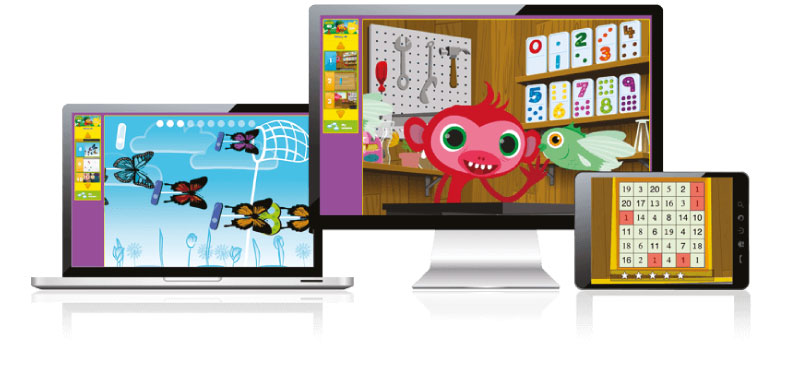
Mathseeds is an euphoric online Math program that caters to children between ages 3 to 9 years. Schools in Dubai and Middle East Regions, promote Mathseeds and even include activities from this platform into their lesson-plan, to make the session more interesting for kids. The activities are carefully created by educational experts and hence ensures age-appropriateness. It even showcases the Mathematical progress of children and they are encouraged to create a custom Avatar – to keep themselves motivated. Mathseeds availability in the UAE and other GCC regions.

Contact us

Fill in your details below or send us an email on info@knowledge-hub.com

Strategizing An Effective Lesson Plan

Strategizing An Effective Lesson Plan

Strategizing An Effective Lesson Plan

Ever wondered how an educator is able to effectively deliver lessons day-in and day-out without faltering. There are so many topics to be covered and concepts to teach the class, but the subject teacher does it with precision and grace. She knows how to pace the learning and estimates the grasping power of students. All this is only possible with the help of proper planning and a bit of back-end effort.

What is a Lesson Plan?

A lesson plan is put together by the teacher so that she can navigate through the loads of lessons she needs to deliver in class. It is prepared in advance and serves as a blueprint for referencing, whenever required. Just like in the corporate environment employees have some targets enlisted clearly on the goal sheet, teachers have to refer to the lesson plan to set their teaching goals and achieve them in a timely manner.

Importance of Lesson Plans

  • It provides a step-by-step guide for the teacher to know what to teach in class
  • The plan guides the teacher to keep the materials ready for the session in advance
  • The ‘objective’ of the lesson is ‘penned down’ clearly, so there is no ambiguity on what the student should know by the end of the session
  • Teachers gain confidence and are less stressed about delivering the lecture
  • You can also be prepared to answer queries that might be asked by the students
  • Effective time-management is possible; as teachers know in advance how to divide the one-hour class cycle and devote time to teaching, conducting activities, and also allowing students to ask queries & do some brainstorming
  • Avoids repetition of topics or forgetting to introduce a particular lesson in class
  • Reference for a substitute teacher, in case the main teacher is absent
  • Helps to strategize teaching and encourages educators to use innovative learning aids, to make the sessions more interesting

Steps for Preparing a Lesson Plan

As a general thumb rule, the lesson plan is designed to include three steps:

  • Learning Objectives
  • Learning Activities
  • Assessment to check for student understanding

Learning Objectives

The objective for a lesson plan must be in sync with the learning readiness of students in class. To device the objectives, ask the following questions;

  • What is the topic to be covered?
  • What should the students learn from this lesson?
  • What are the skills that students must be able to grasp and apply?
  • What is the primary objective and which is the secondary objective?

Example:

Topic:

‘A detailed lesson plan of teaching Pronouns’

Objectives

  • To be able to understand the concept correctly
  • Read the phrase and identify the pronouns
  • Complete the assessment on pronouns
  • Participate in group work and discussions

Learning Activities

The learning activities should be related to the objective. You also need to understand the level of involvement children will have if you present that particular learning activity to them. Choose an activity that offers an immersive experience to students. Make sure it isn’t boring and alongside learning, children enjoy participating in the activity. Prepare for the following tasks;

  • How will I explain the topic to students?
  • How will I present the illustrations to them?
  • How will I make the topic engaging?
  • Are there any relatable examples that I can cite, for kids to understand the concept in a simpler manner?

Writing Objectives for Lesson Plans Using Bloom’s Taxonomy and Associated Action Verbs:

Learning level Associated action verbs

Knowledge

define, describe, state, list, name, write, recall, recognize, label, underline, select, reproduce, outline, match

Comprehension

identify, justify, select, indicate, illustrate, represent, name, formulate, explain, judge, contrast, classify

Application

predict, select, assess, explain, choose, find, show, demonstrate, construct, compute, use, perform

Analysis

analyze, identify, conclude, differentiate, select, separate, compare, contrast, justify, resolve, break down, criticize

Synthesis

combine, restate, summarize, precise, argue, discuss, organize, derive, select, relate, generalize, conclude

Evaluation

judge, evaluate, determine, recognize, support, defend, attack, criticize, identify, avoid, select, choose

Assessment to check for student understanding

This is the final step in the process, but the most important one. Regular assessments are to be conducted to understand the child’s retention capacity and clarity of the topics. Teachers can give homework, conduct quiz, take a surprise class test, and even assign project work, to evaluate and measure the child’s progress. Now that you know how to prepare a ‘lesson plan’ you are all set to take over the classroom session with confidence! However, as we can see preparing a lesson plan is pretty time-consuming, especially when it has to be mapped on paper. To make this process simple for teachers, the Next Learning Platform (NLP) – a school ERP tool, provides ready-made lesson plan templates. One has to simply input the pointers under each category and get started. Also, once the plan is made, it is saved on the system and can be retrieved, thereby saving time & effort to create it all over again. Tech-advanced regions like Dubai and other GCC counterparts, have already adopted NLP and are happy with the enormous time-saving benefits that it offers.

Contact us

Fill in your details below or send us an email on info@knowledge-hub.com

Digital Transformation Through Chatbots

Digital Transformation Through Chatbots

Digital Transformation Through Chatbots

We thrive in a world that is rapidly evolving in terms of digitalization. New inventions are transforming the way we work, connect, and live, thereby positively transforming the quality of our lives. The buzz word ‘AI’ (Artificial Intelligence) continues to trend as smart machines furthermore develop with human-like intelligence to improve efficiency and save man-hours.

What Are Chatbots?

A chatbot is powered by AI and is used by businesses to engage with their audience through the exchange of automated messages. There are more than 300,000 chatbots on Facebook which are majorly focused on marketing and customer support processes. These virtual agents assist customers with their concerns and tend to queries of potential users. Nearly as many as 40% of internet users worldwide prefer interacting with a chatbot, rather than speaking to agents. Whatever industry you cater to, whether it is healthcare, consumer goods, or even banking, chatbots are taking over and are here to stay.

Categories of Chatbots

Some categories of Chatbots that have become popular:

#1 Menu Chatbot

In this fast-paced world, users don’t have much time to navigate through a website and read the content on each tab. They want the required information, without browsing through too many pages and opening numerous links. The ‘menu bot’ basically gives the audience a chance to choose from several drop-down options an item which they want to learn more about and later showcase some more options – based on what you clicked on, ultimately helping the user reach the required info. A nicely drafted welcome message and presenting the correct data with every click are the key to designing a helpful menu bot.

#2 Smart Chatbots

What if a chatbot could understand emotion and have a free-flowing conversation with you, just like a human would do? It is now possible to devise a ‘smart robot’ that can understand intent, language, and sentiment. These chatbots are slightly complicated to program and it requires skill to make the Robot react the way it should in an appropriate scenario. They work as a virtual assistant, in a real-time manner.

#3 Voice Bots

‘Alexa play my favorite tune by Ed Sheeran’, ‘Alexa when is my next meeting scheduled?’…We have become so dependent on Alexa and Siri, our friendly virtual assistants, that we can’t imagine our day without them. Voice bots are convenient, they are pretty smart, and they speak in a language that we understand. Also, it is way more convenient to speak or give out instructions rather than type them out. Hence, voice bots present a rather favorable experience to the end-user.

Advantages of Chatbots

Chatbots are indeed very versatile and user-friendly and they boost engagement by 3X levels, thereby bringing some obvious benefits such as;

Better Service Experience

Chatbots act as a guide and answer relevant questions related to a product or service, that probable customers are interested in. Having a satisfactory response enables the buyer to make a more informed decision and thereby feel happy in making the purchase. A multi-lingual chatbot communicates with people in their local language, thus improving the level of comfort and free flow of communication. Example: Customers from Dubai or other parts of the Middle East, speaking only Arabic, will find ease in sharing their concerns with the bot in their own regional language.

Keeping A check on Budget

Having to hire employees at a service center and set up a 24×7 hotline, is indeed a costly affair. Rather than paying hefty salaries and spending money on rent, it makes sense to automate the process by replacing human efforts with a chatbot. Chatbots can be customized to play a role under different scenarios, and fully tend to the query, or at least answer it partially, before passing on the ‘ticket’ to an employee within the organization.

Seeking feedback

The fastest and most authentic way to get feedback from the customer is to allow the chatbot to do it on your behalf. The bot collects MCQ data and passes it on to the sales & marketing teams, to take it forward from there.

Code Monkey was introduced to challenge the old-fashioned way of studying, by introducing learning aids that are engaging & fun for the learners. With an in-depth understanding of technology, Code Monkey designs modules’ for teaching coding to students, as young as fourth graders. Schools across the world, especially in tech-advanced countries like the UAE and other regions of GCC, encourage parents to make use of the Code Monkey platform. Amongst many of its interesting modules, the most prominent one is ‘create your own chatbot’. Here children 13+ years, build their own chatbot in Python language and solve real-world problems by using their skills.

Contact us

Fill in your details below or send us an email on info@knowledge-hub.com

The Power of Good Vocabulary: Easy Ways To Improve Your Child’s Vocab

The Power of Good Vocabulary: Easy Ways To Improve Your Child’s Vocab

The Power of Good Vocabulary: Easy Ways To Improve Your Child’s Vocab

In addition to the limited vocabulary kids learn or pick up from others in preschools, parents must take extra efforts to introduce children to a bank of new words, every now and then. As per a recent survey, studies show that many students who graduate from preschools have limited vocabulary, and this affects their performance in elementary school and beyond.

Words are empowering, they give the student a gateway to understand the world around him and make sense of everything. Therefore, introducing children to a vast ocean of vocabulary, across varied topics, is the key to success for students.

How to build a robust vocabulary:

Here are a few exercises that can be incorporated to build a robust vocabulary:  

#1 Converse as Much as Possible

Often parents make a mistake by speaking to the child at home in their mother tongue. While it’s important for the child to know his regional language, it is equally or even more important to learn English. Young children can grasp new words passively while having a conversation with someone, and hence make a rule of communicating in English 60% of the time, even when the child is at home. As parents, you also need to use different words or increase the complexity of the words in a sentence, so that children are constantly learning a new ‘word’ without even realizing it. Note that repetition is the key, and hence use this newly introduced word a couple of times before you phase it out and replace it with a new one.

#2 Read a Book Together

As much as your child enjoys flipping through a storybook and admires the colorful illustrious characters on the pages, he also needs to be instructed to read the text. The best way to practice this is to read to your child once or twice aloud and then make him do it. Draw the child’s attention to the book and run your finger word-by-word below the text while you are reading. The trick is to read slowly, clearly, and be mindful of the pronunciations. Pause after reading one page and then ask the child if he needs an explanation of any word that he wasn’t already aware of. Explain the meaning in simple words and then proceed with the story. You can use an e-reader or subscribe to the vast library featured by this famous reading portal called – Reading Eggs. Alongside e-books, Reading Eggs has a plethora of gamified exercises and a dedicated ‘phonics learning section’ to support the learner’s reading skills & vocabulary. This multi-award-winning platform has many loyal subscribers in Dubai and other Middle East countries.

#3 Create A Word Wall

This is a great way of constantly reminding children of the words they are learning, as they look at it every time they pass through the living room door. Place the board at a prominent position and affix a chart paper with 5 to 6 words that the child has recently learnt. Keep the word wall as-is for a couple of weeks, and then change the set of words. By repeatedly looking at the words, the child learns to process the information, such that from his short-term memory, it gets etched in the long-term memory, thereby never to be forgotten.

#4 Sing Rhymes

Together Nursery rhymes are fun, they are peppy, and have catchy tunes which make children dance. In a four-liner rhyme, think of how many new words you can accommodate to teach youngsters some additional vocabulary. It is not necessary that you need to stick to conventional ones; ‘Twinkle – Twinkle, and Humpty Dumpty’. Be free to make your own rhyme and add words that you might feel would be helpful for learning. You could also tweak sentences of an existing nursery song, to introduce synonyms and words that are unusual. Most K-12 schools in UAE and other GCC regions introduce a lot of rhymes in the Primary Year’s Program (PYP), because rhymes are easier to recall, and it helps the child in remembering words and their meanings, associated with the rhymes. Row, row, row your boat, Gently down the stream, And If you see a Pelican, Don’t forget to greet him!

Besides the above methods, you could also introduce a thesaurus to your child, once he’s old enough. An enriched vocabulary will give your child the confidence to communicate freely at school and in a social circle, thereby benefiting him manifold in life. The most important thing to remember is to be positive and support your child’s progress by motivating him.

Contact us

Fill in your details below or send us an email on info@knowledge-hub.com

Learning To Code An HTML Web Page with the TechnoHTML5 Curriculum

Learning To Code An HTML Web Page with the TechnoHTML5 Curriculum

Learning To Code An HTML Web Page with the TechnoHTML5 Curriculum

We live in a Digital World where communication, networking and business, happens online, rather than face-to-face. Digital Assets such as; websites, blogs, and social media pages, are valued the most and an absolute must-have in today’s day & age. The brand is perceived positively or negatively basis its website and reviews/ratings on the internet. All marketing efforts, including budgets, are strategically planned in a way to increase the ‘online image’ and thereby increase awareness & reach. This means, if you want to survive in the ‘Digi Age’ you need to ‘armor up’ with relevant skills.

Computer lessons in schools have undergone a major upgrade in their curriculum to match with the changing pace, especially in tech-advanced regions like UAE and other GCC counterparts. Students as early as elementary school are learning basic fundamentals of coding to power robots and bring high-tech ideas to life. By the time students graduate from school, they are even equipped to construct their own website from scratch.

Steps to Create a Web Page in HTML

Many beginners have apprehensions about coding and find it to be like rocket science, thereby staying away from the same. However, reading through this Blog will change your perspective. Let’s get started by learning about some important jargons associated with the process;

HTML

Hypertext Markup Language is a language that organizes web pages. It adds structure to the pages and its content. This essentially means making the text look presentable with bullet points, using tables wherever required, and spacing out paragraphs.

HTML Tags

With the help of tags, the browser distinguishes between HTML content and simple content. It contains three main parts, opening tag, content tag, and closing tag. Every tag has its specific task and the tag is written within such brackets < >.

Example: <tag> content </tag>

PHP

The full form of PHP is “PHP: Hypertext Preprocessor.” It is a widely used open-source language to build web applications

To Get Started We Need the Following

A Text Editor

To write an HTML code, we need to use any of the text editors you are comfortable with; Notepad on Windows or TextEdit on Mac. You are not required to additionally install any text editor from the net, just work with the one already available on your computer.

A Browser

Any browser will do; Firefox, Chrome, Safari, or any other browser that you use.

Now that we have assimilated everything we need, let’s get started…

#1 Content

A content-rich website is suitable to clearly communicate the brand’s message across and give the target audience an idea of the products/services. Pre-plan what content you wish to showcase on your website’s home page and other internal sub-pages on a word document and use important keywords to enhance your search rating for the purpose of SEO.

#2 Download Images

Use a free-pic platform to download images or get high-resolution images from a paid source. Save all shortlisted images in a folder.

#3 Website Design

Choosing a proper Web design is important, as the look & feel of the website depends upon a proper template. Avoid gaudy colors with unconventional layouts. Let the design be simple, yet effective.

#4 Write HTML Codes

Writing a proper code will allow your website to be displayed the way you want it to look. Use this below code to begin with:

<!DOCTYPE html>

<html>

<head>

<title></title>

</head>

<body>Your content here.</body>

</html>

Save the file in proper format – ‘name’ followed by ‘.html’, for example- fashion.html.

#5 Add the Content

In this step, we will add the content or text that you wrote earlier between the body tags.

#6 Add HTML Tags

Add headings correctly in h1 tags section.

<h1>

Fashion Trends: New Arrivals for Summer 2022

</h1>

#7 Add a List

Listings under bullet points need to be drafted in the following fashion;

<ul>

<li>Wear dresses for summer.</li>

<li>Choose cotton fabrics.</li>

<li>Go for light colors and floral prints.</li>

</ul>

#8 Include Images

Use the image tag to add the images from the file you saved earlier, so that It is uploaded on the web page.

<img src=”images/file-name.jpg”>

And you are kind of done! Refresh the browser to see how your website looks and make corrections wherever required.

TechnoHTML5 TechnoKids has introduced the TechnoHTML5 curriculum to allow students to code a one-of-its-kind web page with HTML and CSS lessons for beginners. Add style text, graphics, and hyperlinks to your project and display your creativity. Such interesting modules by TechnoKids are a hit in schools across the globe, including IB institutes in Dubai in the Middle East. To learn more about TechnoKids, visit our website: <link>

Contact us

Fill in your details below or send us an email on info@knowledge-hub.com