
Lego® Education Solutions Make a Perfect Gifting Kit For School Going Students This Christmas Season

Lego® Education Solutions Make a Perfect Gifting Kit For School Going Students This Christmas Season

Lego® Education Solutions Make a Perfect Gifting Kit For School Going Students This Christmas Season

Christmas celebrations are incomplete without secret Santa being generous and handing over a present to kids. The festival of Christmas is synonymous with exchanging gifts and this culture has been followed through over the years. It is no surprise for children to expect some toys & snacks from their admirers. In fact, most children get so excited about the upcoming month of December, that they start preparing their wish lists a month in advance, hoping they would get all that they’ve asked for.

As fun as it is to receive presents, you would agree that the process of gifting is kind of stressful. Parents get anxious about the whole gifting process, as everyone’s preferences are different, and choosing an ideal present that will make the receiver happy, is a difficult task to fulfill.

It takes maturity to understand that a present is given from the heart and irrespective of what’s inside the box, one must appreciate it and be grateful for the thoughtfulness. We would first like to highlight a few good reasons that indicate why seasonal presents are so important;  

  • When you gift someone, it shows that you care for each other  
  • It is an act of kindness, no matter if you don’t get one in return  
  • It spreads joy and cheer around  
  • Happy memories stay with the person far after the festive season is over 
  • One learns to be grateful for all that they have and develops a habit of being thankful  

Meaningful gifting brings some reason to the season! We want our children to use the presents long after they have been presented with them, and therefore putting some thought before placing an order on Amazon will be worth the effort. Toys are a favorite for everyone, but it’s best when they add some value & support the child’s development.

What are LEGO® Education kits? 

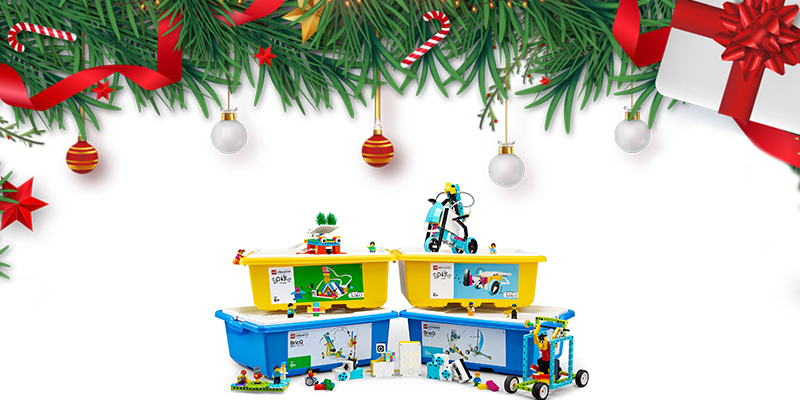
LEGO® Education is based on a hands-on learning approach, where students get to study important concepts of Science, Technology, Engineering, and Math (STEM) by building models and powering them digitally, to support the school’s curriculum and retain knowledge through activities. For over 3 decades, LEGO® Education has been partnering with teachers & educators to deliver playful learning experiences that make classroom-learning fun and impactful in the Middle East, and other regions of the world. Through these kits, children get an opportunity to experiment, learn by doing, develop creativity, and build problem-solving capabilities. If you think about it, these kits are perfect examples of gifting and a better valuable option rather than spending money on soft toys, accessories, or showpieces. Let us learn about the different sets available for sale in Dubai, and even orderable online, around the world.

LE_BricQ Motion Essential PLK_Lifestyle_1HY21_2000471_03

LEGO® Education BricQ Motion Essential Set:

Suitable for elementary grade students (5 to 10 years), this BricQ Motion Essential Set will teach budding science enthusiasts the most important principles of physics; force and motion. Students conduct practical examinations to check what effects ‘push’ and ‘pull’ have on different objects under different circumstances. The experiments will help students make predictions more accurately and solve problems more promptly, not by mugging the formula, but by reasoning out the results. Most schools in the UAE, have made special arrangements in classrooms to include these kits as a part of studies and dedicate some time to children to discover cool “aha” moments.
aaa

LEGO® Education Spike Prime Set: 

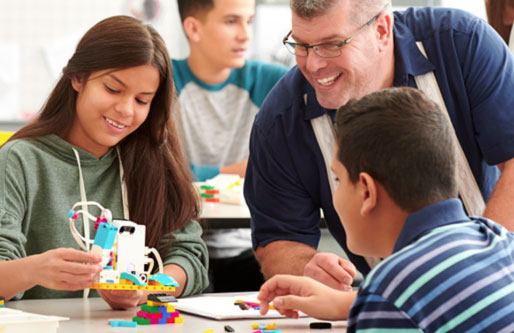
For middle school children aged (11-13 years), this is a perfect gifting solution. The kit is very attractive with as many as 528 colorful lego elements and they are marked safe for usage as its non-toxic. Essentially, children feel extremely proud of experiencing working with multi-port Hubs, cool coding languages, and programmable software based on Scratch, getting an opportunity to translate their theory skills into workable models. The kit comes with instruction manuals and usually, each session is for 45 minutes duration. You can bring one home and order it anywhere in the GCC region, to support STEM studies at home with friends.


Contact us

Fill in your details below or send us an email on info@knowledge-hub.com

Benefits of Investing Time Playing Videogames

Benefits of Investing Time Playing Videogames

Benefits of Investing Time Playing Videogames

The Gaming sector is booming rapidly and is expected to be worth $321 by 2026, as per a report by PwC. During the Covid-19 lockdown, it was surprising to find out that millions of teens and adults explored gaming and many became addicted to it.

Gaming For Good Reasons: 

It Stimulates the Mind

It’s indeed very thrilling to be able to score points and advance to higher levels of challenges by opting to invest time & energy in playing video games. Video games can make your brain sharper by compelling you to think more quickly and take decisions in the spur of the moment. It is safe to say that video gaming increases your grey matter! It tends to improve one’s memory and of course, over time your decision-making process will get smoother. 

Improves Problem-Solving Capabilities

Every game you indulge in has a specific strategy to comply with. Multi-player games are designed with twists & turns, much like a puzzle that take-up the player’s time and skill to solve. When children learn to solve gaming disputes, they gain confidence and are in a better position to apply the learning in real-world scenarios.

Fantasy Facilitates Imagination

Though games are fiction-based, children get introduced to characters that demonstrate some kind of superpower or special ability that they can look up to. Soon these characters become admirable, much like Role Models to kids, and then students mimic these positive traits from them. For example; saving the world and being a good person is a superpower that video game characters might demonstrate, thus imbibing the same values in oneself.

Spatial Visualization Capabilities

Spatial visualization is the ability to visualize and manipulate 2-D objects and 3-D figures in your mind to be able to manipulate or build something meaningful. Playing video games has a lot of graphics and scenes that are mapped out in a virtual environment. Players need promptness to decide their next move and swiftly navigate from one location to the other, and this process happens first in the head via visualization and later played via the consoles. The subject of Geography requires similar visualization skills, where students need to remember maps & different terrains, thus making the process easier.

Positive Effects on Mental Health

With all the stress from studies and extra-curricular work, children get bogged down and need a break. Video Games are a good stress reliever from monotony and offer a refreshing boost that enhances the mood and makes the player more joyful & enthusiastic. Deep thinking and strategizing improve concentration and stats even show that those who suffer from anxiety & depression recover faster with the help of video games.

Improves Social Interaction

Introverts are more inclined towards enjoying solitary activities and thus a video game becomes their best friend. Introverted personality people enjoy creativity & playing games is an outlet to express their creative talents. Though face-to-face interaction may seem too much for a shy person, meeting players virtually kind of leads to less awkwardness. Teaming up with a stranger and eventually becoming their virtual friend, is a good start and the feeling of security & inclusiveness is fostered. 

Gaming isn’t just limited to video games, but the gamut of the industry is vast. There are 1000’s of apps that provide educational games and even teach children the basics of STEAM (the new-age curriculum followed by schools in Dubai and other regions of the Middle East).
Code Monkey is a virtual coding platform that introduces various courses to children of ages 4 to 14+. They have cool coding courses such as; Banana Tales, Beaver Achiever, Dodo Does Math, etc. to make lessons interesting, yet drive concept clarity. Educators and parents trust Code Monkey across the GCC regions, including the UAE, to help budding coders learn important computer science concepts in an easy game-like way.

Contact us

Fill in your details below or send us an email on info@knowledge-hub.com

The Value of Time and Simple Time Management Lessons For Kids

The Value of Time and Simple Time Management Lessons For Kids

The Value of Time and Simple Time Management Lessons For Kids

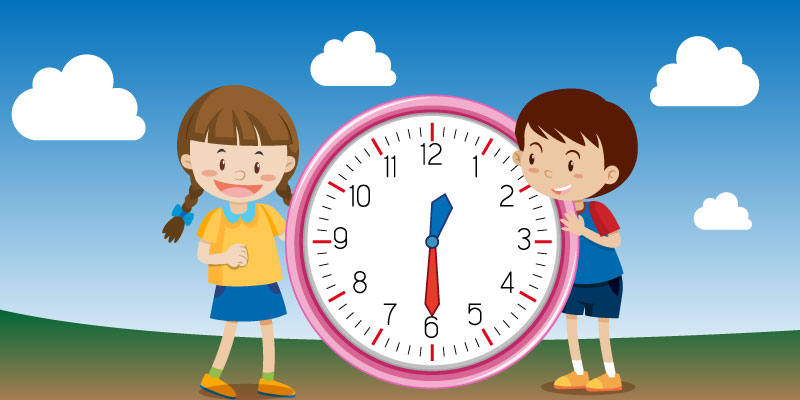
Learning to read the clock starts at a young age of 6 years, when children are taught to tell the difference between am and pm, and also make themselves comfortable with analog clocks & their digital versions. The 12 hour clock ticks from 1 am to 12 noon and from 1 pm to 12 midnight, whereas the 24-hour clock is read as 00:00 to 23:59 and so on. Learning to read time is reinforced in school through Math lessons which are made fun thanks to the Mathseeds platform used popularly in the UAE. For all the good reasons, Mathseeds has won itself multiple awards and aims to build an even stronger foundation for kids between 3 to 9 years of age in Dubai and all over the globe.

Once students familiarize themselves with reading time, the question asked is, do they know how to appreciate the value of time? Why don’t schools take the onus to teach time management at an early age? Our generation of adults had to learn time management the hard way through trial & error! But now, IB schools in the Middle East, especially those that incorporate STEAM learning, are focusing on not just the theoretical aspect of time but also teaching kids the value of time management by assigning project work and setting deadlines.
Students are anyways burdened with extra-curricular classes, school work, and social life, therefore this phase of their life is the most appropriate to learn the tricks of time management.
Here are a few tips to practice Time Management daily, and inculcate a habit to make it every progressive learner’s go-to skill to reap its benefits all through their lives;

 #1 Help children create a to-do list

Teaching students discipline and routine is great. These are success mantras for all successful people. Following a to-do list and sticking to it develops confidence and gets more things done throughout the day. A child’s day could be planned as follows; wake up at 7.30 am, get ready and go to school by 8.30 am, finish school by 3 pm and take a 45-minute rest break, go for extra-curricular classes at 4 pm, and then finish homework from 5.30 pm to 7 pm. Post 7 pm is free time for 1 hour to socialize with friends, followed by dinner at 8 pm, and lastly going to bed by 9.30 pm. Similar to this one, make a routine for the weekend, which will include going out with family and pursuing free-play activities like art & craft, to further stimulate freedom & creativity. In the words of the famous writer Robin Sharma, ‘Your daily schedule reflects your deepest values.’

#2 Goal Setting is Important

Goal setting is an important life skill that can be practiced early on in one’s life. Teach kids to set realistic goals and divide them into short-term and long-term goals. Short-term goals can be something like scoring 80% and above to be eligible for standing as Vice House Captain in school. Another short-term goal example is; successfully winning a goal medal in sports athletics competitions to participate in inter-school and then state level to represent the region. If you set goals, you will be able to track your progress and work towards continuous improvement. Goals need not necessarily have to be about academics and extra-curricular classes, they can be on a personal level too. Some of them include; saving money in a piggy bank, sleeping on time, being more hygienic, and making a gratitude journal to stay positive & emotionally invested. Long terms goals are also necessary to list down as the student’s dreams and aspirations are linked to them. Getting into the topmost Business School or going abroad for studies are all long terms planning that can be achieved by taking small steps every single day. There are a number of Goal-setting apps available for download in the GCC region, that notifies the user and reminds them about how far they’ve come and how much more effort is needed to achieve the next goal.

#3 Staying Organized Is Beneficial

‘There is a place for everything and everything must be in its place’. Staying organized saves time and unnecessary effort in trying to figure out things at the last moment. Even small things like keeping your school uniform in the wardrobe at its assigned shelf, will save time in the morning and create less panic when it’s already time to catch the school bus. Even studies should be done in an organized manner to submit class work on time and prepare for exams well in advance. Toys should be kept in the toy rack and not scattered around the house. Assigning some household chores like washing plates after eating, handling laundry duty on Sunday, and taking care of plants in the garden, will keep the children positively engaged and organize their time efficiently, instead of spending hours playing video games.

Parents and teachers, therefore, play an equal role in helping kids learn the essence of time management. Try out the above tips shared in the Blog and guide students to a path of a bright future.

Contact us

Fill in your details below or send us an email on info@knowledge-hub.com

Past Tense: Types, Definition, & Some Examples

Past Tense: Types, Definition, & Some Examples

Past Tense:

Types, Definition, & Some Examples

In English language, tenses are important skills that need to be mastered in order to be able to frame the sentence correctly for proper verbal and written communication. By the age of 4 or 5 years, most schools in Dubai & other regions, teach children what verbs are. Verbs are nothing but words that indicate an action. Some examples of verbs are; run, sing, jump, eat, etc. suggesting that an action is happening.

Tenses are related to verbs in the sense that it defines when the verb or action has taken place. All verbs follow three basic tenses; past, present, and future. This means the action (cooking) is either done in the past, is being done in the present, or will be done in the future. Let us study the Past Tense in detail, through this Blog.

Past Tense

As the name suggests, the past tense is used to speak about an event that happened in the past or talk about an action that has already happened. The Oxford Learner’s Dictionary defines the term ‘past tense’ as “the form of a verb used to describe actions in the past.”

I jumped on the playground.
I completed my homework.
I was reading a book.
I got married in the summer season.

These are all activities that happened in the past, and they could be recent past or events that happened quite some time ago. Reading Eggs is an excellent platform that is available online for kids of ages 2 – 13 years. Children who are studying the concept of tenses can refer to story books available on Reading Eggs and practice their tense by finding sentences from the story and writing down the appropriate tense it belongs to. A single Reading Eggs account can be accessible by up to 4 children and therefore parents in the Middle East and GCC regions rely on it wholeheartedly.

We use four different types of past tenses so that there is enough clarity and the reference of the event is understood in the correct context.

Type of Past Tense

Definition

Example 1

Example 2

Example 3

Simple Past Tense This indicates that the action or occurrence happened in the past and is over now John won the Gold medal I yawned I went to the mall
Past Continuous Tense It indicates that the event is still ongoing or happening and hasn’t ended yet I was playing tennis Thiea was working on her research paper He was smiling during his visit to the garden
Past Perfect Tense When an event precedes another event in the past, we use past perfect tense. In simple words, it is an event that happened before another event in the simple past tense I had already won 5 quiz competitions by the time I was 13 years old across the UAE The car had already exceeded the speed limit before they got caught by the cops My dog Scooby had already eaten all the chicken before we got home.
Past Perfect Continuous Tense It is an event that began in the past, continued for a period of time, and is still ongoing when another past event happened. John had been eating chocolates when Dad walked into the kitchen. You had been waiting here for 3 hours before your father arrived She had been going to the same gym glass for years before it shut down.
Type of Past Tense  Positive  Negative Question
Simple Past Tense I graduated from this school I didn’t graduate from this school Did I graduate from this school?
Past Continuous Tense I was working on my assignment I wasn’t working on my assignment Were you working on your assignment?
Past Perfect Tense I had completed my cooking before everyone else even started I hadn’t completed my cooking before everyone else even started Had I completed my cooking before everyone else even started?
Past Perfect Continuous Tense I had been repairing my phone, before the technician came over I hadn’t been repairing my phone, before the technician came over Had she been repairing her phone before the technician came over?

Contact us

Fill in your details below or send us an email on info@knowledge-hub.com

New Age Matching Games for Kids

New Age Matching Games for Kids

New Age Matching Games for Kids

Be a Fruit Ninja: Practice Matching By Coding Your MatataBots 

Matching is a very basic skill that kids learn when they enter preschool. Right from toddler age, children start identifying objects and learning their names. For example: show them a flashcard of a chair and then point to a chair around the classroom to familiarize them with the object’s name. Now do this exercise multiple times to reinforce what a chair is.

Matching helps kids associate objects and things by different criteria. The simplest type of matching is just identifying the same items and pairing them (ball to ball) or (cup to cup). As the child comes to terms with the basics, increase the level of complexity, by making the worksheet tricky. Now students need to read the instructions, and match as per the following;

  • Match a color to the similar colored object
  • Count the number of items and match them with the corresponding number
  • Match shapes with the object that represents that shape
  • Match animals and their young ones
  • Match similar geometric patterns …and many more

This activity helps one identify similarities, and differences, and develops observational skills. One needs to have decent hand-eye coordination and motor movements to be able to hold the pencil or crayon and draw a line across the worksheet to match items. Matching helps build cognitive skills and even problem-solving capabilities.

Matatalab Fruit Match-Up Game

Suitable for kids: 4 – 7-year-old | Time: 45 minutes

Today’s digital-savvy generation uses tabs and smart boards in classrooms vs. the traditional chalk, board, and book mediums. As technology has taken over preschools in Dubai and other Middle East Regions, the method of teaching even simple concepts like ‘matching’ is done through fancy coding kits, such as that by Matatalab (readily available in GCC regions, including the UAE). Let’s learn more about the Matatalab Fruit Match-up Game.

Objective:

Allocate a Matatalab Lite kit to students and turn on the Coding Mode. Allow kids to choose their favorite color MatataBot to move from one fruit to another of the same type. For example; move the Bot from the watermelon image on the chart to another watermelon image by navigating our little friend over to the other side of the map. So, it’s as simple as this, move the Bot from fruit to fruit and match them, to develop the child’s abstraction abilities.

Learning Outcome:

• Learn coding so that child can move the MatataBot from one fruit to the other
• Use some math skills to calculate the shortest route to move the MatataBot from one fruit to the other

Key Vocabulary to explain to children through the activity

• Coding: a set of instructions or directions sent to the computer to perform certain tasks
• Sequencing: Following a set of instructions in a proper order
• Robot: A human-like machine that carries out difficult tasks that are inputted by the programmer through the system
• Debugging: Trying to fix or remove any error in the computer hardware or software
• Algorithm: Rules or directions to be followed by the computer
• Command: Instructions given to the computer robot

Step-by-step process to perform the activity

1. The teacher shows students how to use coding to plan a path and move the MatataBot from one fruit to the other
2. Divide students into groups and let each child take their turn to place the MatataBot at the starting point by choosing any fruit of their choice and then move it to the end point, to reach the identical fruit
3. Increase the complexity by having a fruit picture and corresponding it to the name of the fruit. This way the child learns the spellings of the fruits as well.
4. Ask your little coders if they had fun and would like to play again!

Contact us

Fill in your details below or send us an email on info@knowledge-hub.com