

Future Ready Classrooms UAE: Transforming Learning for the Next Generation
Education is evolving beyond traditional classrooms. Today’s students need learning environments that encourage creativity, collaboration, innovation, and technology-driven problem-solving.
Future Ready Classrooms UAE combine modern teaching approaches, digital technologies, hands-on learning tools, and innovative curriculum solutions to prepare students for a rapidly changing world.
A future-ready classroom is not simply a classroom with computers or smart boards. It is a learning ecosystem where students actively explore ideas, create solutions, collaborate with peers, and develop skills required for future careers.
By integrating technologies such as artificial intelligence, coding, robotics, STEM learning, and digital platforms, schools can create engaging environments that inspire curiosity and lifelong learning.

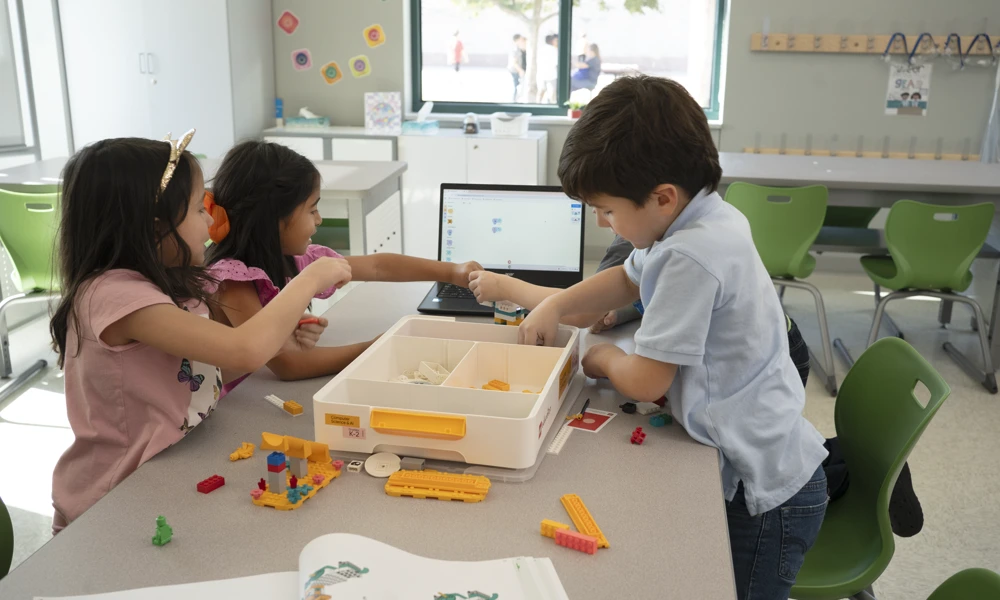
What Are Future Ready Classrooms?
A future-ready classroom is a technology-enabled learning environment designed to develop the skills students need for the future.
It focuses on:
- Student-centred learning
- Technology integration
- Collaboration
- Creativity
- Problem-solving
- Digital literacy
- Innovation
Unlike traditional classrooms where students mainly receive information, future-ready classrooms encourage students to participate, experiment, design, and create.
Why Future Ready Classrooms Are Important
Preparing Students for Future Skills
The skills required for tomorrow's workforce are changing.
Creating Engaging Learning Experiences
Technology allows educators to move beyond traditional teaching methods.
Supporting Innovation and Creativity
Future-ready classrooms encourage students to become innovators.
Students need capabilities such as:
- Critical thinking
- Creativity
- Collaboration
- Digital literacy
- Coding skills
- Adaptability
Future-ready classrooms help students develop these abilities through meaningful learning experiences.
Students can learn through:
- Interactive activities
- Digital simulations
- Collaborative projects
- Virtual experiences
- Hands-on experiments
This creates deeper engagement and better understanding.
Learners can:
- Build prototypes
- Develop solutions
- Explore new ideas
- Work on real-world challenges
This creates a culture of experimentation and discovery.
Key Elements of a Future Ready Classroom
1. Digital Learning Technologies
Technology plays an important role in modern classrooms. Structured digital learning platforms such as ICT 360 Curriculum help schools introduce coding, computer science, AI concepts, and digital literacy through age-appropriate learning pathways.
Examples include:
- Interactive learning platforms
- Digital content
- Learning management systems
- Online collaboration tools
- Smart classroom solutions
These technologies support personalized and flexible learning.
2. AI-Powered Learning
Artificial intelligence is transforming education by enabling smarter learning experiences.
AI can support:
- Personalized learning pathways
- Student progress insights
- Intelligent learning assistance
- Automated feedback
Schools can integrate AI through structured AI Education Solutions UAE that introduce students to artificial intelligence concepts and responsible technology usage.
3. STEM and Hands-On Learning
Future-ready classrooms encourage students to learn by doing.
Through STEM learning, students develop skills through:
- Experiments
- Engineering challenges
- Research activities
- Innovation projects
Schools can strengthen this approach through a structured STEM Curriculum UAE.
4. Coding and Robotics Integration
Coding and robotics help students understand how technology is created.
Students learn:
- Programming concepts
- Logical thinking
- Automation
- Engineering design
Solutions such as LEGO® Education enable students to develop technology skills through hands-on projects. Schools can further enhance these experiences through Robotics and Coding Programs UAE, helping students develop programming, automation, and engineering skills.
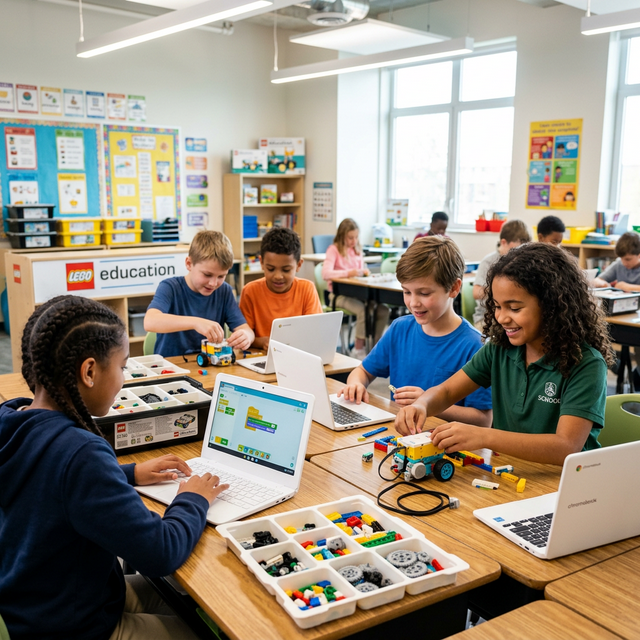
Designing a Future Ready Classroom Environment
A successful future-ready classroom includes more than technology equipment.
It requires:
Flexible Learning Spaces
Classrooms should support:
- Group collaboration
- Discussions
- Project work
- Individual learning
Technology Resources
Schools can integrate:
- Coding platforms
- Robotics kits
- Digital learning tools
- Interactive displays
Curriculum Integration
Technology should connect with learning objectives rather than being used separately.
Successful classrooms combine:
- ICT education
- STEM learning
- AI awareness
- Robotics
- Digital literacy
Teacher Support
Teachers need confidence and training to effectively use new technologies.
Professional development helps educators:
- Design technology-based lessons
- Use digital tools effectively
- Manage project-based learning
- Assess digital skills
Future Ready Classrooms and ICT Education
Digital transformation begins with strong technology foundations.
An effective ICT Curriculum UAE helps students develop:
- Computer skills
- Coding knowledge
- Digital literacy
- Computational thinking
When ICT is combined with STEM and emerging technologies, students gain a complete future-learning experience.
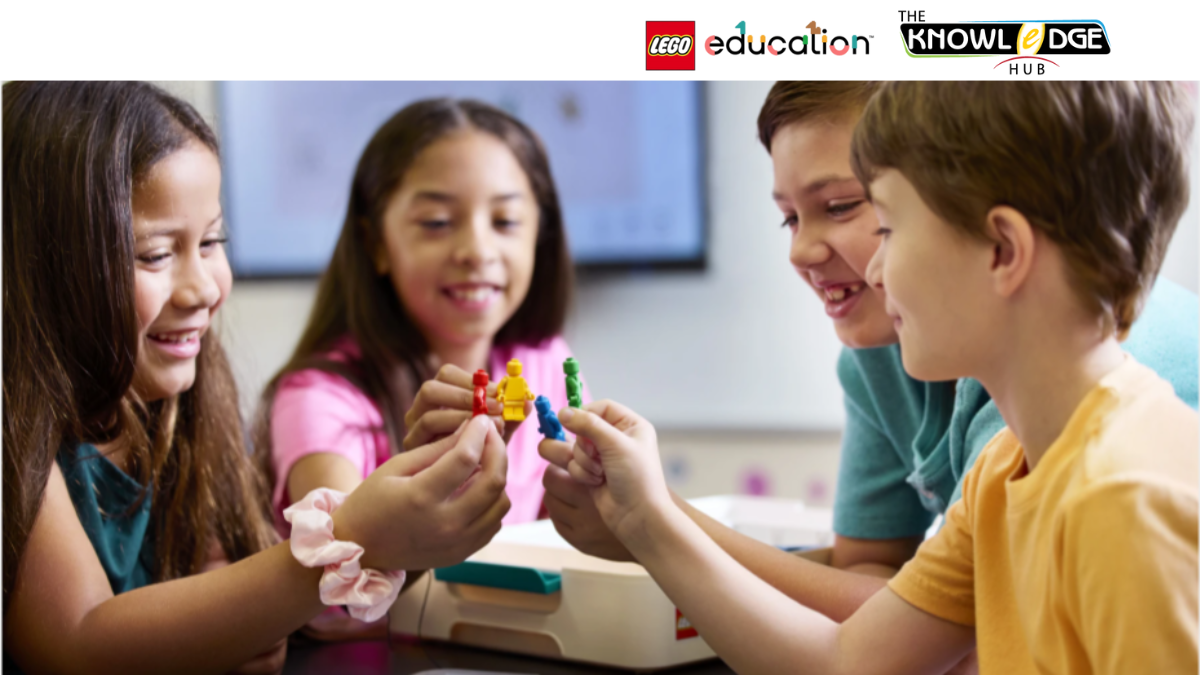
Benefits of Future Ready Classrooms for Schools
Improves Student Engagement
Interactive and practical learning experiences increase student participation.
Develops Future Skills
Students build skills required for higher education and future careers.
Encourages Collaboration
Technology-supported classrooms promote teamwork and communication.
Supports Personalized Learning
Digital tools allow educators to adapt learning experiences according to student needs.
Builds Innovation Culture
Students become creators, problem-solvers, and innovators.
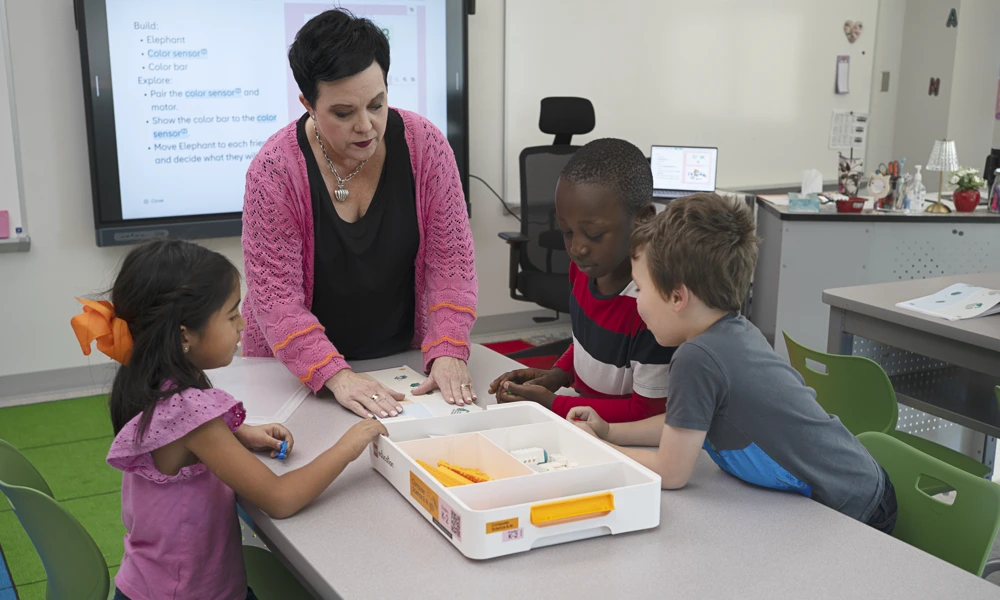
The Role of Teachers in Future-Ready Learning
Teachers remain central to classroom transformation.
Technology enhances teaching but does not replace educators.
Future-ready teachers learn how to:
- Integrate digital tools
- Facilitate collaborative learning
- Guide student projects
- Encourage creativity
- Use technology responsibly
https://knowledge-hub.com/teacher-training-certifications-uae
Continuous teacher development through Teacher Training and Certifications UAE is essential for successful classroom transformation and effective technology integration.
How Knowledge Hub Supports Future Ready Classrooms UAE
Knowledge Hub helps schools create modern learning ecosystems through:
- ICT curriculum solutions
- AI learning programs
- STEM education
- Robotics solutions
- Digital learning platforms
- Teacher training
By combining technology, curriculum expertise, and hands-on learning experiences, Knowledge Hub enables schools to prepare students for the challenges of tomorrow.
Choosing the Right Future Classroom Partner
Schools should consider:
Complete Learning Ecosystem
The solution should include curriculum, resources, training, and support.
Age-Appropriate Solutions
Learning experiences should match student development levels.
Hands-On Experiences
Students should actively create and explore.
Teacher Enablement
Educators should receive ongoing support.
Scalability
Solutions should grow with changing technology needs.
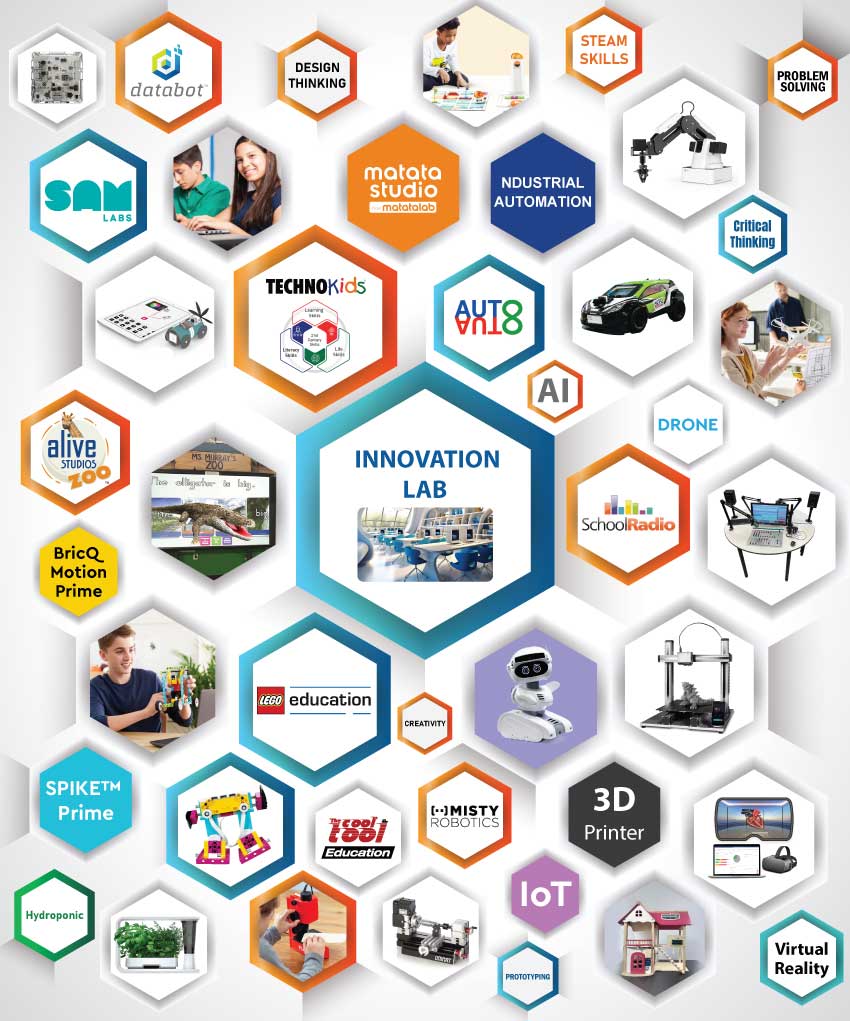
Transform Your School with Future Ready Classrooms UAE
The classroom of the future is not just about technology — it is about creating meaningful learning experiences that prepare students to innovate, collaborate, and solve problems.
Partner with Knowledge Hub to build Future Ready Classrooms UAE powered by AI, STEM, robotics, coding, and digital learning solutions.
Contact Knowledge Hub today to explore classroom transformation solutions for your school.
FAQ’S (Frequently Asked Questions)
1. What are Future Ready Classrooms UAE?
Future Ready Classrooms UAE are modern learning environments that combine technology, innovative teaching methods, and hands-on learning experiences to help students develop future skills such as creativity, collaboration, and problem-solving.
2. Why are future-ready classrooms important for schools?
Future-ready classrooms help schools prepare students for a technology-driven world by integrating digital learning, AI, STEM, coding, and collaborative learning approaches.
3. What technologies are used in future-ready classrooms?
Future-ready classrooms may include AI learning tools, coding platforms, robotics kits, digital learning platforms, interactive technologies, and STEM resources that enhance student engagement.
4. How do future-ready classrooms support STEM and coding education?
Future-ready classrooms provide students with opportunities to apply STEM concepts through experiments, robotics projects, coding activities, and real-world problem-solving challenges.
5. How can schools transform traditional classrooms into future-ready classrooms?
Schools can transform classrooms by combining the right technology solutions, curriculum frameworks, teacher training, and hands-on learning resources that support modern education goals.
6. What role do teachers play in future-ready classrooms?
Teachers guide and facilitate learning by using technology effectively, designing engaging activities, and helping students develop creativity, critical thinking, and digital skills.