

Artificial intelligence is becoming an increasingly important part of everyday life, influencing how people learn, communicate, work, and solve problems. As AI tools become more accessible, schools have an opportunity to prepare students not just to use these technologies but also to understand how they work and evaluate the information they produce.
This is where AI literacy in schools becomes essential.
AI education should go beyond introducing students to AI applications. It should help them develop the knowledge, practical skills, and critical thinking abilities needed to interact with artificial intelligence confidently and responsibly.
What Does AI Literacy Really Mean?
AI literacy refers to the ability to understand, interact with, and critically evaluate artificial intelligence technologies.
For students, this means learning more than how to enter prompts or generate answers using AI tools. They should also explore the processes behind these technologies.
For example, students can investigate:
- How AI works: Understanding how artificial intelligence systems process information and generate outputs.
- How AI uses data: Exploring how data helps AI systems learn and make predictions.
- How AI identifies patterns: Discovering how AI recognizes patterns and uses them to respond to different inputs.
- How to evaluate AI results: Learning to question information, identify possible errors, and assess whether an AI-generated response is reliable.
These concepts provide students with a stronger foundation for understanding the technology they encounter in their daily lives.
Why Should Schools Focus on AI Literacy?
As artificial intelligence becomes more integrated into education and different industries, students need the ability to engage with it thoughtfully.
Introducing AI literacy into the curriculum helps schools develop several important competencies.
1. Developing Critical Thinking
AI-generated information is not always accurate or complete. Students need to learn how to question responses, verify information, and recognise potential limitations rather than accepting every AI-generated answer as correct.
2. Understanding Data and Technology
Exploring how AI systems use data helps students understand the relationship between information, patterns, and technology. It also introduces important concepts such as data quality and responsible data use.
3. Encouraging Responsible Technology Use
Understanding AI helps students recognise the importance of privacy, fairness, transparency, and responsible decision-making when interacting with AI-powered tools.
4. Preparing Students for Future Opportunities
AI knowledge is becoming relevant across multiple career fields. Developing AI literacy early gives students a foundation for exploring future technologies and understanding how artificial intelligence may influence different professions.
From Understanding to Applying and Evaluating AI
Effective AI education should encourage students to move through three important stages of learning:
Understand → Apply → Evaluate
- Understand: Explore the fundamentals of artificial intelligence, including data, patterns, and how AI systems operate.
- Apply: Use practical activities and guided challenges to experiment with AI concepts and understand their applications.
- Evaluate: Examine AI-generated results, question their accuracy, and consider the limitations and implications of the technology.
This approach encourages students to become active learners rather than passive users of technology.
It also creates opportunities for classroom discussions, experimentation, problem-solving and collaborative learning.
Making AI Literacy Practical Through Hands-On Learning
One of the most effective ways to introduce complex technology concepts is through practical exploration.
Rather than relying entirely on theoretical explanations, teachers can create learning experiences where students investigate concepts, experiment with ideas, and discover how technology works.
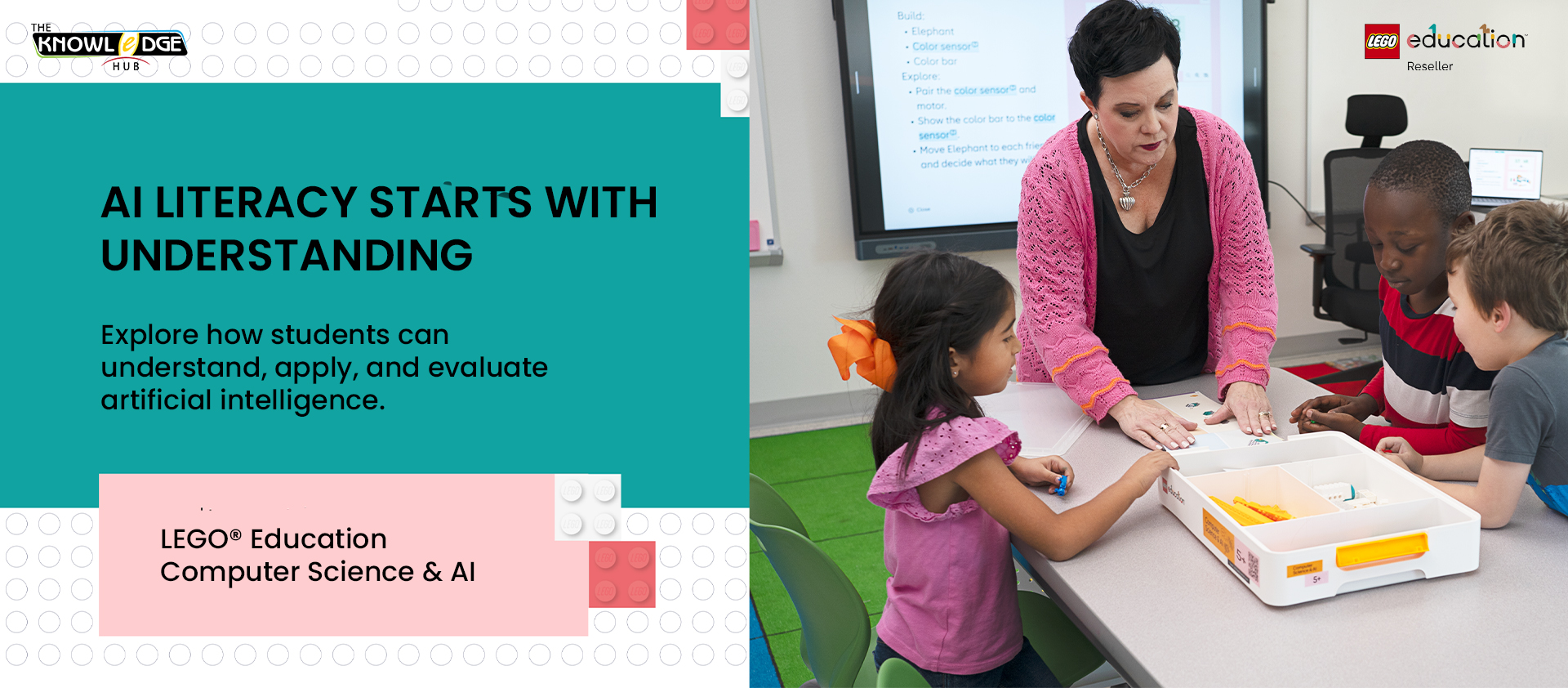
LEGO® Education Computer Science & AI supports this approach through hands-on learning experiences that encourage students to explore computer science and artificial intelligence concepts.
By combining practical activities with classroom learning, students can develop a deeper understanding of technology while building problem-solving, collaboration, and critical-thinking skills.
For schools introducing AI education, these experiences can help make abstract concepts more accessible and engaging.
Building AI-Ready Classrooms Starts with Understanding
Preparing students for an AI-powered world requires more than giving them access to digital tools. It requires helping them understand the technology, apply their knowledge, and think critically about the results.
By prioritising AI literacy in schools, educators can create learning environments where students develop the confidence to explore artificial intelligence and the judgement to use it thoughtfully.
With structured learning opportunities and hands-on exploration, schools can take meaningful steps towards building future-ready classrooms.
Explore how LEGO® Education Computer Science & AI can support your school's journey towards meaningful AI learning with Knowledge Hub.