

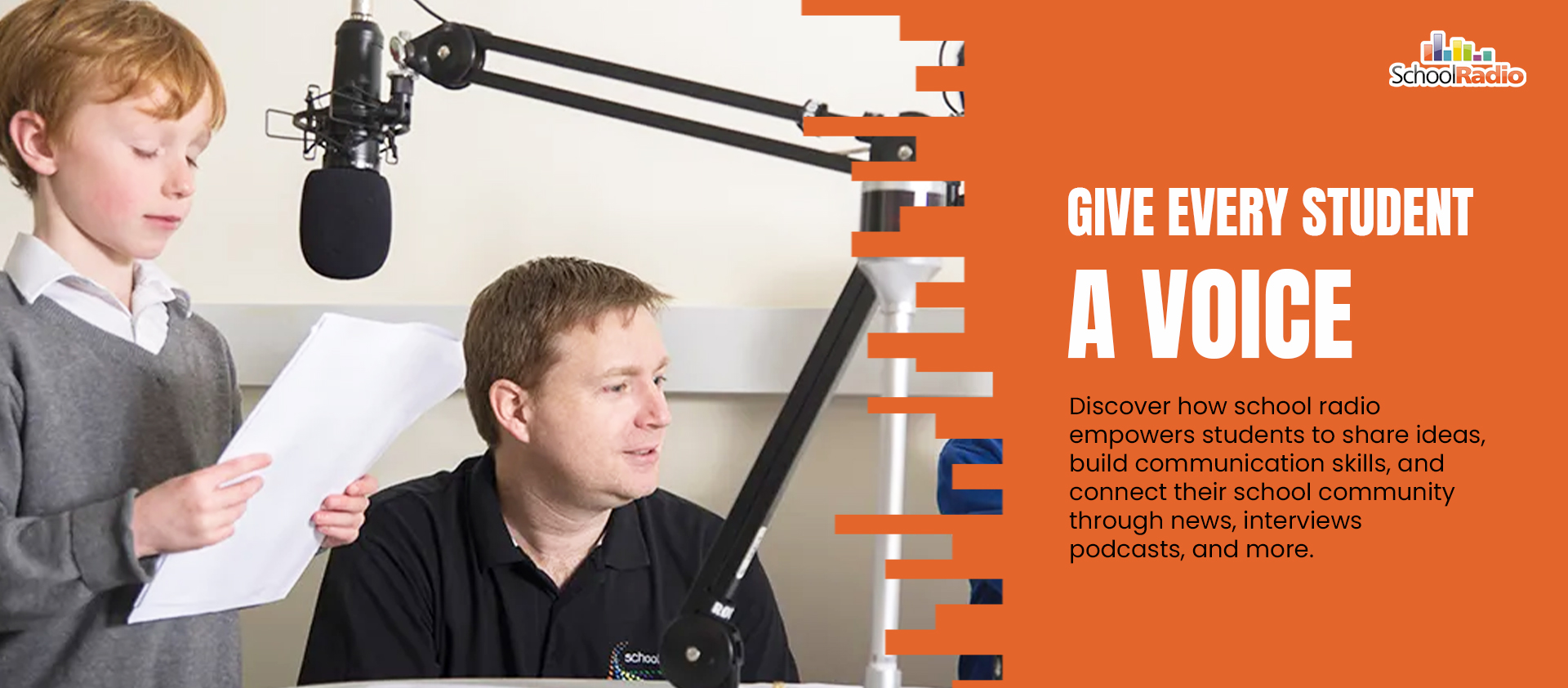
Imagine a platform where students inform, inspire, and connect their entire school community. From sharing school news and conducting interviews to creating podcasts and covering special events, a school radio station gives students a voice and an opportunity to participate actively in school life.
School radio for students is more than a broadcasting activity. It is an engaging learning experience that encourages communication, creativity, collaboration, and student leadership.
By giving students the opportunity to plan, produce, and present their own content, schools can create a more connected and participatory learning environment.
What Is School Radio?
School radio is a student-focused broadcasting platform that allows learners to create and share audio content with their school community. Depending on the setup, broadcasts can be delivered through classroom speakers, school-wide audio systems, online platforms, or recorded podcasts.
Students can take on different roles, including presenters, scriptwriters, interviewers, reporters, audio editors, and production coordinators. These responsibilities introduce them to the process of creating meaningful content while developing practical communication and media skills.
With structured guidance from teachers, school radio can become a valuable part of classroom activities, extracurricular programmes, and whole-school engagement initiatives.
How School Radio Benefits Students
1. Develops Communication Skills
Preparing scripts, presenting announcements, and interviewing guests help students practise speaking clearly and organising their ideas. Regular participation can also help them become more confident when communicating with different audiences.
2. Encourages Creativity and Storytelling
From student podcasts to themed broadcasts and special features, school radio gives learners the freedom to explore ideas and express their perspectives. Students learn to turn information into engaging stories that their peers and teachers want to hear.
3. Builds Collaboration and Leadership
Producing a school radio programme requires teamwork. Students must coordinate responsibilities, meet deadlines, share ideas, and solve problems together. Taking ownership of a broadcast also encourages responsibility, decision-making, and leadership.
4. Strengthens Media and Digital Literacy
Students can explore audio recording, editing, script development, interviewing, and content planning. These activities introduce practical digital skills while encouraging learners to consider accuracy, responsible communication, and appropriate use of media.
5. Connects the School Community
School radio provides a shared platform for celebrating achievements, announcing activities, highlighting student projects, and sharing important school updates. It can help students feel more involved and create opportunities for different voices to be heard.
School Radio Ideas for Engaging Students
Schools can introduce a variety of formats to keep broadcasts relevant, informative, and enjoyable.
- School news: Share announcements, upcoming activities, competitions, and student achievements.
- Student interviews: Invite teachers, school leaders, students, and special guests to discuss their experiences and interests.
- Educational podcasts: Explore subjects such as science, technology, literature, environmental awareness, and current affairs.
- Special features: Celebrate cultural occasions, international days, school milestones, and community initiatives.
- Student voice segments: Give learners opportunities to share book recommendations, creative writing, opinions, and positive messages.
A simple weekly programme can begin with short announcements and gradually expand into interviews, podcasts, and student-produced features as learners gain experience.
How Schools Can Introduce a School Radio Programme
Getting started does not have to be complicated. Schools can begin by identifying their objectives, selecting a suitable broadcasting setup, and creating a small student production team.
Teachers can guide students in choosing topics, writing scripts, checking facts, recording audio, and reviewing content before broadcast. Establishing clear guidelines for privacy, respectful language, copyright, and appropriate content helps ensure that student-created programmes remain safe and inclusive.
A consistent schedule also helps students develop responsibility and gives the wider school community something to look forward to.
Bring Learning to Life with School Radio
School radio transforms everyday school communication into an opportunity for students to learn, create, and connect. By combining communication, creativity, teamwork, and digital media skills, it helps learners take a more active role in their school community.
With the right structure and support, school radio for students can become a meaningful platform for student expression, collaborative learning, and school-wide engagement.
When students lead the conversation, every broadcast becomes an opportunity to share ideas, celebrate achievements, and strengthen the school community.