

Artificial intelligence is becoming part of the world children are growing up in. From voice assistants and smart devices to image recognition and automated systems, AI is already shaping everyday experiences. This makes AI education for kids an important part of preparing young learners for the future.
But learning about AI should be more than understanding definitions. Children learn best when they can explore, experiment, create, and see how technology responds to their ideas.
Making AI Education More Interactive
Traditional explanations can help students understand what artificial intelligence is, but hands-on experiences can make those concepts easier to understand and remember.
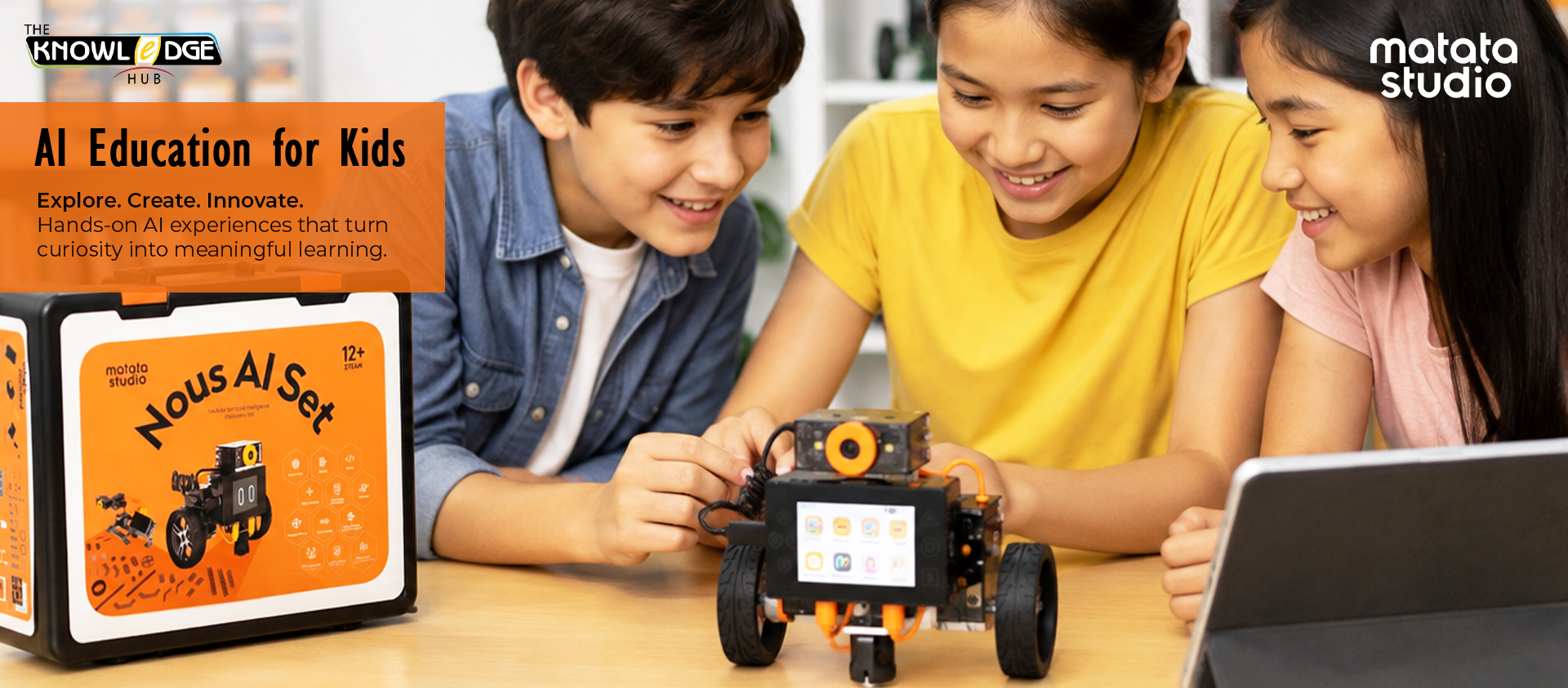
With the NOUS AI Set, students can explore AI through engaging, open-ended projects. They can experiment with technologies such as object recognition and voice commands while developing an understanding of how intelligent systems interact with the world around them.
Instead of simply learning how AI works, students get opportunities to experience it.
Building AI Skills Through Exploration
Effective AI education for kids should encourage curiosity. When students are given the freedom to test ideas and explore different possibilities, they begin to develop skills that extend beyond technology.
Hands-on AI activities can help children develop:
- Problem-solving skills by finding solutions to challenges
- Computational thinking by breaking problems into manageable steps
- Creativity by designing their own AI-based ideas
- Critical thinking by observing results and making improvements
- Collaboration by working together on projects
- Digital confidence by experimenting with emerging technologies
These skills are valuable not only for future careers in technology but also for learning across subjects.
Learning Artificial Intelligence Through Projects
One of the most effective approaches to AI learning for kids is project-based exploration. Instead of presenting AI as a complicated subject, educators can introduce concepts through practical challenges that encourage students to ask questions and experiment.
For example, students might explore how a system recognizes an object, responds to a voice command, or reacts to different inputs. Each project becomes an opportunity to understand a new concept while encouraging learners to think about how technology can be used creatively.
This approach also makes artificial intelligence for kids more accessible. Students don't need to begin with complex theory. They can start with simple experiences and gradually build their understanding as their confidence grows.
Encouraging Young Innovators
Children naturally ask questions such as “What happens if I try this?” or “Can I make it do something different?” Open-ended AI experiences turn these questions into learning opportunities.
The NOUS AI Set encourages students to explore, create, and innovate through experiences that can grow with their imagination. Rather than following only one predetermined outcome, learners can experiment with ideas and discover different ways technology can respond.
This helps shift the role of students from technology users to technology creators.
Preparing Students for an AI-Driven Future
As AI continues to influence education, workplaces, and everyday life, introducing students to AI concepts early can help them become more confident and thoughtful users of technology.
Good AI education for kids is not simply about teaching children how to use artificial intelligence. It is about helping them understand technology, question how it works, solve problems, and imagine what they could create with it.
Through hands-on AI learning for kids, every project can become a new opportunity to explore, experiment, and think differently.
Bringing AI Learning to Life
The future of education is not only about knowing what technology can do. It is about giving young learners confidence and creativity to explore what they can do with it.
With engaging, project-based experiences, AI education for kids can become an exciting journey of discovery—one where curiosity leads to experimentation; experimentation leads to understanding, and understanding inspires innovation.